Artwork
A prince celebrating Holi with palace women on a terrace at night (recto); calligraphy of a quatrain (verso)
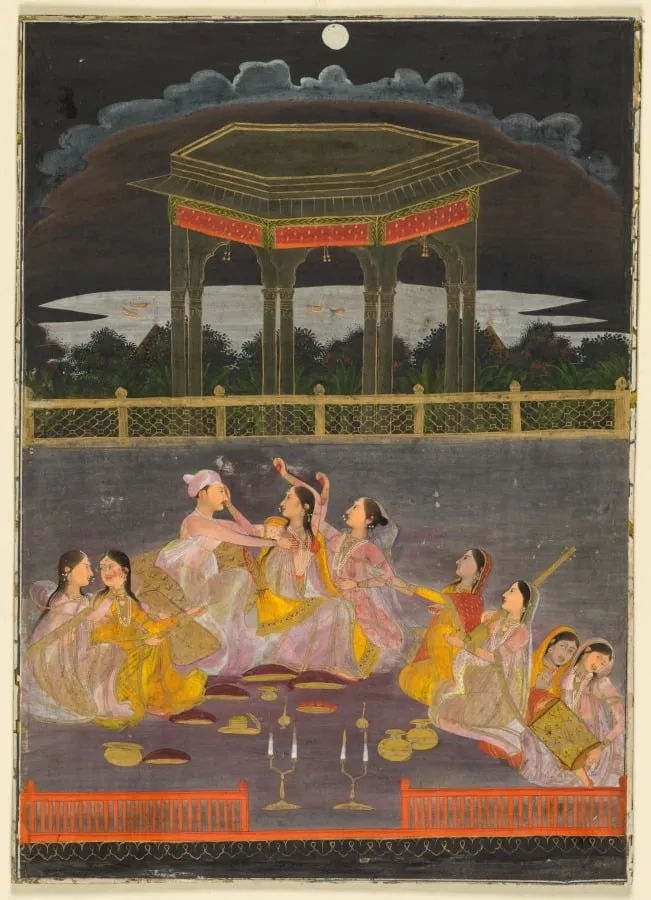
A prince celebrating Holi with palace women on a terrace at night (recto); calligraphy of a quatrain (verso) is an unspecified painting by the Mughal Painting artist Unknown. It dates from 1760 and is held in the collection of the Cleveland Museum of Art. The miniature depicts a night‑time celebration of Holi, the Indian spring festival, set on a palace terrace.
About this work
Overview
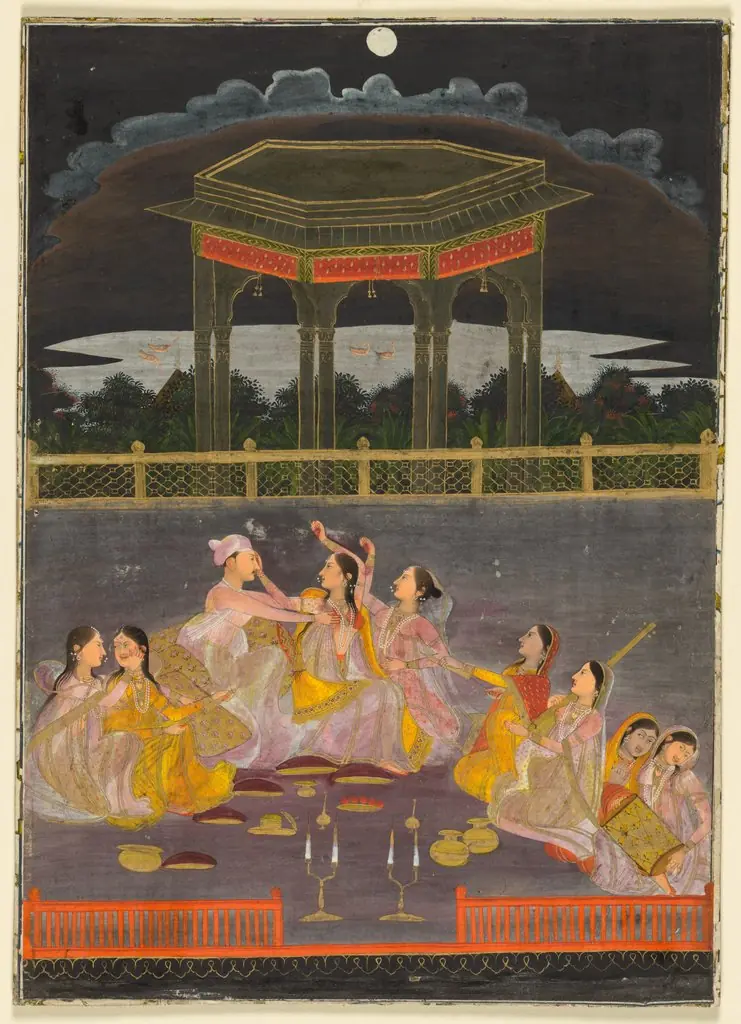
The miniature depicts a night‑time celebration of Holi, the Indian spring festival, set on a palace terrace. A princely figure is surrounded by court women, all engaged in the customary throwing of colored powders and liquids. The scene is illuminated by moonlight reflected on a river and the soft glow of candles, creating a luminous atmosphere.
Subject & Meaning
The composition captures the joyous, communal aspects of Holi, emphasizing playfulness and social interaction within the royal court. The presence of dishes piled with pigment and plunger‑type devices for spraying colored water illustrates the ritual’s tactile, exuberant nature, while the prince’s participation underscores the festival’s acceptance across social ranks.
Technique & Style
Executed in the late eighteenth‑century Mughal miniature tradition, the work combines delicate brushwork with rich, saturated pigments to render the powdered hues. Fine detailing conveys the reflective quality of moonlight on water and the flickering candlelight, while the spatial arrangement on a terrace creates a sense of depth within the confined pictorial plane.
History & Provenance
Created during the latter half of the 1700s, the painting reflects a period when Mughal court art increasingly documented leisure and festivity. Its dual‑sided format—scene on the recto and a calligraphic quatrain on the verso—suggests it functioned as a decorative and literary object, likely commissioned for a royal patron.
Context
By the eighteenth century, Mughal artists were incorporating more secular subjects, moving beyond strict religious or courtly portraiture. Holi, with its vibrant colors and communal revelry, offered a vivid theme that aligned with the era’s growing interest in everyday court life and seasonal celebrations.
Artist & collection

 Domestic Scene
 Giacomo and Cardinal Marco, investing Andrea, Abbot of San Zeno, with his Benefice
 The Nymph of Fontainebleau
 Portrait of a Woman
 Madonna and Child with Saints in the Enclosed Garden
 Venus and Minerva
 Family Group of Four on Sofa
 Wall painting from Room H of the Villa of P. Fannius Synistor at Boscoreale
 A prince celebrating Holi with palace women on a terrace at night (recto)
 A prince celebrating Holi with palace women on a terrace at night (recto); calligraphy of a quatrain (verso)
 A prince celebrating Holi with palace women on a terrace at night (recto)
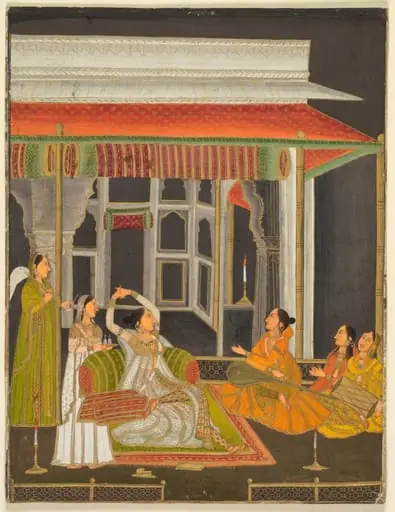 A Princess on a Terrace with Attendants at Night (recto)
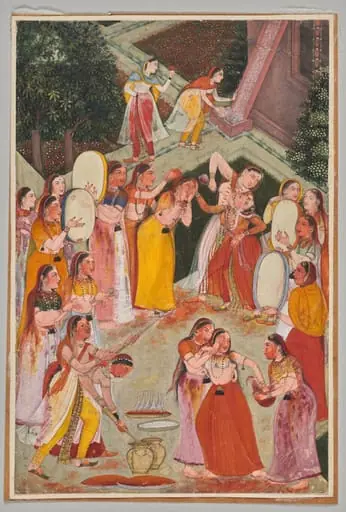 Girls Spraying Each Other at Holi
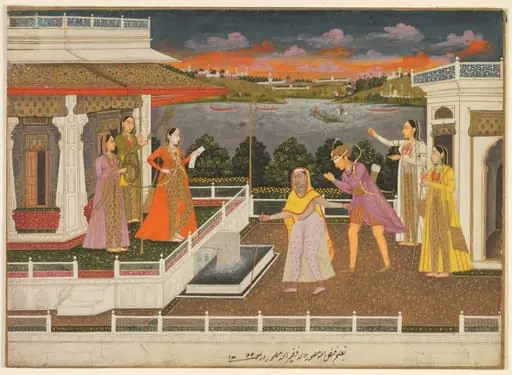 A blindfolded suitor is brought before a princess (recto)
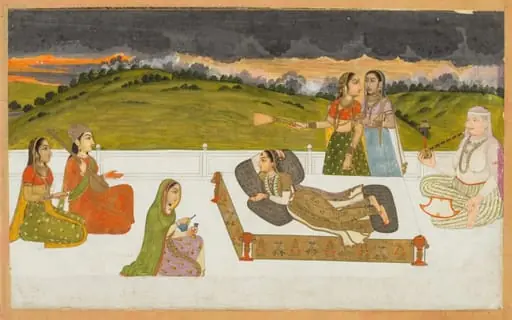 A princess reclining on a terrace with attendants
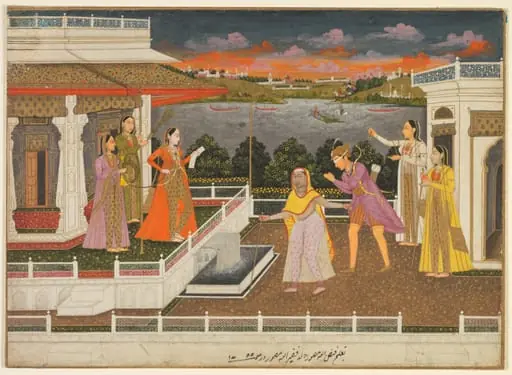 A blindfolded suitor is brought before a princess; verso: scrolling floral vines
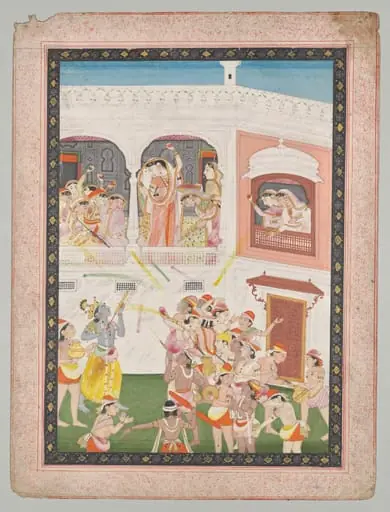 Radha and Hindu God Krishna celebrating the festival Holi
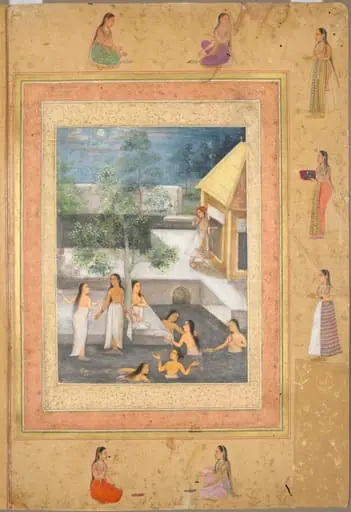 Harem night-bathing scene, from the Late Shah Jahan Album (recto)
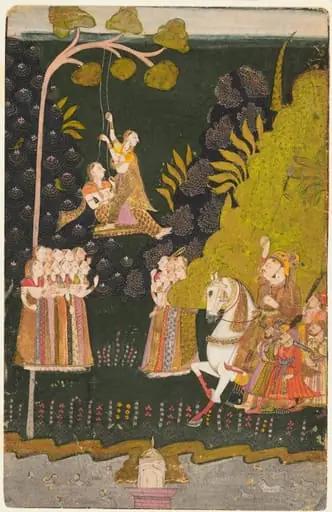 Maharaja Abhai Singh of Marwar (reigned 1724–49), Equestrian, Watching Girls Swinging at the Teej Festival