Artwork
A prince celebrating Holi with palace women on a terrace at night (recto)
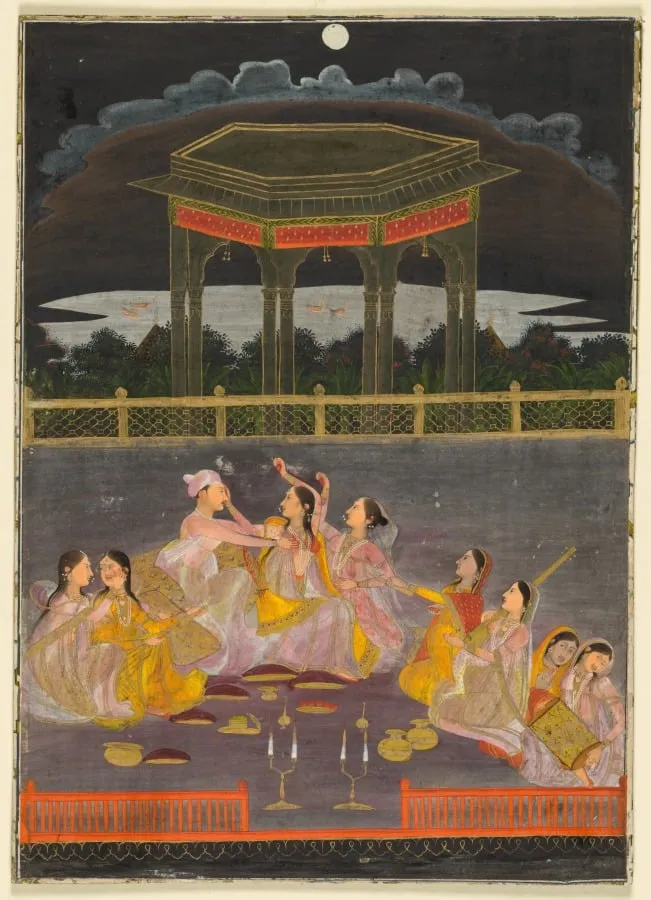
A prince celebrating Holi with palace women on a terrace at night (recto) is an unspecified painting by the Mughal Painting artist Unknown. It dates from 1760 and is held in the collection of the Cleveland Museum of Art. This 18th-century Mughal painting depicts a lively nighttime scene of a prince celebrating the Holi festival with palace women on a terrace.
About this work
It’s one of many playful Mughal works from the 1700s, when rulers commissioned art to celebrate pleasure, not just power.
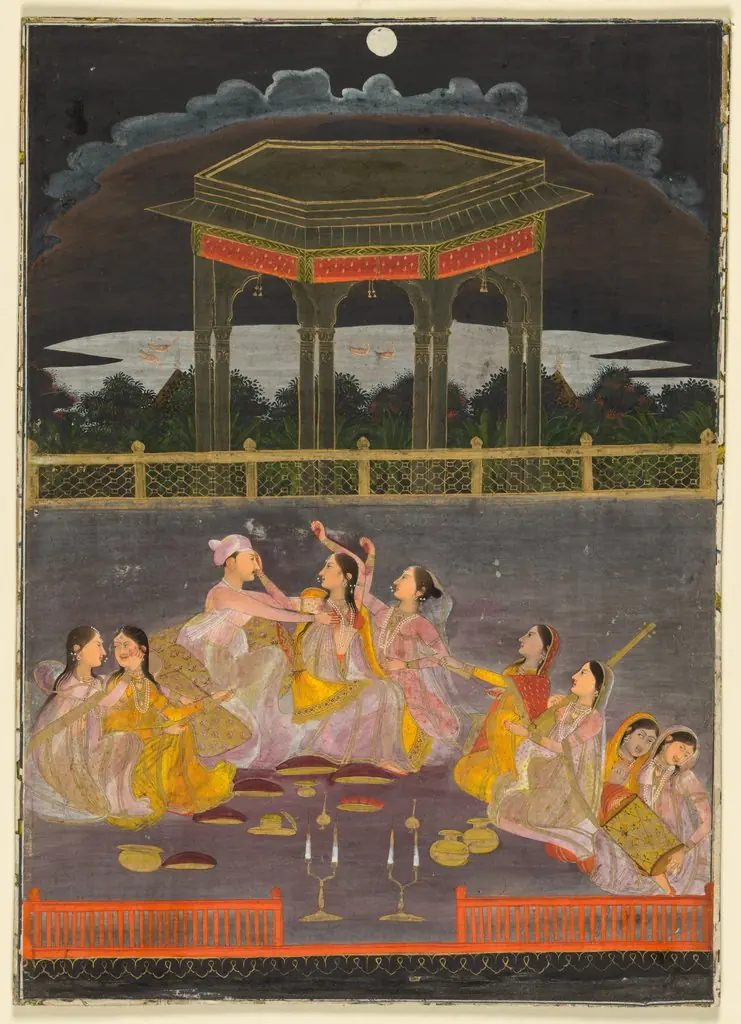
Bright colors swirl across a nighttime terrace. A prince and palace women laugh, tossing powder and spraying liquid under a full moon. Dishes of red, yellow, and blue sit ready for Holi.
This painting shows the festival at its liveliest—no stiff poses, just joy. The artist even hid tiny candle flames in the dark to make the scene glow. It’s one of many playful Mughal works from the 1700s, when rulers commissioned art to celebrate pleasure, not just power.
To see more of these lively scenes, look up 18th century Indian art.
Overview
This 18th-century Mughal painting depicts a lively nighttime scene of a prince celebrating the Holi festival with palace women on a terrace.
Subject & Meaning
The artwork captures the joyful chaos of Holi, with the prince and women engaged in traditional festivities: smearing colored powders (displayed on nearby dishes) and spraying colored liquid. The scene conveys unbridled delight, eschewing formal poses for spontaneous interaction.
Technique & Style
The painting features bright, swirling colors against a dark nighttime backdrop, illuminated by a full moon reflected in a river and subtle, hidden candle flames. This technique creates a warm, glowing ambiance.
History & Provenance
Created during the latter half of the 1700s, this work is characteristic of Mughal art from a period when rulers increasingly commissioned pieces celebrating pleasure and leisure, alongside traditional themes of power.
Context
Part of a broader trend in 18th-century Indian art, this painting reflects the cultural significance of Holi and the Mughal court’s embrace of vibrant, playful themes in their visual arts.
Legacy
This piece contributes to the enduring visibility of Holi’s cultural significance in art and the appreciation of Mughal period’s shift towards depicting joy and leisure activities.
Artist & collection

 Domestic Scene
 Giacomo and Cardinal Marco, investing Andrea, Abbot of San Zeno, with his Benefice
 The Nymph of Fontainebleau
 Portrait of a Woman
 Madonna and Child with Saints in the Enclosed Garden
 Venus and Minerva
 Family Group of Four on Sofa
 Wall painting from Room H of the Villa of P. Fannius Synistor at Boscoreale
 A prince celebrating Holi with palace women on a terrace at night (recto); calligraphy of a quatrain (verso)
 A prince celebrating Holi with palace women on a terrace at night (recto)
 A prince celebrating Holi with palace women on a terrace at night (recto); calligraphy of a quatrain (verso)
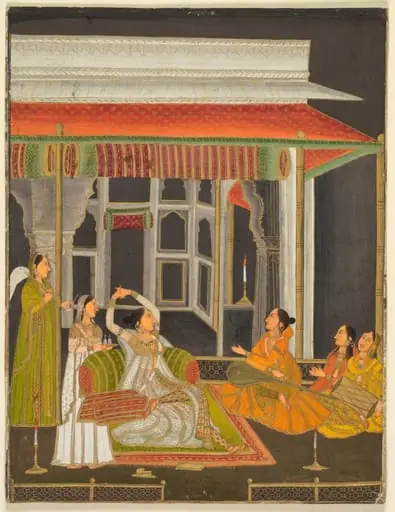 A Princess on a Terrace with Attendants at Night (recto)
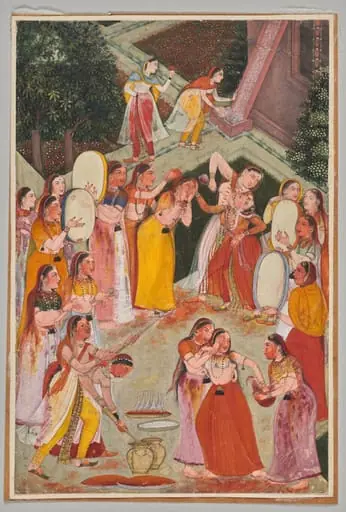 Girls Spraying Each Other at Holi
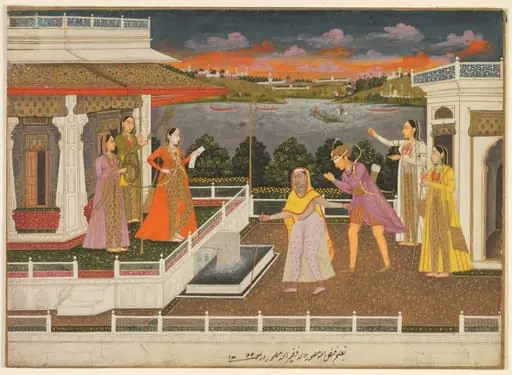 A blindfolded suitor is brought before a princess (recto)
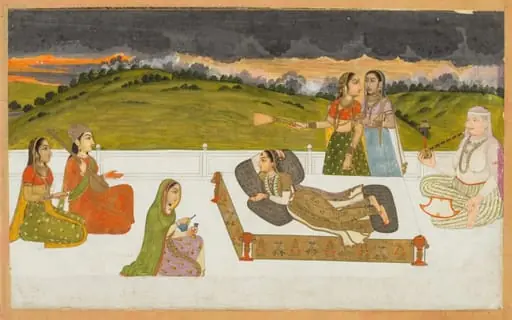 A princess reclining on a terrace with attendants
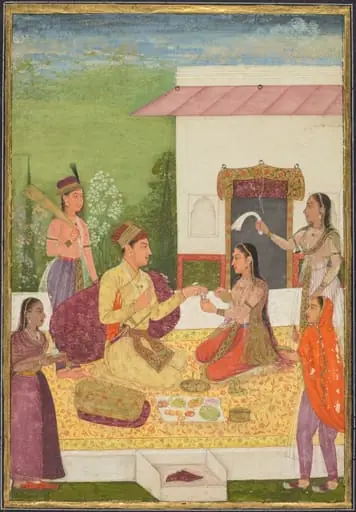 A prince conversing with a woman while taking refreshments on a terrace (recto)
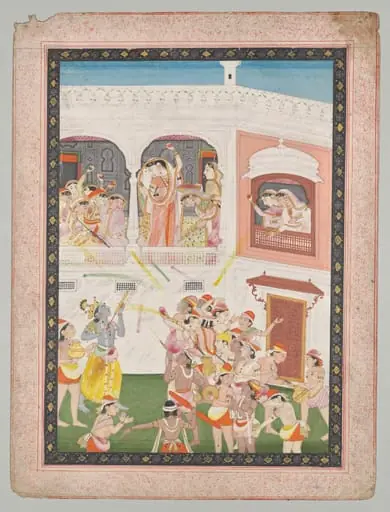 Radha and Hindu God Krishna celebrating the festival Holi
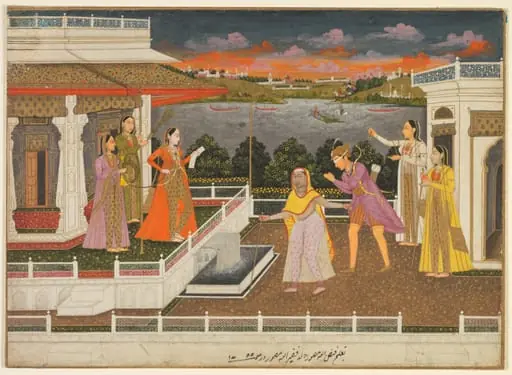 A blindfolded suitor is brought before a princess; verso: scrolling floral vines
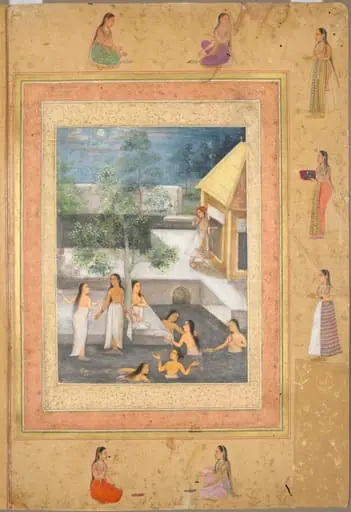 Harem night-bathing scene, from the Late Shah Jahan Album (recto)
 Maharaja Abhai Singh of Marwar (reigned 1724–49), Equestrian, Watching Girls Swinging at the Teej Festival