Artwork
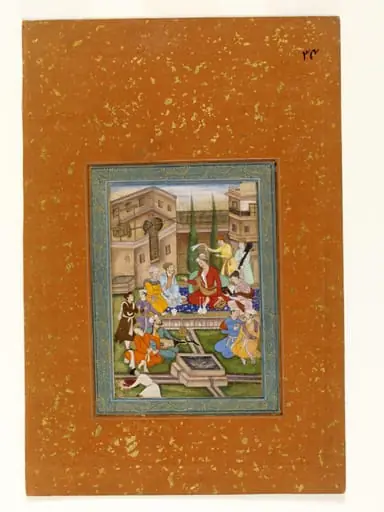
A woman mistakes a cow for the Angel of Death, from a Lights of Canopus (Anwar-i Suhaili) of Kashifi (Iranian, d. 1504)
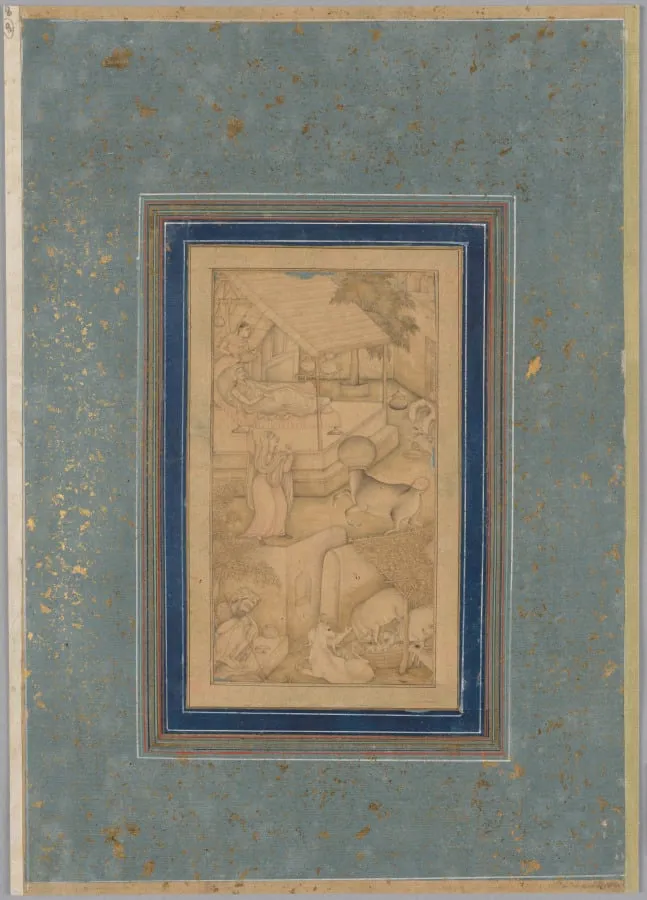
A woman mistakes a cow for the Angel of Death, from a Lights of Canopus (Anwar-i Suhaili) of Kashifi (Iranian, d. 1504) is a drawing by the Baroque artist Unknown. It dates from 1610 and is held in the collection of the Cleveland Museum of Art. This Iranian drawing from Kashifi's 'Lights of Canopus' (Anwar-i Suhaili) depicts a poignant and mistaken moment in a family's crisis.
About this work
To see more paintings like this, look up Mughal India, court of Jahangir (1605–1627).
A sick girl lies in bed while her mother kneels beside her, pointing up. A cow with a pot stuck on its head stumbles into the courtyard. The mother thinks the cow is the Angel of Death.
This painting comes from a book of stories meant to teach moral lessons. The artist shows the moment the mother offers her own life to save her daughter. The cow’s silly mistake makes the scene feel both strange and real.
To see more paintings like this, look up Mughal India, court of Jahangir (1605–1627).
Overview
This Iranian drawing from Kashifi's 'Lights of Canopus' (Anwar-i Suhaili) depicts a poignant and mistaken moment in a family's crisis. A sick girl, her desperate mother, and a confused cow with a pot stuck on its head are the central figures in this gently colored and shaded scene.
Subject & Meaning
The artwork illustrates a moral lesson from the book. A mother, praying to sacrifice her own life for her ailing daughter's health, mistakenly identifies a cow (with its head stuck in a pot) as the Angel of Death. Her gesture of pointing upwards conveys her desperate plea to spare her child.
Technique & Style
The drawing features gentle coloring and ample shading, creating a sense of serenity amidst the turmoil. The composition balances the indoor scene of the mother and daughter with outdoor elements, such as the stumbling cow and a dozing holy man, indicating an evening setting.
History & Provenance
Originating from an Iranian 'Anwar-i Suhaili' by Kashifi (d. 1504), this piece is part of a collection of stories designed to impart moral lessons. Its style reflects the artistic traditions of its time, with possible influences or comparisons to later Mughal Indian art (notably the court of Jahangir, 1605–1627).
Context
The scene unfolds in a domestic courtyard, contrasting the intimate, emotional moment between the mother and daughter with the absurd, unintended intrusion of the cow. External elements, like the calf and the holy man, add depth to the setting.
Legacy
While specific lasting impacts of this exact piece are not detailed, it represents the enduring tradition of illustrating moral tales in Iranian literature. For similar artistic expressions, the Mughal court's later works under Jahangir offer comparative insights into the evolution of such themes and styles.
Artist & collection

 Domestic Scene
 Giacomo and Cardinal Marco, investing Andrea, Abbot of San Zeno, with his Benefice
 The Nymph of Fontainebleau
 Portrait of a Woman
 Madonna and Child with Saints in the Enclosed Garden
 Venus and Minerva
 Family Group of Four on Sofa
 Wall painting from Room H of the Villa of P. Fannius Synistor at Boscoreale
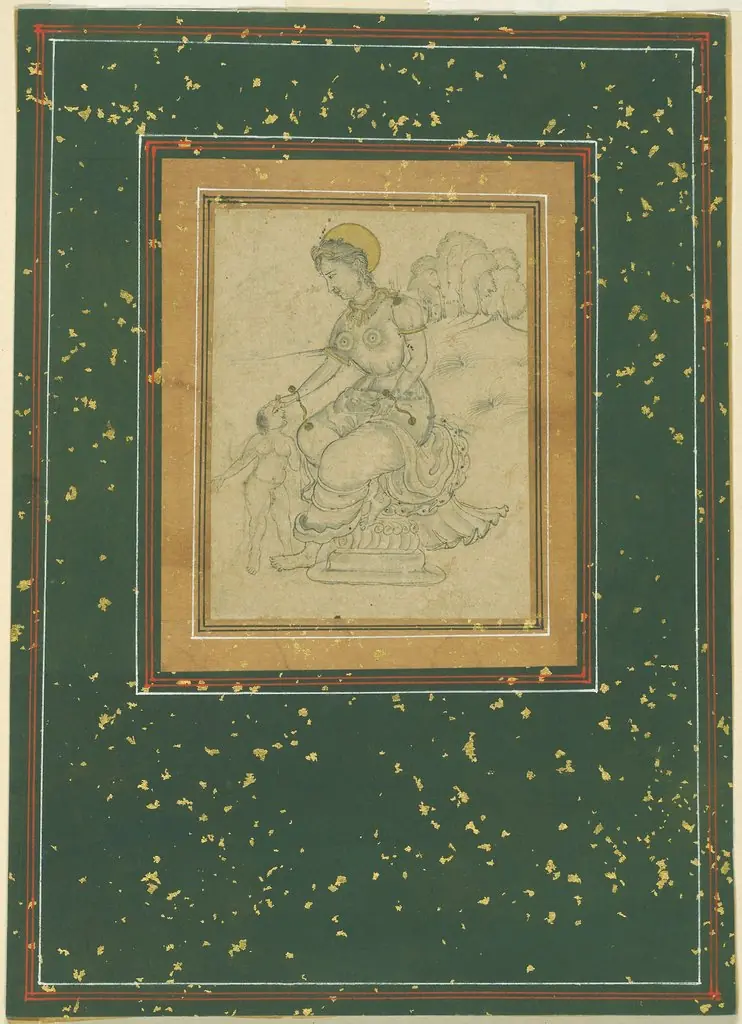 Mother and Child
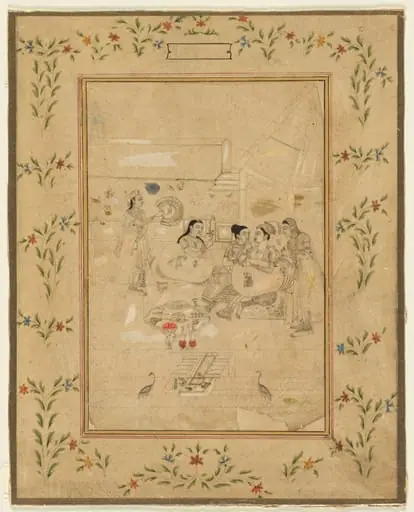 Women playing at cross-dressing
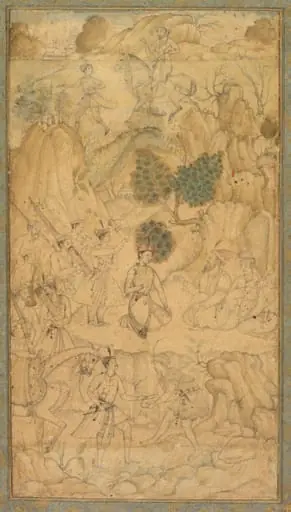 A prince visiting a holy man in a rocky landscape
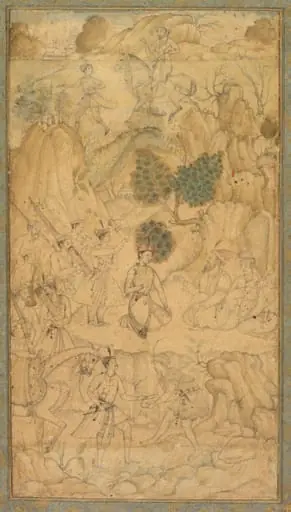 A Prince Visiting a Holy Man in a Rocky Landscape (recto)
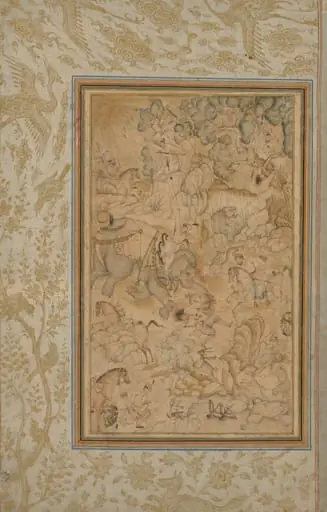 Princes hunting in a rocky landscape
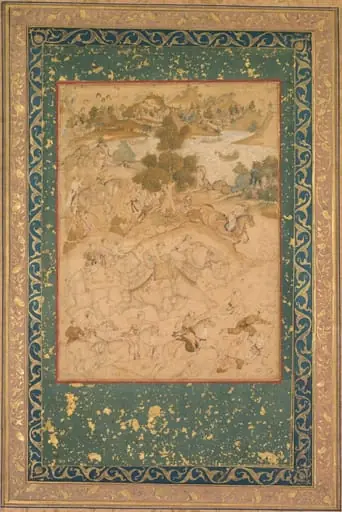 Akbar supervising the capture of wild elephants at Malwa in 1564, painting 90 from an Akbar-nama (Book of Akbar) of Abu’l Fazl (Indian 1551–1602)
 Akbar supervising the capture of wild elephants at Malwa in 1564, painting 90 from an Akbar-nama (Book of Akbar) of Abu’l Fazl (Indian 1551–1602)
 Ramakali Ragini
 Jehovah
 Radha's hair being dressed
 European Banquet Scene
 Akbar
Akbar