Artwork
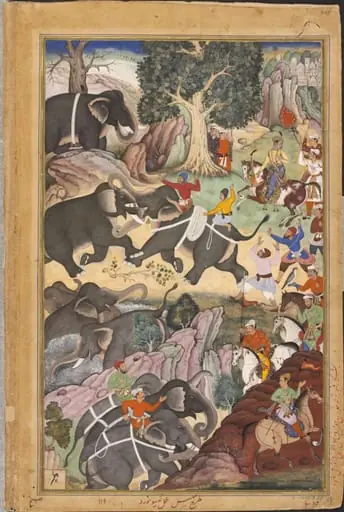
Akbar supervising the capture of wild elephants at Malwa in 1564, painting 90 from an Akbar-nama (Book of Akbar) of Abu’l Fazl (Indian 1551–1602)
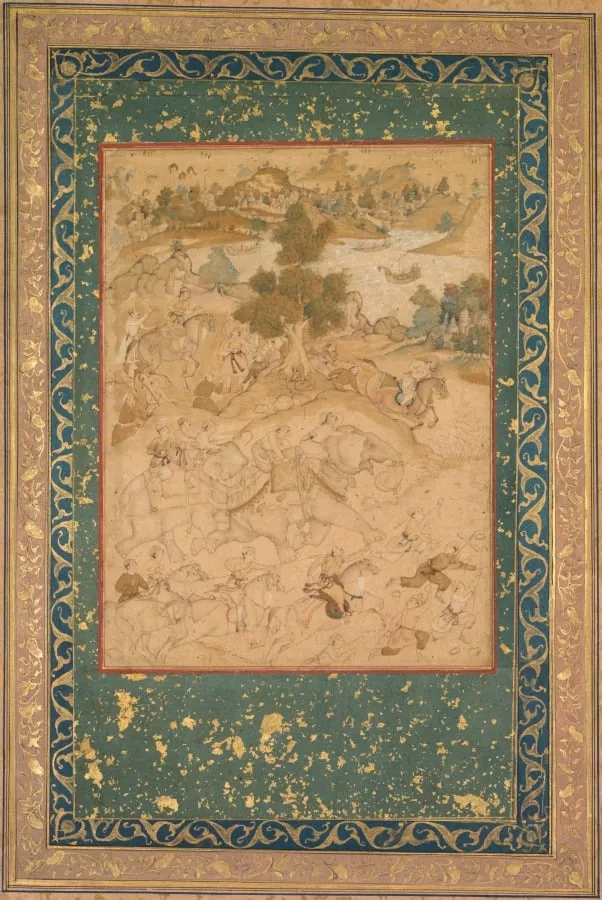
Akbar supervising the capture of wild elephants at Malwa in 1564, painting 90 from an Akbar-nama (Book of Akbar) of Abu’l Fazl (Indian 1551–1602) is an unspecified painting by the Mughal Painting artist Farukh Chela. It dates from 1704 and is held in the collection of the Cleveland Museum of Art. The work is an illustration from an early biography of the Mughal emperor Akbar, created shortly before his death in 1605.
About this work
Overview
The work is an illustration from an early biography of the Mughal emperor Akbar, created shortly before his death in 1605. It records an episode from 1564 in which the young ruler organized the capture of a herd of wild elephants for his royal stables. The scene shows Akbar on horseback overseeing the operation, while tame elephants drive the wild ones toward his men.
Subject & Meaning
The painting emphasizes the emperor’s active leadership and his control over nature, portraying him as a decisive figure who directs his courtiers and soldiers in a complex logistical task. By highlighting the coordinated chase, the image conveys the power and organization of the Mughal court and the importance of elephants as symbols of royal prestige and military utility.
Technique & Style
Rendered in vivid pigments and dense, miniature-like figures, the composition combines a crowded foreground of chasers with a distant landscape of rolling hills and city silhouettes. The perspective and background details reflect the influence of European prints that entered Akbar’s collection, evident in the stylized horizons and lighter coloration compared to earlier Persian models.
History & Provenance
Originally part of an Akbar‑nama compiled by Abu’l‑Fazl, the illustration was produced in the late 16th century for a courtly audience. In the 18th century decorative borders were added, altering the original frame of the image. The manuscript later entered various collections before being catalogued by the museum that now displays the painting.
Context
Elephant capture was a specialized Mughal practice: trained elephants would pursue the wild herd, after which the animals were bound together and coaxed with preferred foods to calm them. This method allowed the empire to acquire valuable war and ceremonial animals, reinforcing the ruler’s authority over both nature and his subjects.
Artist & collection

 Akbar supervising the capture of wild elephants at Malwa in 1564, painting 90 from an Akbar-nama (Book of Akbar) of Abu’l Fazl (Indian 1551–1602)
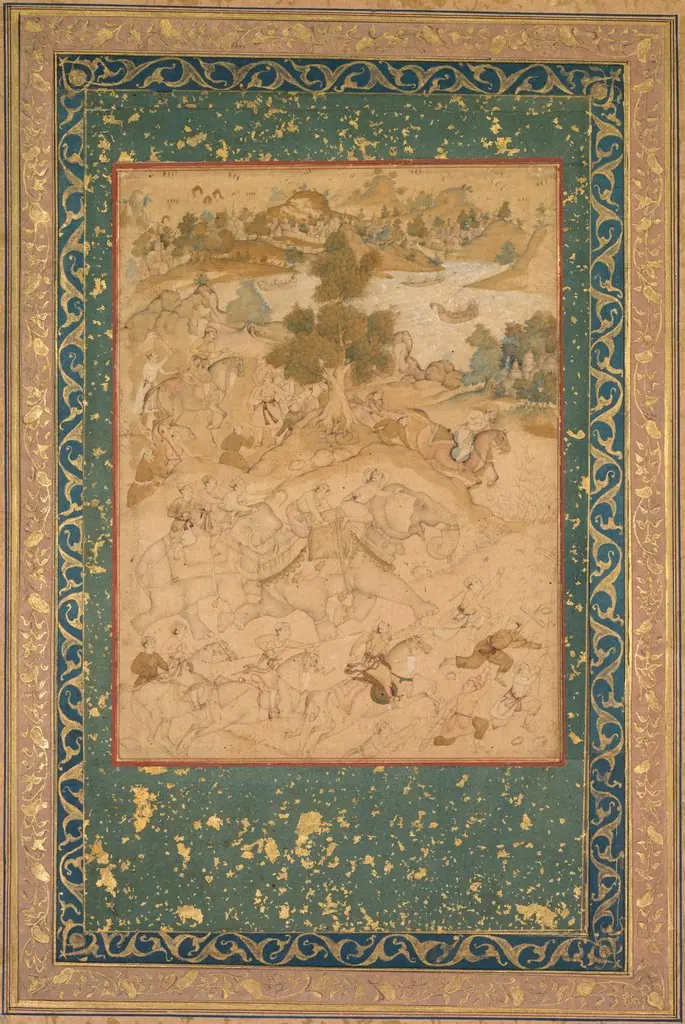 Akbar supervising the capture of wild elephants at Malwa in 1564, painting 90 from an Akbar-nama (Book of Akbar) of Abu’l Fazl (Indian 1551–1602)
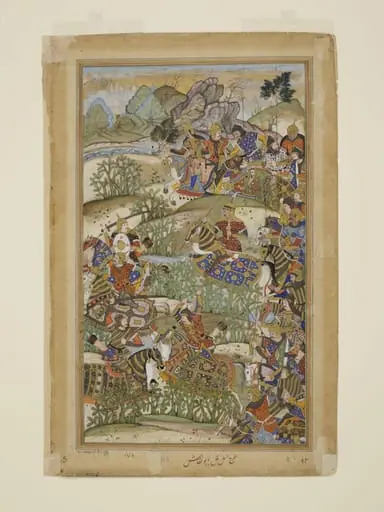 Battle of Sarnal in Gujarat
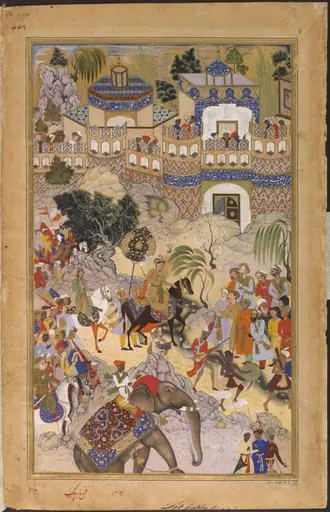 Akbar
Akbar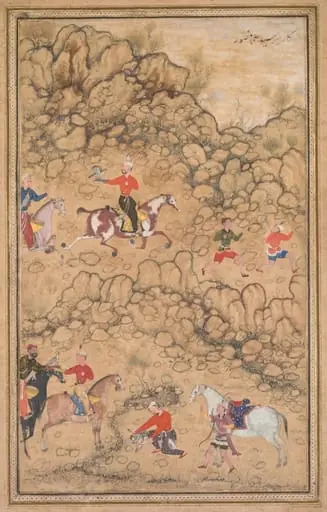 Hunting with falcons in a landscape (recto)
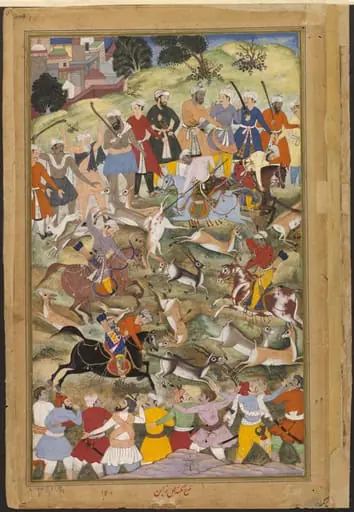 Akbar
Akbar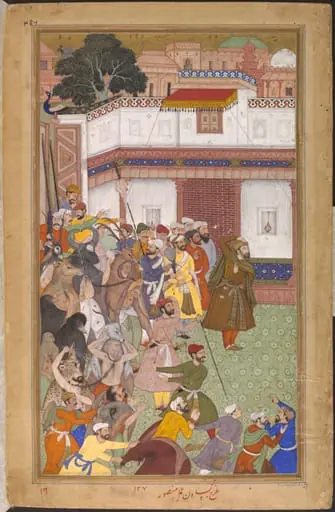 Husain Quli and Akbar
 Akbar
Akbar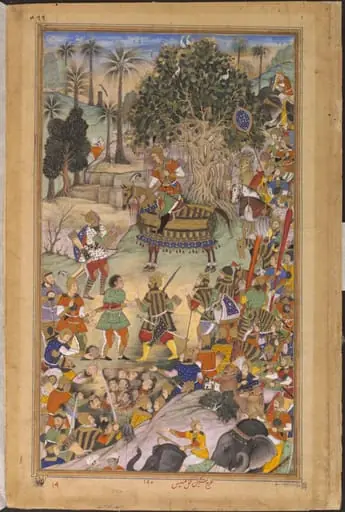 Muhammad Husain Mirza and Akbar
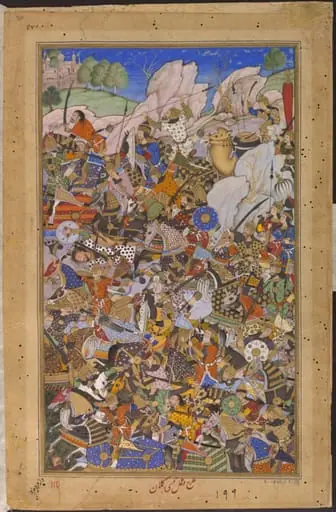 Untitled
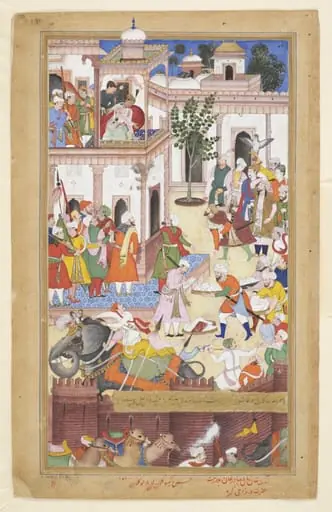 Ali Quli, Bahadur Khan and Akbar
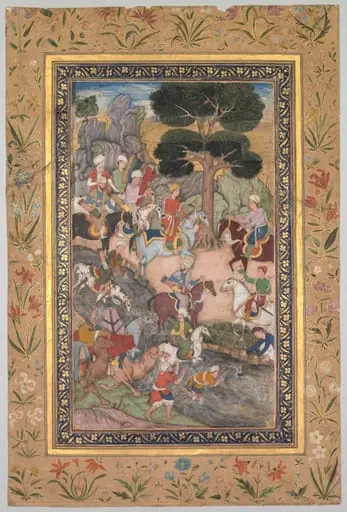 Babur meeting with Sultan Ali Mirza at the Kohik River, from a Babur-nama (Memoirs of Babur)
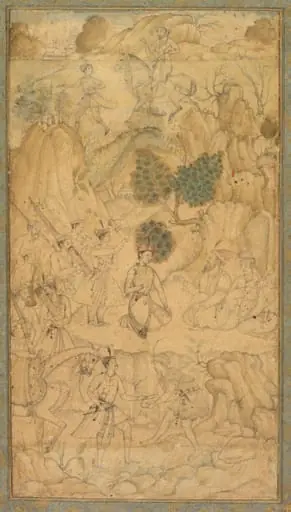 A prince visiting a holy man in a rocky landscape
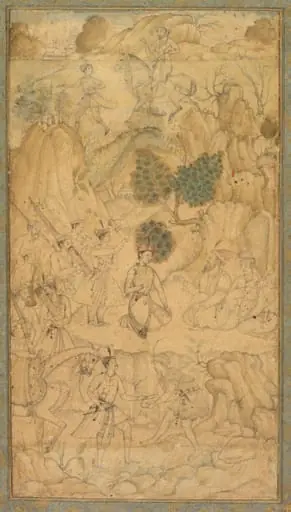 A Prince Visiting a Holy Man in a Rocky Landscape (recto)
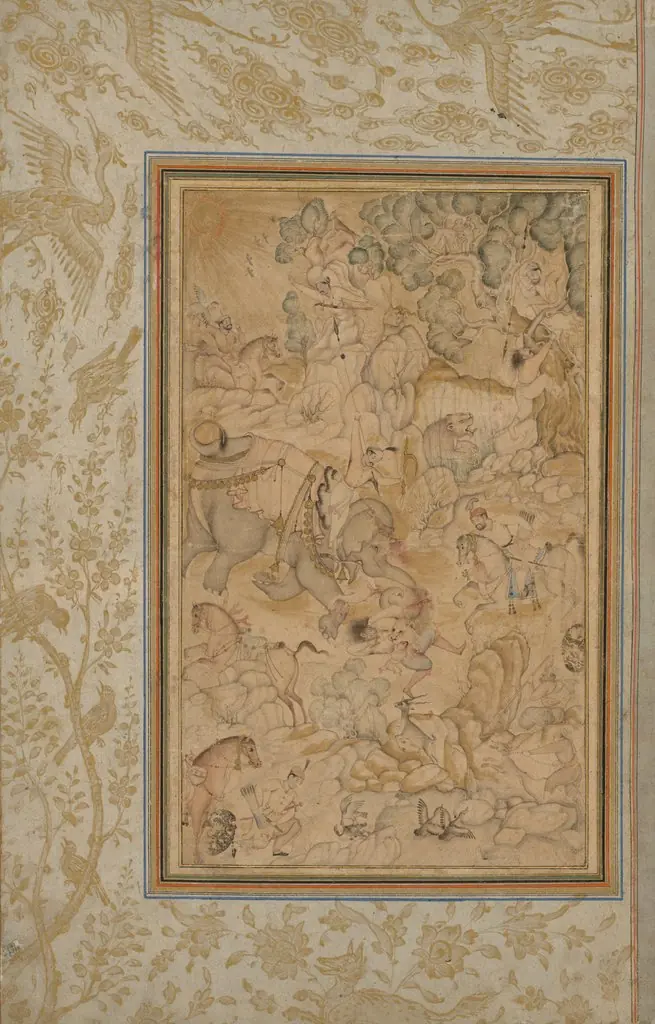 Princes hunting in a rocky landscape
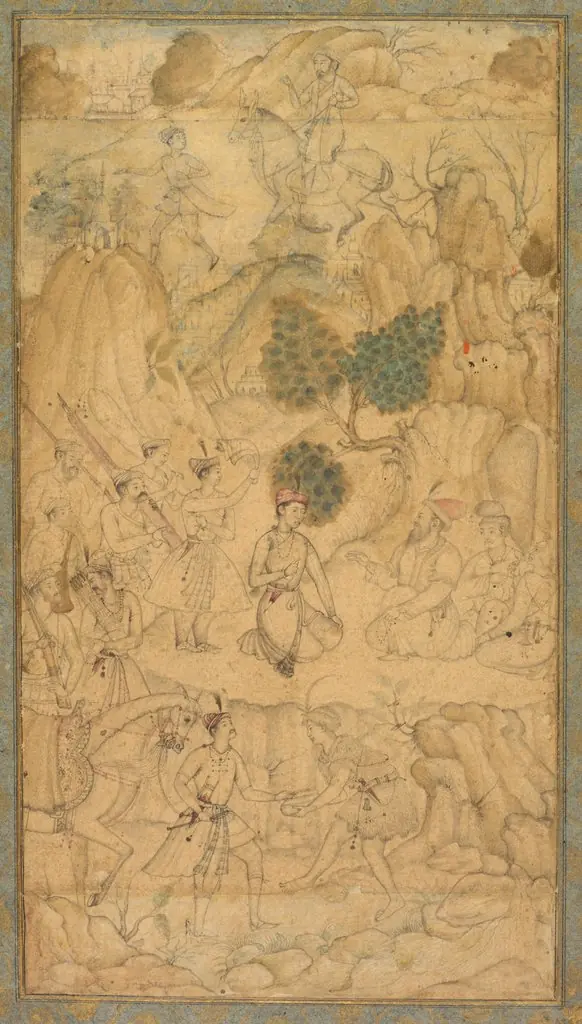 A Prince Visiting a Holy Man in a Rocky Landscape (recto)
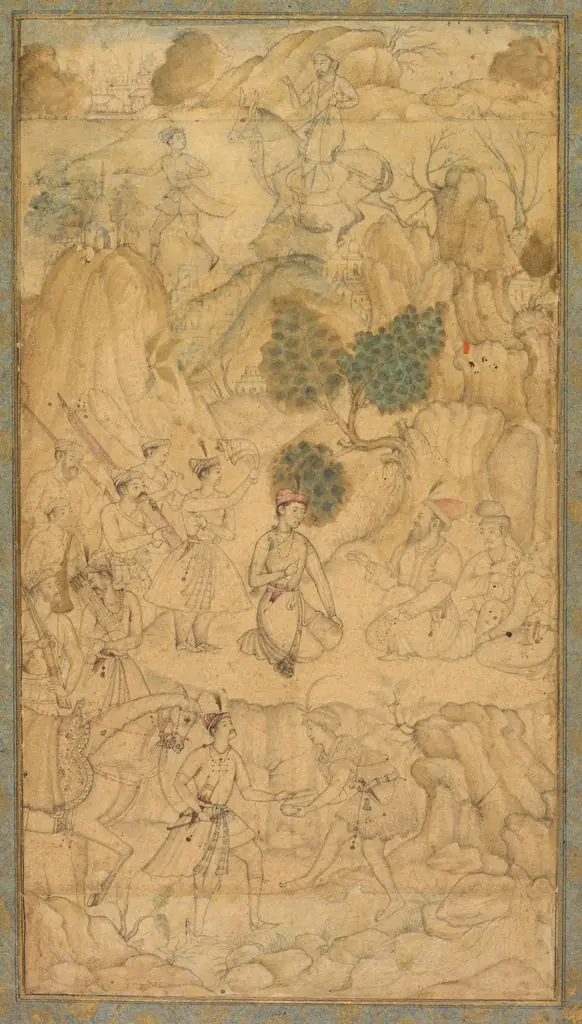 A prince visiting a holy man in a rocky landscape
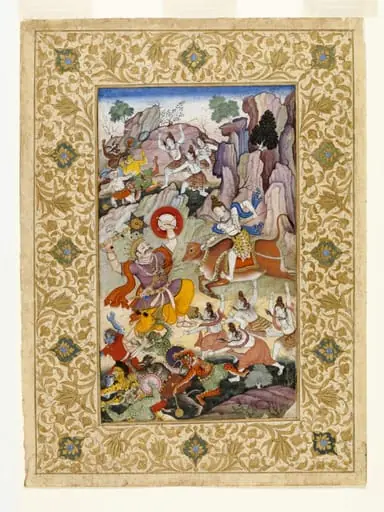 Shiva and Andhaka
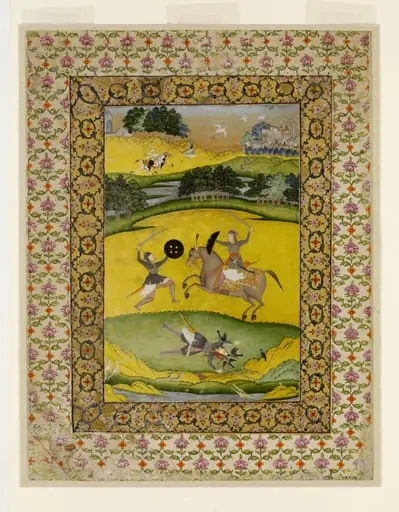 Nata Ragini
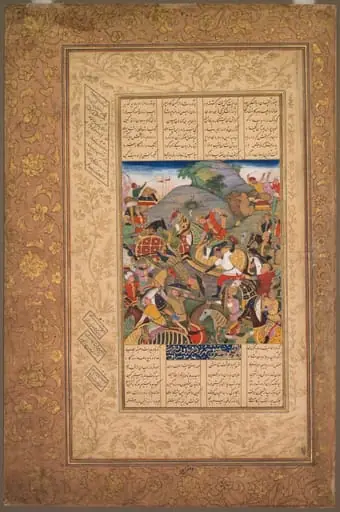 Battle between Manuchihr and Tur, from a Shah-nama (Book of Kings) of Firdausi (Persian, c. 934–1020)