Artwork
An archer riding a composite horse
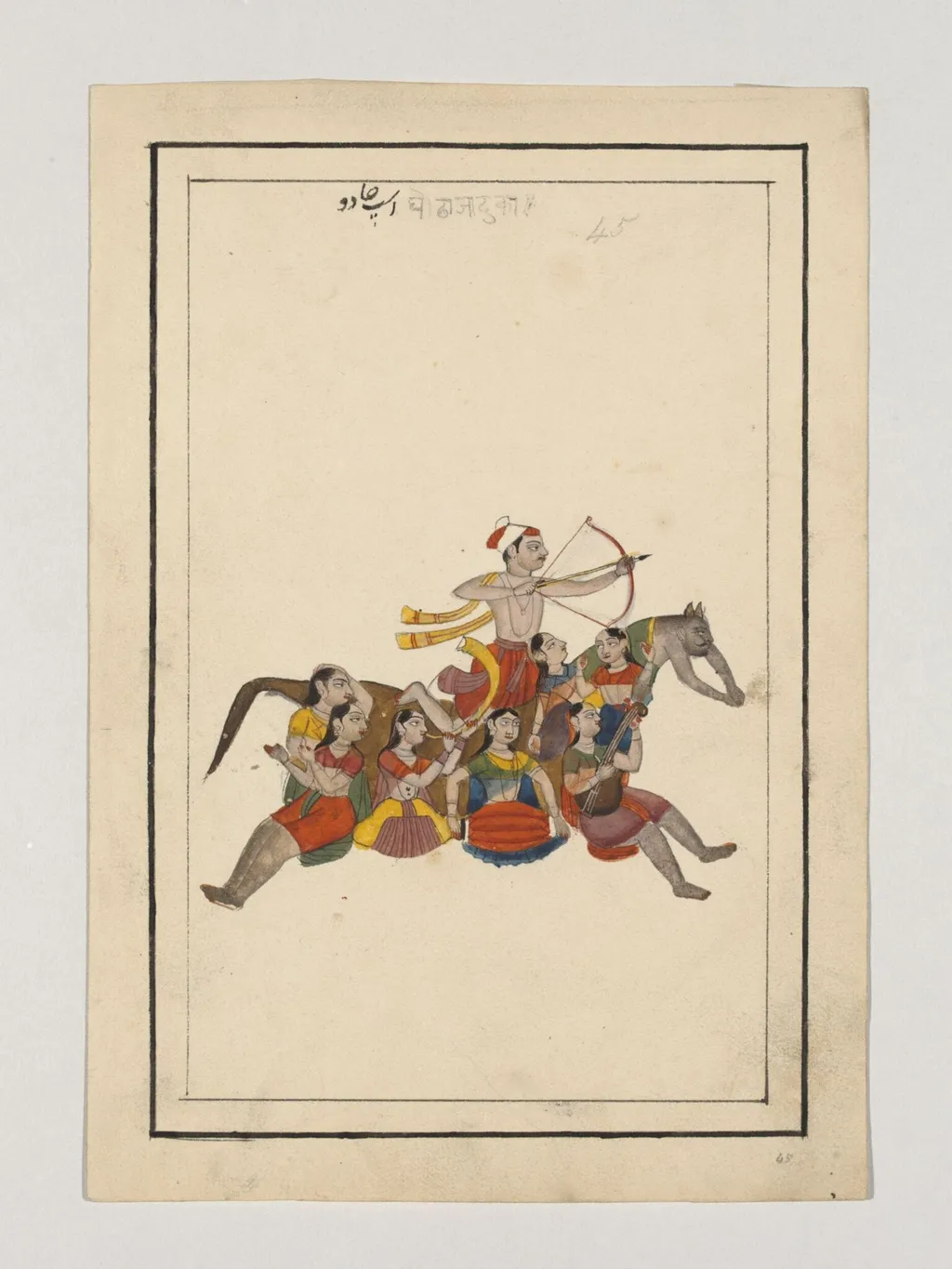
An archer riding a composite horse is a paint painting by the Patna School of Painting artist Unknown. It dates from 1820 and is held in the collection of the Victoria and Albert Museum.
About this work
This painting shows an archer on a horse made of seven women and a demon-like figure.
This painting shows an archer on a horse made of seven women and a demon-like figure. One woman plays a horn. Another drums. A third strums a guitar-like instrument. One claps while two others lounge.
Company paintings like this were popular in Delhi around 1820-1830. They were made by Indian artists for Europeans living in India. These artists mixed local styles with European tastes.
This work mixes myth, music, and odd shape. See it for yourself at the Victoria and Albert Museum.
Overview
This painting, created in Delhi around 1820–1830, belongs to the Company painting tradition—a genre produced by Indian artists for European patrons, particularly those employed by the East India Company. It merges indigenous visual conventions with elements of Western realism, reflecting a hybrid aesthetic shaped by cross-cultural exchange. The work’s unusual composition suggests it may have been made for curiosity or decorative purposes rather than religious or narrative function.
Subject & Meaning
An archer rides a fantastical steed composed of seven female figures and a demon-like form. Each woman engages in musical activity—playing horn, drum, guitar-like instrument, or finger cymbals—while two rest passively and one claps. The grouping evokes a surreal fusion of music, motion, and myth, possibly symbolizing harmony, chaos, or the exoticized feminine as a metaphor for the land. The archer, central yet detached, may represent control over this chaotic assembly, though no clear narrative is established.
Technique & Style
The artist employs fine brushwork and delicate coloration typical of Mughal and regional Indian miniatures, but adapts them with Western-style shading and spatial depth. Figures are rendered with naturalistic detail, yet the composite horse defies anatomical logic, creating a dreamlike tension. The composition is tightly organized, with figures arranged in a horizontal band, suggesting influence from European printmaking and album illustrations popular among colonial collectors.
History & Provenance
Produced during a period of heightened demand in Delhi for visual curiosities, this work likely originated in an artist’s workshop catering to British residents. Such paintings were often sold in local bazaars or commissioned as souvenirs. The piece entered the Victoria and Albert Museum’s collection through documented acquisitions of Company art in the 19th century, where it remains as evidence of colonial-era artistic collaboration and cultural translation.
Context
Around 1820–1830, Delhi’s artistic community adapted traditional styles to meet European tastes for exoticism and novelty. Company paintings responded to colonial curiosity about Indian life, often blending myth, folklore, and everyday scenes. This work reflects a broader trend where Indian artists negotiated identity and commerce, producing images that satisfied foreign patrons while retaining local aesthetic sensibilities—even when depicting the impossible.
Legacy
Though not widely replicated, this painting exemplifies the inventive spirit of Company art, where cultural boundaries blurred in pursuit of visual novelty. It stands as a record of how Indian artists responded to colonial patronage—not merely imitating Western forms but reimagining them through indigenous frameworks. Today, it contributes to scholarly understanding of cross-cultural exchange and the complex dynamics of artistic production under empire.
Artist & collection

 Domestic Scene
 Giacomo and Cardinal Marco, investing Andrea, Abbot of San Zeno, with his Benefice
 The Nymph of Fontainebleau
 Portrait of a Woman
 Madonna and Child with Saints in the Enclosed Garden
 Venus and Minerva
 Family Group of Four on Sofa
 Wall painting from Room H of the Villa of P. Fannius Synistor at Boscoreale
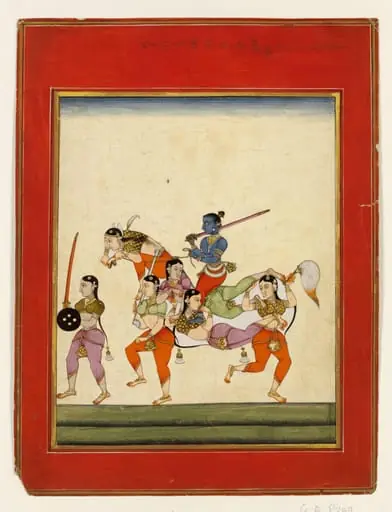 Vishnu
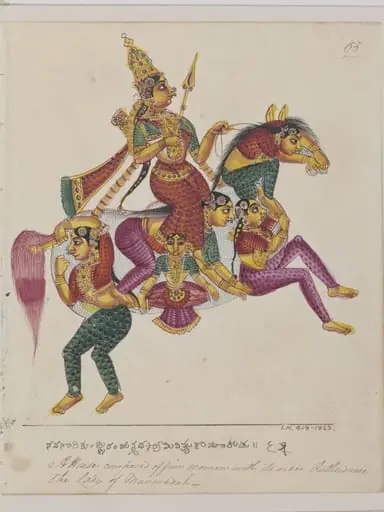 Rati
Rati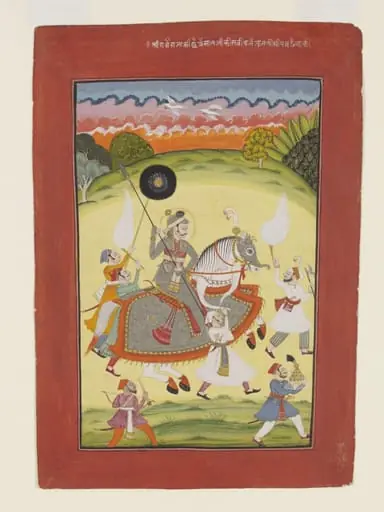 Rao Chhattar Sal
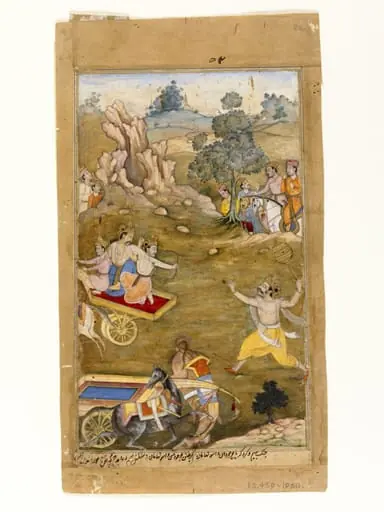 Bhima and Aswathama
 Untitled
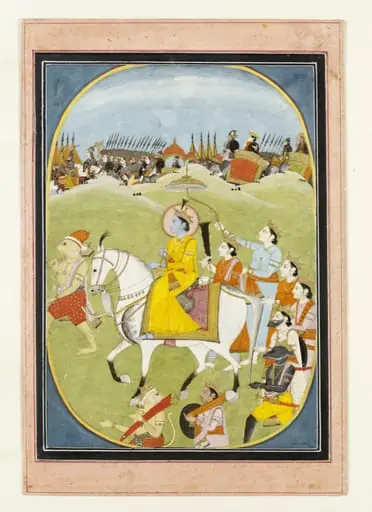 Rama
Rama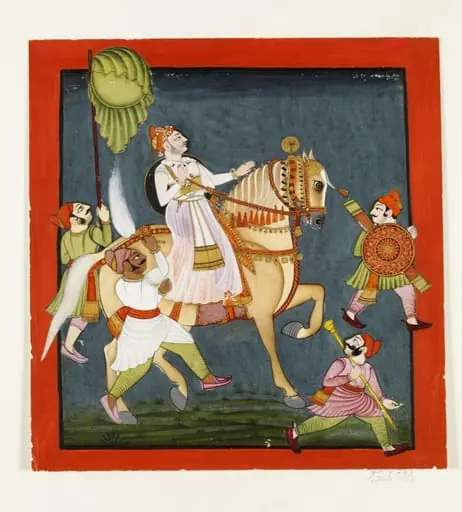 Raja Bishan Singh of Bundi
![Rama and Lakshmana Fighting Ravana, from a Dashavatara (Ten Incarnations [of Vishnu]) series, by Unknown](https://artifactworldgallery.com/img/unknown--rama-and-lakshmana-fighting-ravana-from-a-dashavatara-ten-in--5e1e27c9fffbe47d-w320.webp) Rama and Lakshmana Fighting Ravana, from a Dashavatara (Ten Incarnations [of Vishnu]) series
Rama and Lakshmana Fighting Ravana, from a Dashavatara (Ten Incarnations [of Vishnu]) series![Rama and Lakshmana Fighting Ravana, from a Dashavatara (Ten Incarnations [of Vishnu]) series, by Unknown](https://artifactworldgallery.com/img/unknown--rama-and-lakshmana-fighting-ravana-from-a-dashavatara-ten-in--44f1c99a2c65cc54-w320.webp) Rama and Lakshmana Fighting Ravana, from a Dashavatara (Ten Incarnations [of Vishnu]) series
Rama and Lakshmana Fighting Ravana, from a Dashavatara (Ten Incarnations [of Vishnu]) series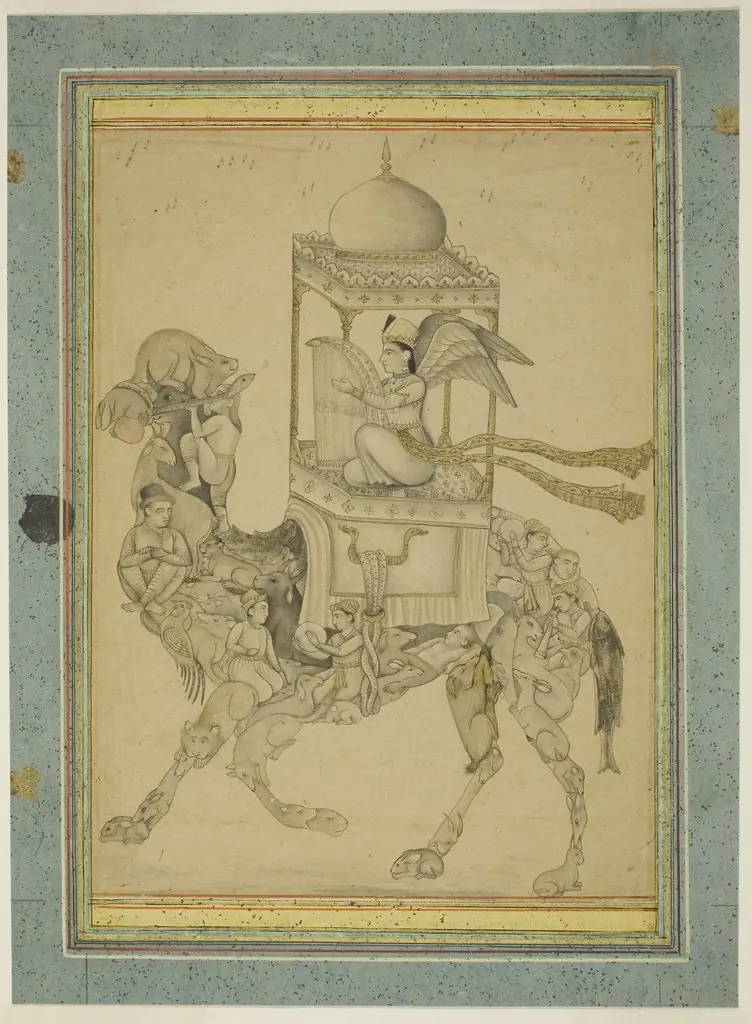 Angel (Peri) Riding a Composite Camel
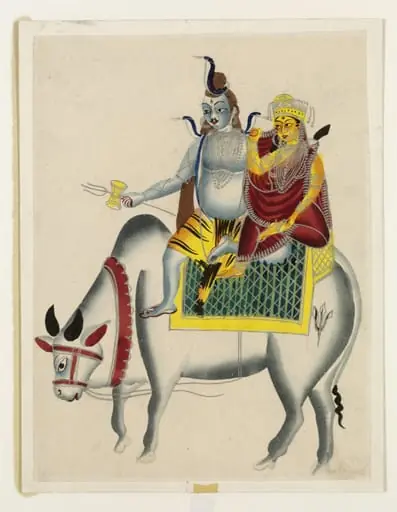 Shiva, Parvati and Nandi
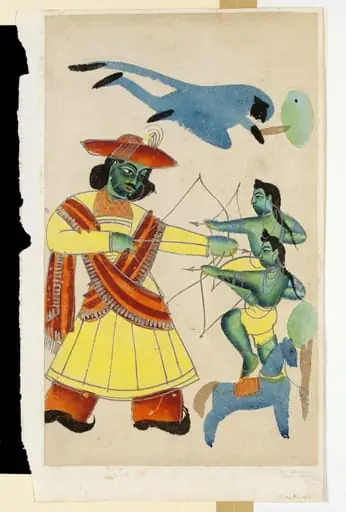 Rama, Lava, Kusha and Hanuman