Artwork
Bhima and Aswathama
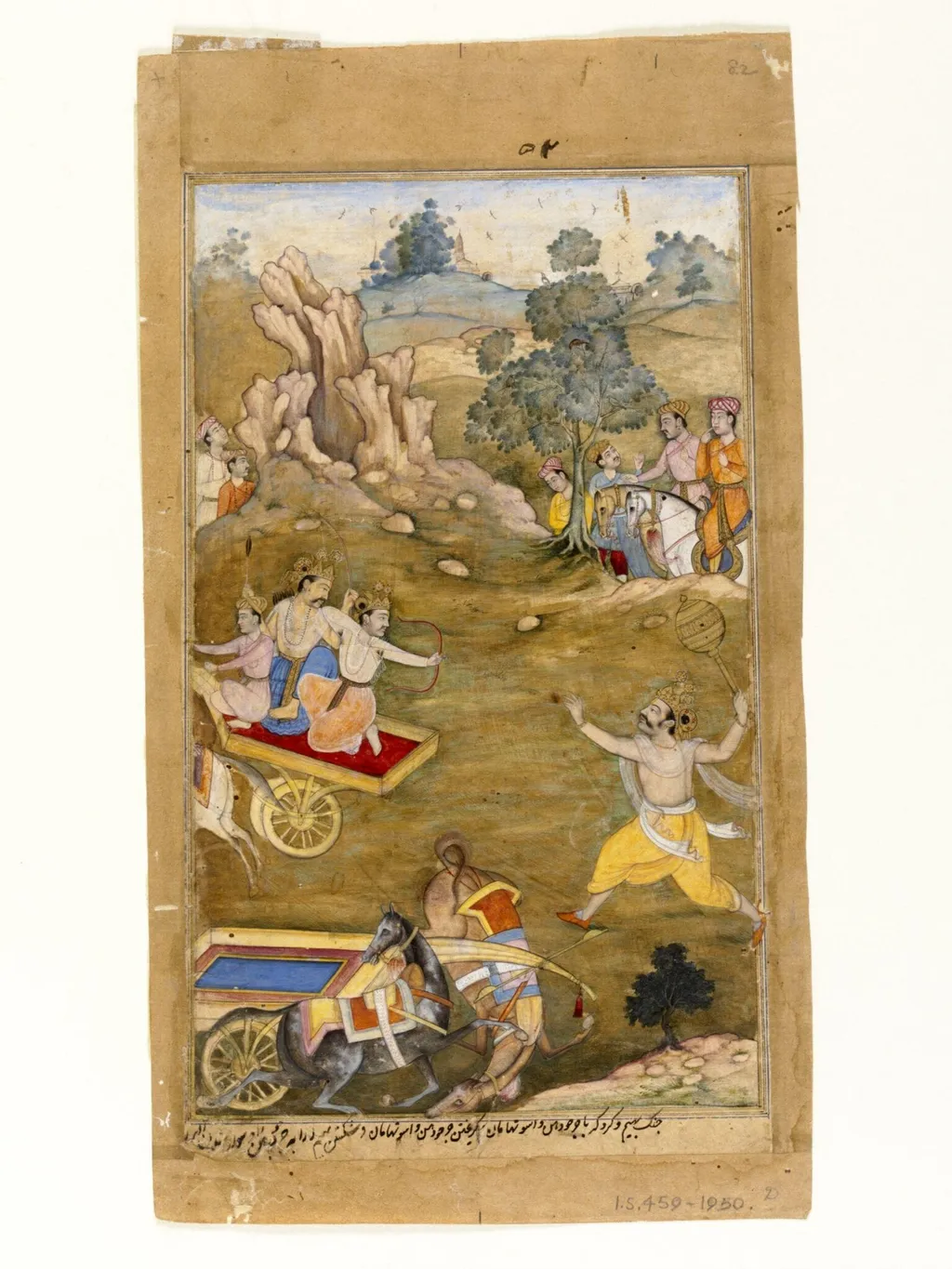
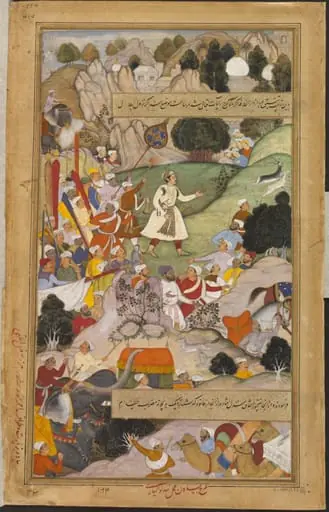
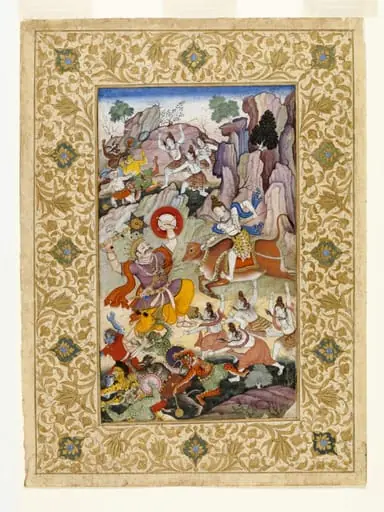
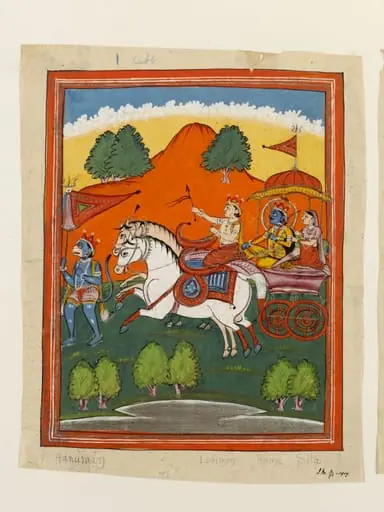
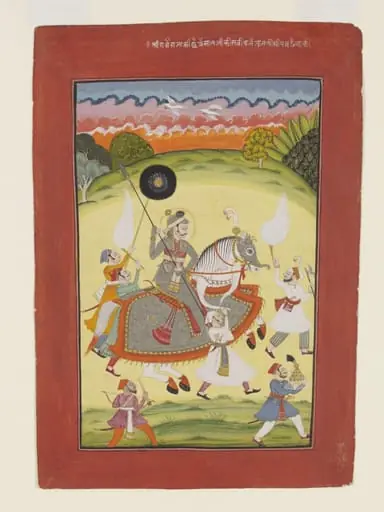
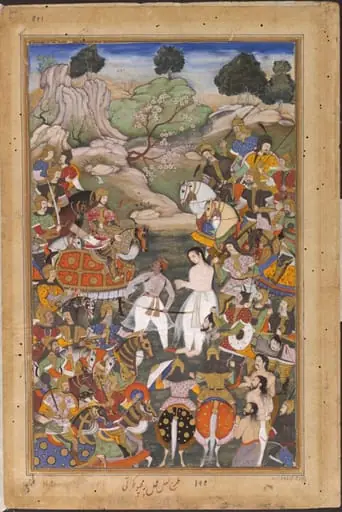
Bhima and Aswathama is a paint painting by the Mughal Painting artist Unknown. It dates from 1598 and is held in the collection of the Victoria and Albert Museum.
About this work
Overview
The work is an opaque watercolor illustration originating from a 1598 manuscript of the Razm‑nama, a Persian rendition of the Indian epic Mahabharata. It portrays a combat scene between the warrior Bhima, shown on foot, and the figure Aswatthama, who launches arrows from a chariot. The composition is populated with numerous figures and a varied landscape.
Subject & Meaning
The image captures a moment from the Mahabharata narrative in which Bhima confronts Aswatthama, a key episode illustrating heroic conflict. The presence of multiple onlookers, riders, and a distant setting suggests a broader battlefield context, emphasizing the drama and scale of the mythic encounter.
Technique & Style
The overall treatment balances stylized human forms against a softer, naturalistic background of trees, water and architecture.
Executed in opaque watercolor, the illustration combines vivid, saturated hues for the figures—blues, yellows, reds—with a more muted palette for the surrounding terrain. Clothing is rendered with flowing, elongated drapery, while facial features and hands receive detailed attention. The overall treatment balances stylized human forms against a softer, naturalistic background of trees, water and architecture.
History & Provenance
Created for a Persian translation of the Mahabharata, the piece reflects the cross‑cultural transmission of Indian epic material into Islamic literary traditions during the late sixteenth century. The manuscript, dated 1598, situates the work within the Safavid period, when Persian artists frequently illustrated foreign narratives.
Context
The illustration belongs to a broader tradition of manuscript painting that merged Persian artistic conventions with Indian subject matter. Its use of bright colors and intricate detailing aligns with contemporary courtly aesthetics, while the depiction of a chariot and battlefield echoes motifs found in both South Asian and Persian visual cultures.
Artist & collection

 Domestic Scene
 Giacomo and Cardinal Marco, investing Andrea, Abbot of San Zeno, with his Benefice
 The Nymph of Fontainebleau
 Portrait of a Woman
 Madonna and Child with Saints in the Enclosed Garden
 Venus and Minerva
 Family Group of Four on Sofa
 Wall painting from Room H of the Villa of P. Fannius Synistor at Boscoreale