Artwork
Architectural Conference
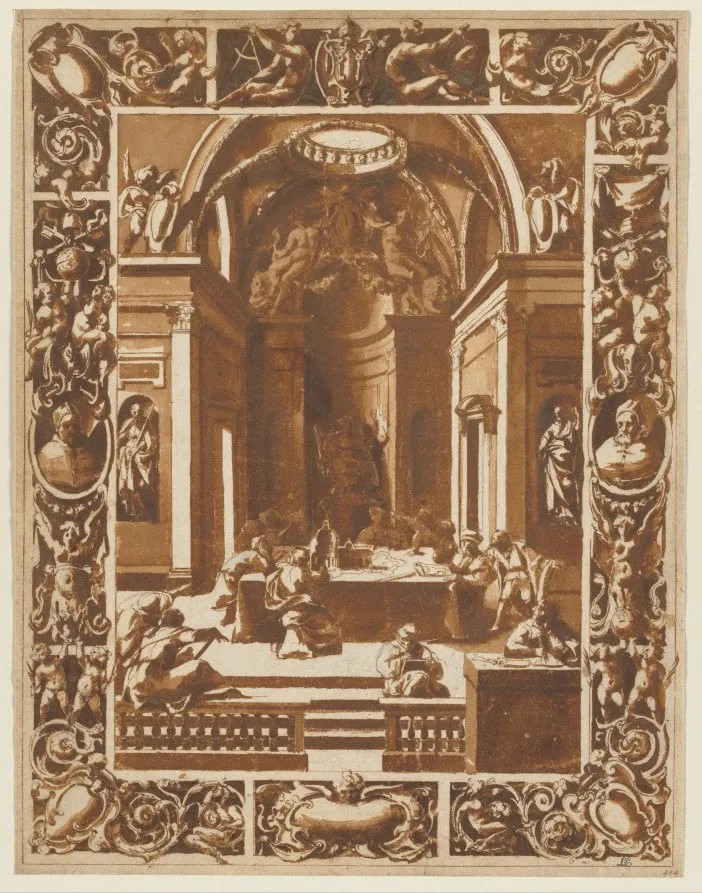
Architectural Conference is a drawing by the Baroque artist Unknown. It dates from 1622 and is held in the collection of the Cleveland Museum of Art. This architectural drawing depicts a lavish interior where a group of figures convenes around a long table laden with documents.
About this work
Overview
Above, a monumental arch opens to a celestial scene populated by floating figures, while the walls are densely adorned with sculptural ornamentation.
This architectural drawing depicts a lavish interior where a group of figures convenes around a long table laden with documents. Above, a monumental arch opens to a celestial scene populated by floating figures, while the walls are densely adorned with sculptural ornamentation. The composition merges earthly deliberation with divine symbolism, suggesting a convergence of human intellect and transcendent order.
Subject & Meaning
The scene likely represents an intellectual or institutional gathering, possibly a scholarly or civic assembly, elevated by the celestial imagery above. The figures below engage in practical matters, while the airborne forms suggest divine sanction or idealized knowledge. The juxtaposition implies that human endeavor is guided by higher principles, a common theme in Baroque allegory.
Technique & Style
The artist employs chiaroscuro to model forms with dramatic contrasts between light and shadow, enhancing spatial depth and focus. Sharp illumination highlights the table and central figures, while recessed areas recede into darkness. Intricate detailing in carvings and drapery reflects a meticulous draftsmanship typical of Baroque architectural renderings, prioritizing theatrical effect over realism.
History & Provenance
The drawing originates from a period when architectural design was closely tied to intellectual and religious institutions. Though its exact origin is undocumented, its style aligns with 17th-century European academies that used such imagery to legitimize scholarly authority through visual allegory. It may have served as a preparatory study or ceremonial illustration.
Context
In the Baroque era, architecture was not merely structural but symbolic, often designed to convey power, divine favor, or intellectual prestige. This drawing reflects a broader trend where interiors were rendered as stage-like spaces, merging real and imagined realms to elevate the status of their occupants and their pursuits.
Legacy
The work exemplifies how architectural drawings functioned as ideological tools, not just technical plans. Its fusion of realism and allegory influenced later academic traditions, where visual rhetoric shaped perceptions of knowledge and authority. Such imagery persisted in institutional spaces well into the 18th century.
Artist & collection

 Domestic Scene
 Giacomo and Cardinal Marco, investing Andrea, Abbot of San Zeno, with his Benefice
 The Nymph of Fontainebleau
 Portrait of a Woman
 Madonna and Child with Saints in the Enclosed Garden
 Venus and Minerva
 Family Group of Four on Sofa
 Wall painting from Room H of the Villa of P. Fannius Synistor at Boscoreale
 The Banquet of Antony and Cleopatra
 Illustration from Torquato Tasso's Gerusalemme Liberata
 Monument to William Chancellor Cowper
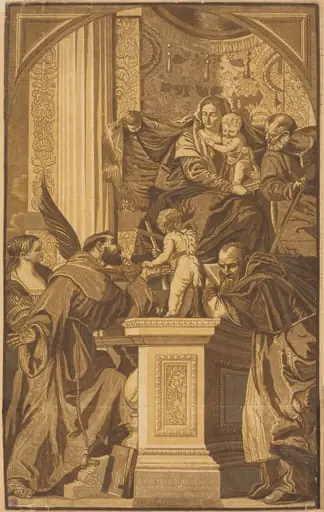 Holy Family and Four Saints
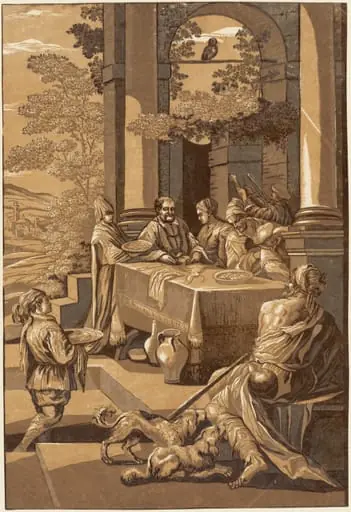 Dives and Lazarus (Right Panel)
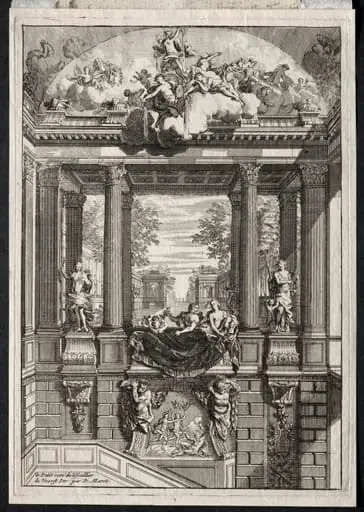 Staircase at the Palace of Voorst in Holland
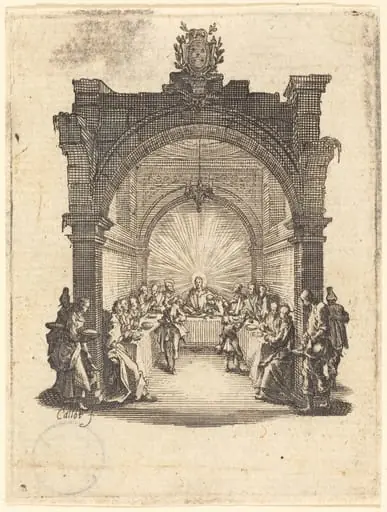 The Last Supper
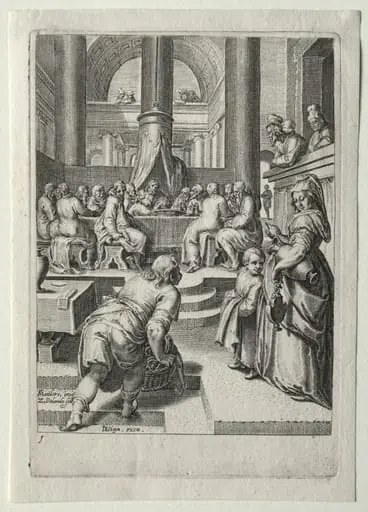 Life of Christ: The Last Supper
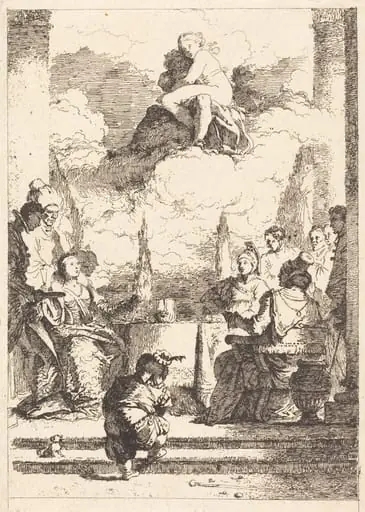 The Feast of Anthony and Cleopatra (Le festin d'Antoine et de Cleopatre)
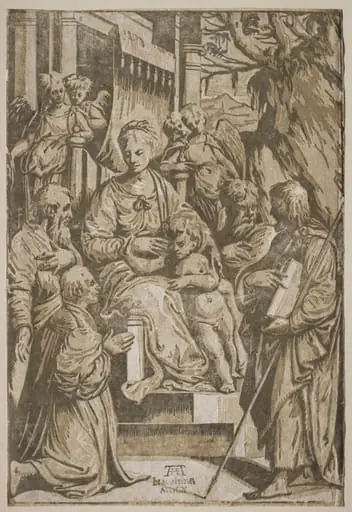 The Virgin and Child with Saints and a Donor (after a drawing by Girolamo da Treviso)
![Interior of the Chapel of Mary Magdelene (Interno della cappella della Maddalena) [plate H], by Jacopo Ligozzi](https://artifactworldgallery.com/img/jacopo-ligozzi--interior-of-the-chapel-of-mary-magdelene-interno-della-cappe--2c8c7a51e39993f2-w320.webp) Interior of the Chapel of Mary Magdelene (Interno della cappella della Maddalena) [plate H]
Interior of the Chapel of Mary Magdelene (Interno della cappella della Maddalena) [plate H]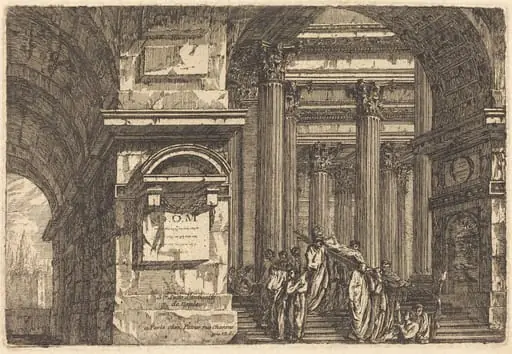 Funeral Scene in Imaginary Architecture