Artwork
Asita and Shataskandha
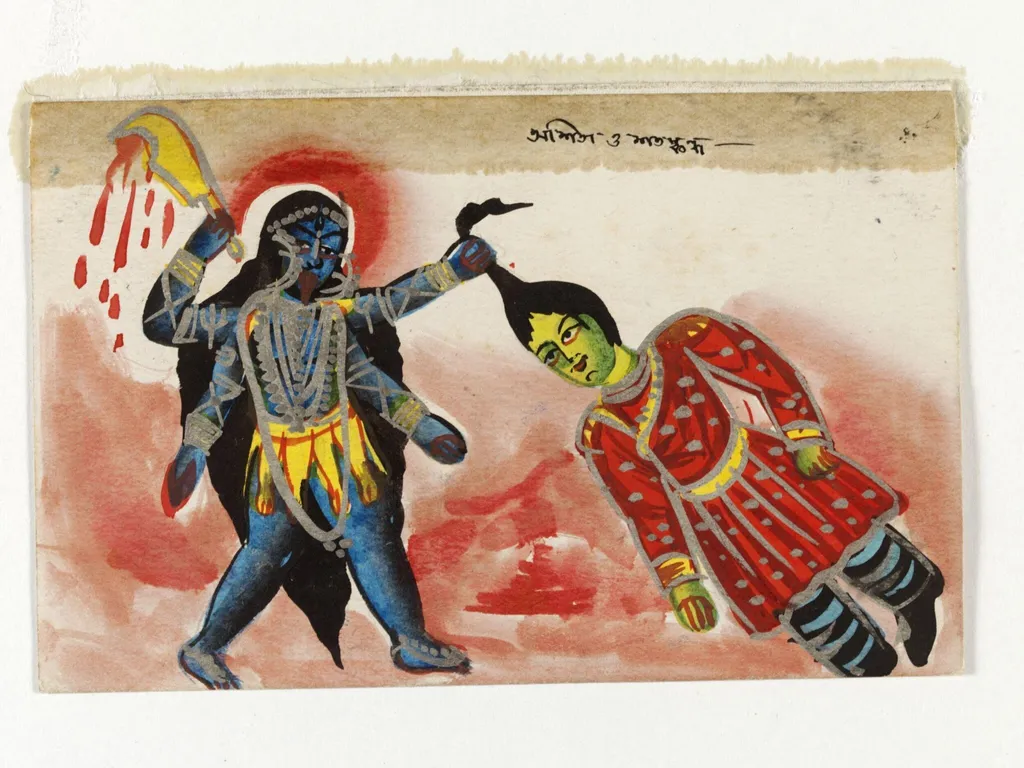
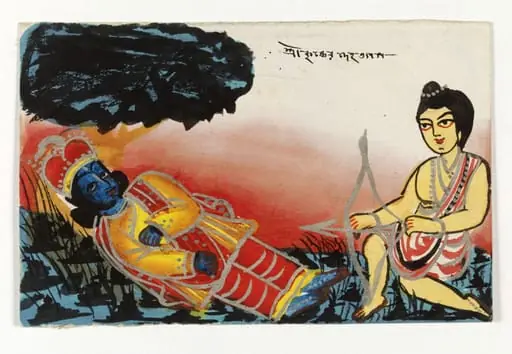
Asita and Shataskandha is a paint painting by the Impressionist artist Unknown. It dates from 1890 and is held in the collection of the Victoria and Albert Museum. Created in 1890, this watercolor and tin‑alloy painting on cardboard presents a dramatic encounter between two mythic figures.
About this work
Overview
Created in 1890, this watercolor and tin‑alloy painting on cardboard presents a dramatic encounter between two mythic figures. The composition is dominated by vivid, flat areas of color and a stark background, while the edges of the support show signs of wear, suggesting age and handling.
Subject & Meaning
The work portrays the sage Asita in the act of vanquishing the entity Shataskandha. Asita is shown upright, clothed in blue and yellow, wielding a curved implement reminiscent of a sword, whereas Shataskandha kneels, rendered in red and black, reaching outward in a gesture of surrender or supplication.
Technique & Style
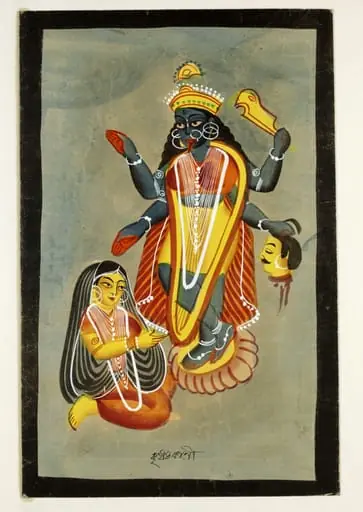
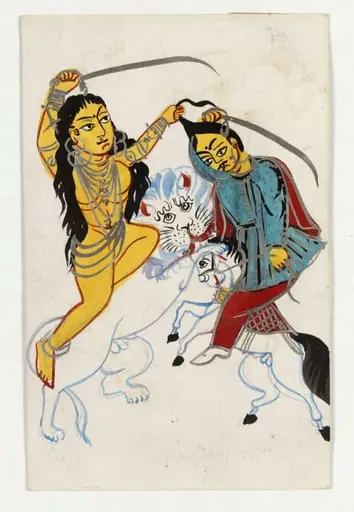
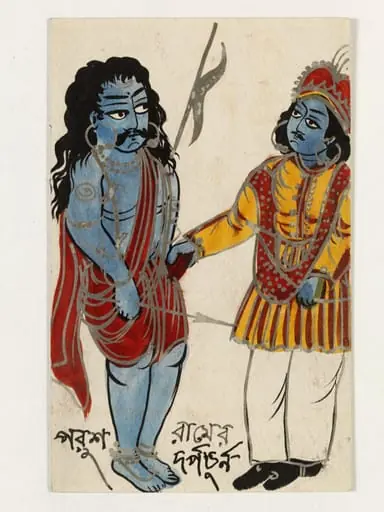
Executed with watercolor pigments combined with tin alloy, the artist applied the medium to cardboard, achieving bright, unmodulated color fields. The figures feature exaggerated proportions and simplified decorative motifs, reflecting a stylized aesthetic that emphasizes graphic clarity over naturalistic modeling.
Context
The painting aligns with the visual language of the Kalighat school, a late‑19th‑century Indian tradition known for its bold outlines, flat coloration, and caricature‑like treatment of subjects. Such works often served as popular prints, conveying narrative scenes with a direct, accessible visual approach.
Artist & collection

 Domestic Scene
 Giacomo and Cardinal Marco, investing Andrea, Abbot of San Zeno, with his Benefice
 The Nymph of Fontainebleau
 Portrait of a Woman
 Madonna and Child with Saints in the Enclosed Garden
 Venus and Minerva
 Family Group of Four on Sofa
 Wall painting from Room H of the Villa of P. Fannius Synistor at Boscoreale