Artwork
Kshemankari
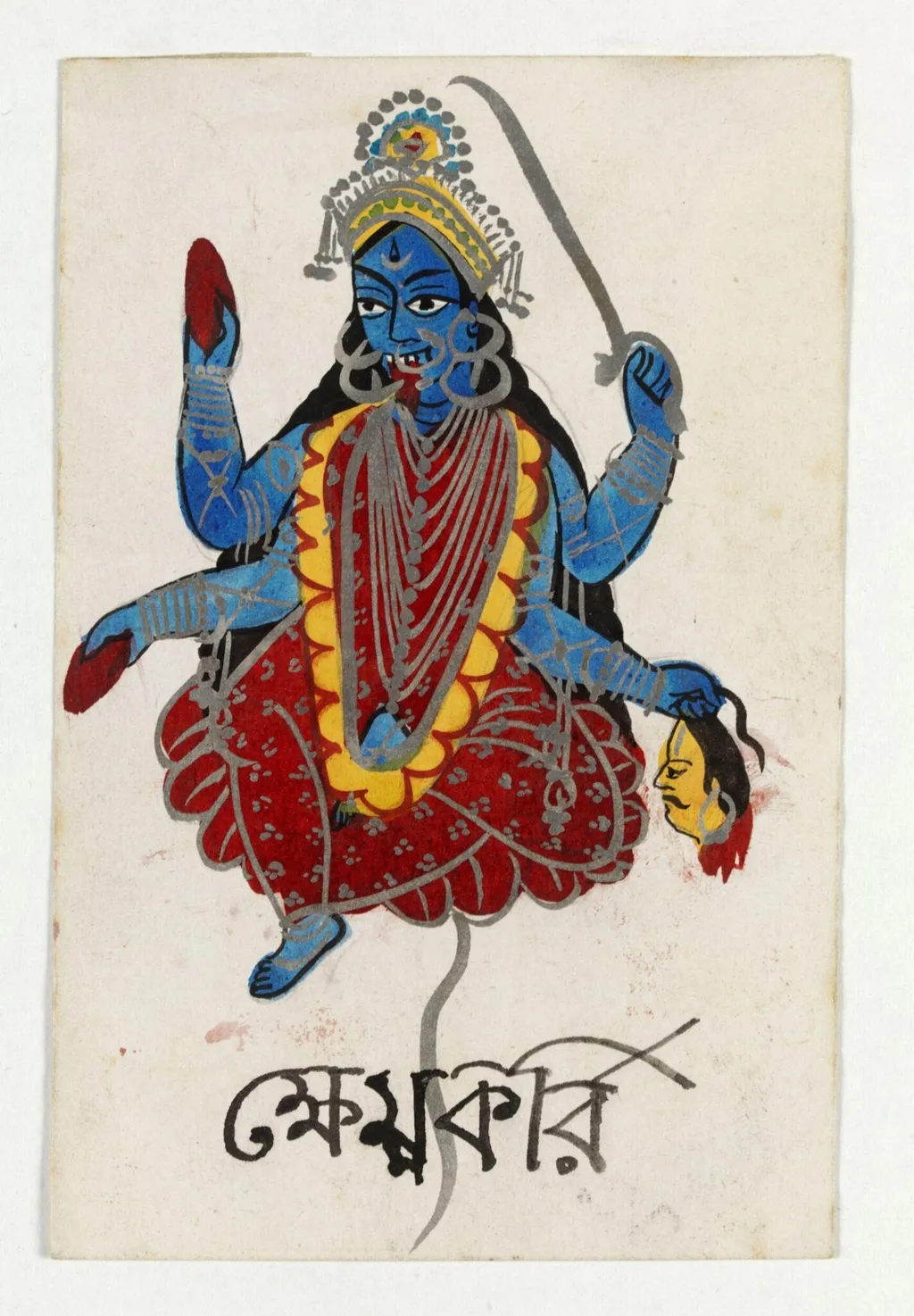
Kshemankari is a paint painting by the Impressionist artist Unknown. It dates from 1890 and is held in the collection of the Victoria and Albert Museum.
About this work
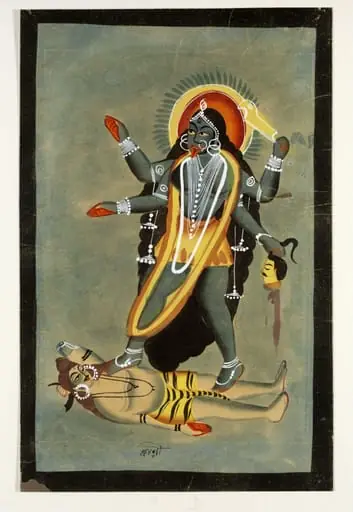
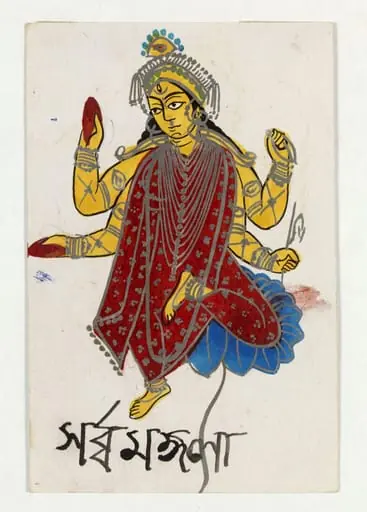
The bold outlines and flat colors suggest this is part of the *kalighat* style, a type of Indian folk art from the 19th century.
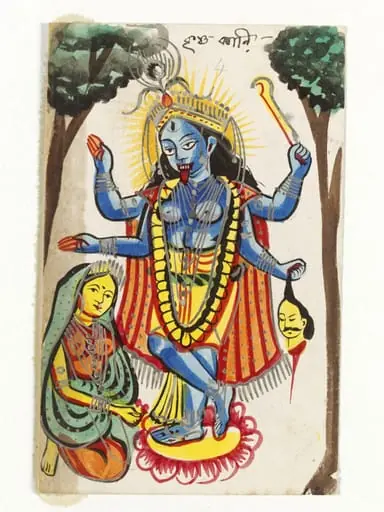
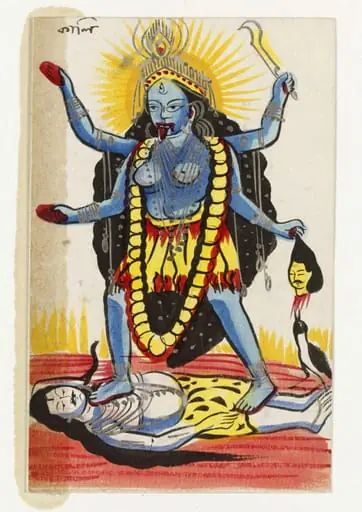
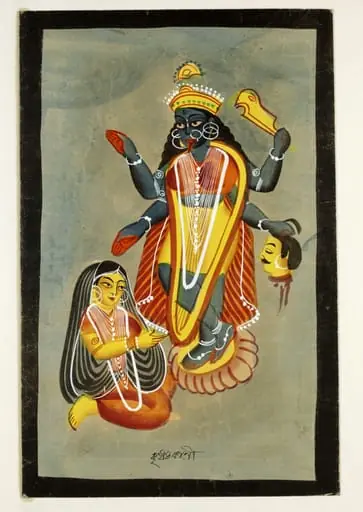
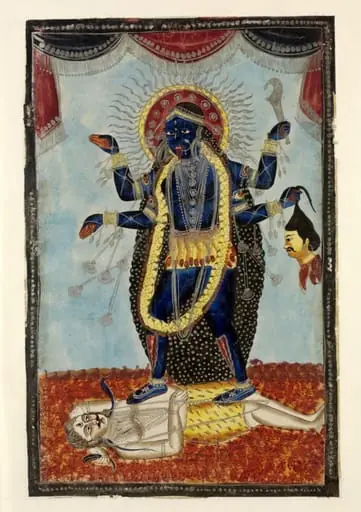
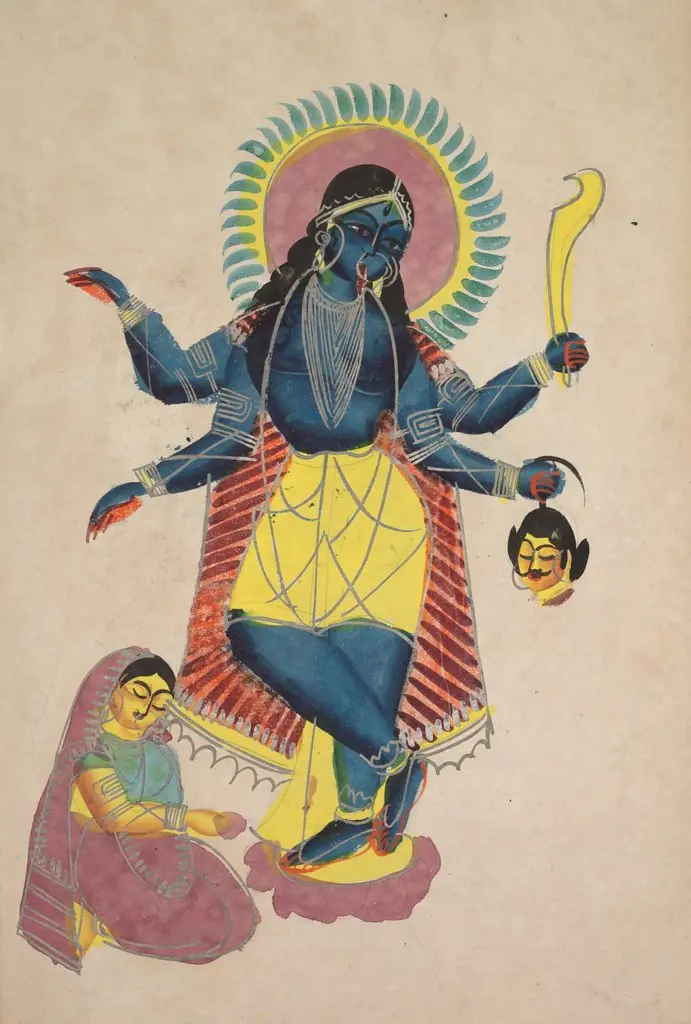
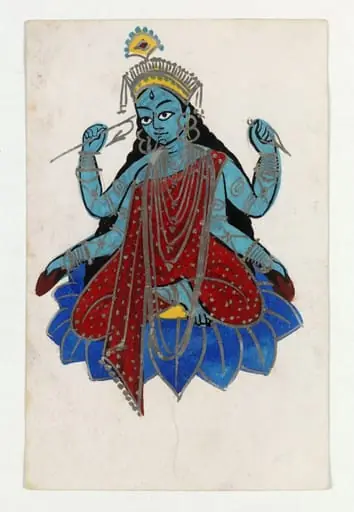
This painting shows a blue-skinned figure with four arms, wearing a red skirt and yellow jewelry. One arm holds a small face, another raises a red object, and the third arm points upward. The figure has a crown with dangling ornaments and a necklace of red and gold beads.
The bold outlines and flat colors suggest this is part of the *kalighat* style, a type of Indian folk art from the 19th century.
Look up kalighat to see more paintings in this vibrant, storytelling tradition.
Overview
The work portrays the Hindu deity Kshemankari, rendered in watercolor combined with tin alloy on a cardboard support. The figure sits upon a pink lotus, clutching a sword in one hand and a severed head in another, embodying a dramatic narrative scene.
Subject & Meaning
Kshemankari, depicted with blue skin and four arms, is shown wearing a red skirt and adorned with yellow jewelry. One arm bears a small face, another lifts a red object, while a third arm points upward, all elements reflecting traditional iconography of divine power and triumph over evil.
Technique & Style
The painting employs bold outlines and flat, vivid colors characteristic of the Kalighat school, a 19th‑century Indian folk tradition. The use of watercolor and tin alloy on cardboard creates a glossy surface, while the stylized forms emphasize narrative clarity over naturalistic detail.
History & Provenance
Created within the Kalighat movement, the piece reflects the commercial art practices of Kolkata’s Kalighat market, where itinerant artists produced affordable devotional images for a broad audience. Its material composition and stylistic markers date it to the late 1800s to early 1900s.
Context
Kalighat paintings emerged as a response to urbanization and the demand for accessible religious imagery among the burgeoning middle class. The depiction of Kshemankari aligns with the tradition’s focus on mythological subjects, rendered in a manner that blends popular devotion with folk aesthetic conventions.
Artist & collection

 Domestic Scene
 Giacomo and Cardinal Marco, investing Andrea, Abbot of San Zeno, with his Benefice
 The Nymph of Fontainebleau
 Portrait of a Woman
 Madonna and Child with Saints in the Enclosed Garden
 Venus and Minerva
 Family Group of Four on Sofa
 Wall painting from Room H of the Villa of P. Fannius Synistor at Boscoreale