Artwork
The Virgin of the Immaculate Conception
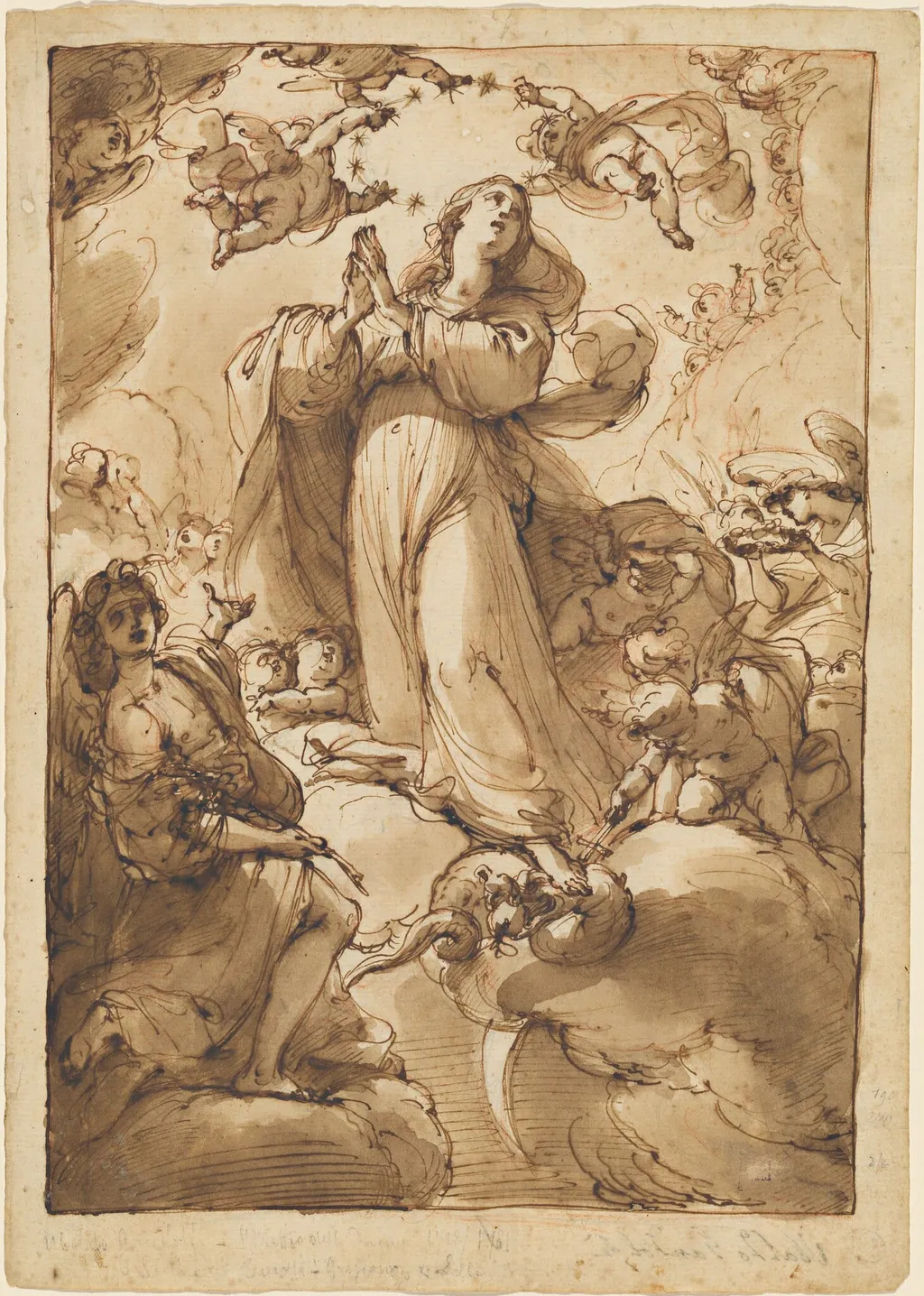
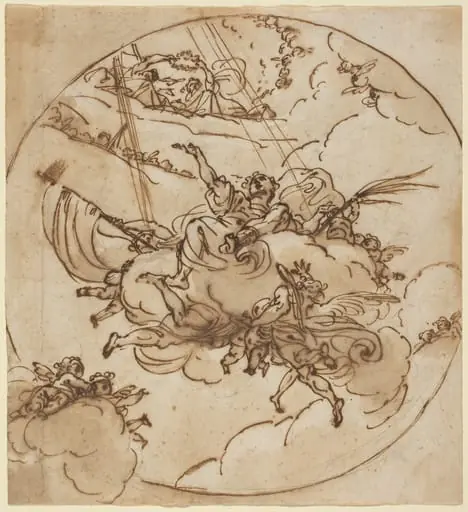
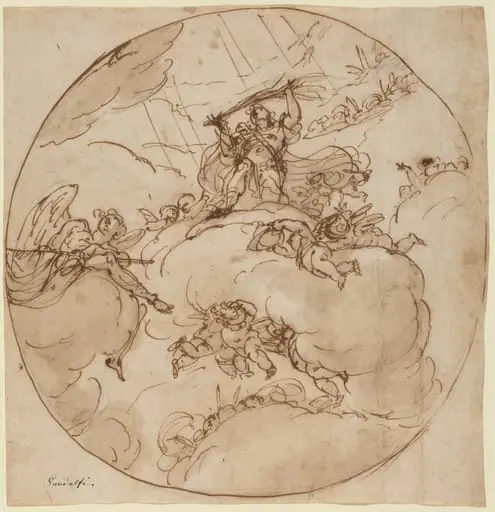
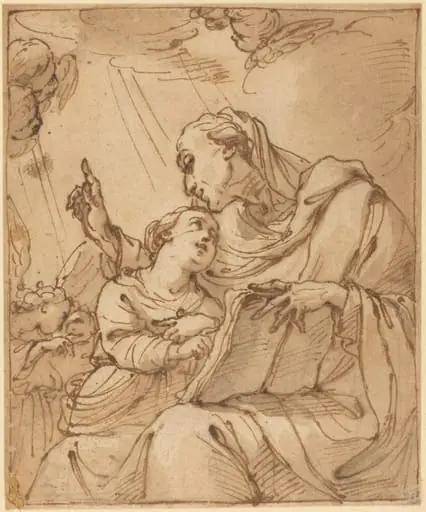
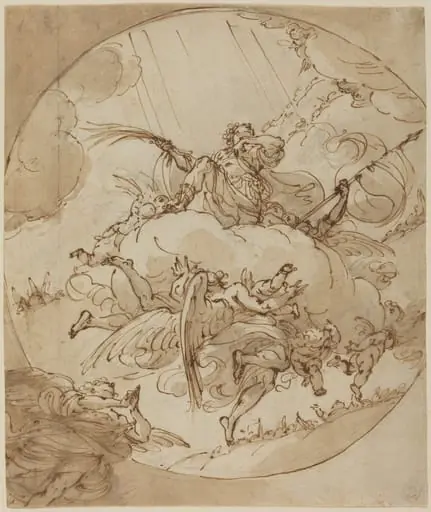
The Virgin of the Immaculate Conception is an ink drawing by the Romanticist artist Ubaldo Gandolfi. It dates from 1773 and is held in the collection of the National Gallery of Art.
About this work
Overview
It exemplifies the artist’s mastery of draftsmanship and his focus on religious themes within the late-Baroque tradition.
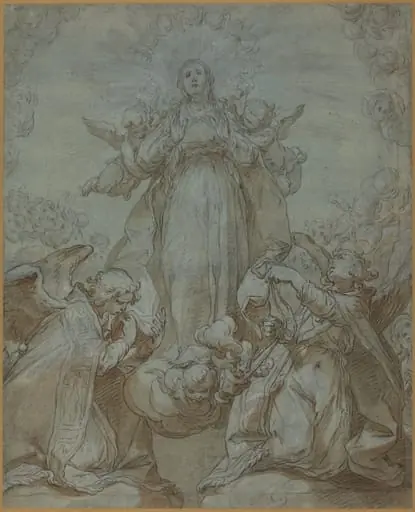
Created in 1773, this drawing by Ubaldo Gandolfi depicts the Virgin Mary as the Immaculate Conception, rendered in pen and brown ink with wash over red chalk and graphite on cream laid paper. It exemplifies the artist’s mastery of draftsmanship and his focus on religious themes within the late-Baroque tradition. The work was produced in Bologna, where Gandolfi and his brother Gaetano were leading figures in the regional art scene.
Subject & Meaning
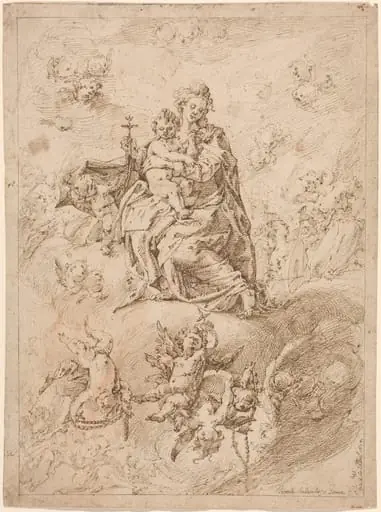
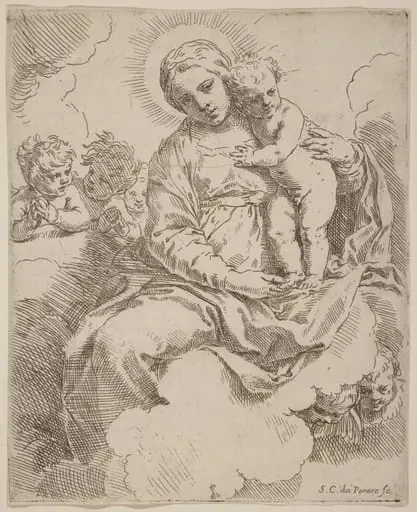
The Virgin Mary is portrayed in a moment of quiet devotion, her hands clasped in prayer, elevated among swirling clouds and fluttering cherubs. This composition reflects the theological concept of her purity and divine selection, free from original sin. The surrounding angels reinforce her celestial status, while the absence of earthly elements emphasizes her transcendence and spiritual isolation.
Technique & Style
Gandolfi employed layered drawing techniques: graphite for initial contours, red chalk for warm tonal foundations, and pen with brown wash to model form and depth. The subtle gradations of ink create volume in the drapery and figures, while the cream paper preserves luminosity in the sky. His handling of light and shadow is precise yet fluid, characteristic of Bolognese academic training and late-Baroque sensibilities.
History & Provenance
The drawing was made during a period when Gandolfi received numerous ecclesiastical commissions across northern Italy. Though its early ownership is undocumented, its technical refinement suggests it was likely a preparatory study for a larger altarpiece or fresco. It remained within Italian collections until entering a public collection in the 20th century.
Context
In late 18th-century Bologna, religious imagery remained central to artistic production, even as Enlightenment ideas gained ground. Gandolfi’s work bridged the ornate traditions of the Baroque and emerging Neoclassical clarity. His drawings, often made for patrons or workshop use, demonstrate how religious subjects were refined through careful study before being translated into paint or sculpture.
Legacy
Gandolfi’s drawings, including this one, are valued for their technical discipline and emotional restraint. They reflect the enduring role of draftsmanship in Bolognese art education and the continuity of devotional imagery through the transition from Baroque to Neoclassical aesthetics. His work influenced later generations of academic artists in northern Italy.
Artist & collection
Artist
Ubaldo Gandolfi (1728–1781) was an Italian painter, draughtsman and sculptor of the late-Baroque period, mainly active in and near Bologna.