Artwork
Astronomer
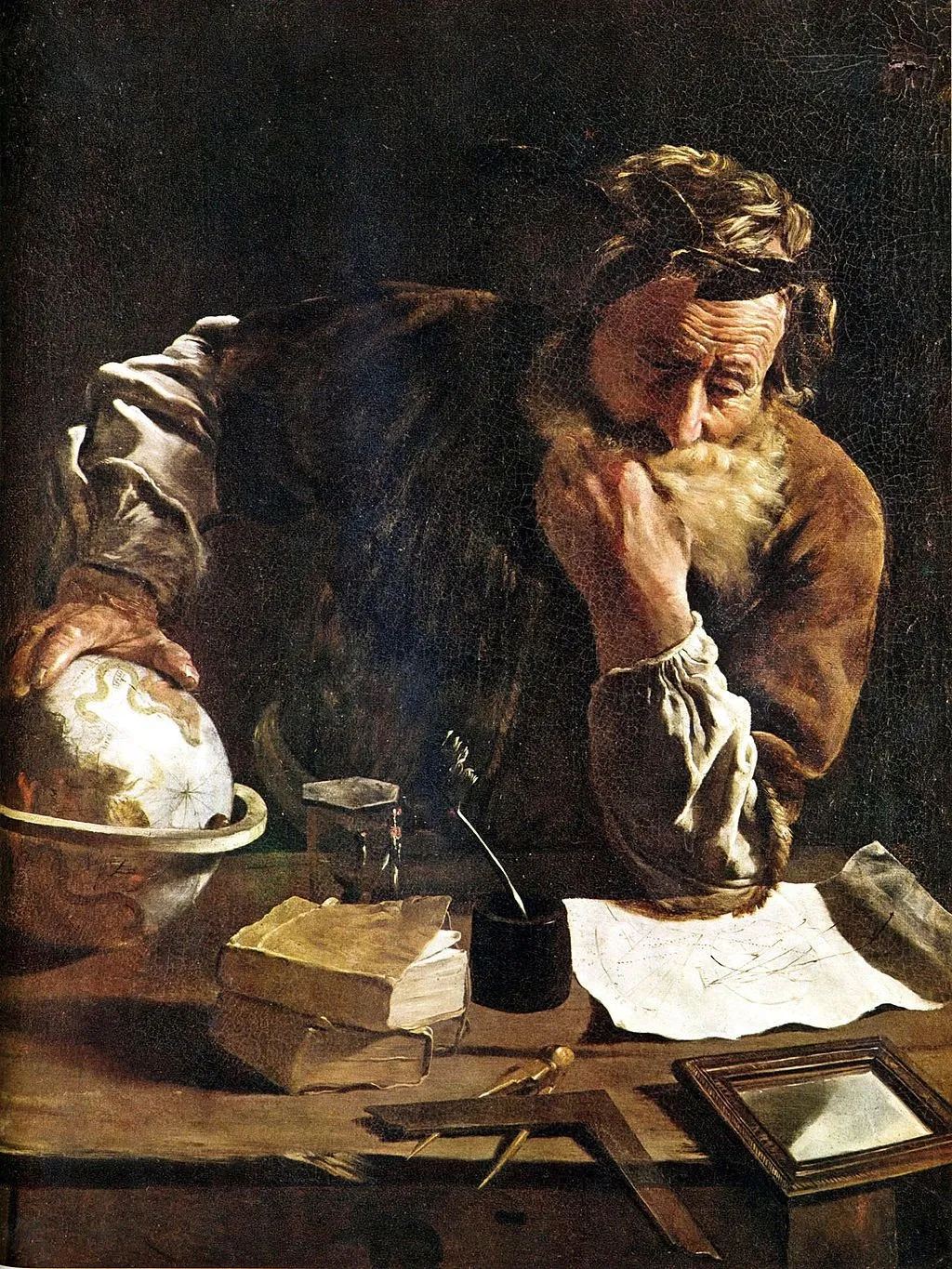
Astronomer is an unspecified painting by the Early Baroque Italian artist Unknown. It dates from 1650 and is held in the collection of the Gemäldegalerie Alte Meister.
About this work
Overview
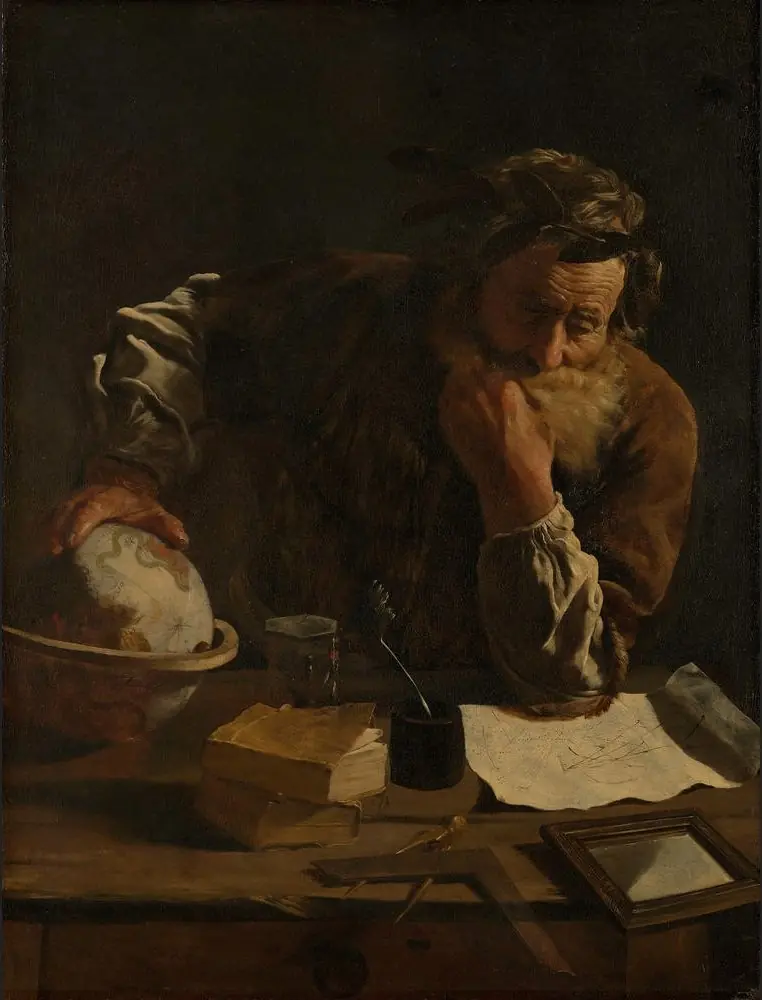
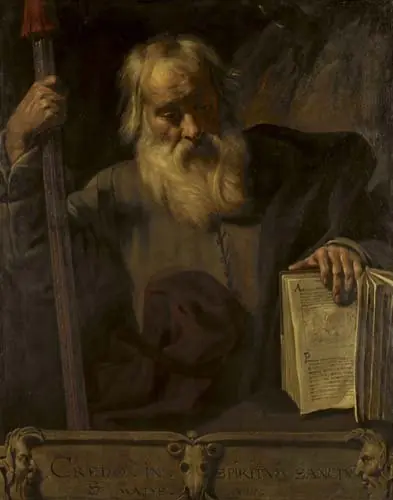
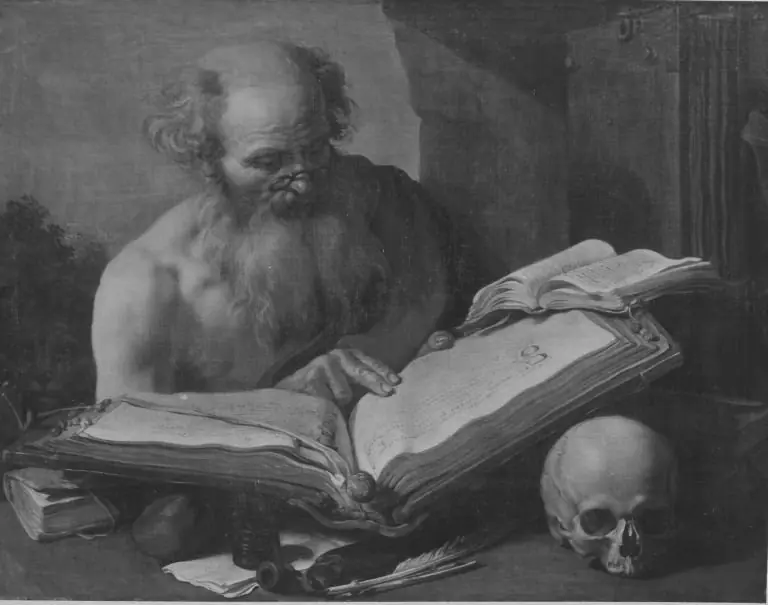
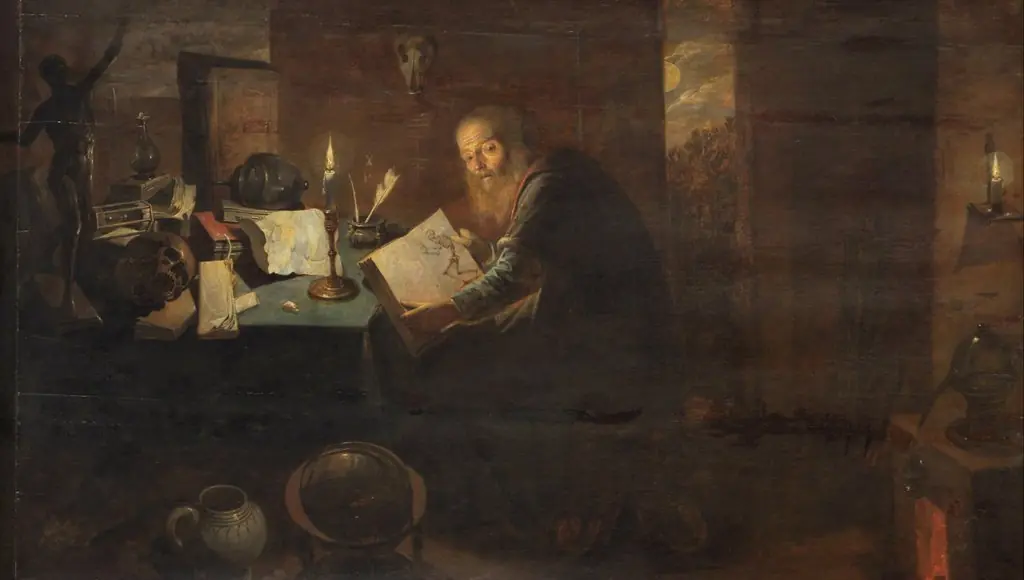
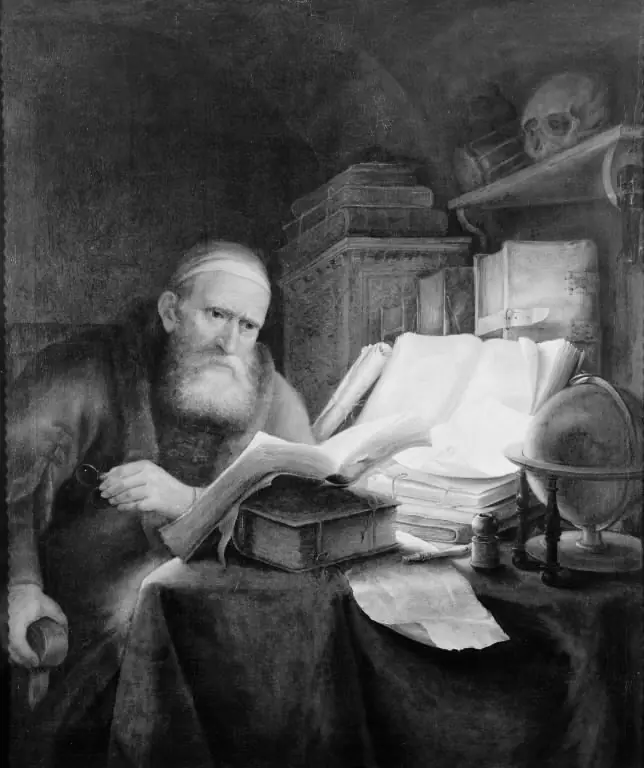
Dressed in a brown jacket over a white shirt and bearing a long white beard, he rests his chin on one hand while the other touches a large globe.
This painting depicts a solitary astronomer seated at a cluttered desk, engaged in quiet reflection. Dressed in a brown jacket over a white shirt and bearing a long white beard, he rests his chin on one hand while the other touches a large globe. The scene is intimate and still, emphasizing concentration over action. Objects scattered across the desk suggest scholarly activity, reinforcing the figure’s identity as a student of the heavens.
Subject & Meaning
The astronomer represents the pursuit of knowledge through observation and reason. His downward gaze and contemplative posture suggest deep engagement with celestial phenomena, possibly interpreting data from the books and instruments before him. The globe and small spherical objects imply a connection between earthly measurement and cosmic order, reflecting the Renaissance ideal of the scholar as a seeker of universal truths.
Technique & Style
The painting employs subtle contrasts of light and shadow to model the figure and objects, creating a sense of volume and depth. The textures of fabric, paper, and wood are rendered with precision, enhancing the realism of the scene. The composition is tightly focused, directing attention to the astronomer’s face and hands, while the background remains softly muted to preserve the mood of introspection.
History & Provenance
The painting’s origins are tied to 17th-century Dutch artistic traditions, where scholars and scientists were frequently portrayed in domestic settings. Though its exact provenance is not fully documented, its style aligns with works from the period that celebrated intellectual labor. It likely belonged to a private collector interested in the cultural value of science during the Dutch Golden Age.
Context
In the 17th century, astronomy was undergoing rapid transformation through new instruments and empirical methods. Paintings like this reflected societal admiration for thinkers who bridged classical learning and modern discovery. The inclusion of globes, books, and measuring tools signaled a broader cultural shift toward valuing observation and rational inquiry over dogma.
Legacy
This work contributes to a genre that elevated scientific study as a dignified, contemplative pursuit. It influenced later depictions of scholars in art, reinforcing the image of the scientist as a thoughtful, solitary figure. Its quiet realism continues to resonate as a representation of intellectual humility and the enduring human desire to understand the cosmos.
Artist & collection

 Domestic Scene
 Giacomo and Cardinal Marco, investing Andrea, Abbot of San Zeno, with his Benefice
 The Nymph of Fontainebleau
 Portrait of a Woman
 Madonna and Child with Saints in the Enclosed Garden
 Venus and Minerva
 Family Group of Four on Sofa
 Wall painting from Room H of the Villa of P. Fannius Synistor at Boscoreale