Artwork
Blazonul funerar a contesei Kata Teleki
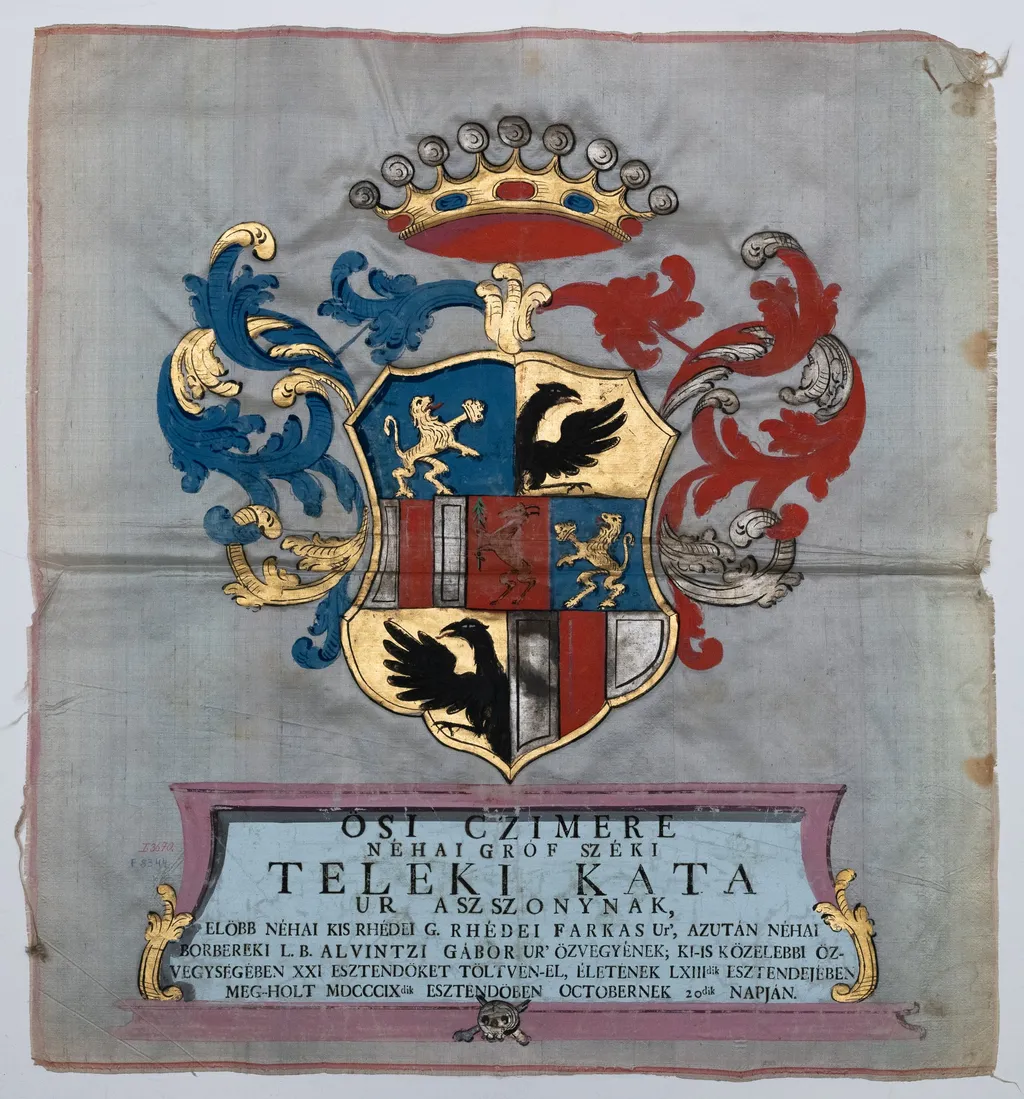
Blazonul funerar a contesei Kata Teleki is an unspecified painting by the Romanticist artist Unknown. It dates from 1809 and is held in the collection of the National Museum of Transylvanian History. This work is a funerary blazon commemorating Countess Kata Teleki, rendered in painted form.
About this work
Overview
This work is a funerary blazon commemorating Countess Kata Teleki, rendered in painted form. Heraldic imagery dominates the composition, combining symbolic motifs with inscribed biographical details. The piece serves both as a record of lineage and a memorial, adhering to conventions of aristocratic portraiture in Central Europe during the early nineteenth century.
Subject & Meaning
The blazon memorializes Kata Teleki, a noblewoman of the Széki Teleki family, whose marriages linked her to the Rhédei and Alvintzi families. The inscription enumerates her age at death—sixty-three—and the duration of her final widowhood—twenty-one years—while specifying the date of her passing in 1809. Such blazons functioned as visual eulogies, preserving familial prestige.
Technique & Style
Executed in vibrant pigments, the blazon employs precise heraldic conventions, with shield divisions, charges, and mantling arranged symmetrically.
Executed in vibrant pigments, the blazon employs precise heraldic conventions, with shield divisions, charges, and mantling arranged symmetrically. While the inscription adopts a formal, all-capital script, the surrounding decorative elements—scrollwork, foliage, and possibly metallic leaf—reflect the ornate aesthetic of late Baroque funeral art. The technique prioritizes clarity and symbolic richness over painterly illusionism.
History & Provenance
Created in 1809 following the death of Countess Kata Teleki, the blazon likely originated within a Transylvanian or Hungarian context, given its linguistic and cultural markers. Its survival suggests preservation among family archives or ecclesiastical collections, though its exact chain of ownership remains undocumented. Heraldic artworks of this kind were often displayed in churches or ancestral estates.
Context
Funerary blazons emerged as a distinct genre among European nobility, particularly in regions governed by the Holy Roman Empire and its successor states. These works bridged legal documentation and commemorative art, reinforcing social hierarchies through visual genealogy. The Teleki family, prominent in Hungarian and Transylvanian politics, would have commissioned such pieces to assert enduring status.
Artist & collection

Museum
National Museum of Transylvanian History
Continue through works from the same source collection.
 Domestic Scene
 Giacomo and Cardinal Marco, investing Andrea, Abbot of San Zeno, with his Benefice
 The Nymph of Fontainebleau
 Portrait of a Woman
 Madonna and Child with Saints in the Enclosed Garden
 Venus and Minerva
 Family Group of Four on Sofa
 Wall painting from Room H of the Villa of P. Fannius Synistor at Boscoreale
 Het wapen van Susanna van Collen (1692-1745), echtgenote van Jacob Feitama
 Coat of Arms of Prince Rupert, Hollar and Evelyn
 The family shields of Jacobus Loohoff and Johanna Pierraert, 1684
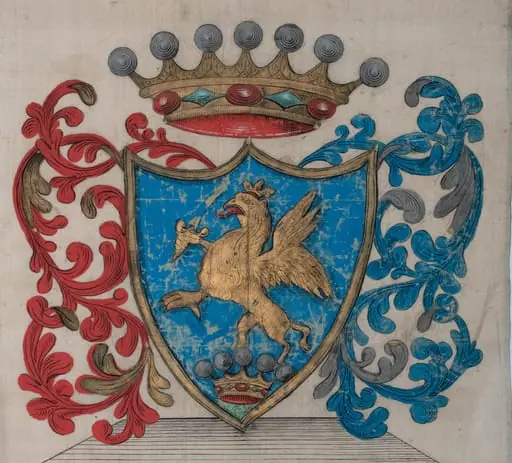 Blazonul funerar a văduvei baronului László Kemény din Mănăstireni, născută baronesa Ágnes Bánffy de Losontz
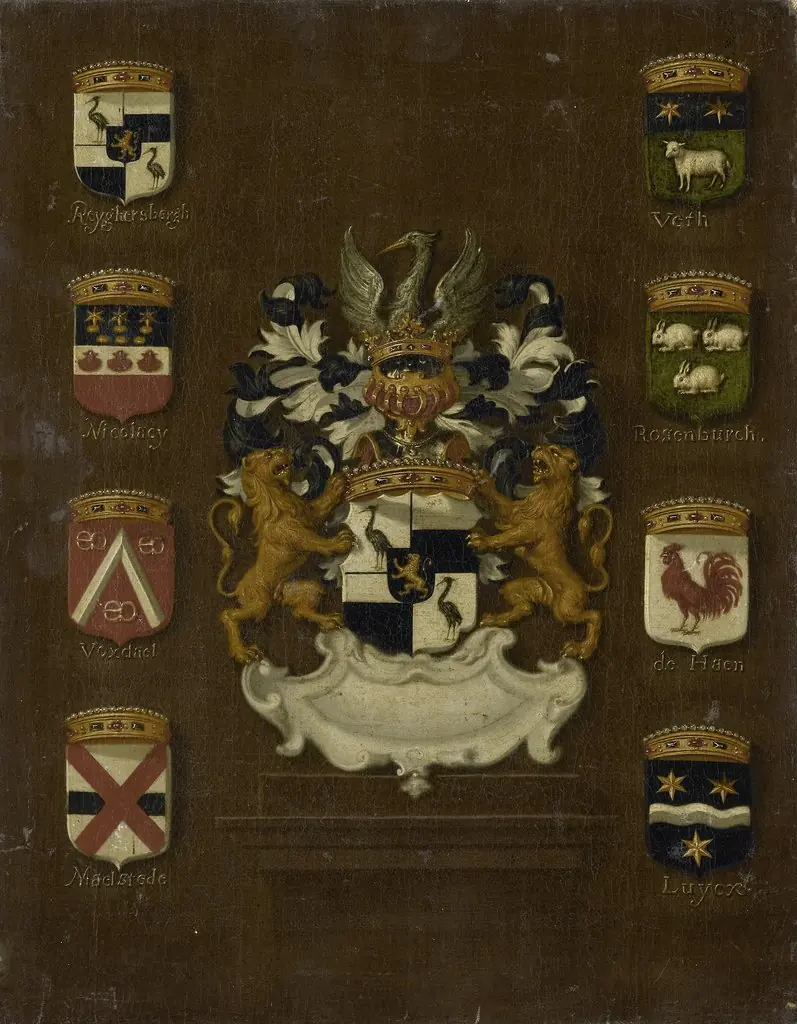 Coat of Arms of Jan van Reyersbergh with its eight quarterings
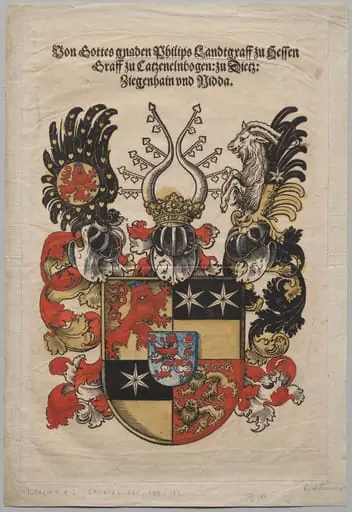 Coat of Arms of Philip, Landgrave of Hesse
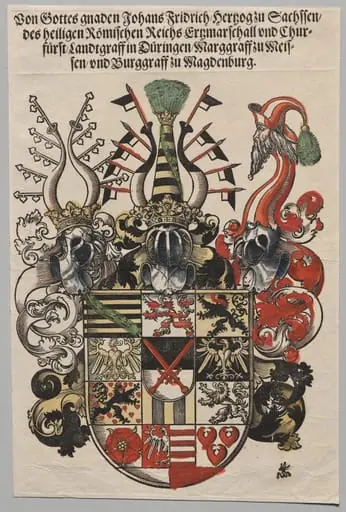 Coat of Arms of John Frederic, Elector of Saxony, called the Magnanimous
 Het wapen van Jacob Feitama II (1698-1774)