Artwork
blid cu toarte
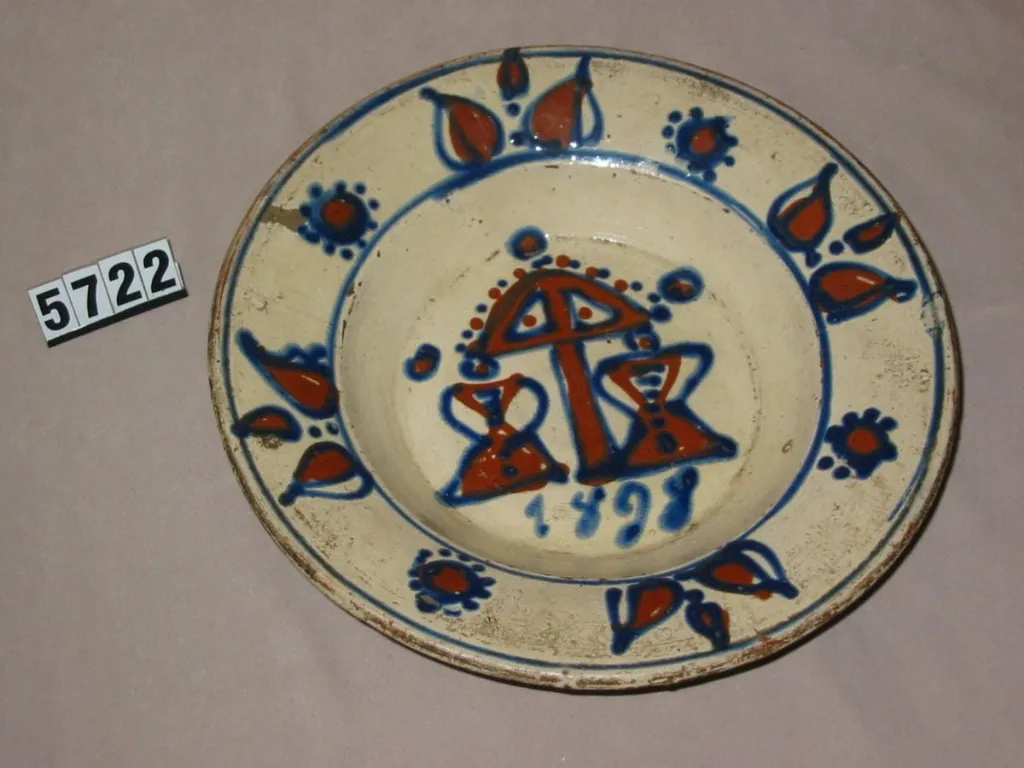
blid cu toarte is a print by the Impressionist artist Unknown. It dates from 1898 and is held in the collection of the ASTRA National Museum Complex.
About this work
In the center, there’s a blue-and-red design shaped like a cross with dots and lines inside it.
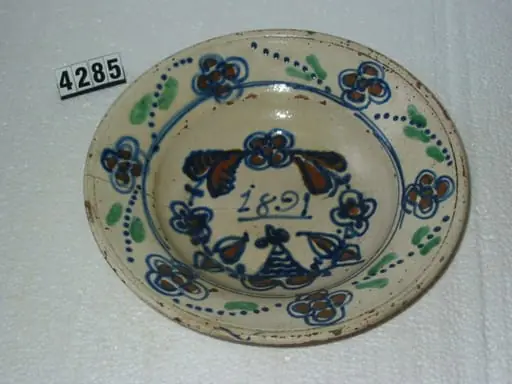
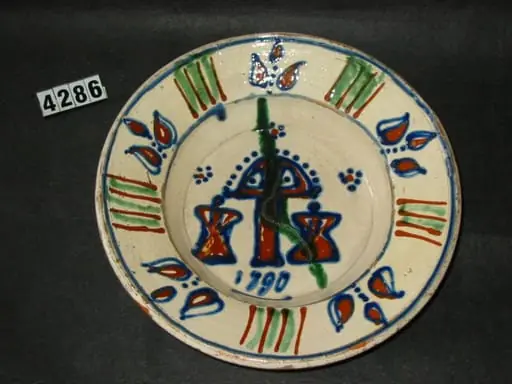
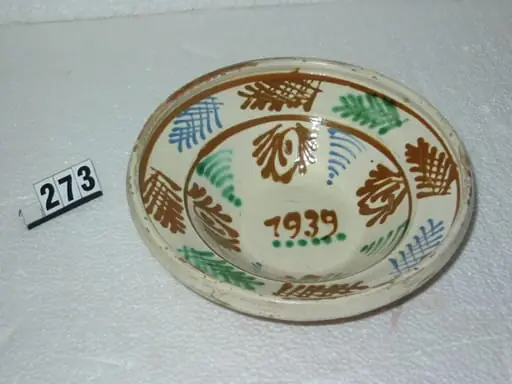
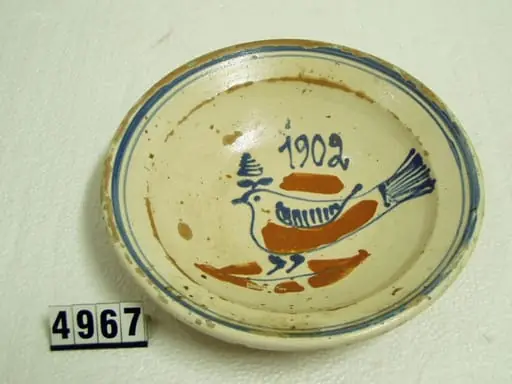
This is a round dish with a simple white background. The rim has a blue border filled with small red flowers and blue leaves. In the center, there’s a blue-and-red design shaped like a cross with dots and lines inside it.
The year 1898 is written in blue on the right side of the cross. The dish looks old, with some wear on the edges.
Next, check out the Museum of Ethnography to see more objects like this one.
Overview
This circular ceramic dish, dated 1898, features a minimalist white field bordered by a blue band adorned with small red flowers and blue leaves. A central cross-like motif, composed of blue and red lines and dots, dominates the surface. The year is inscribed in blue along the right arm of the design. Surface wear along the rim suggests regular use, consistent with functional domestic or ceremonial objects from the period.
Subject & Meaning
The central cross form, combined with floral and geometric elements, may reflect localized symbolic traditions, possibly tied to seasonal cycles, spiritual beliefs, or communal identity. The inclusion of the year 1898 suggests a deliberate marking of time, perhaps commemorating an event or the maker’s intent. The repetition of red and blue—colors often carrying cultural significance—hints at coded meaning beyond mere decoration.
Technique & Style
The dish was likely hand-painted using mineral-based pigments on a low-fired ceramic body. The border’s repetitive floral pattern and the precise linear structure of the cross indicate a standardized decorative vocabulary, possibly passed through generations. The restrained palette and lack of shading point to a regional aesthetic favoring clarity and symmetry over naturalism.
History & Provenance
Though its exact origin is unrecorded, the dish aligns with folk ceramic traditions from Eastern Europe, particularly those produced in rural households or small workshops around the late 19th century. Its survival and preservation suggest it was valued beyond daily utility, possibly kept for special occasions. The Museum of Ethnography holds comparable examples, indicating broader cultural circulation.
Context
In the late 1800s, many rural communities maintained distinct decorative arts as expressions of identity amid rapid modernization. This dish reflects a continuity of handcrafted traditions, where household objects carried both practical and symbolic roles. Similar wares were often exchanged during rites of passage, reinforcing social bonds through shared visual language.
Legacy
The dish contributes to the understanding of vernacular ceramic practices in Eastern Europe before industrialization. Its preservation in ethnographic collections highlights efforts to document fading folk traditions. While no single maker is known, its form and motifs remain part of a larger visual archive of pre-industrial material culture.
Artist & collection

 Domestic Scene
 Giacomo and Cardinal Marco, investing Andrea, Abbot of San Zeno, with his Benefice
 The Nymph of Fontainebleau
 Portrait of a Woman
 Madonna and Child with Saints in the Enclosed Garden
 Venus and Minerva
 Family Group of Four on Sofa
 Wall painting from Room H of the Villa of P. Fannius Synistor at Boscoreale