Artwork
blid/talger
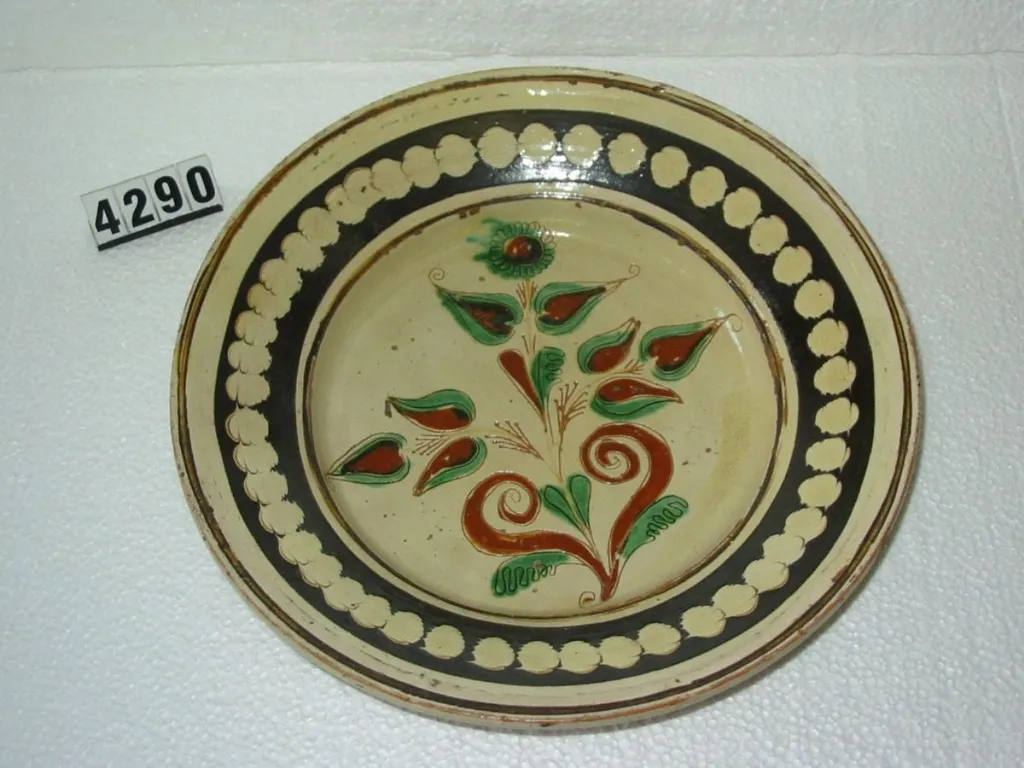
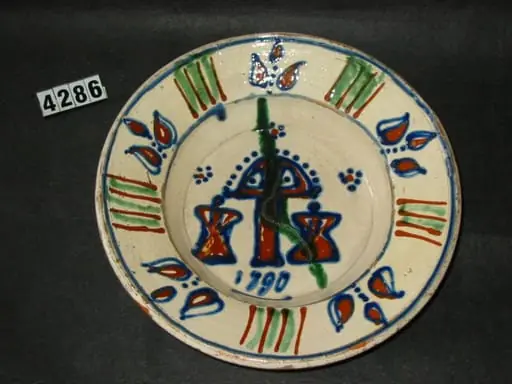
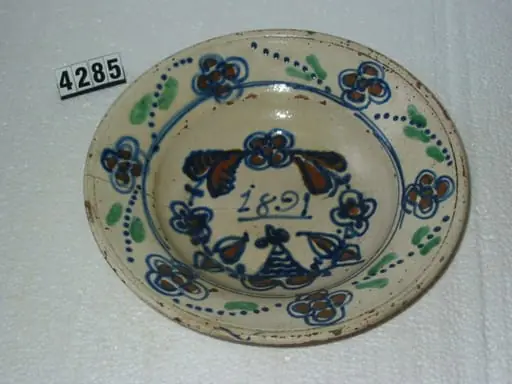
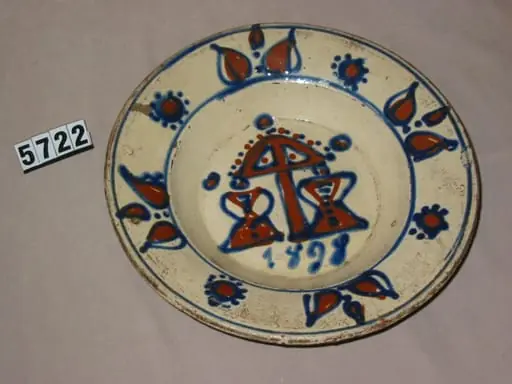
blid/talger is a photography by Unknown. It dates from 1850 and is held in the collection of the ASTRA National Museum Complex.
About this work
Overview
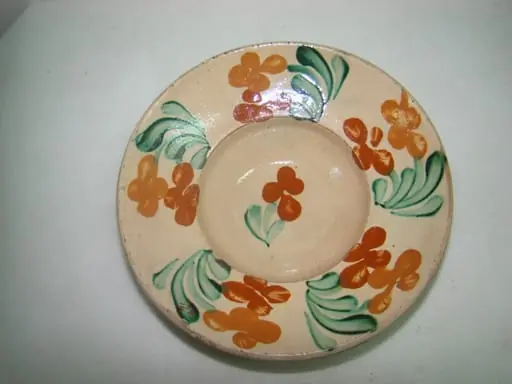
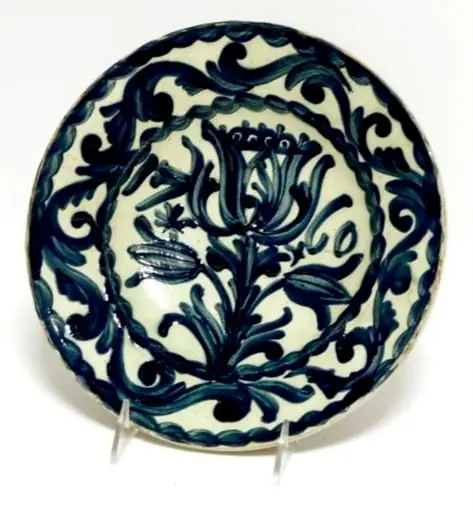
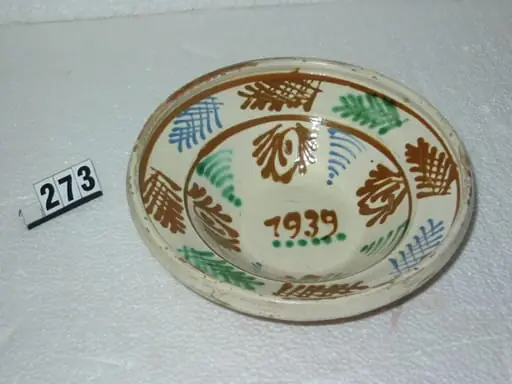
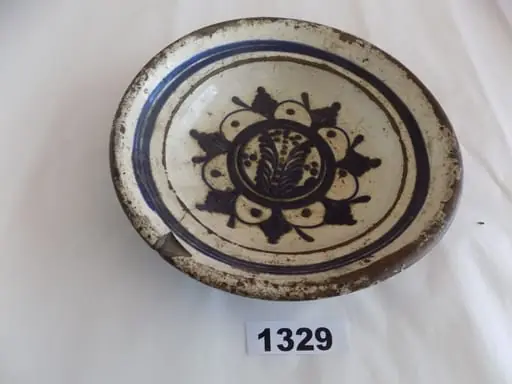
Surface wear suggests prolonged use or age, and the object is presented on a neutral backdrop, consistent with institutional display practices.
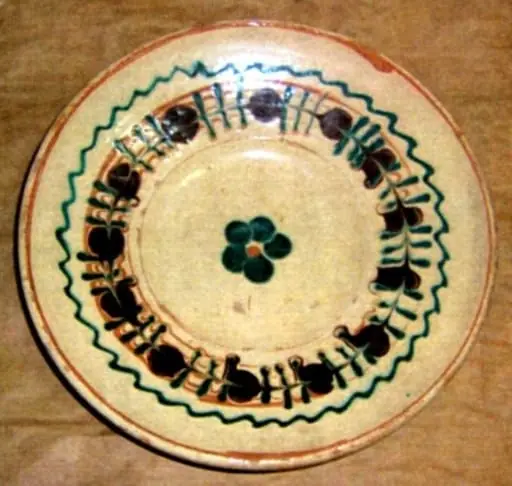
A circular ceramic plate, likely from the late 19th or early 20th century, features a restrained decorative scheme centered on a cream ground. A floral motif in brown and green encircles the middle, bordered by a narrow black band dotted with small cream circles. Surface wear suggests prolonged use or age, and the object is presented on a neutral backdrop, consistent with institutional display practices.
Subject & Meaning
The floral pattern lacks overt symbolism, instead reflecting a common aesthetic of domestic ceramics from the period. Its repetition and symmetry suggest an emphasis on ornamentation over narrative, aligning with trends in household tableware that valued visual harmony over storytelling. The design may have been inspired by natural forms, adapted for mass production.
Technique & Style
The plate was likely hand-painted or transferred using stencils, with glazed ceramic construction typical of European or American production. The contrast between the muted floral tones and the stark black-and-cream border indicates a deliberate use of framing to highlight the central design. Surface imperfections point to hand-finishing rather than industrial precision.
History & Provenance
Though specific origins are unconfirmed, similar plates appear in collections of domestic ceramics from the late 1800s, particularly in Scandinavian or Central European households. Its current presentation suggests acquisition by a museum or private collector interested in everyday material culture, possibly linked to ethnographic or decorative arts archives.
Context
This plate belongs to a broader category of utilitarian ceramics produced during industrialization, when decorative household items became more widely accessible. Its design echoes popular motifs in printed textiles and wallpaper of the era, reflecting a shared visual language across domestic goods, even as manufacturing methods evolved.
Legacy
Such objects now serve as material evidence of changing domestic tastes and production techniques. Preserved in institutional collections, they offer insight into the aesthetics of ordinary life, shifting scholarly focus from elite art to the cultural significance of everyday objects.
Artist & collection

 Domestic Scene
 Giacomo and Cardinal Marco, investing Andrea, Abbot of San Zeno, with his Benefice
 The Nymph of Fontainebleau
 Portrait of a Woman
 Madonna and Child with Saints in the Enclosed Garden
 Venus and Minerva
 Family Group of Four on Sofa
 Wall painting from Room H of the Villa of P. Fannius Synistor at Boscoreale