Artwork
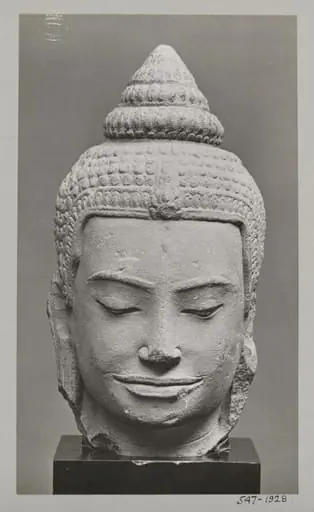
Sculpture, head of Asura, Ankor region, 12th - 13th century, H.G. Quaritch Wales collection
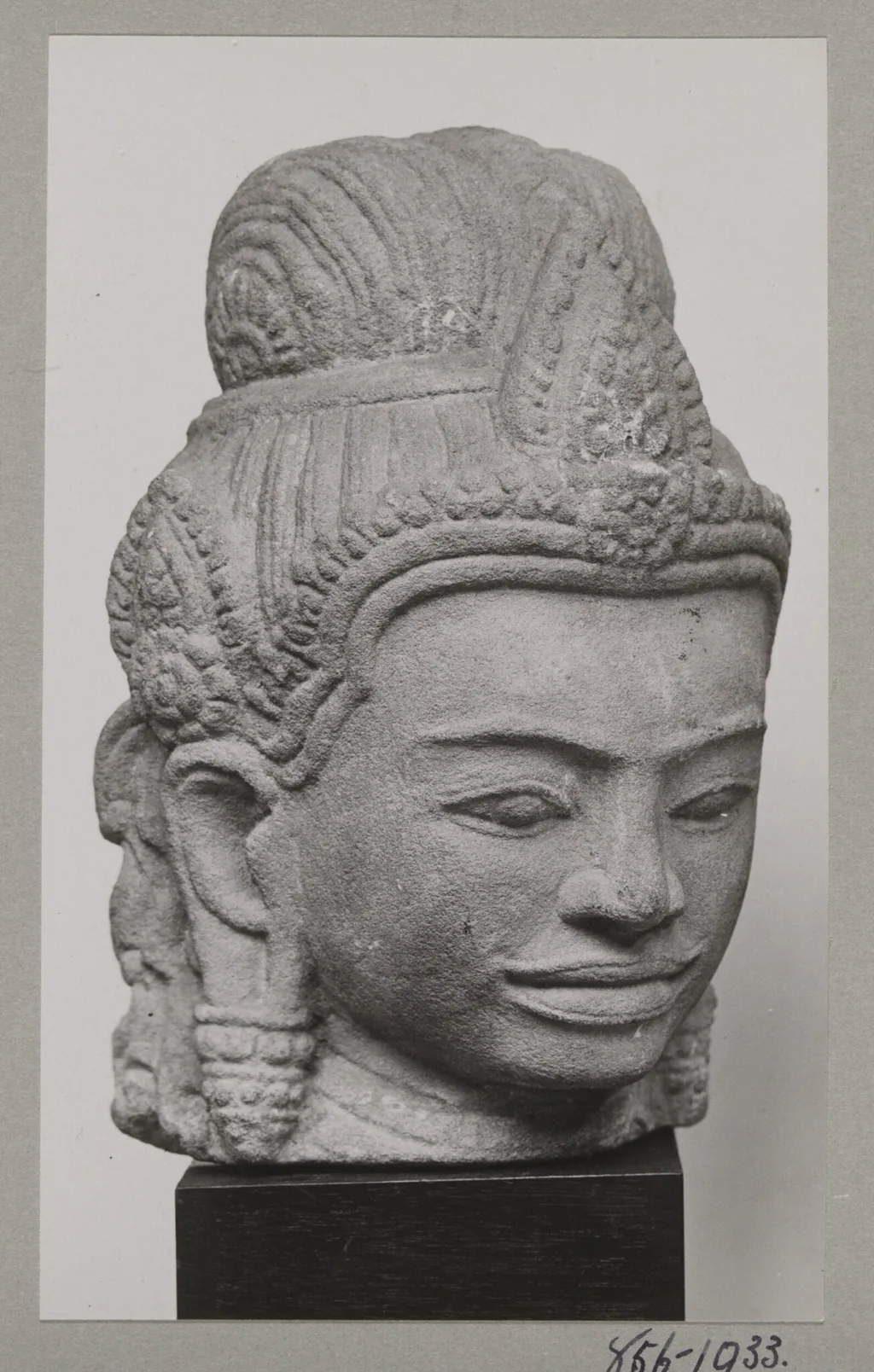
Sculpture, head of Asura, Ankor region, 12th - 13th century, H.G. Quaritch Wales collection is a photographic photography by Unknown. It dates from 1934 and is held in the collection of the Victoria and Albert Museum.
About this work
Overview
This 12th to 13th-century stone sculpture depicts the head of Asura in a three-quarter view, characterized by a heavy, rounded headdress and a calm, serious expression. The piece originates from the Ankor region.
Subject & Meaning
The sculpture portrays Asura, a figure from Hindu and Buddhist mythologies, often symbolizing a powerful, sometimes malevolent being. The serene yet solemn facial expression and regal headdress convey a sense of authority.
Technique & Style
The carving features simple yet detailed work, with smooth curves on the forehead contrasting with sharp lines in the hair. The half-closed eyes and slightly open mouth contribute to the overall calm, serious demeanor.
History & Provenance
By 1934, the sculpture was part of the H.G. Quaritch Wales collection. A black and white photograph from the 1930s documents the piece, reflecting early 20th-century methods of art documentation.
Context
The sculpture's style, particularly the headdress resembling stacked cloth or a crown, aligns with other ancient carvings from the region, highlighting its adherence to traditional Ankor region artistic conventions.
Artist & collection

 Domestic Scene
 Giacomo and Cardinal Marco, investing Andrea, Abbot of San Zeno, with his Benefice
 The Nymph of Fontainebleau
 Portrait of a Woman
 Madonna and Child with Saints in the Enclosed Garden
 Venus and Minerva
 Family Group of Four on Sofa
 Wall painting from Room H of the Villa of P. Fannius Synistor at Boscoreale
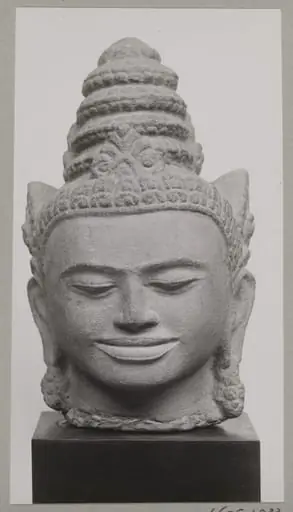 East Siam sculpture of head of Bodhisattva, ca. 12th century, H.G. Quaritch Wales Collection
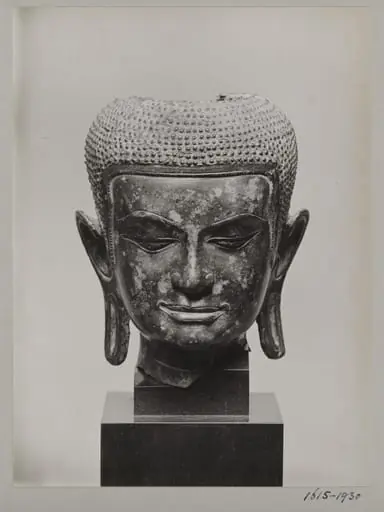 Cambodian bronze sculpture of Buddha head, ca. 13th century A.D., V&A Museum
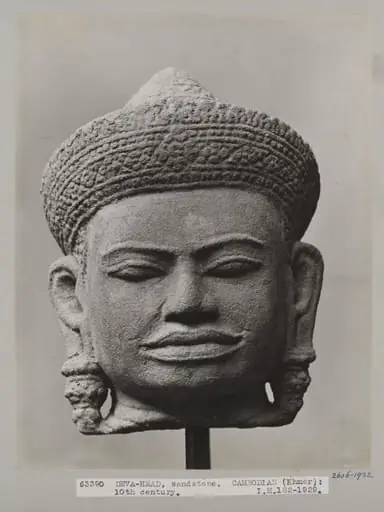 Cambodian sandstone sculpture of head of Deva, 10th century, V&A Museum, London
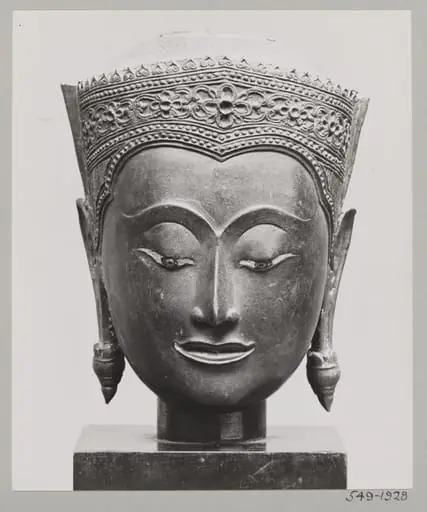 Siamese bronze sculpture of Buddha, 14th or 15th century, V&A Museum
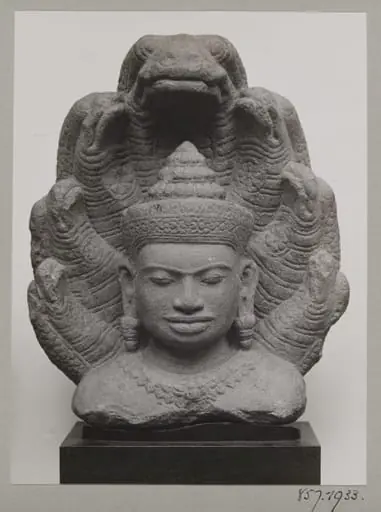 Sculpture, carved stone, Buddha with naga hood, Eastern Siam, 12th-13th century, H. G. Quaritch Wales Collection
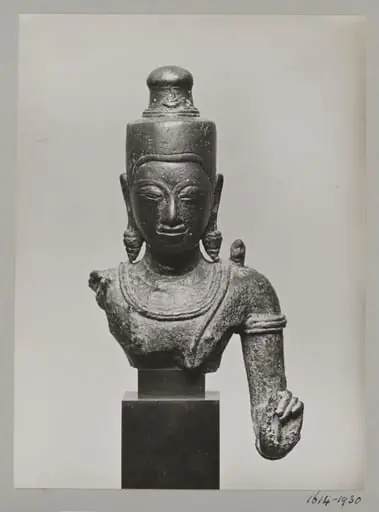 Bronze Cambodian sculpture of Buddha, ca. 13th century, V&A Museum, London
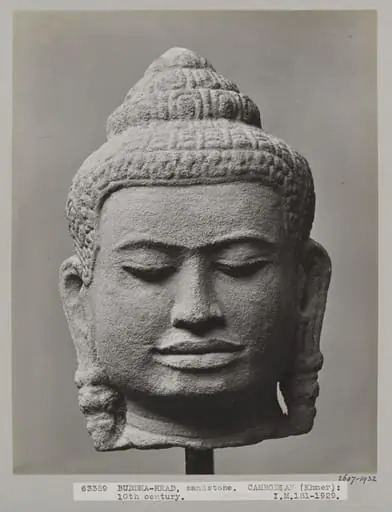 Cambodian Bayon style sandstone sculpture of head of Buddha, 10th century A.D., V&A Museum, London
 Sandstone sculpture of head of Buddha, Siam, 9th century A.D., V&A Museum, London
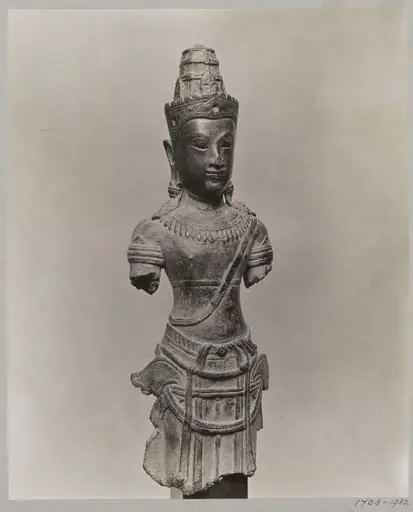 Bronze Cambodian sculpture of Bodhisattva, ca. 13th century, A.D., V&A Museum, London
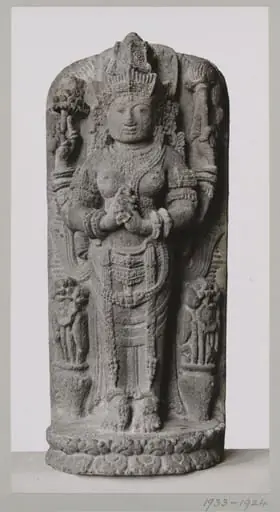 East Javanese volcanic rock sculpture, relief figure of Umā, early 15th century, V&A Museum, London
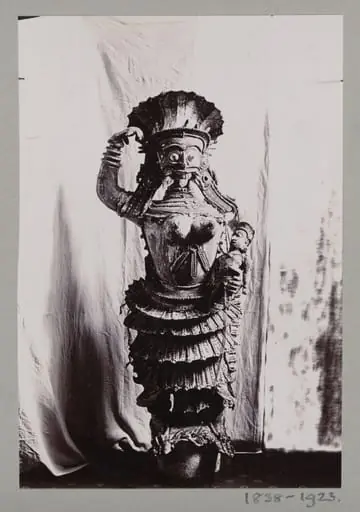 Carved wood sculpture, Goddess, Javanese (?)