Artwork
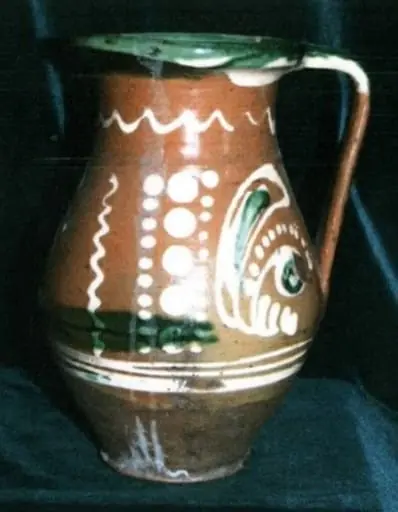
oală de lapte cu mănușar
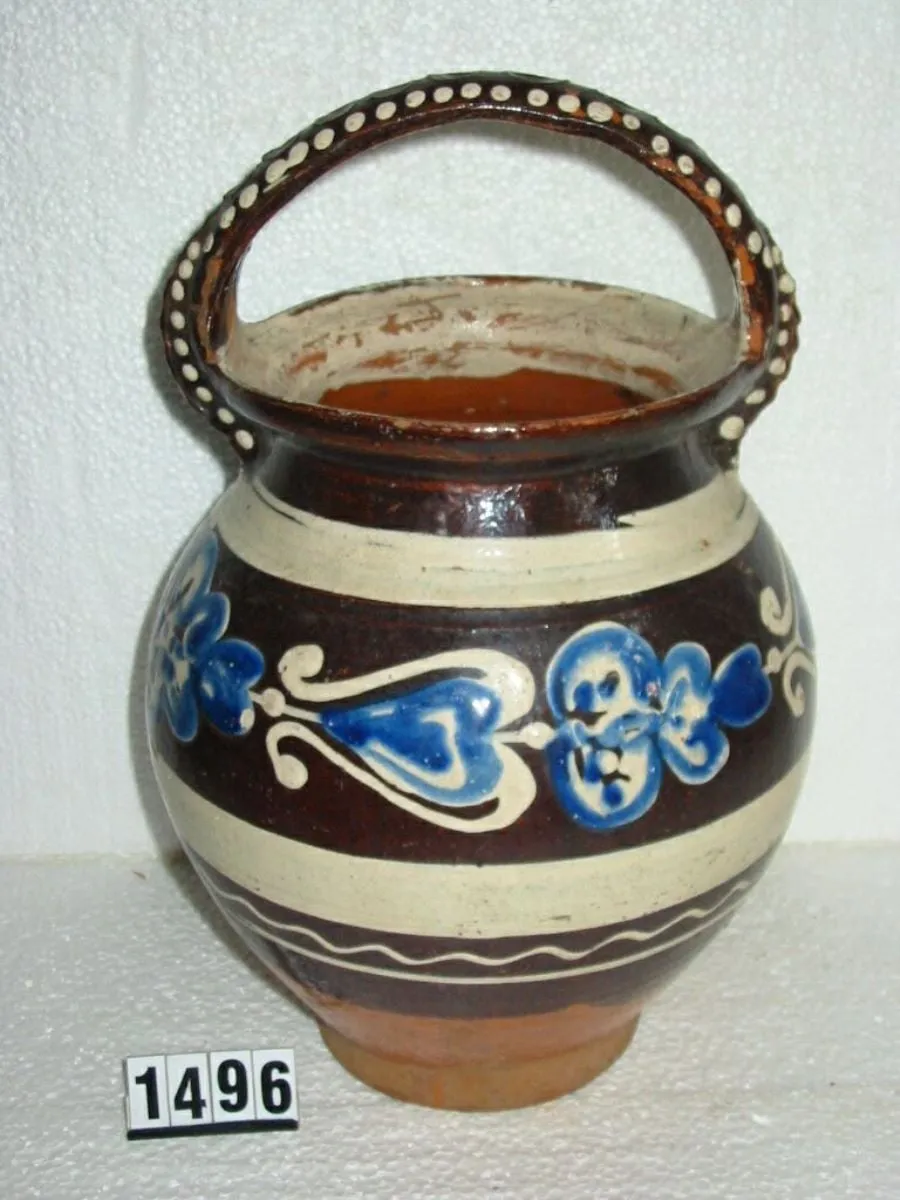
oală de lapte cu mănușar is a photography by Unknown. It dates from 1850 and is held in the collection of the ASTRA National Museum Complex. The object is a ceramic pitcher, traditionally used for liquids such as milk or water.
About this work
Overview
The object is a ceramic pitcher, traditionally used for liquids such as milk or water. Its form includes a rounded body, a single handle attached near the top, and a flared rim. The surface shows signs of age, with areas of chip and faded glaze, indicating prolonged use.
Subject & Meaning
Decorative motifs dominate the vessel: two horizontal white bands encircle the midsection, while between them a stylized blue floral pattern unfolds. The rim is edged with a series of small white dots. Such iconography is typical of folk pottery, where floral designs often symbolize fertility, abundance, or seasonal cycles.
Technique & Style
The pitcher is fashioned from low‑temperature clay, likely hand‑built or wheel‑thrown, then coated with a slip that yields the dark brown ground. White and blue pigments were applied as painted overglazes before a final firing, producing the contrasting bands and floral elements. The wear on the glaze suggests a functional rather than purely decorative purpose.
Context
The combination of dark brown background, white stripe accents, and blue floral motifs aligns with a regional tradition of Eastern European rural pottery, where such color schemes were common in household vessels. The design reflects a vernacular aesthetic that blended utilitarian needs with locally transmitted decorative language.
Legacy
Pieces of this type are collected as representative examples of folk ceramic art, illustrating how everyday objects served both practical and symbolic roles within their communities. Their preservation offers insight into the material culture and artistic conventions of the area from which they originated.
Artist & collection

 Domestic Scene
 Giacomo and Cardinal Marco, investing Andrea, Abbot of San Zeno, with his Benefice
 The Nymph of Fontainebleau
 Portrait of a Woman
 Madonna and Child with Saints in the Enclosed Garden
 Venus and Minerva
 Family Group of Four on Sofa
 Wall painting from Room H of the Villa of P. Fannius Synistor at Boscoreale
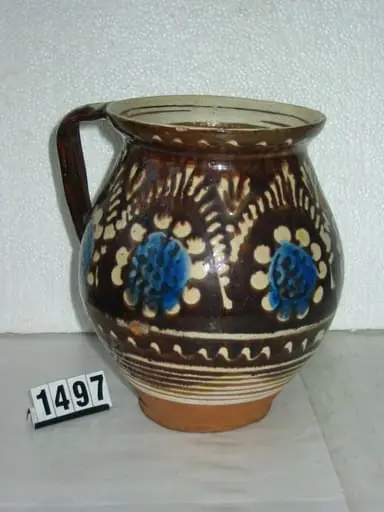 cană de lapte cu mănușă
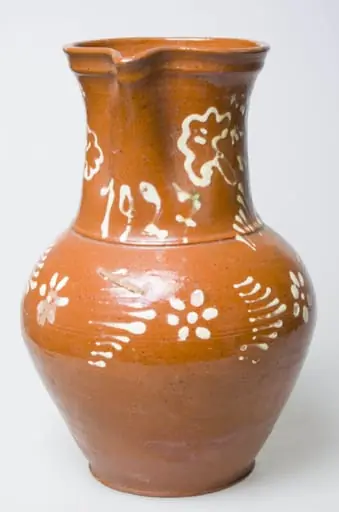 Vasul are forma tronconică, cu fund lat, gât gros, toartă și cioc opus acesteia. Decorul este unul floral, stilizat pe partea superioară imediat sub cioc. Obiectul este smălțuit pe ambele părti, fiind prevăzut cu o toartă pentru prindere. Cromatică: fondul este maro, iar motivele sunt pictate cu alb.
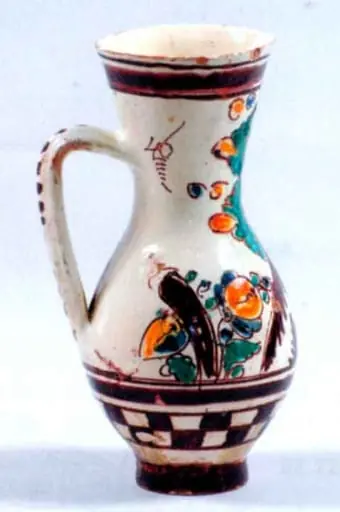 canceu
 ulcea de lapte
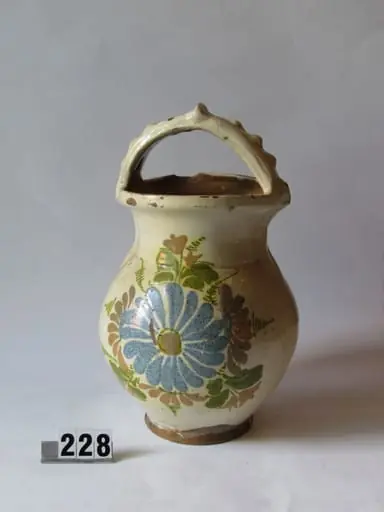 Cană cu toartă deasupra/mănușar
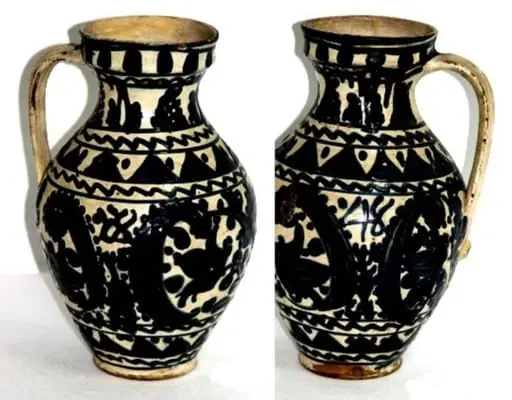 cană de vin
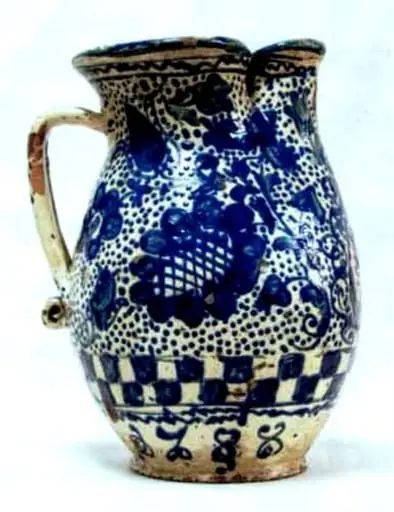 cană de vin