Artwork
cană de lapte cu mănușă
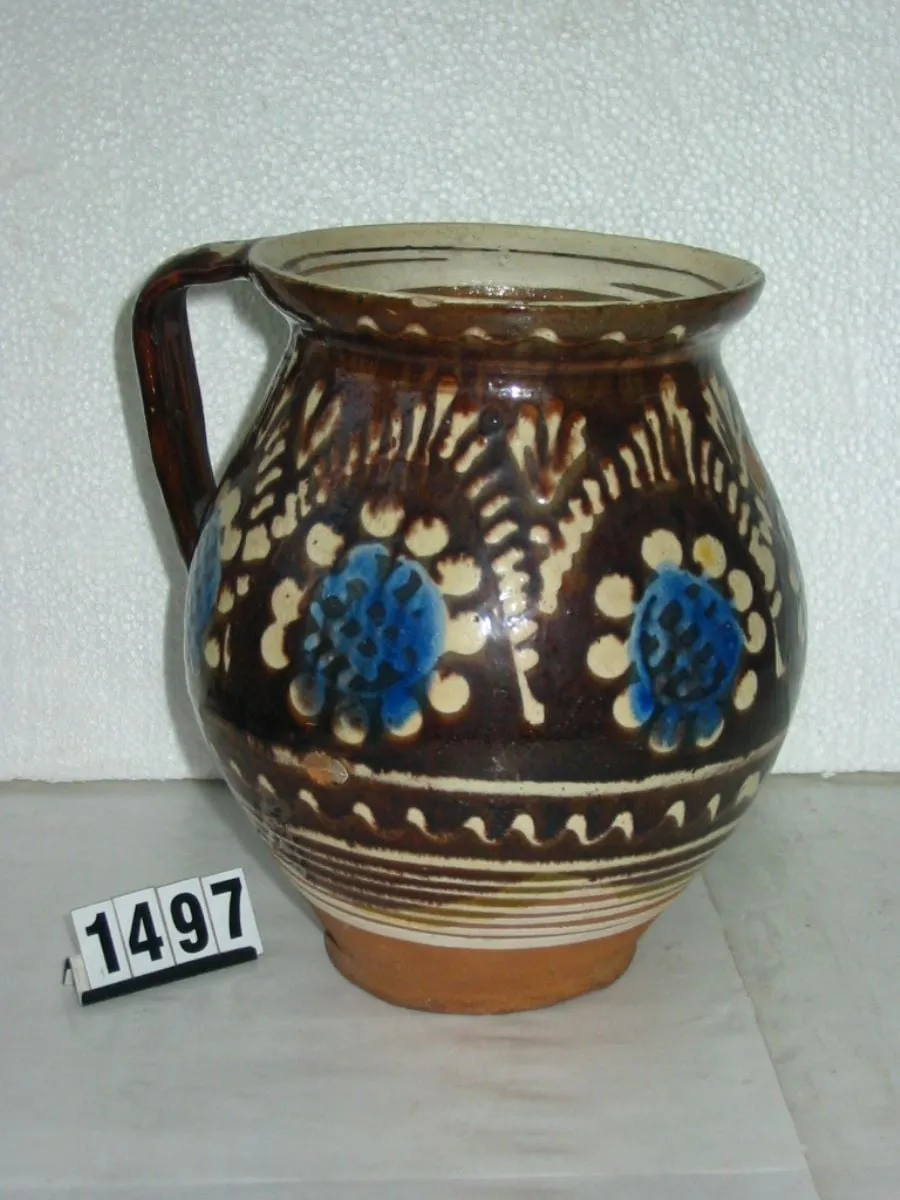
cană de lapte cu mănușă is a photography by Unknown. It dates from 1850 and is held in the collection of the ASTRA National Museum Complex.
About this work
Overview
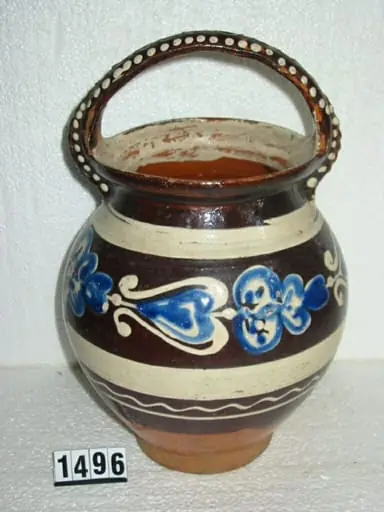
This ceramic pitcher, known as cană de lapte cu mănușă, features a rounded body and a single handle, typical of utilitarian vessels.
This ceramic pitcher, known as cană de lapte cu mănușă, features a rounded body and a single handle, typical of utilitarian vessels. Its surface is painted in dark brown with irregular white and yellow dots, suggesting organic decoration. Two clusters of bright blue pigment, resembling floral motifs, appear midway along the body, contrasting with a narrow, striped band near the base in muted earth tones. The hand-applied design shows deliberate irregularity, indicating non-industrial production.
Subject & Meaning
The blue clusters likely represent stylized flowers or buds, a common symbolic element in folk ceramics. Their placement near the vessel’s midsection may reflect a desire to infuse daily use with natural imagery, possibly evoking growth, fertility, or seasonal cycles. The absence of figurative detail suggests abstraction over literal representation, aligning with regional traditions that favored pattern over narrative.
Technique & Style
The pitcher was hand-formed and decorated with pigment applied freehand, resulting in uneven dot patterns and asymmetrical bands. The use of limited colors—dark brown, white, yellow, and blue—indicates reliance on locally available materials. The bold, unrefined brushwork and lack of glaze point to a functional, non-elite craft tradition, where aesthetic value arose from rhythmic repetition rather than precision.
History & Provenance
The object originates from a rural ceramic tradition in Eastern Europe, likely produced in the late 19th or early 20th century. Its form and decoration resemble pottery from Moldavian or Romanian villages, where household vessels were often decorated with symbolic motifs. No documented provenance exists, but similar pieces are held in regional ethnographic collections, suggesting local domestic use before eventual preservation.
Context
In rural households, such pitchers served practical roles in storing and pouring milk or water. Decoration was not ornamental in a fine-art sense but embedded in daily life, reinforcing cultural patterns through repetition. The floral motifs may have echoed textile or wall-painting traditions, creating visual continuity across domestic objects. Production was likely seasonal, tied to agricultural cycles and communal craft practices.
Legacy
This pitcher exemplifies a fading vernacular craft tradition, where handmade utility carried cultural meaning. While mass production later replaced such items, surviving examples are now preserved in ethnographic museums as markers of pre-industrial life. Its aesthetic, though unpolished, continues to inform contemporary interpretations of folk art, valued for its authenticity and connection to local identity.
Artist & collection

 Domestic Scene
 Giacomo and Cardinal Marco, investing Andrea, Abbot of San Zeno, with his Benefice
 The Nymph of Fontainebleau
 Portrait of a Woman
 Madonna and Child with Saints in the Enclosed Garden
 Venus and Minerva
 Family Group of Four on Sofa
 Wall painting from Room H of the Villa of P. Fannius Synistor at Boscoreale