Artwork
Chandra, the moon, represented as the god Vishnu.
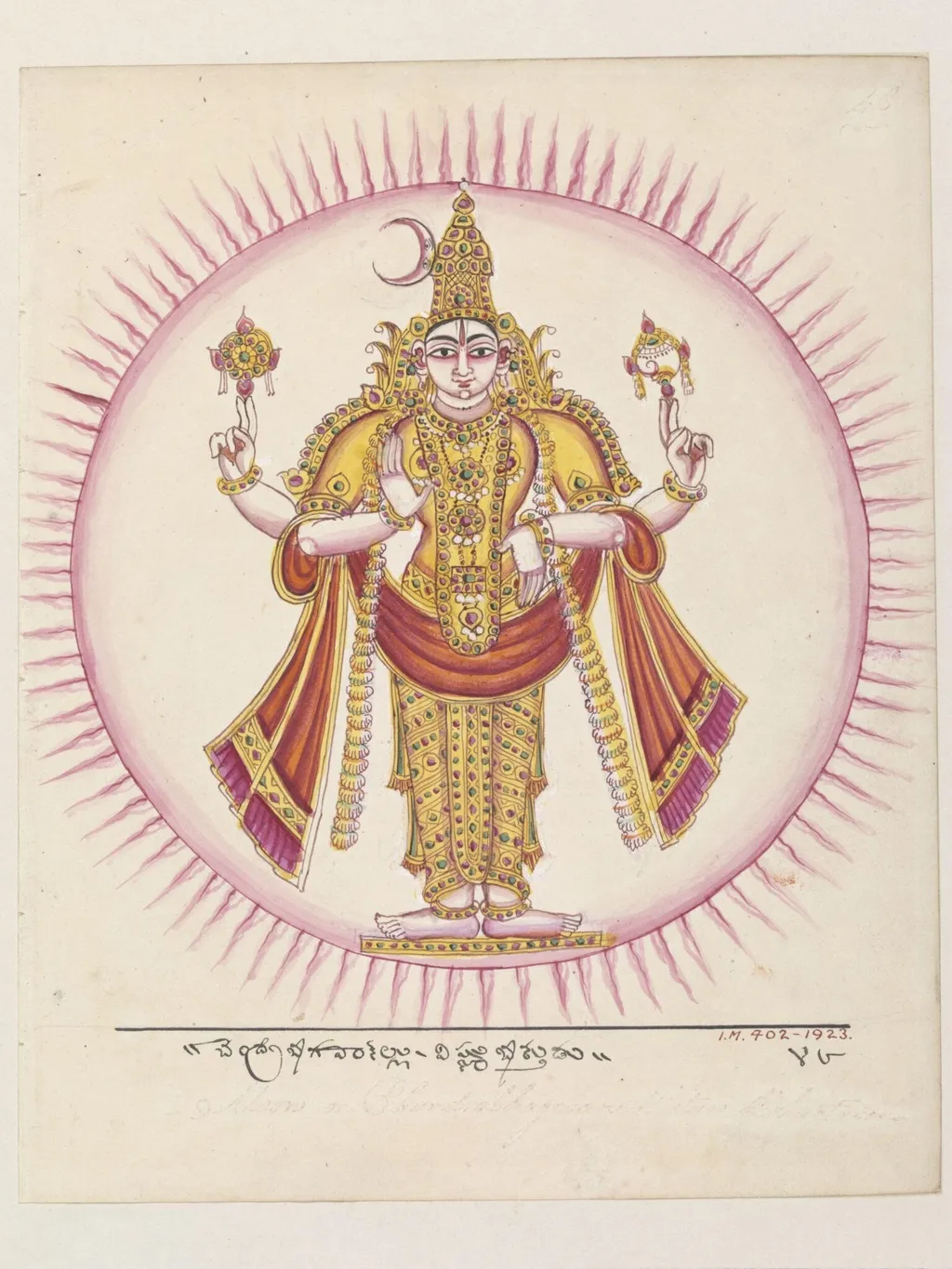
Chandra, the moon, represented as the god Vishnu. is a paint painting by the Romanticist artist Unknown. It dates from 1820 and is held in the collection of the Victoria and Albert Museum.
About this work
Overview
This 19th-century South Asian painting depicts a divine figure combining attributes of Chandra (the moon god) and Vishnu, characterized by a distinctive crescent moon on its crown.
Subject & Meaning
The subject, identified by the crescent moon, embodies the confluence of Chandra and Vishnu, symbolizing divine power and celestial influence through its multi-armed form and symbolic accessories (flower, drum, and hand gestures).
Technique & Style
Executed in vibrant gold, red, and pink hues, the painting showcases intricate robe patterns and a radiant halo, aligning with early 19th-century South Asian artistic traditions.
History & Provenance
Attributed to an unknown artist, the work is dated to circa 1820; its exact origin and ownership history prior to its current location are not specified.
Context
The painting reflects the syncretic tendencies in Hindu iconography and the aesthetic preferences of its time, with the circular, rayed background enhancing the figure's divine aura.
Legacy
While not individually renowned, the piece contributes to the broader understanding of 19th-century South Asian religious art, with comparable works found in institutions like the Victoria and Albert Museum.
Artist & collection

 Domestic Scene
 Giacomo and Cardinal Marco, investing Andrea, Abbot of San Zeno, with his Benefice
 The Nymph of Fontainebleau
 Portrait of a Woman
 Madonna and Child with Saints in the Enclosed Garden
 Venus and Minerva
 Family Group of Four on Sofa
 Wall painting from Room H of the Villa of P. Fannius Synistor at Boscoreale
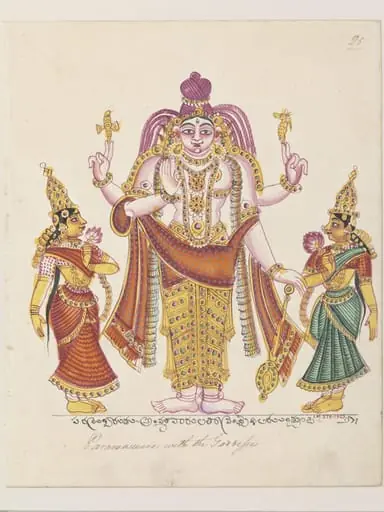 Harihara attended by Parvati and Lakshmi
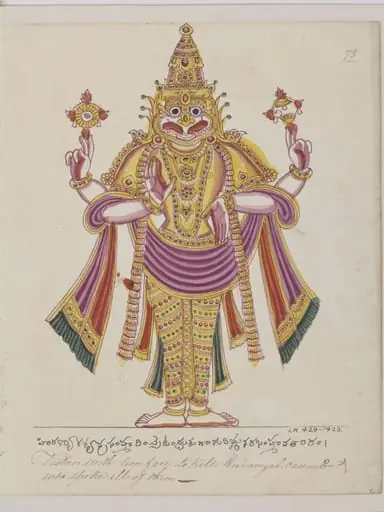 Narasimha, the man-lion, the fourth avatar (incarnation) of Vishnu
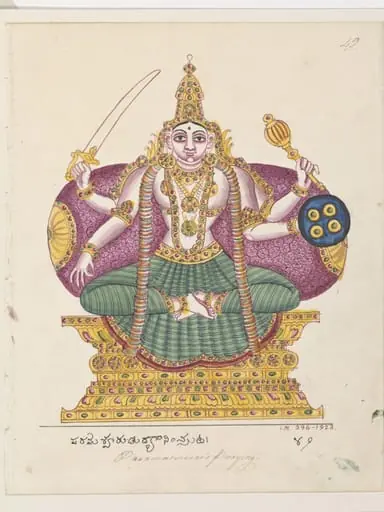 Shiva holding a sword, mace and shield.
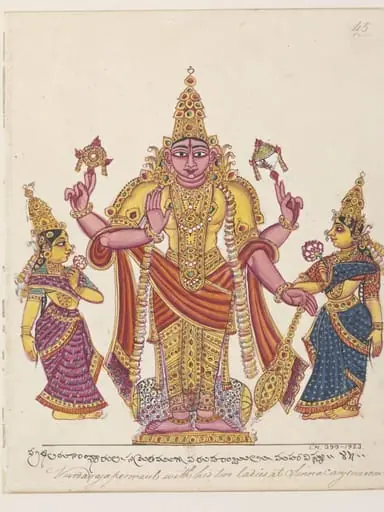 Vishnu as Varadarajaswami with his two 'shaktis', Shri Devi and Bhumi Devi.
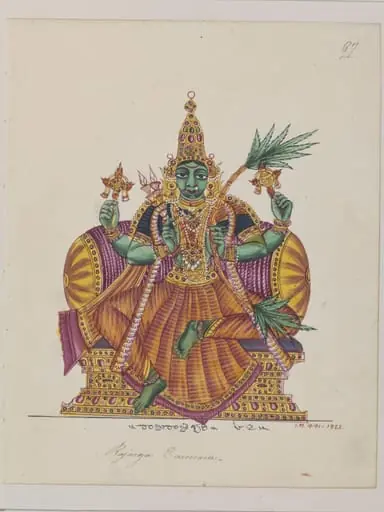 The goddess Rajarajeshvari
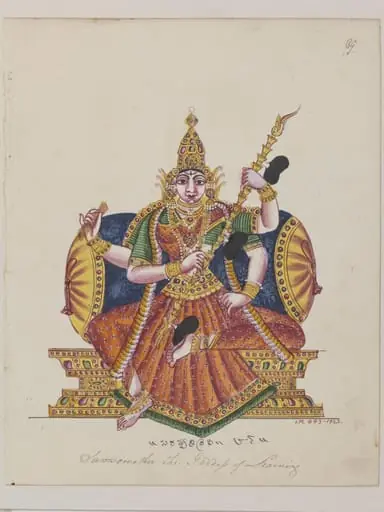 Sarasvati, the goddess of learning, speech and music
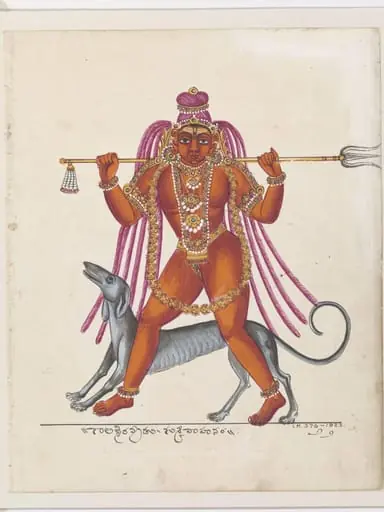 Kala-Bhairava, an emanation of the god Shiva, with trident and hound.