Artwork
Contururi incizate: sfânt în picioare, veșminte lungi, aureolă; Trăsături redate schematic, reduse la esențial. Încadrat lateral de două coloane înguste cu motiv fitomorf delimitat de incizii verticale trasate neglijent. Chenar floral pictat pe laturile verticale și pe cea orizontală inferioară(câte 5 flori) bandă de culoare roșie în 1/3 inf pe care este incizat anul 1941; Cromatica: roșu, negru, galben, culoarea lemnului. Icoana de vatră este specifică sudului țării, a cunoscut o popularitate deosebită în sec. XVII-XVIII, dispare la sfârșitul secolului XIX;
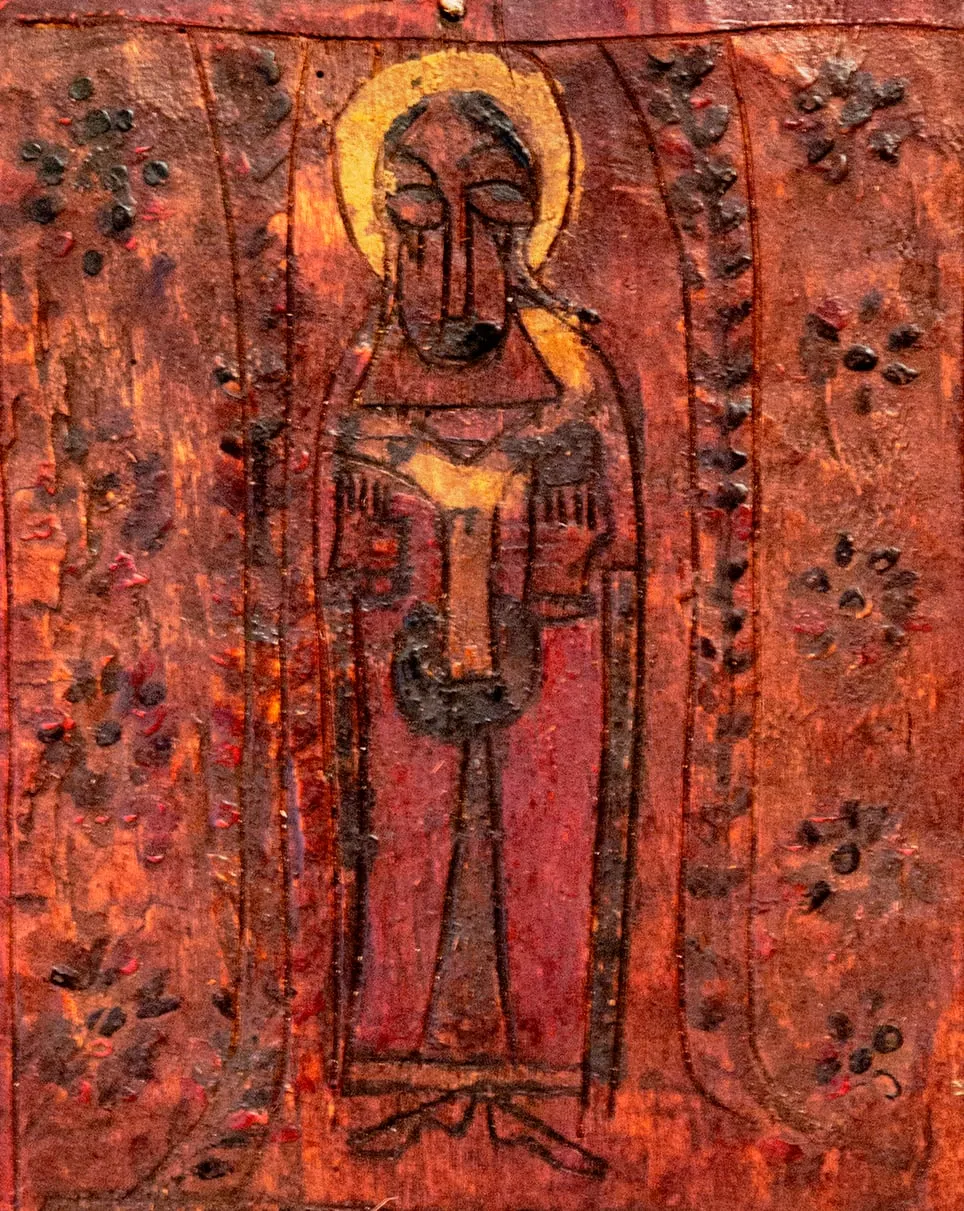
Contururi incizate: sfânt în picioare, veșminte lungi, aureolă; Trăsături redate schematic, reduse la esențial. Încadrat lateral de două coloane înguste cu motiv fitomorf delimitat de incizii verticale trasate neglijent. Chenar floral pictat pe laturile verticale și pe cea orizontală inferioară(câte 5 flori) bandă de culoare roșie în 1/3 inf pe care este incizat anul 1941; Cromatica: roșu, negru, galben, culoarea lemnului. Icoana de vatră este specifică sudului țării, a cunoscut o popularitate deosebită în sec. XVII-XVIII, dispare la sfârșitul secolului XIX; is a drawing by Unknown. It dates from 1850 and is held in the collection of the "Dimitrie Gusti" National Village Museum. The work presents a standing saint, rendered in a highly simplified manner with long robes and a golden halo.
About this work
Overview
The work presents a standing saint, rendered in a highly simplified manner with long robes and a golden halo. The figure is outlined against a wooden texture, its posture rigid and arms crossed. The composition is bordered by two narrow vertical columns decorated with modest plant motifs, while the lower edge features a strip of red pigment bearing the inscription of the year 1941.
Subject & Meaning
The central image depicts a devotional icon typical of Romanian folk tradition, known as an "icoana de vatră" or hearth icon. Such images served as household objects of veneration, reflecting the spiritual practices of rural communities in the southern regions of the country during the 17th and 18th centuries.
Technique & Style
Executed in incised lines and limited coloration, the piece relies on a restrained palette of red, black, yellow, and the natural hue of the wood. The schematic rendering reduces anatomical details to essential forms, while the surrounding vegetal motifs are applied with a loose, vertical incising technique.
History & Provenance
The work bears the date 1941, indicating a 20th‑century reproduction or continuation of a folk iconographic tradition that peaked in the 1600s–1700s and waned by the late 1800s. Its survival suggests it was kept in a domestic setting, likely passed through private hands before entering a collection.
Context
The icon belongs to a broader category of Romanian folk art objects that combined religious imagery with everyday life. The decline of such household icons at the end of the 19th century corresponded with urbanization and the spread of printed religious images, which gradually replaced hand‑crafted versions.
Artist & collection
Museum
"Dimitrie Gusti" National Village Museum
Continue through works from the same source collection.
 Domestic Scene
 Giacomo and Cardinal Marco, investing Andrea, Abbot of San Zeno, with his Benefice
 The Nymph of Fontainebleau
 Portrait of a Woman
 Madonna and Child with Saints in the Enclosed Garden
 Venus and Minerva
 Family Group of Four on Sofa
 Wall painting from Room H of the Villa of P. Fannius Synistor at Boscoreale
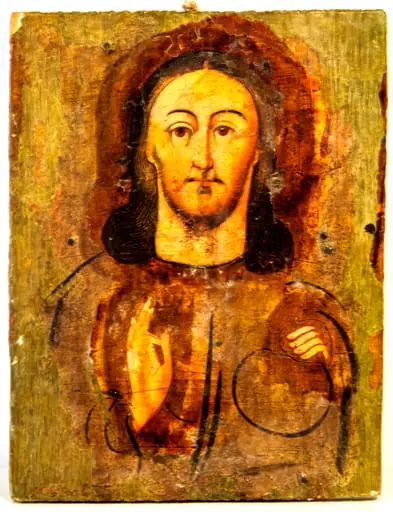 Pe un suport de lemn de brad de formă dreptunghiulară, în ax vertical este reprezentat Isus în ipostaza de Pantocrator.Cu dreapta binecuvintează, în stânga ține globul pământesc. Icoana a fost anterior acoperită cu ferecătură metalică, în momentul de față lipsește, fiind pictate doar zonele mâinilor și feței, restul fiind acoperit cu grund și un strat de culoare verzuie. Desenul este realizat coform canoanelor bizantine, tehnica iluminării treptate.Fața prelungă, barba scurtă, ochii mari, căprui, nasul lung, proporțiile fiind cele consacrate de tradiția bizantină.Părul castaniu, lucrat cu minuțiozitate, lăsat pe umeri. Desenul mâinilor foarte fin, contur roșcat. Se observă urme de cuie metalice în care a fost fixată ferecătura. Peste pictură a fost aplicat vernis.
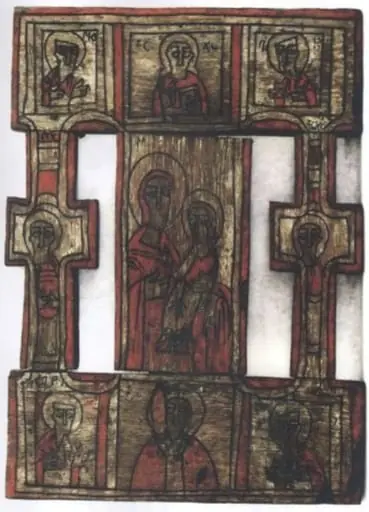 troiță
 Temadisp
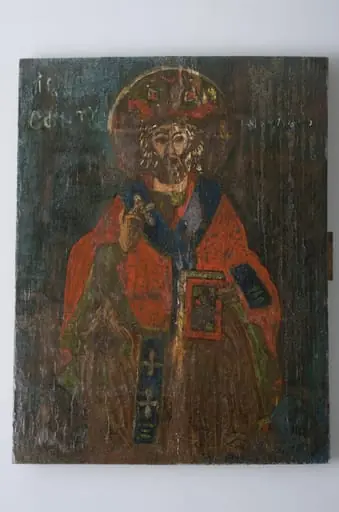 Icoana este pictată pe lemn, reprezentându-l pe Sfântul Nicolae cu veșminte arhierești (felon roșu, omofor albastru și mitră pe cap), ținând Evanghelia închisă cu mâna stângă și binecuvântând cu mâna dreaptă. Cromatică: roșu, albastru, verde, maro închis.
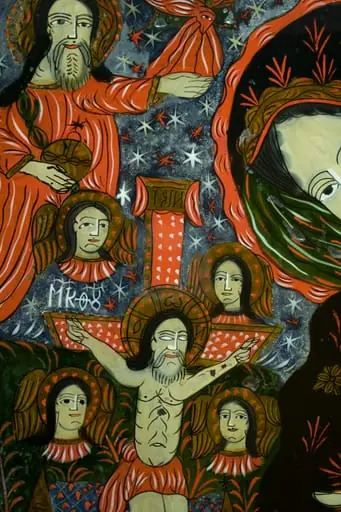 Temaobri
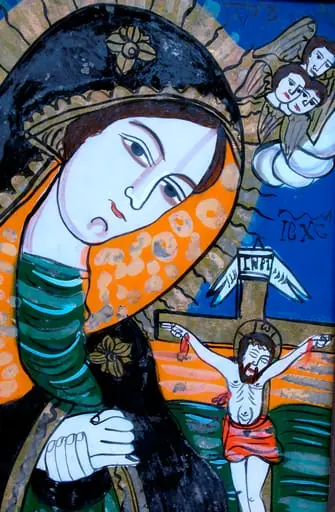
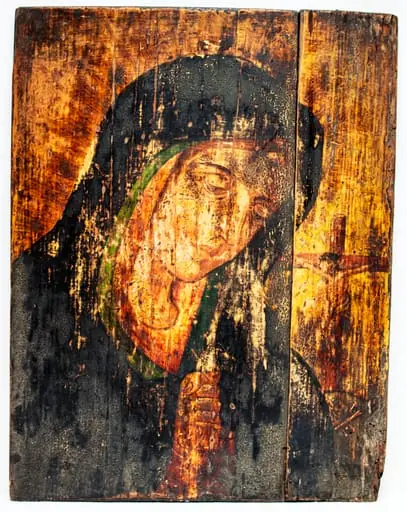 Icoana denumită și "Maica Domnului jalnică" sau îndurerată, o reprezintă pe Maica Domnului în prim plan, în veșmânt mohorât, cu mâinile împreunate, cu privirea interiorizată,concentrată asupra Fiul Ei răstignit pe cruce. Accentul cade pe durerea Mamei generată de răstignirea fiului ei, Iisus redat în planul îndepărtat, pe dealul Golgotei, unde la picioarele crucii este reprezantat craniul lui Adam, oasele strămoșilor ale căror păcate le spală sângele Mântuitorului. Maica este cernită, veșmântul lasă să i se vadă părul, ceea ce nu se întâmplă la alte tipuri de icoane. Mâinile împreunate. Sunt vădite influențele picturii apusene, trăsături renascentiste, buzele mari, cărnoase, nasul lung cu nări fine, pleoapele cu gene lungi, plecate sub sprâncenele arcuite. Tema este foarte frecventă în pictura pe sticlă din Transilvania, ceea ce confirmă filiera apuseană Modul de tratare al aureolei specific picturii occidentale. Fond ușor luminat, difuz.
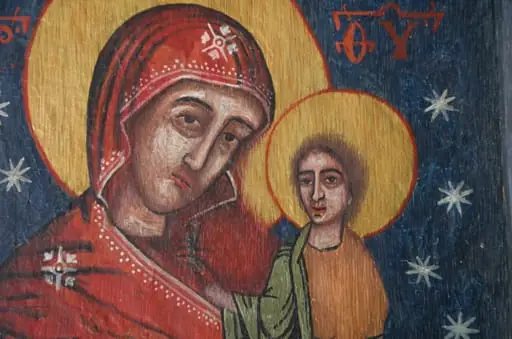 Icoana este pictată pe lemn și o reprezintă pe Maica Domnului „Îndrumătoarea” (Hodighitria), „Cea care arată calea”, cu Pruncul în brațe. Conform Tradiției Bisericii, tema a fost pictată pentru prima dată de Sfântul Apostol și Evanghelist Luca, în timpul vieții pământești a Fecioarei Maria. Maica Domnului poartă un maforion roșu și arată cu mâna dreaptă înspre Fiul său, acesta, la rândul Lui, arătând cu mâna stângă înspre Maica Sa. Pe fundal sunt pictate stele. Rama are trei chenare pictate în albastru, verde și roșu. Icoana prezintă în partea superioară câte o balama pe latura stângă și cea dreaptă, probabil deservind în trecut rolul de triptic. Cromatică: fond albastru închis; roșu; verde; portocaliu; galben; alb.
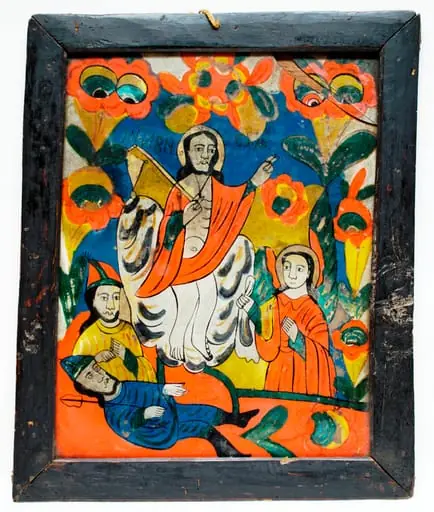 Icoaorat
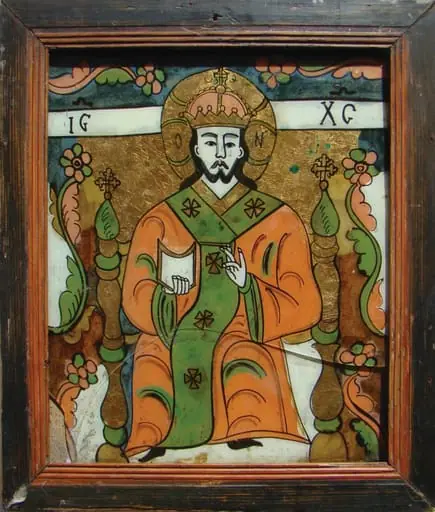 Iisus Hristos Mare Arhiereu și Învățător, tronând
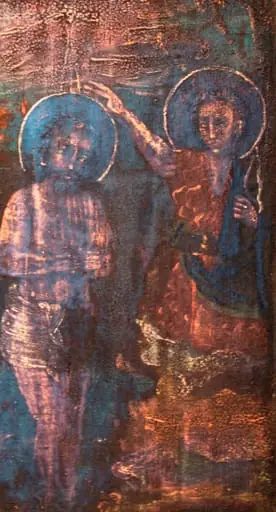 Pictura redă scena Botezului lui Isus de către Sf. Ioan, la apa Iordanului. Se observă ușoare influențe academiste și impresioniste ale picturii de sec. XIX la un zugrav de factură populară. Isus este în centru, în prim plan, cu picioarele în apa Iordanului și mâinile la piept.În jurul mijlocului are o eșarfă albă. Ușor aplecat întors către Sfântul Ioan aflat în stânga, cu mâna ridicată deasupra capului lui Iisus. În dreapta lui Isus plasat putin mai jos se află Arhanghelul Gavriil într-un veșmânt lung, roșu. În jurul capului au aureole mărginite de o linie albă fină. Duhul Sfânt coboară asupra Mântuitorului în formă de porumbel alb, înconjurat de un nor luminos. Fondul cerului albastru bleu. Rama este compusă dintr-o parte profilată, alcătuită din patru stinghii îmbinate oblic la colțuri și încă patru stinghii late montate vertical, sub forma unei casete.Pentru prindere s-au folosit cuie de fier.