Artwork
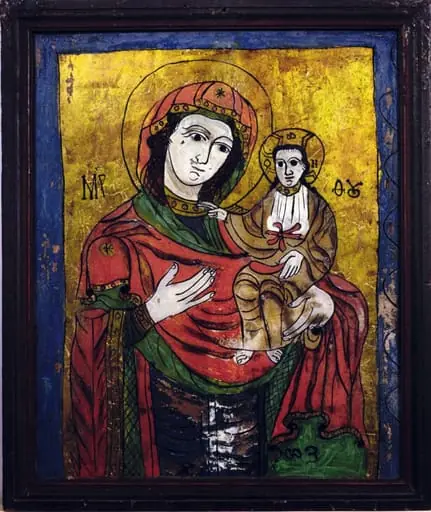
Icoana este pictată pe lemn și o reprezintă pe Maica Domnului „Îndrumătoarea” (Hodighitria), „Cea care arată calea”, cu Pruncul în brațe. Conform Tradiției Bisericii, tema a fost pictată pentru prima dată de Sfântul Apostol și Evanghelist Luca, în timpul vieții pământești a Fecioarei Maria. Maica Domnului poartă un maforion roșu și arată cu mâna dreaptă înspre Fiul său, acesta, la rândul Lui, arătând cu mâna stângă înspre Maica Sa. Pe fundal sunt pictate stele. Rama are trei chenare pictate în albastru, verde și roșu. Icoana prezintă în partea superioară câte o balama pe latura stângă și cea dreaptă, probabil deservind în trecut rolul de triptic. Cromatică: fond albastru închis; roșu; verde; portocaliu; galben; alb.
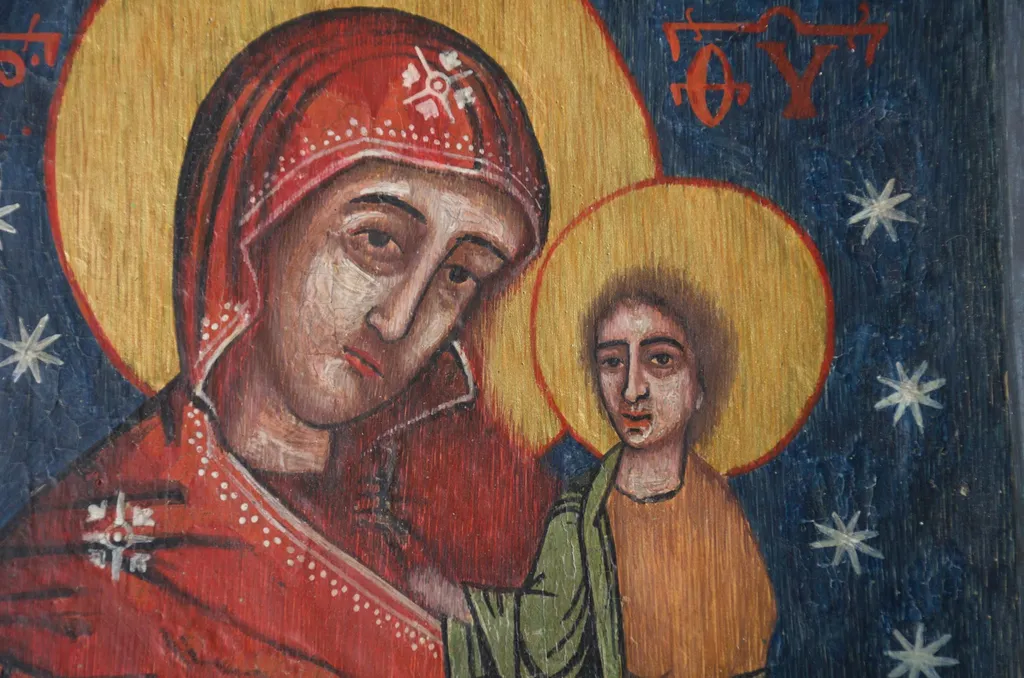
Icoana este pictată pe lemn și o reprezintă pe Maica Domnului „Îndrumătoarea” (Hodighitria), „Cea care arată calea”, cu Pruncul în brațe. Conform Tradiției Bisericii, tema a fost pictată pentru prima dată de Sfântul Apostol și Evanghelist Luca, în timpul vieții pământești a Fecioarei Maria. Maica Domnului poartă un maforion roșu și arată cu mâna dreaptă înspre Fiul său, acesta, la rândul Lui, arătând cu mâna stângă înspre Maica Sa. Pe fundal sunt pictate stele. Rama are trei chenare pictate în albastru, verde și roșu. Icoana prezintă în partea superioară câte o balama pe latura stângă și cea dreaptă, probabil deservind în trecut rolul de triptic. Cromatică: fond albastru închis; roșu; verde; portocaliu; galben; alb. is a drawing by Unknown. It dates from 1850 and is held in the collection of the ASTRA National Museum Complex. This wooden icon depicts the Virgin Mary as Hodighitria, meaning 'She who shows the way,' holding the Christ Child.
About this work
Overview
Painted in traditional Byzantine style, it features a rich palette of deep blue, red, green, orange, yellow, and white.
This wooden icon depicts the Virgin Mary as Hodighitria, meaning 'She who shows the way,' holding the Christ Child. Painted in traditional Byzantine style, it features a rich palette of deep blue, red, green, orange, yellow, and white. Two hinges at the top edges suggest it once formed part of a triptych, likely used in devotional settings. The composition follows longstanding iconographic conventions, emphasizing spiritual guidance over naturalism.
Subject & Meaning
Mary, dressed in a red maforion, gestures toward Jesus with her right hand, while the Child, seated on her lap, returns the gesture with his left. This mutual pointing signifies divine revelation and the role of Mary as the one who directs the faithful to Christ. The stars on the dark blue background symbolize the heavenly realm, reinforcing her status as the Theotokos—the God-bearer—and the path to salvation.
Technique & Style
Executed in tempera on wood, the icon employs flat, stylized forms and symbolic color rather than perspective or volume. The figures are rendered with precise outlines and minimal shading, consistent with Eastern Orthodox iconography. The frame’s three painted borders—blue, green, and red—frame the sacred image without distracting from its spiritual focus, enhancing its liturgical function.
History & Provenance
According to tradition, the Hodighitria type was first painted by Saint Luke during the Virgin Mary’s lifetime, lending the image apostolic authority. While the specific origin of this icon is undocumented, its form and materials align with late medieval or early modern Byzantine or post-Byzantine production, likely from the Balkans or Romania. The hinges indicate it was once part of a larger, movable altarpiece.
Context
In Eastern Christian worship, icons like this served as focal points for prayer and theological instruction. The Hodighitria motif, emphasizing Mary’s role as guide, was especially venerated in monastic and household devotion. The use of gold-leaf was common in higher-status icons, but here the symbolic colors and composition convey holiness without it, reflecting regional or economic constraints while maintaining doctrinal fidelity.
Legacy
This icon continues a centuries-old visual language rooted in early Christian tradition. Its enduring form, passed through generations of iconographers, reflects a commitment to theological consistency over artistic innovation. Though not attributed to a known hand, its preservation and stylistic adherence affirm the living continuity of Orthodox devotional practice into the modern era.
Artist & collection

 Domestic Scene
 Giacomo and Cardinal Marco, investing Andrea, Abbot of San Zeno, with his Benefice
 The Nymph of Fontainebleau
 Portrait of a Woman
 Madonna and Child with Saints in the Enclosed Garden
 Venus and Minerva
 Family Group of Four on Sofa
 Wall painting from Room H of the Villa of P. Fannius Synistor at Boscoreale
 Maic
Maic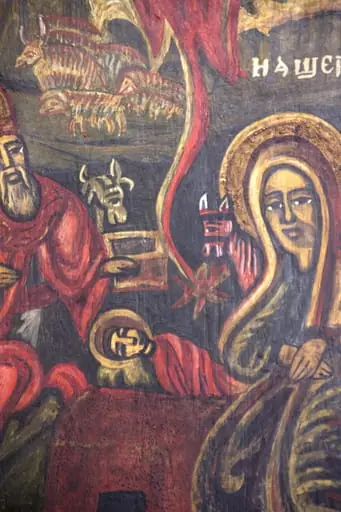 Piesă de formă dreptunghiulară, înfățișând imaginea a doi sfinți și Nașterea lui Iisus Christos. Scena este împărțită în trei registre: stânga sus - Sfântul Atanasie; dreapta sus - Sfântul Dumitru (cele două registre sunt despărțite de o ghirlandă); registrul inferior - în colțul din stânga sus al acestui registru se află un păstor cu oi, în stânga jos cei trei magi, în dreapta Iosif și Maria, iar central se află Pruncul Iisus. Deasupra capetelor Mariei și Iosif este scris cu litere chirilice - Nașterea lui Isus Hristos. Culori folosite: verde, negru, roșu, galben.
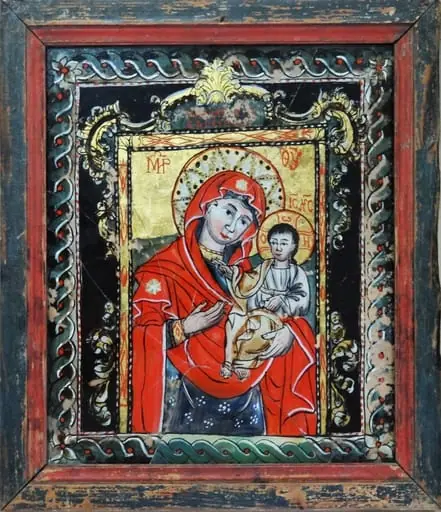 Maica Domnului cu Pruncul
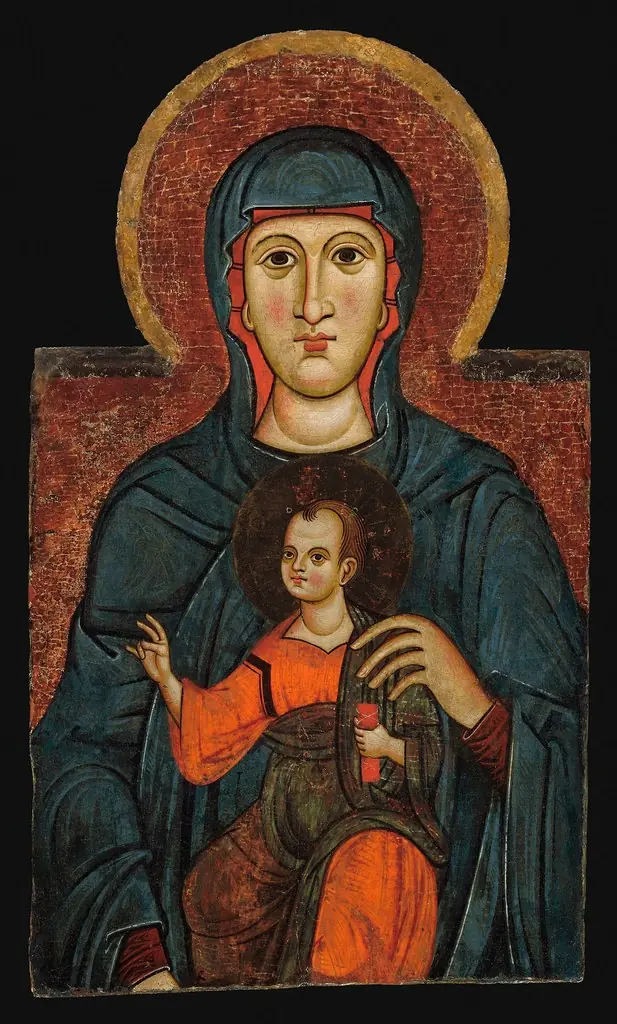 Virgin and Child
 Maica Domnului cu Pruncul
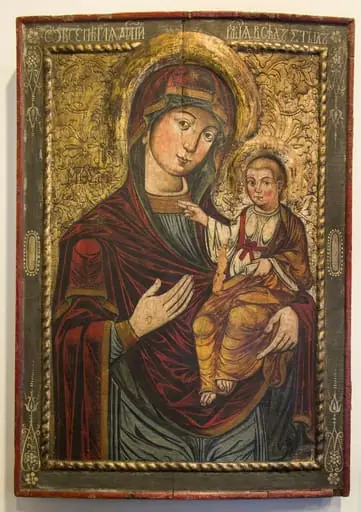 Maica Domnului cu pruncul; Icoană de catapeteasmă; Icoană împărătească
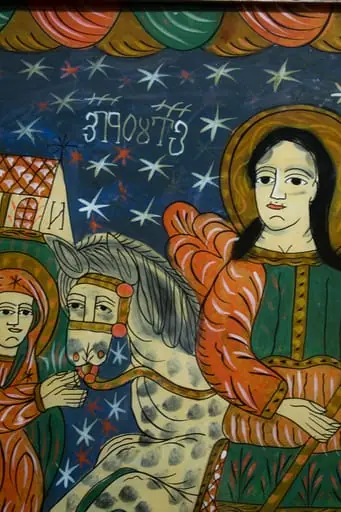 Icoaastr
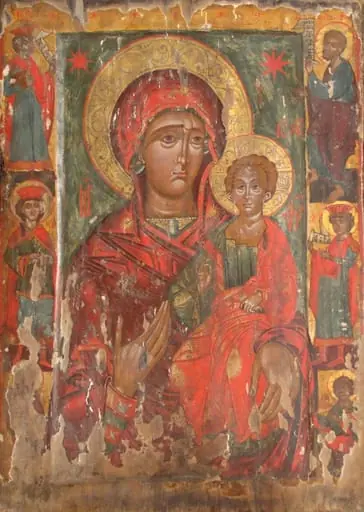 Maica Domnului cu Pruncul, flancată de prooroci
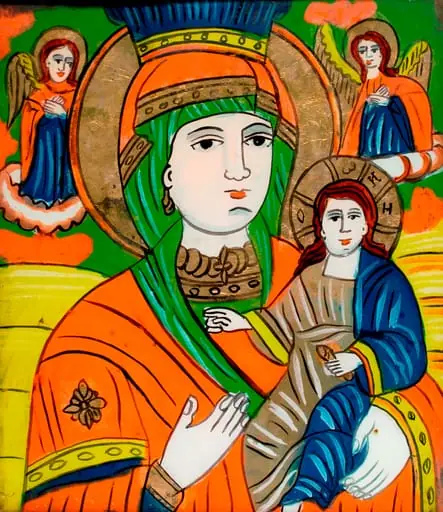 Icoagmen
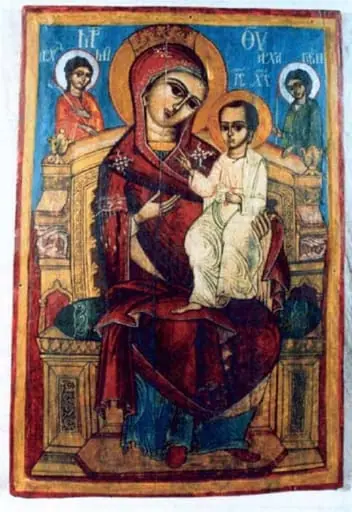 Maica cu Pruncul/Maica Împărăteasă-Doamnă
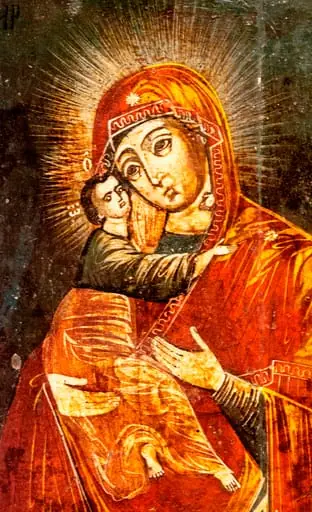
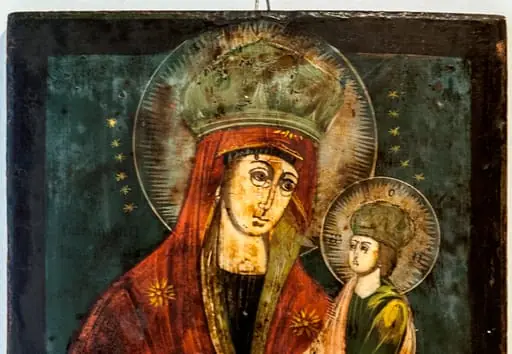 Maica Domnului cu Pruncul, tip derivat din Hodighitria(Călăuzitoarea), stil ce indică o școală rusească. Maria 3/4, ține Pruncul pe mâna stângă. Isus îi ține mâna dreaptă cu ambele mâini. Fecioara privește către Prunc cu cu o expresie de tristețe. Înveșmântată cu stolă albastră, cu blicuri de culoare mai deschisă, și decorațiune delicată la mâneci.Maforion roșu vișiniu, anticipând patimile.Pe margine decorație fină, la mânecă franjuri delicați. Pe frunte și pe umeri poartă stelele întreitei Feciorii, în formă de floare cu petale aciculare. Steaua de pe frunte este parțial acoperită de coroana împărătească de tip rusesc, închisă, mare. Aureola din raze alb galbene dispuse orizontal și încadrate de un cerc trasat cu un instrument. Isus poartă același tip de coroană, înconjurată de aureola cu raze, peste care au fost inscipționate însemnele nimbului cruciger. Chipul matur, sobru, trist, privind către Maica Sa. Fața rotundă, capul și mâinile de proporții mai mici în raport cu corpul.Înveșmântat cu un chiton verde cu blicuri galbene, peste care poartă, petrecut pe umărul drept un himation roșu orange cu blicuri alb aurii.Desculț. Nimburile sunt înconjurate de steluțe mici, aurii, dispuse pe fondul bleu închis la o mică distanță de linia de contur. Lângă umărul drept al Maicii apare o inscripție parțial șterasă, cu majuscule, în slavonă,.(SPOPUȘNIINÎ METȘA?). Chenar lat de culoare neagră, care este depășit de aura Fecioarei în partea de sus.
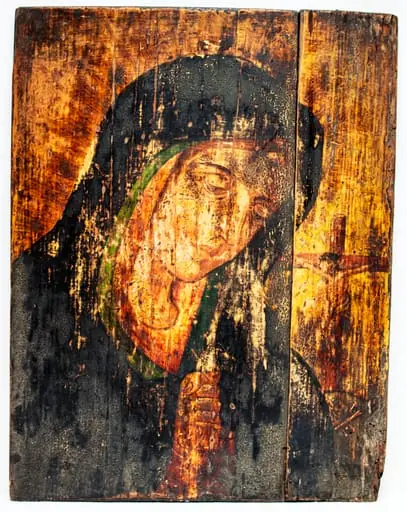 Icoana denumită și "Maica Domnului jalnică" sau îndurerată, o reprezintă pe Maica Domnului în prim plan, în veșmânt mohorât, cu mâinile împreunate, cu privirea interiorizată,concentrată asupra Fiul Ei răstignit pe cruce. Accentul cade pe durerea Mamei generată de răstignirea fiului ei, Iisus redat în planul îndepărtat, pe dealul Golgotei, unde la picioarele crucii este reprezantat craniul lui Adam, oasele strămoșilor ale căror păcate le spală sângele Mântuitorului. Maica este cernită, veșmântul lasă să i se vadă părul, ceea ce nu se întâmplă la alte tipuri de icoane. Mâinile împreunate. Sunt vădite influențele picturii apusene, trăsături renascentiste, buzele mari, cărnoase, nasul lung cu nări fine, pleoapele cu gene lungi, plecate sub sprâncenele arcuite. Tema este foarte frecventă în pictura pe sticlă din Transilvania, ceea ce confirmă filiera apuseană Modul de tratare al aureolei specific picturii occidentale. Fond ușor luminat, difuz.