Artwork
Crucifixion
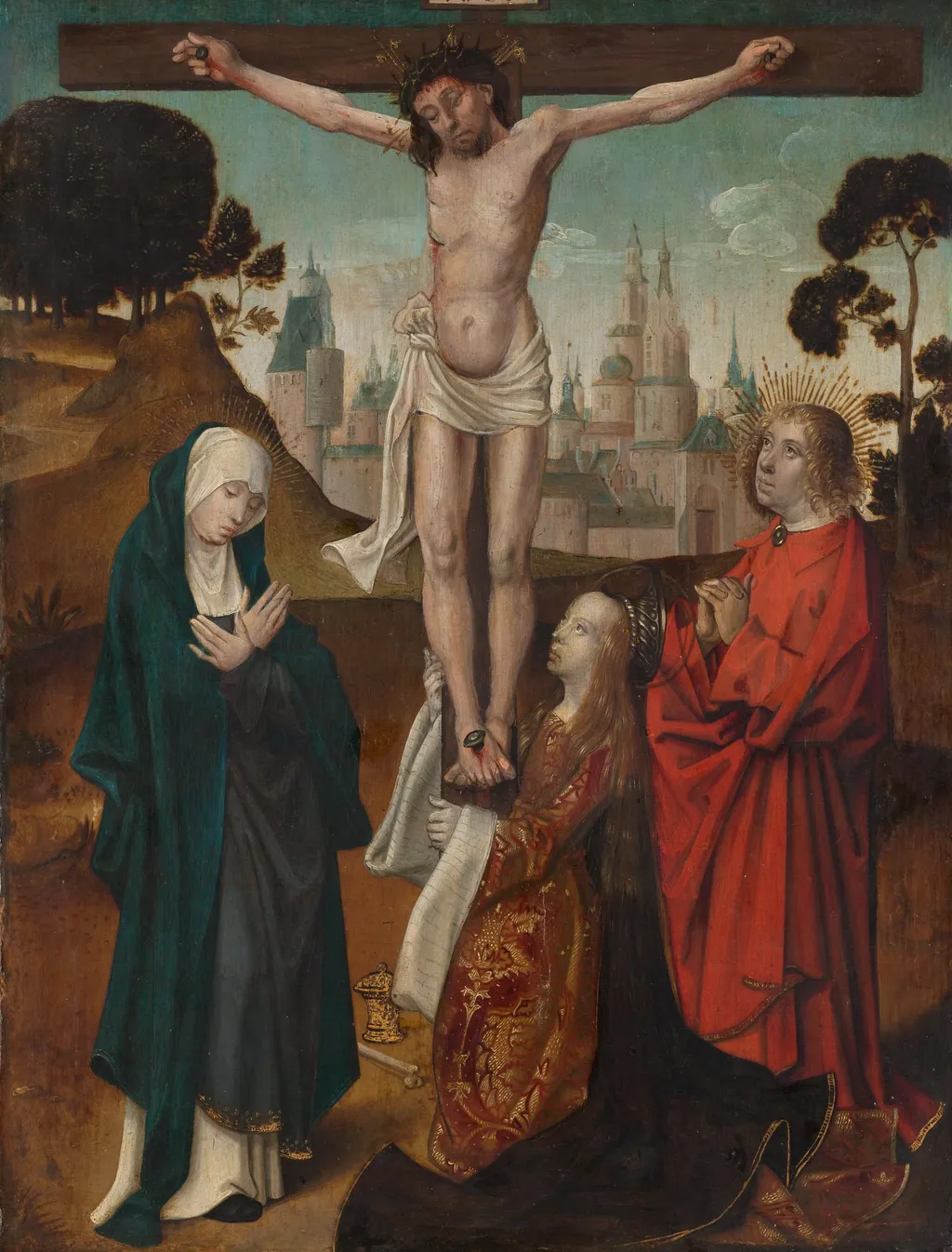
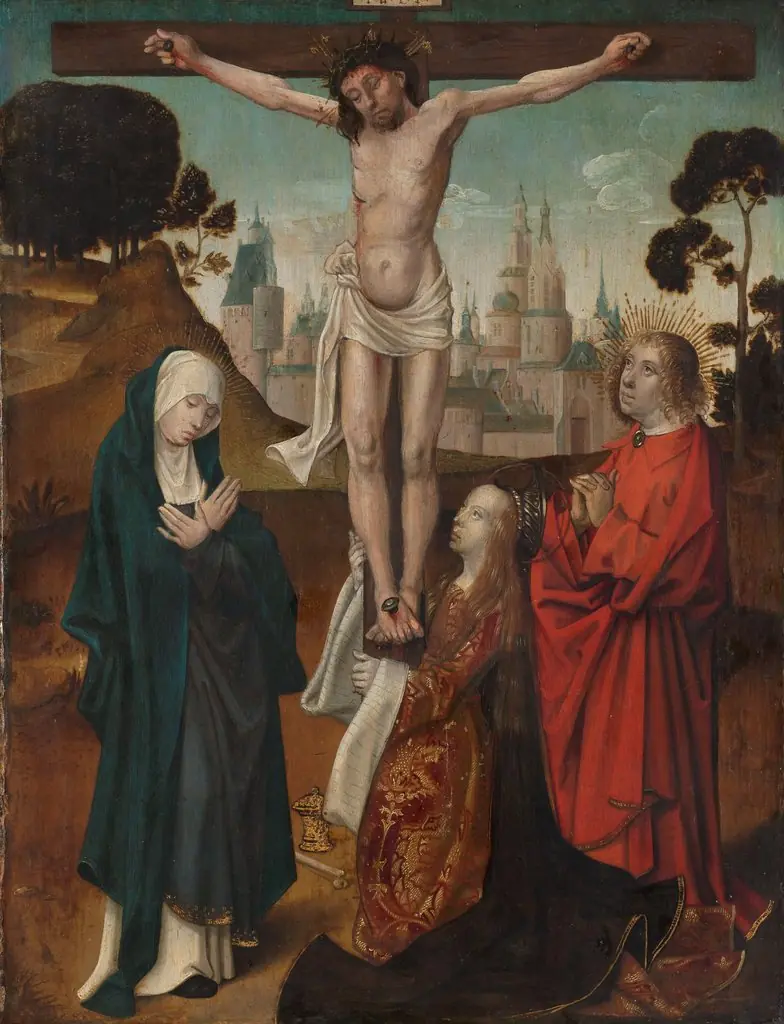
Crucifixion is an unspecified painting by the Northern Renaissance artist Unknown. It dates from 1510 and is held in the collection of the Rijksmuseum.
About this work
Overview
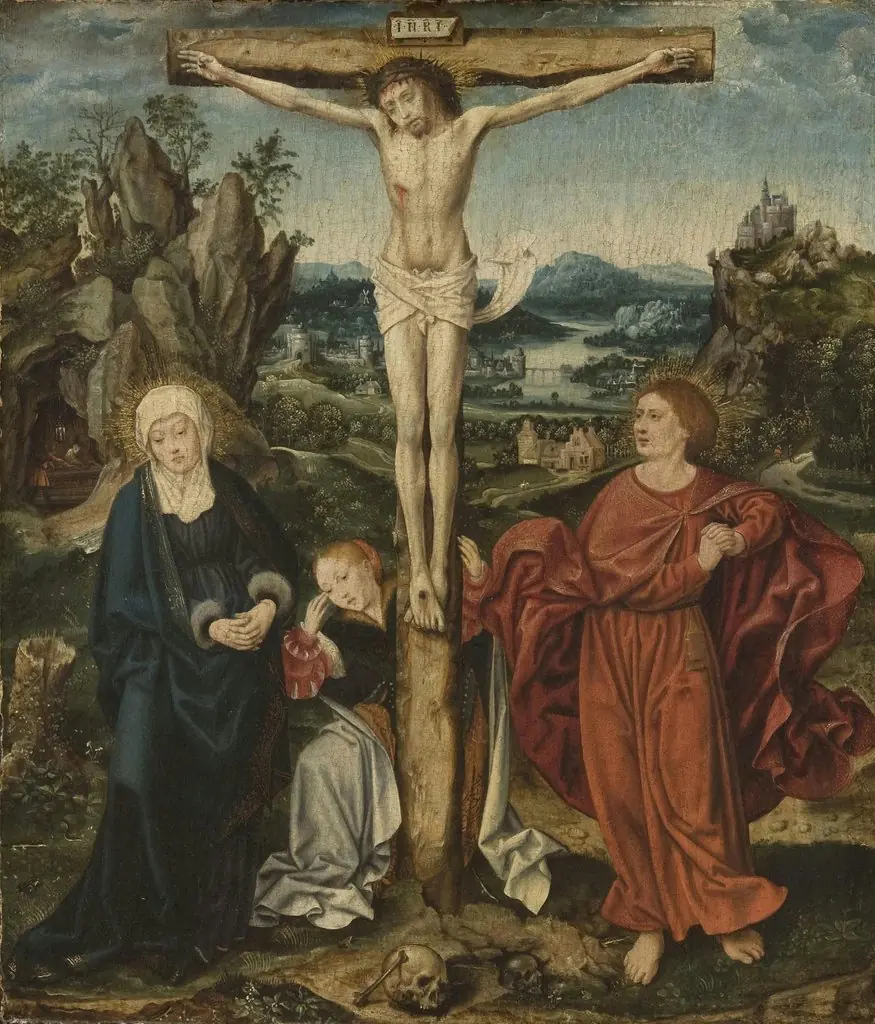
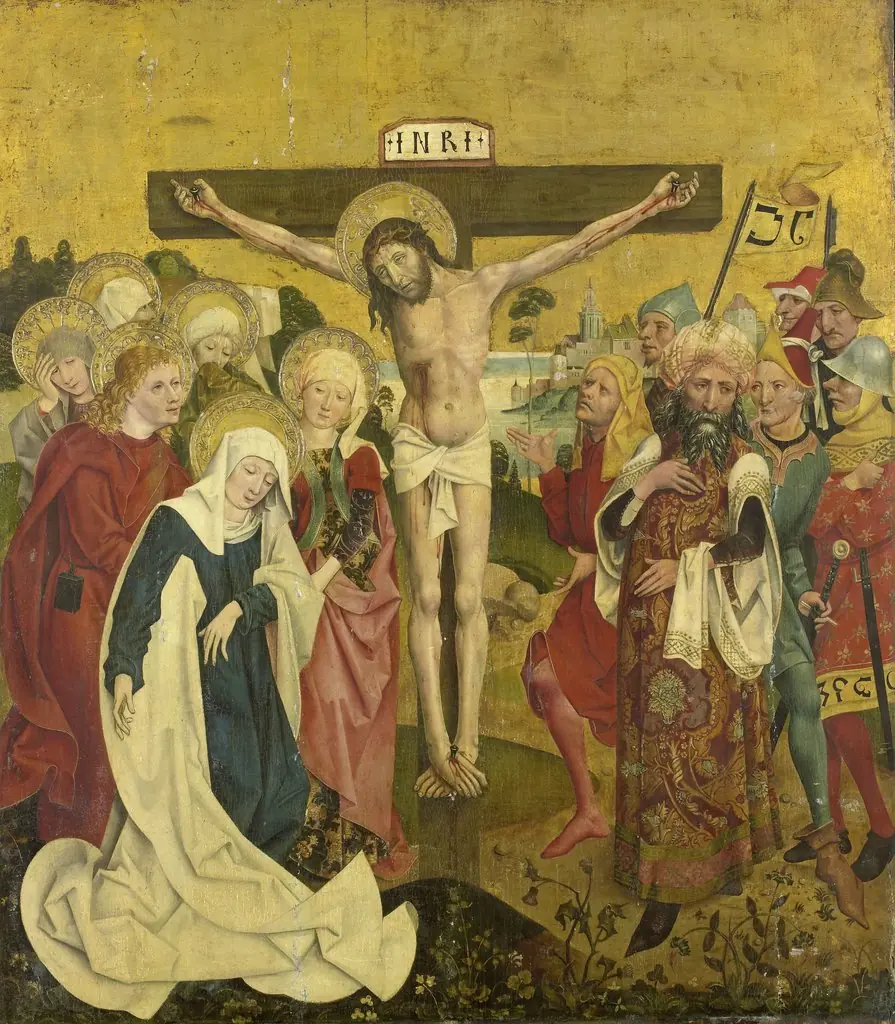
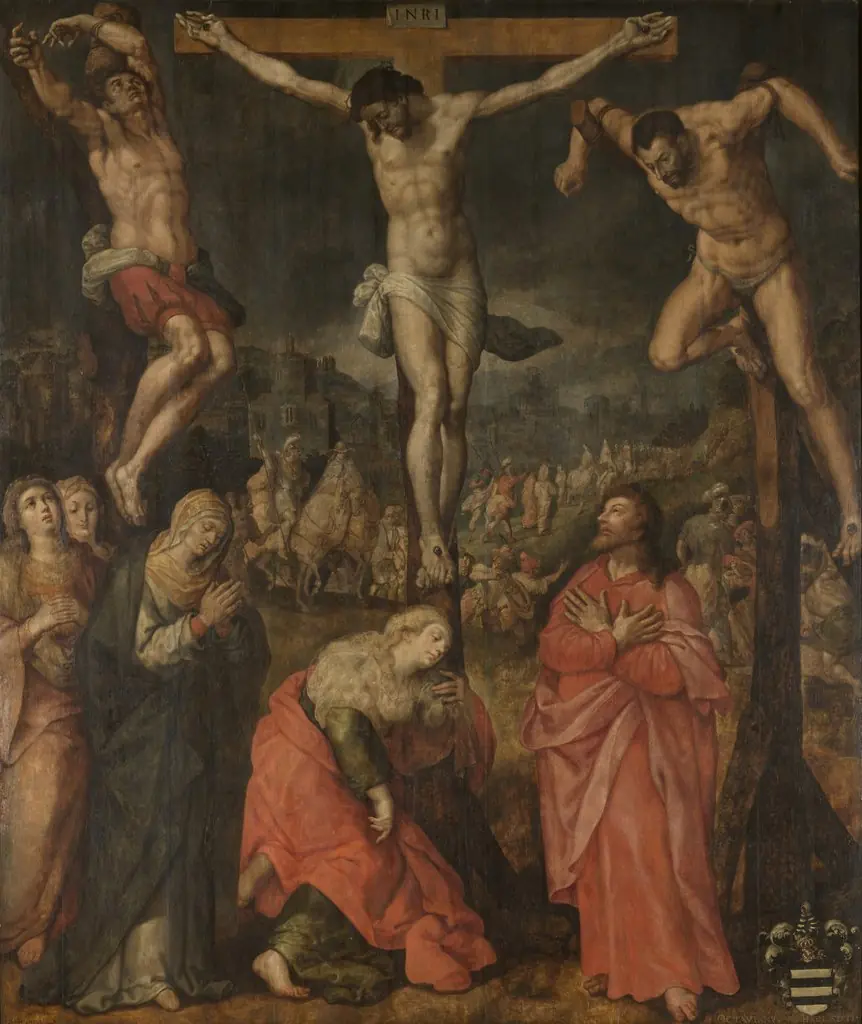
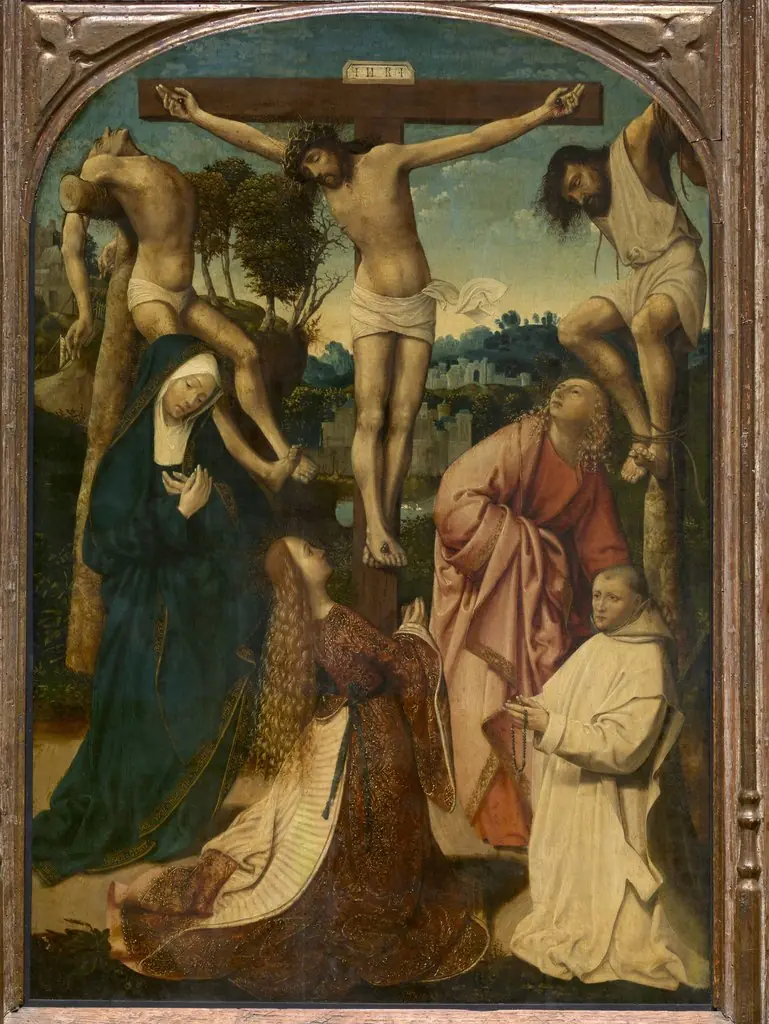
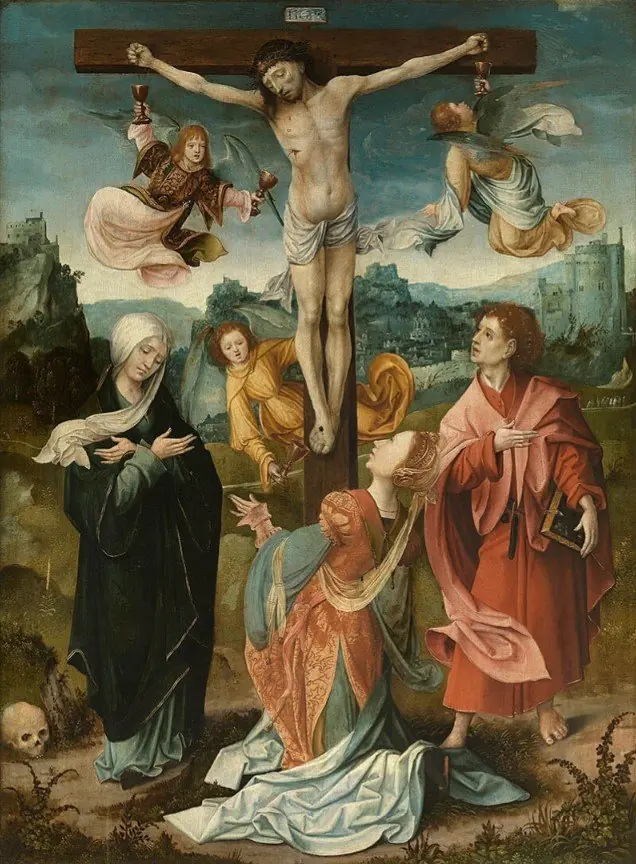
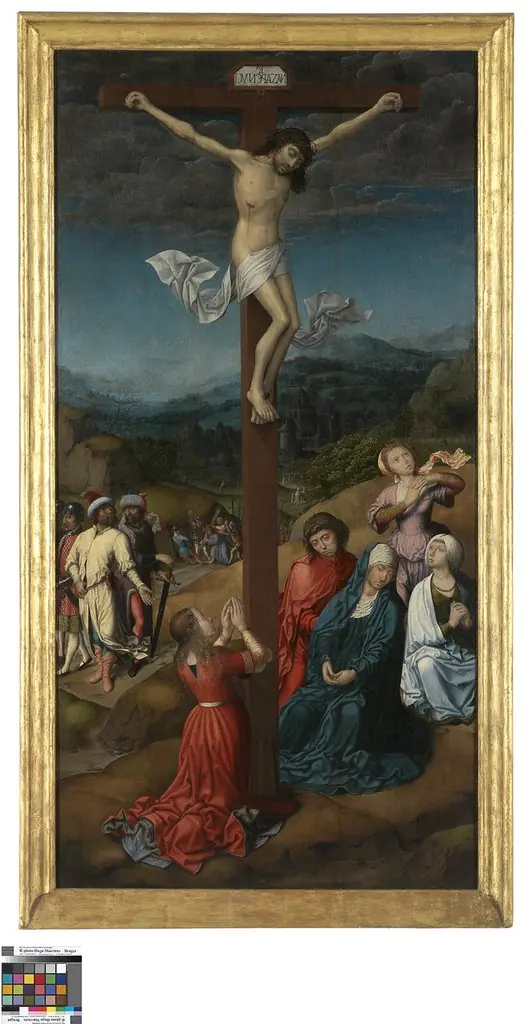
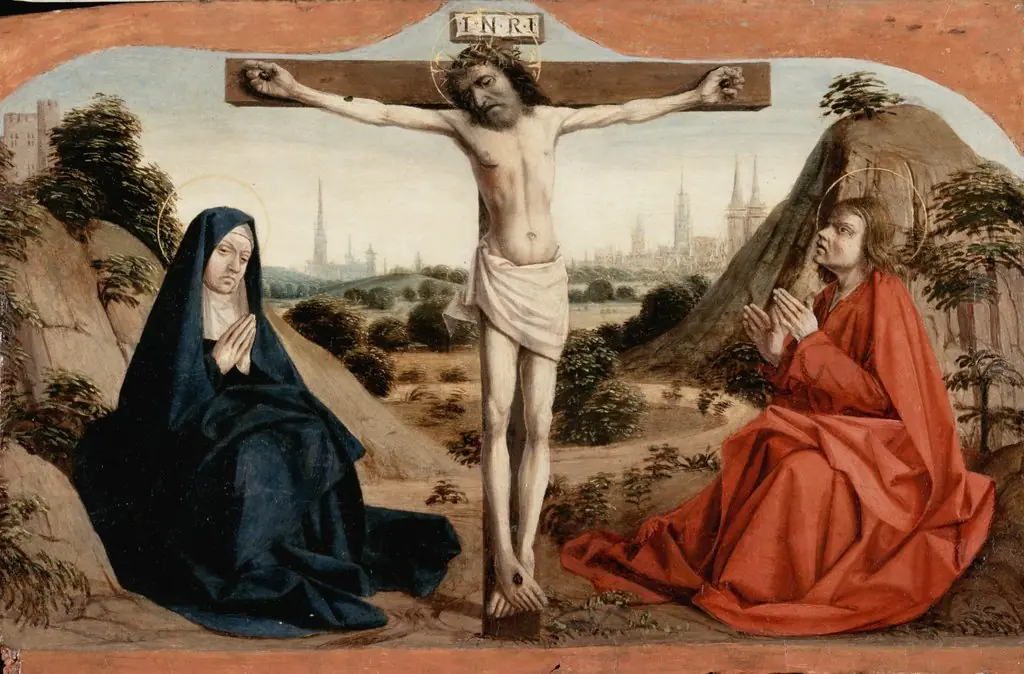
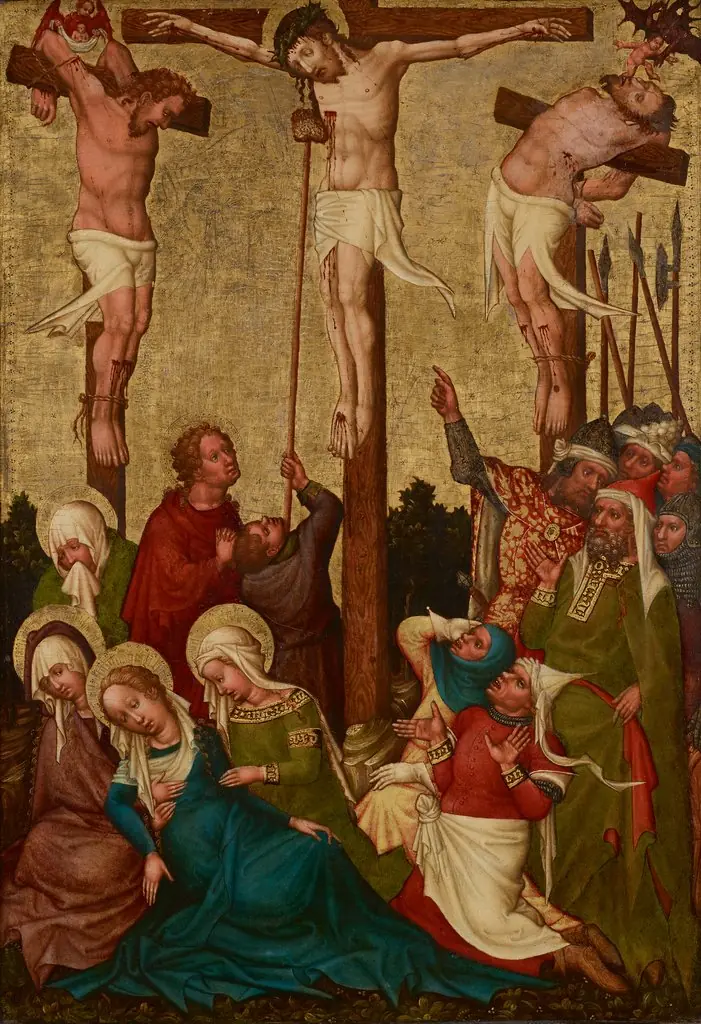
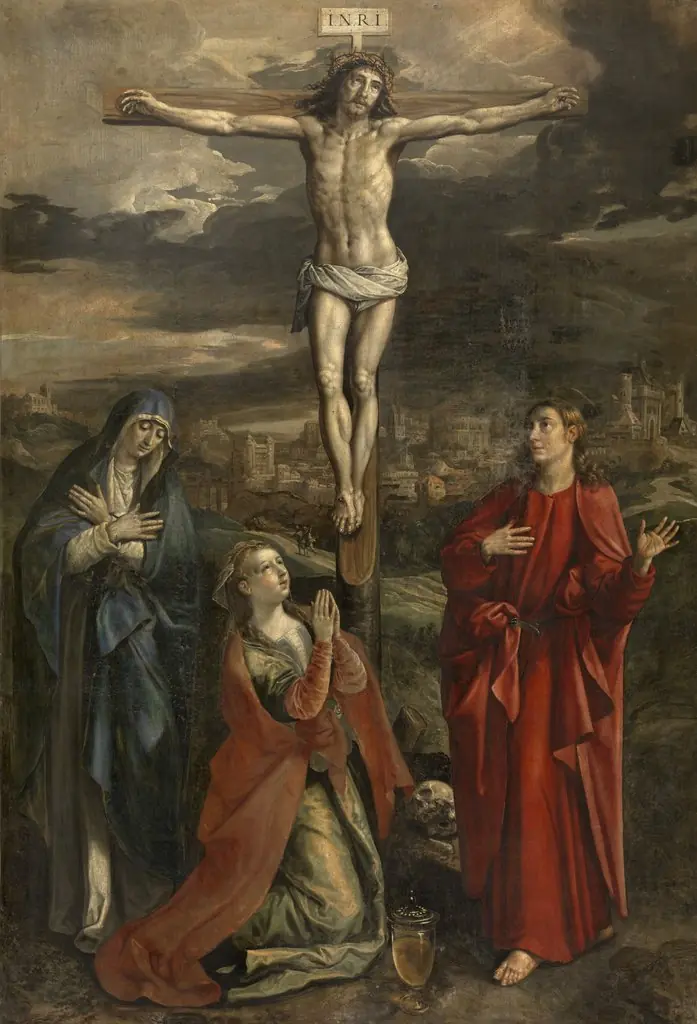
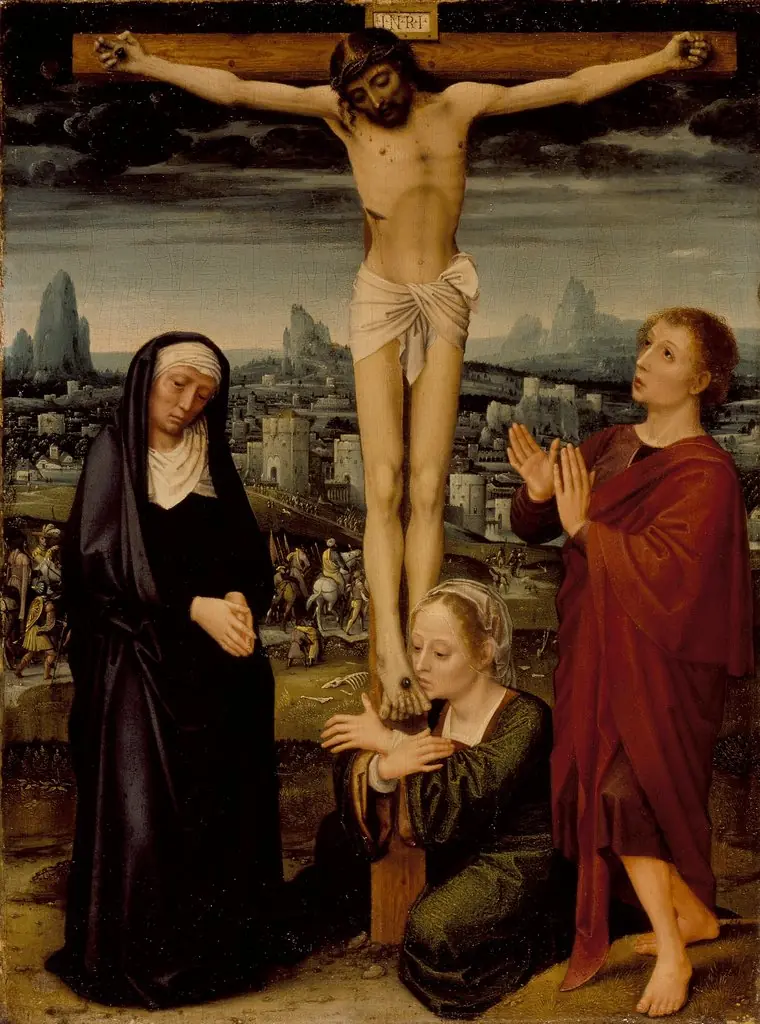
The work depicts the crucifixion of Christ, with the central figure on the cross flanked by the Virgin Mary on the left and Saint John on the right. Mary Magdalene is shown kneeling at the foot of the cross, while a fortified town lies behind them beneath a somber sky.
Subject & Meaning
The composition emphasizes the sorrow of the Passion, arranging the primary mourners around the crucified Christ to convey grief and devotion. The inclusion of a walled city may allude to Jerusalem, situating the event within its historical setting.
Technique & Style
Executed in the early sixteenth century, the painting employs a restrained palette and thin layers of paint that allow the dark background to dominate, creating a stark contrast with the lightly rendered figures. The facial features and garments are rendered with minimal detail, giving the scene a sketch‑like quality.
History & Provenance
The artist remains unidentified, and the work’s early 1500s origin is established through stylistic analysis rather than documentary evidence. Its provenance prior to acquisition by the museum is not recorded.
Context
During the period, crucifixion scenes were common devotional subjects, often used to inspire contemplation of Christ’s sacrifice. The simplified treatment of figures aligns with a trend toward more intimate, emotionally direct religious imagery in the early Renaissance.
Artist & collection

 Domestic Scene
 Giacomo and Cardinal Marco, investing Andrea, Abbot of San Zeno, with his Benefice
 The Nymph of Fontainebleau
 Portrait of a Woman
 Madonna and Child with Saints in the Enclosed Garden
 Venus and Minerva
 Family Group of Four on Sofa
 Wall painting from Room H of the Villa of P. Fannius Synistor at Boscoreale