Artwork
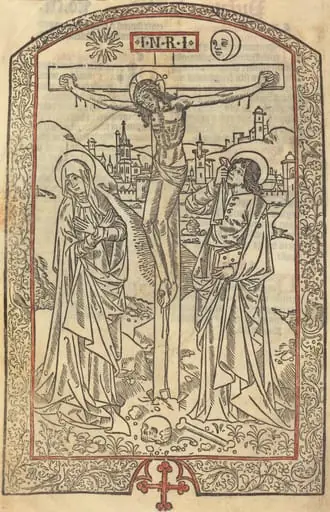
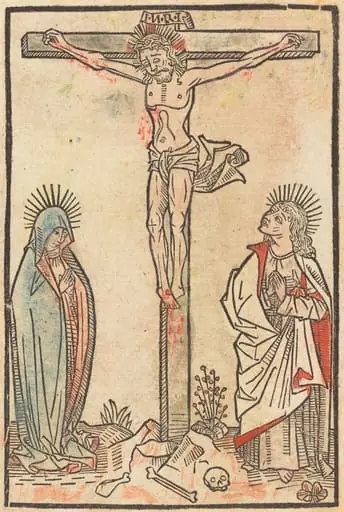
Crucifixion; published in Operette: Regola a tutti religiosi, Trattato del sacramento e dei misteri della Messa, Ragola del ben vivere
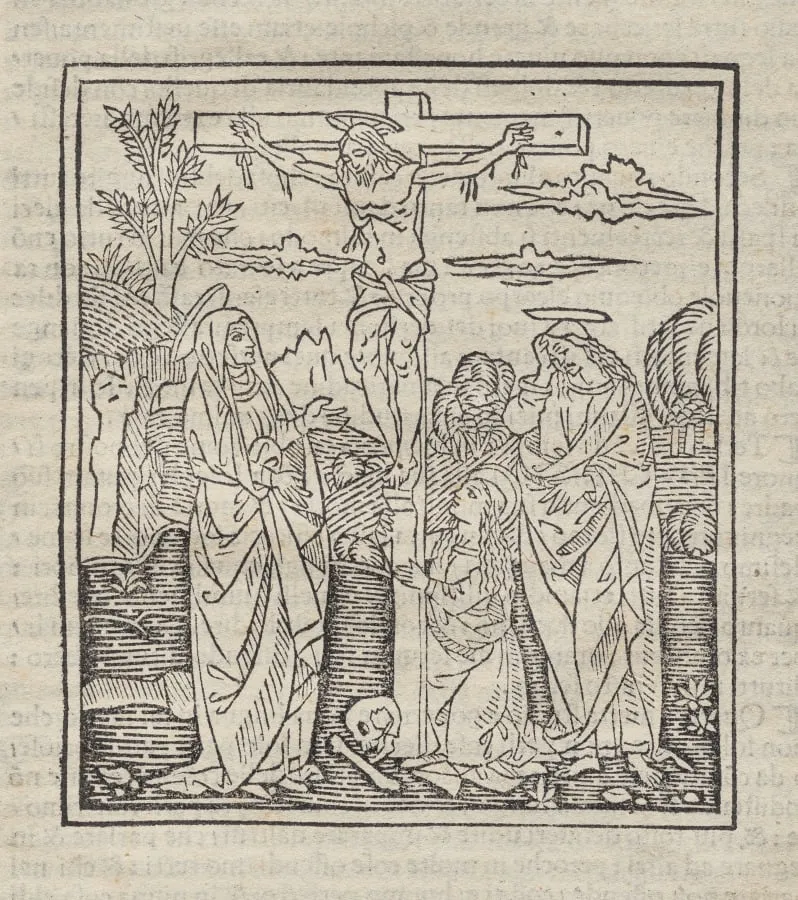
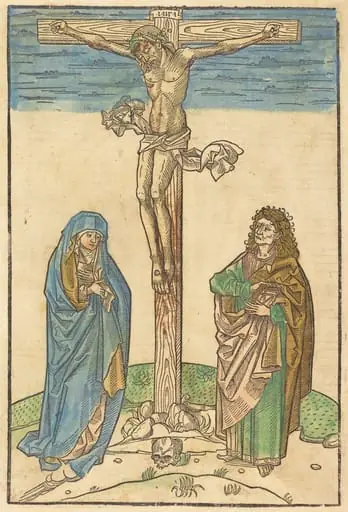
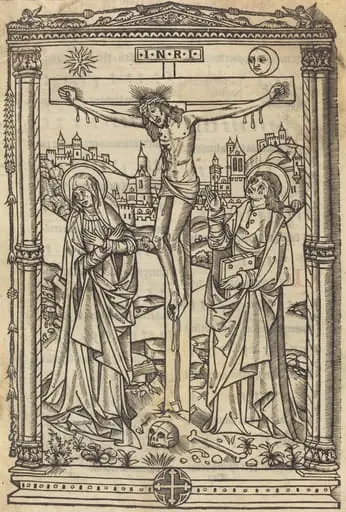
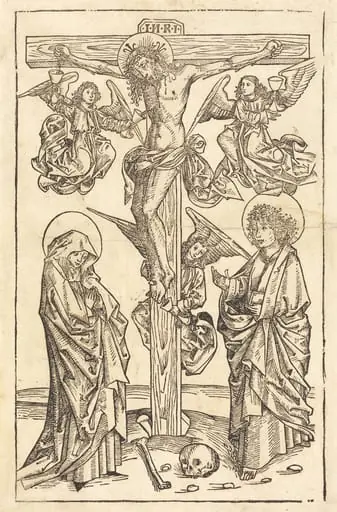
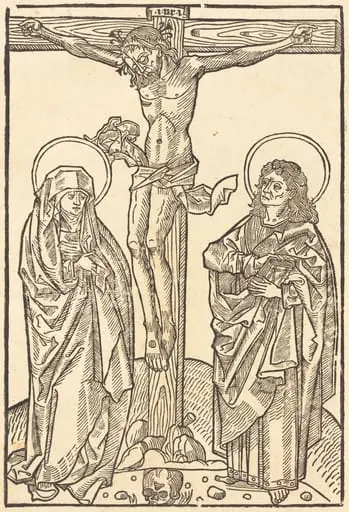
Crucifixion; published in Operette: Regola a tutti religiosi, Trattato del sacramento e dei misteri della Messa, Ragola del ben vivere is a print by the Renaissance artist Unknown. It dates from 1499 and is held in the collection of the Cleveland Museum of Art. This woodcut depicts Christ on the cross flanked by two thieves, printed around 1499 in a devotional handbook for religious communities.
About this work
This image was printed in a book of rules for monks around 1499, right after Savonarola was hanged in Florence.
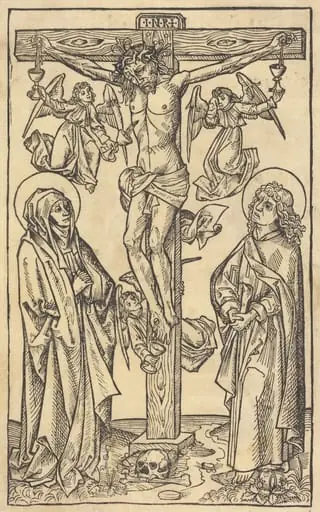
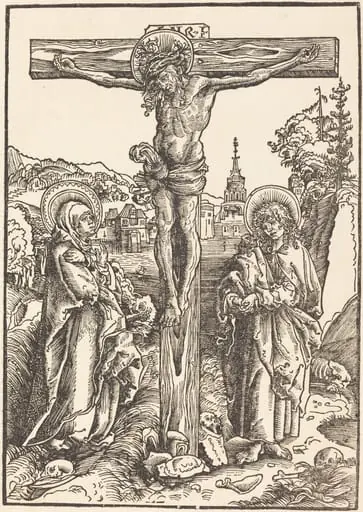
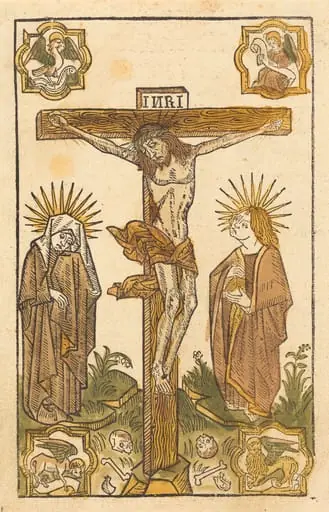
You see a simple woodcut of Christ on the cross, with two thieves beside him.
This image was printed in a book of rules for monks around 1499, right after Savonarola was hanged in Florence. He preached against fancy art and luxury, yet here’s a picture meant to teach faith—plain, not fancy. The artist is unknown, but the style feels urgent, like a sermon in ink.
To see more art from this time, look up *italy, florence, late 15th century*.
Overview
This woodcut depicts Christ on the cross flanked by two thieves, printed around 1499 in a devotional handbook for religious communities. Produced anonymously in Florence shortly after the execution of Girolamo Savonarola, the image reflects the austere spiritual climate of the time. Its simplicity aligns with the friar’s rejection of ornate religious art, yet it serves as a tool for meditation, not decoration.
Subject & Meaning
The scene presents the Crucifixion in stark, unadorned form, emphasizing suffering and sacrifice over grandeur. By omitting halos, elaborate backgrounds, or decorative elements, the image redirects focus to the theological core of Christ’s death. It was intended to reinforce monastic discipline and personal piety, consistent with Savonarola’s teachings that rejected worldly splendor in favor of spiritual purity.
Technique & Style
Executed as a woodcut, the image uses bold, linear contrasts and minimal detail to convey its message with clarity. The figures are arranged symmetrically, their forms simplified to essential outlines. The printing style is functional, lacking the refinement of commercial art, suggesting rapid production for devotional use rather than aesthetic display.
History & Provenance
Created for inclusion in a 1499 edition of religious rules and sermons, the print emerged in the immediate aftermath of Savonarola’s execution. Though he had condemned luxury in art, this image—plain yet purposeful—was used to sustain the moral urgency of his message. Its placement in a monastic manual indicates continued interest in his teachings despite his condemnation by the Church.
Context
Florence in the late 1490s was a city in spiritual turmoil, torn between the radical reforms of Savonarola and the restored power of the Medici and papal authority. Art production shifted from celebratory patronage to utilitarian religious instruction. This print exemplifies how visual imagery adapted to serve doctrinal clarity amid political and ecclesiastical upheaval.
Legacy
The woodcut stands as a quiet testament to the tension between reform and tradition in Renaissance religious life. Though Savonarola’s movement collapsed, such images preserved a strand of ascetic devotion that influenced later monastic and Counter-Reformation art. Its anonymity and modesty underscore how spiritual conviction could be communicated without institutional endorsement.
Artist & collection

 Domestic Scene
 Giacomo and Cardinal Marco, investing Andrea, Abbot of San Zeno, with his Benefice
 The Nymph of Fontainebleau
 Portrait of a Woman
 Madonna and Child with Saints in the Enclosed Garden
 Venus and Minerva
 Family Group of Four on Sofa
 Wall painting from Room H of the Villa of P. Fannius Synistor at Boscoreale