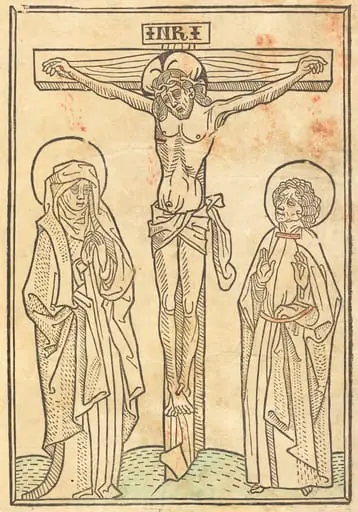
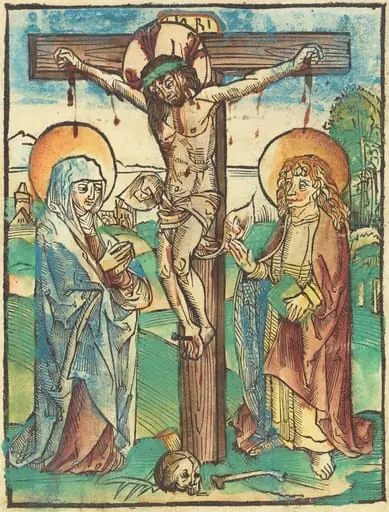
Artwork
Christ on the Cross
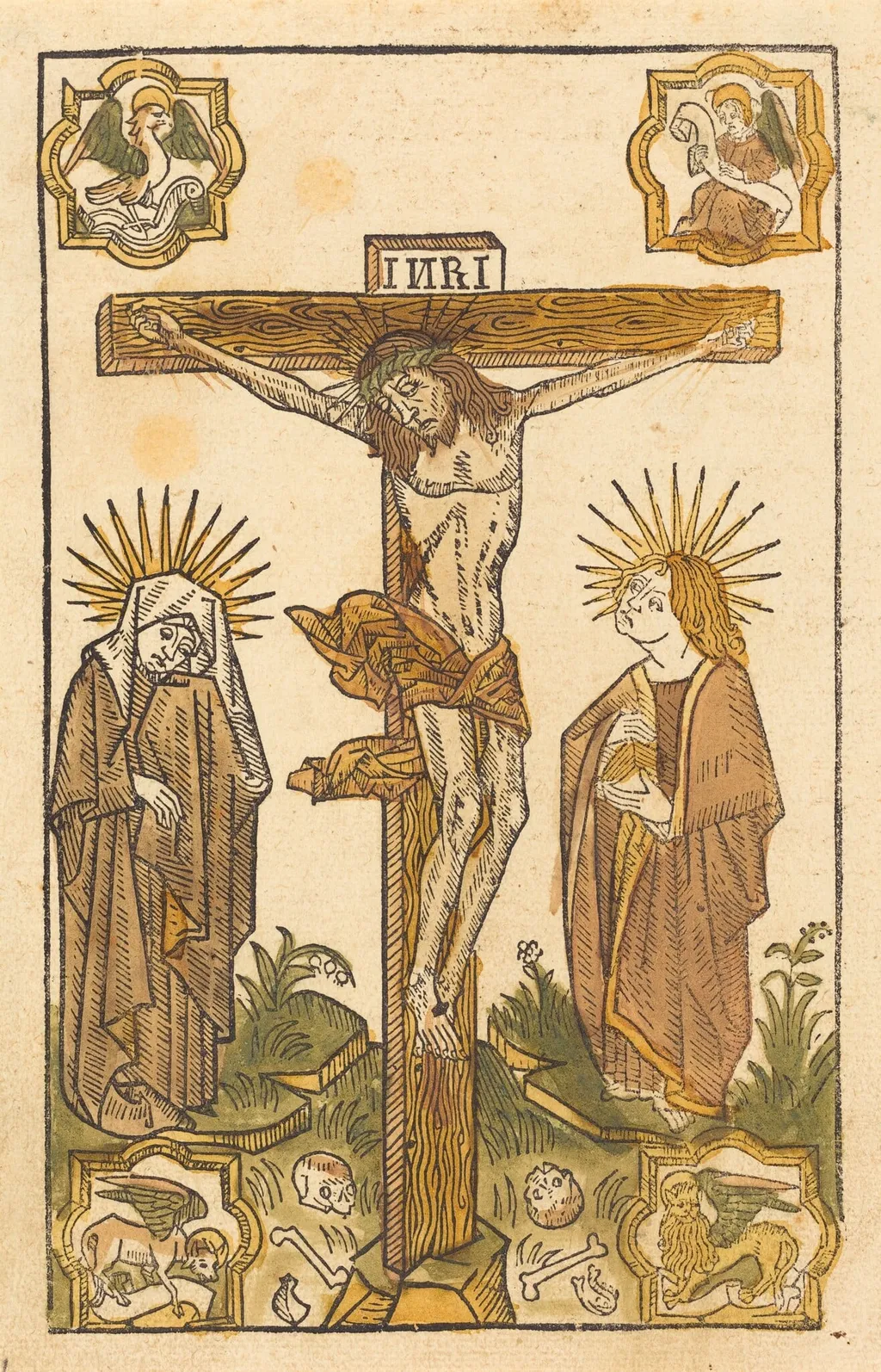
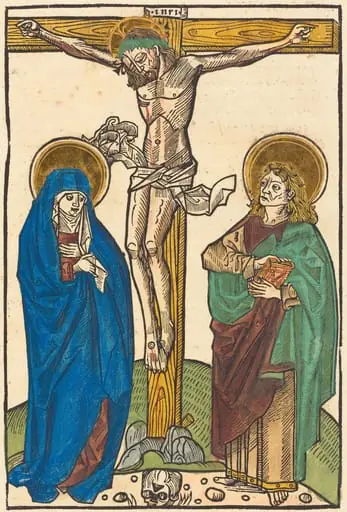
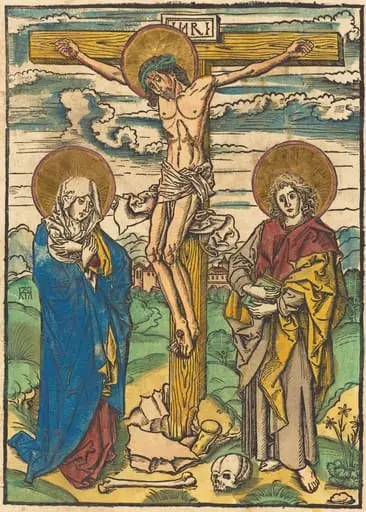
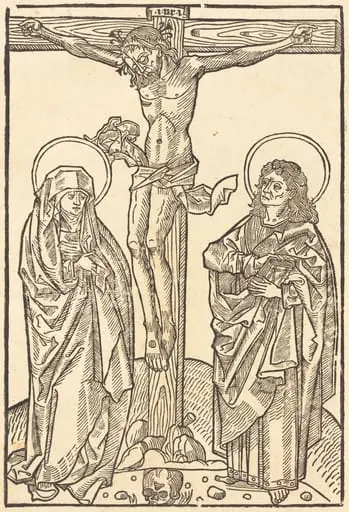
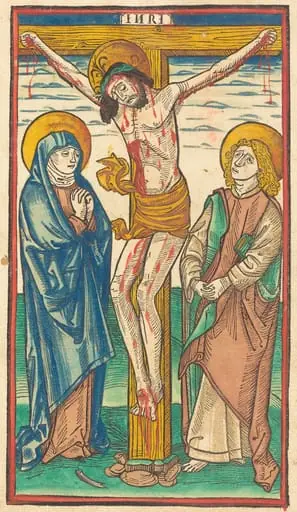
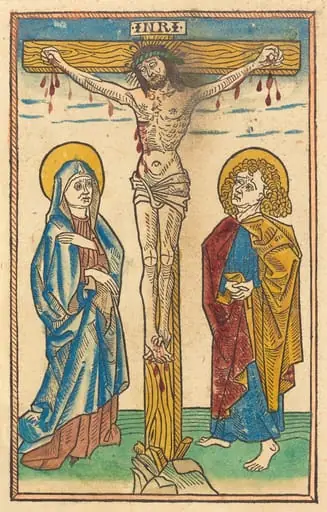
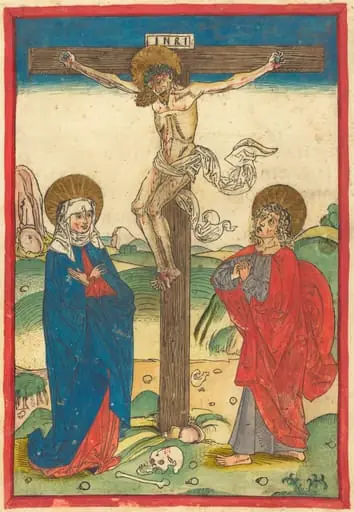
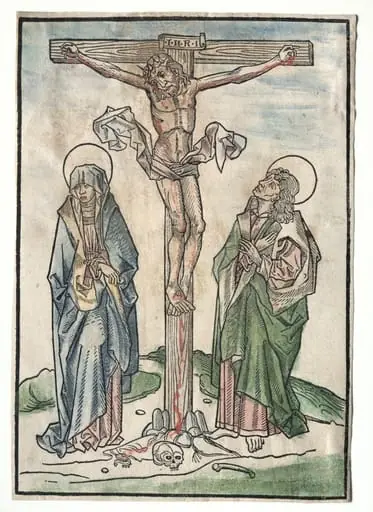
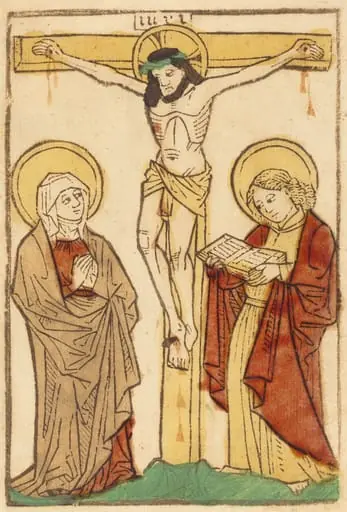
Christ on the Cross is an ink print by the Renaissance artist German 15th Century. It dates from 1485 and is held in the collection of the National Gallery of Art. The work is a hand‑colored woodcut on laid paper that depicts the crucifixion of Christ.
About this work
Overview
The central figure is nailed to a cross with arms outstretched, flanked below by two mourners—a grieving man on the left and a contemplative woman on the right.
The work is a hand‑colored woodcut on laid paper that depicts the crucifixion of Christ. The central figure is nailed to a cross with arms outstretched, flanked below by two mourners—a grieving man on the left and a contemplative woman on the right. Small angelic vignettes appear above the cross, while a lower register contains symbolic motifs such as skulls and a lion, all rendered in earthy pigments.
Subject & Meaning
The image presents the traditional Christian narrative of the Passion, emphasizing both the physical suffering of the crucified Christ and the emotional response of the faithful. The mourners’ gestures—clasped hands and up‑turned gaze—suggest prayer and sorrow, while the angelic scenes above hint at divine presence. The inclusion of the monogram IHS, an abbreviation of the name of Jesus, reinforces the work’s devotional intent.
Technique & Style
Executed as a woodcut, the design relies on sharply incised lines that define the figures and architectural elements. After printing, the image was hand‑colored with a limited palette of brown, tan, ochre, olive and red, giving it a muted, rustic character typical of early printmaking. The use of laid paper provides a textured surface that enhances the contrast between the dark outlines and the subtle coloration.
Context
Woodcut prints of biblical scenes were widely circulated in the late medieval and early modern periods as affordable devotional images. The combination of a clear narrative composition with symbolic marginalia reflects the didactic purpose of such prints, intended to instruct viewers on the theological significance of Christ’s sacrifice while offering visual meditation aids.
Artist & collection

Artist
This 15th-century German artist carved vivid religious scenes into metal and wood, then hand-painted them in bright, symbolic colors.

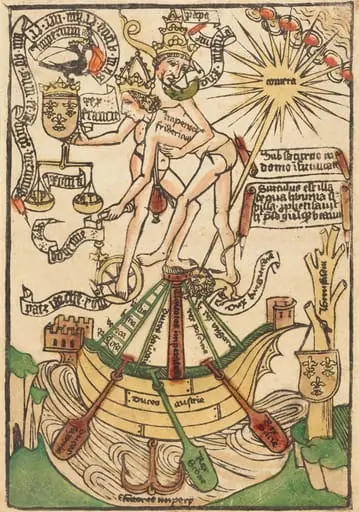 Allegory of the Meeting of Pope Paul II and Emperor Frederick III
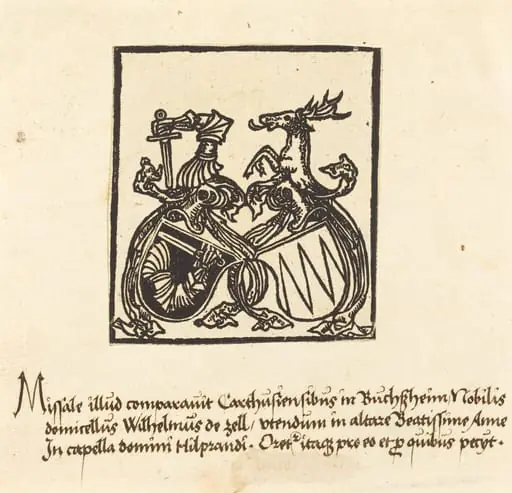 Bookplate of Wilhelm von Zell
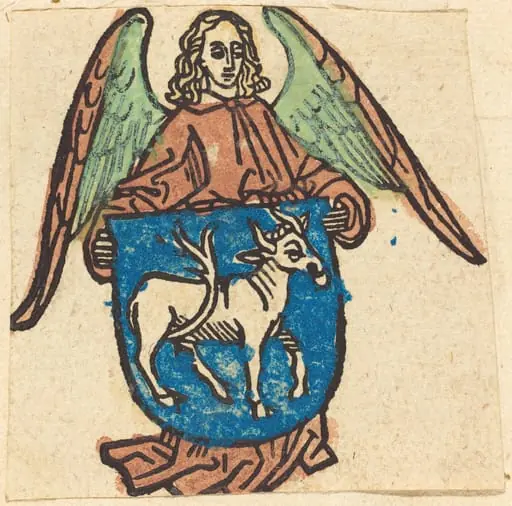 Bookplate of Hilprand Brandenburg of Bibrach
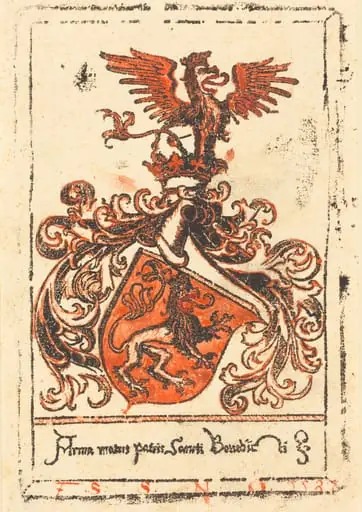 Bookplate of the Abbey of Ottobeuren
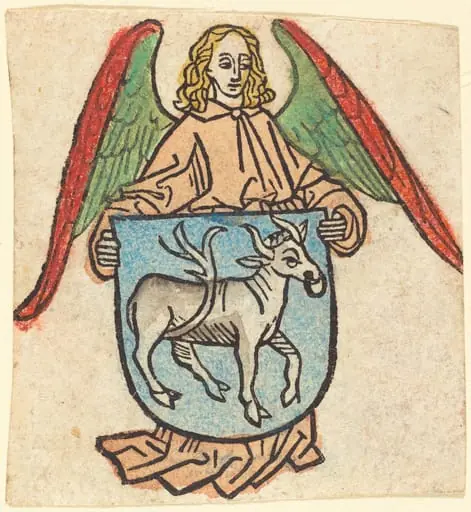 Bookplate of Hilprand Brandenburg of Bibrach
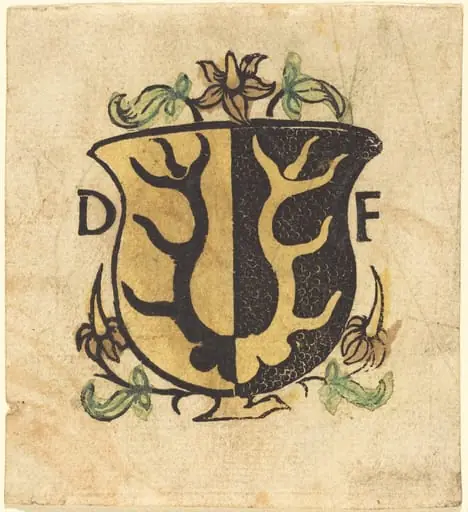 Bookplate of Dominicus Frauenfelder
![Studies for Six Figures (sheet from a model book) [recto], by German 15th Century](https://artifactworldgallery.com/img/german-15th-century--studies-for-six-figures-sheet-from-a-model-book-recto--4837429e0755bc3f-w320.webp) Studies for Six Figures (sheet from a model book) [recto]
Studies for Six Figures (sheet from a model book) [recto]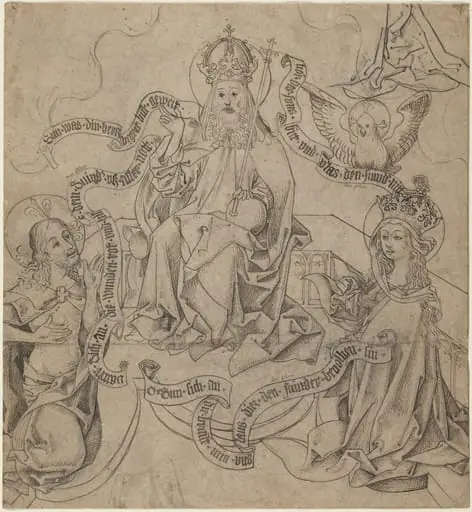 Christ and Mary Interceding with God the Father