Artwork
Deisis
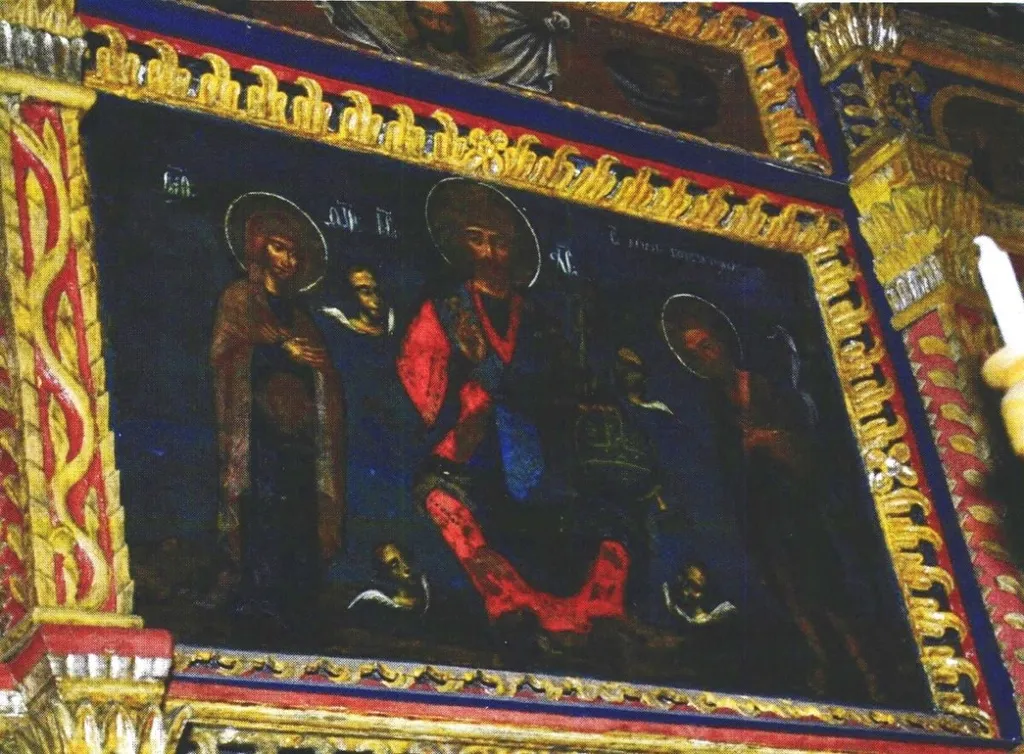
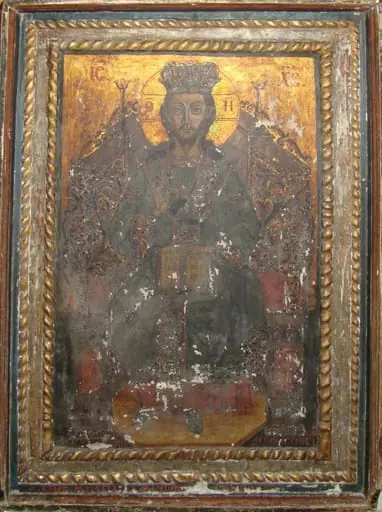
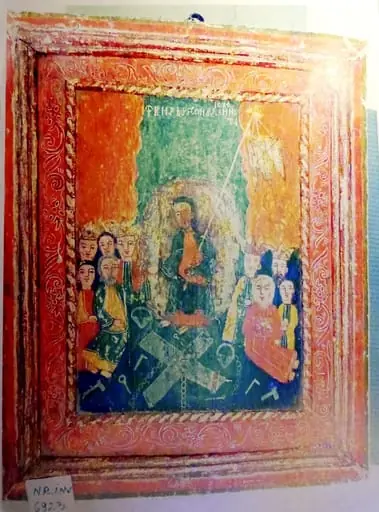
Deisis is a drawing by the Romanticist artist Unknown. It dates from 1810 and is held in the collection of the National Museum of Bukovina.
About this work
Overview
It is housed in the Museum of Ethnography, though its stylistic roots lie outside the Romanticism movement often mistakenly associated with it.
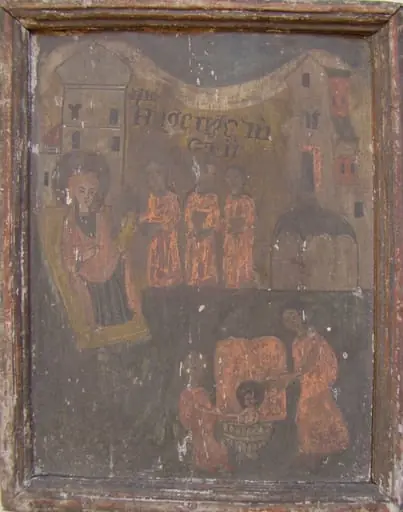
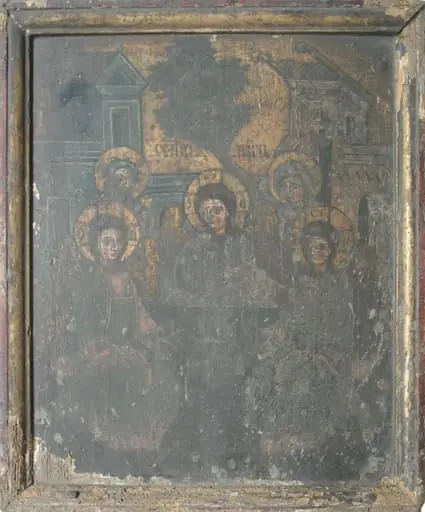
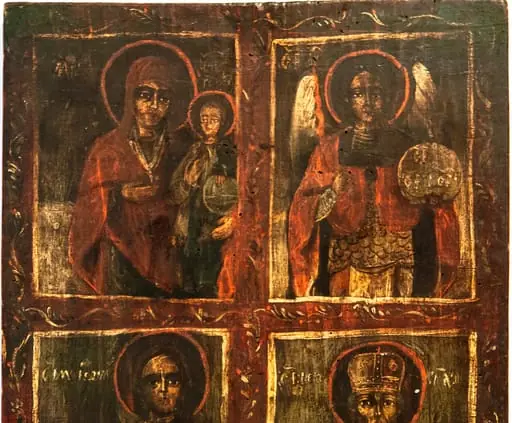
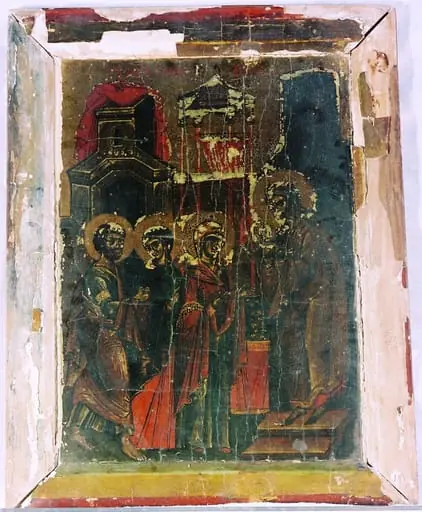
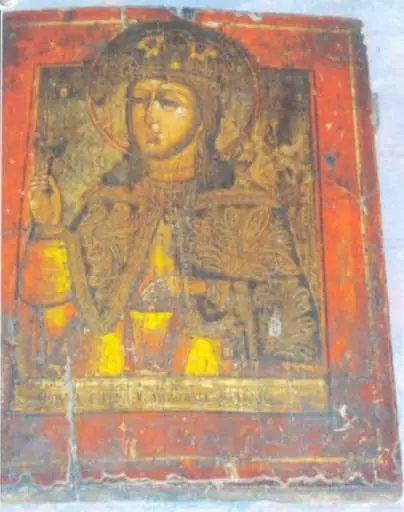
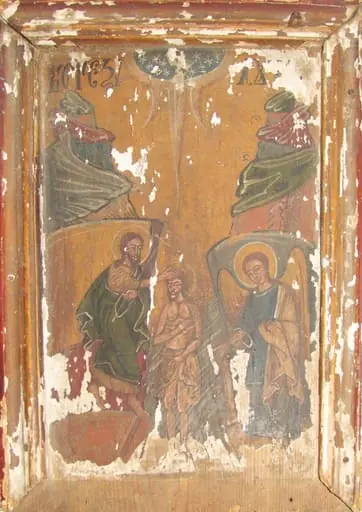
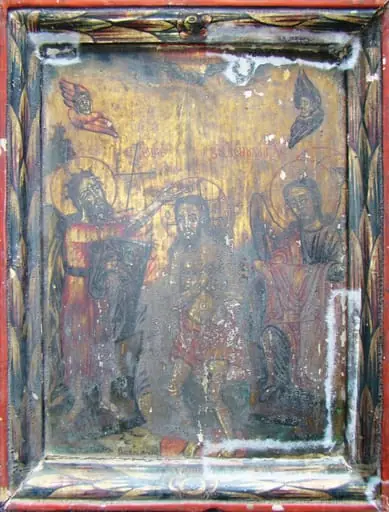
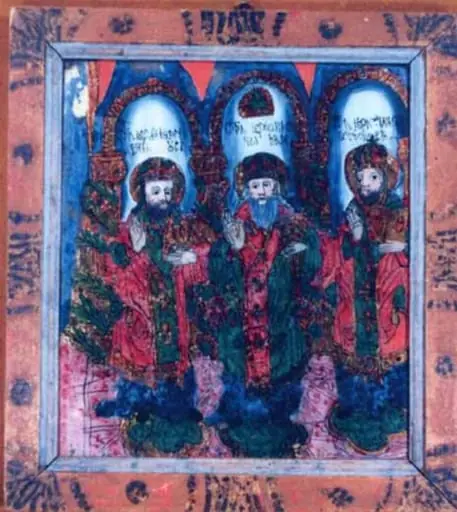
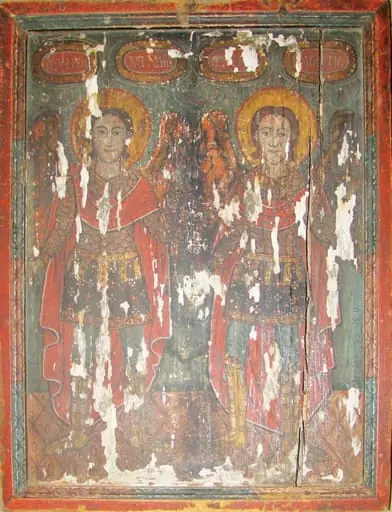
This panel painting, titled Deisis, depicts a solemn assembly of figures in richly adorned robes, each marked by a halo. Set against a background of gold and red decorative patterns, the scene conveys a quiet intensity. The figures appear engaged in contemplative interaction, with one holding a book and another gesturing toward an unseen point. It is housed in the Museum of Ethnography, though its stylistic roots lie outside the Romanticism movement often mistakenly associated with it.
Subject & Meaning
The Deisis composition traditionally represents Christ flanked by the Virgin Mary and John the Baptist, interceding on behalf of humanity. Here, the figures’ solemn demeanor and hierarchical arrangement suggest a moment of divine supplication. The book and pointing gesture may symbolize scriptural authority or divine revelation, reinforcing the spiritual function of the image as a focus for prayer or veneration.
Technique & Style
The painting employs a flat, hierarchical composition typical of Byzantine iconography, with figures rendered in elongated proportions and minimal spatial depth. Gold leaf and crimson pigments dominate the background, enhancing the sacred atmosphere. Facial expressions are restrained, emphasizing spiritual presence over individual emotion, consistent with liturgical art traditions rather than later Western naturalism.
History & Provenance
The work originates from a region with strong Byzantine artistic influence, likely produced in the medieval or early post-Byzantine period. It entered the collection of the Museum of Ethnography through documented acquisition, possibly as part of a broader effort to preserve religious artifacts from Eastern Europe or the Balkans. Its preservation suggests continued cultural significance beyond its original ecclesiastical context.
Context
Deisis panels were common in Orthodox Christian churches, positioned above the iconostasis to frame the central altar. Their function was liturgical and devotional, not decorative. The use of gold and symbolic gestures aligns with theological concepts of heaven’s radiance and intercessory prayer. This work reflects a continuity of Eastern Christian visual language, distinct from Western Renaissance developments.
Legacy
Though often misattributed to Romanticism, the painting belongs to a much older tradition of Eastern Christian iconography. Its presence in an ethnographic museum underscores its role as a cultural artifact, preserved for study rather than worship. Scholars now emphasize its connection to Byzantine and post-Byzantine practices, helping to correct earlier misclassifications and reaffirm its place in religious art history.
Artist & collection
 Domestic Scene
 Giacomo and Cardinal Marco, investing Andrea, Abbot of San Zeno, with his Benefice
 The Nymph of Fontainebleau
 Portrait of a Woman
 Madonna and Child with Saints in the Enclosed Garden
 Venus and Minerva
 Family Group of Four on Sofa
 Wall painting from Room H of the Villa of P. Fannius Synistor at Boscoreale