Artwork
Depictions of a Hoopoe and a Goshawk of Northern India
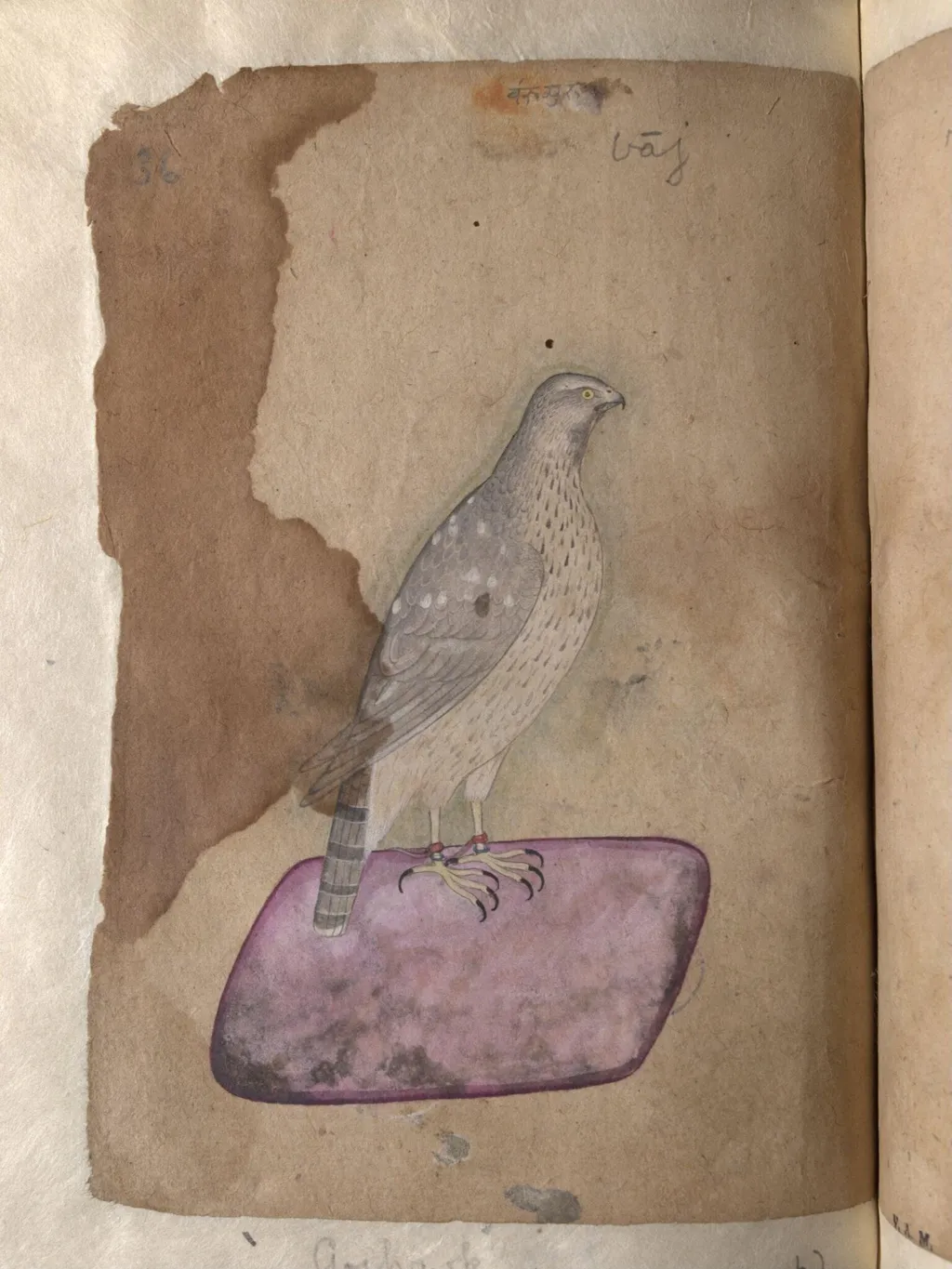
Depictions of a Hoopoe and a Goshawk of Northern India is a paint painting by the Patna School of Painting artist Unknown. It dates from 1820 and is held in the collection of the Victoria and Albert Museum. Two small watercolour studies on stained paper occupy opposite pages of a single album folio.
About this work
Overview
Two small watercolour studies on stained paper occupy opposite pages of a single album folio. One image portrays a hoopoe, the other a goshawk, both birds native to northern India. The compositions are rendered on a flat, purple ground that isolates the subjects, allowing their forms and plumage to dominate the visual field.
Subject & Meaning
The left-hand illustration captures a diminutive hoopoe, recognizable by its elongated, striped crest and modest size. Opposite it, a larger bird with speckled plumage and a hooked beak represents a goshawk. The pairing highlights contrasting avian types—one a distinctive passerine, the other a raptor—providing a comparative study of Indian birdlife.
Technique & Style
Executed in watercolour, the artist employs simple geometric shapes and a limited palette of bright hues to delineate feathers, claws and beak details. The stained paper lends a warm undertone, while the plain purple background eliminates extraneous context, emphasizing anatomical accuracy and the delicate texture of each bird's plumage.
History & Provenance
The folio entered the museum collection through a 1929 donation by Robert Scott Greenshields, a former officer of the Indian Civil Service. Greenshields’ contribution reflects the period’s practice of transferring personal colonial-era documents and artworks to public institutions for scholarly access.
Artist & collection

 Domestic Scene
 Giacomo and Cardinal Marco, investing Andrea, Abbot of San Zeno, with his Benefice
 The Nymph of Fontainebleau
 Portrait of a Woman
 Madonna and Child with Saints in the Enclosed Garden
 Venus and Minerva
 Family Group of Four on Sofa
 Wall painting from Room H of the Villa of P. Fannius Synistor at Boscoreale
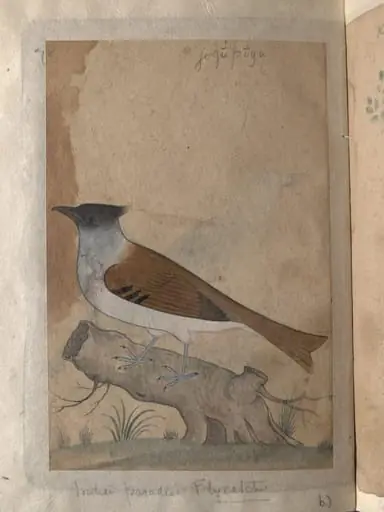 Depictions of Indian house crow and a Indian paradise flycatcher of Northern India
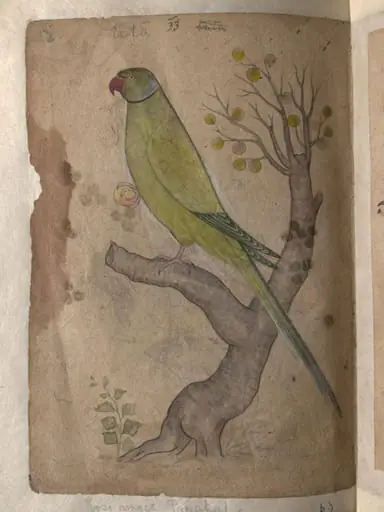 Depictions of Striated scops owl and Rose-ringed parakeet of Northern India
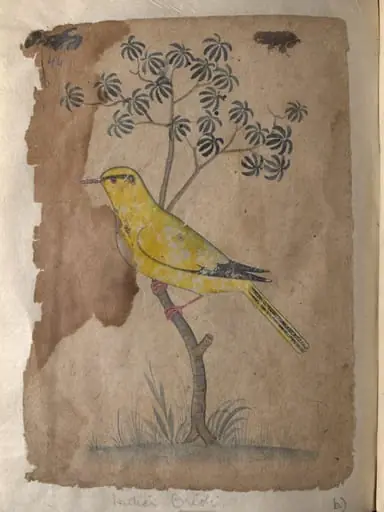 Depictions of a Shikra and a Indian oriole of Northern India
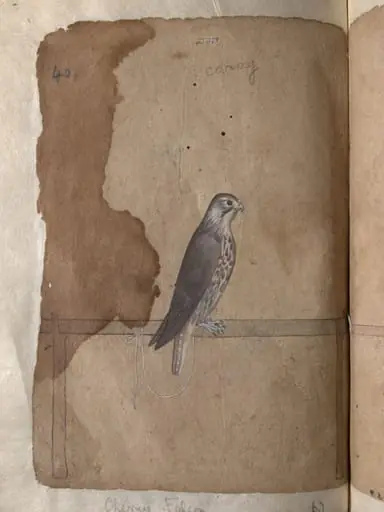 Depictions of a Eastern peregrine falcon and Cherrug falcon of Northern India
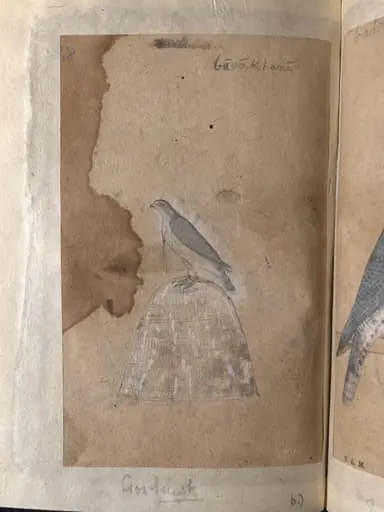 Depictions of a Bronze-winged dove and a Goshawk of Northern India
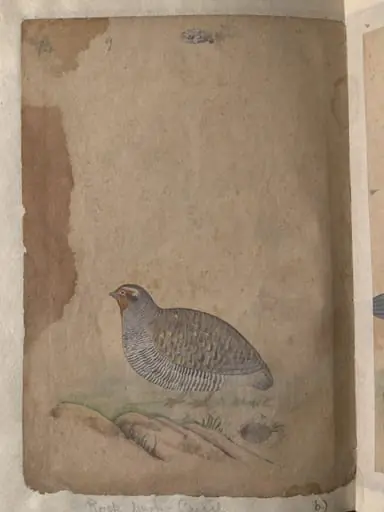 Depictions of a (unfinished drawing) and a Rock bush-quail of Northern India
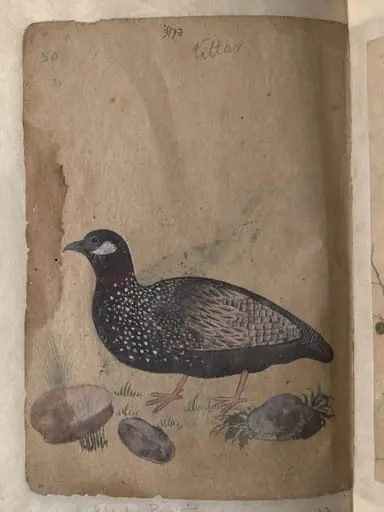 Depictions of Common (or grey) quail and a Black partridge of Northern India
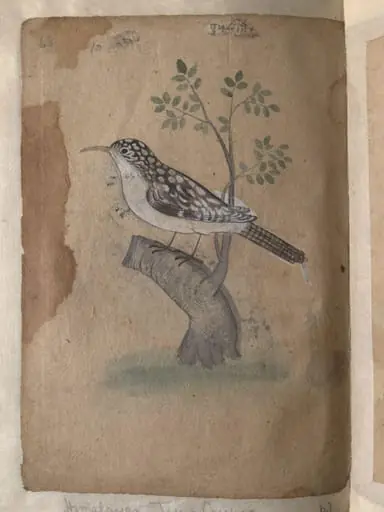 Depictions of a Common Indian myna and a Himalayan tree-creeper of Northern India
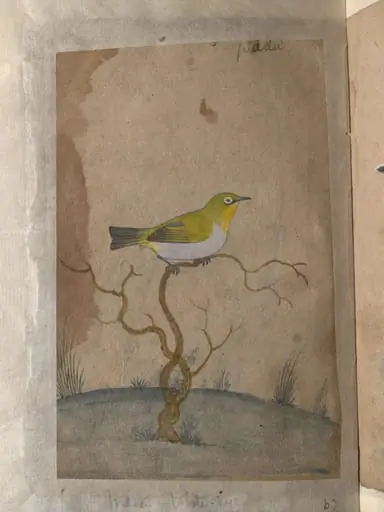 Depictions of a Indian spotted owlet and a Indian white-eye of Northern India
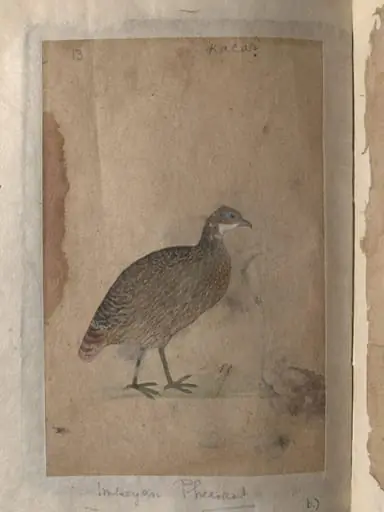 Depictions of Chukor partridge and Impeyan pheasant of Northern India
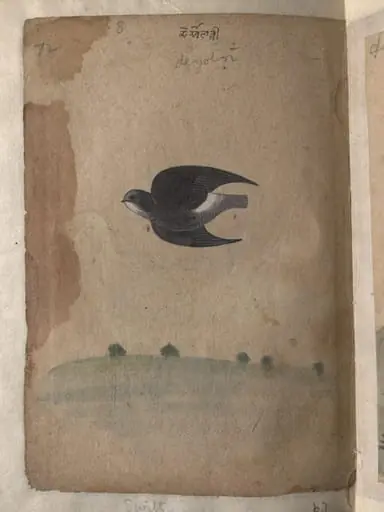 Depictions of a Green pigeon (?) and a Common house-swift of Northern India