Artwork
Depictions of a Grey lag goose and Knob-billed goose, of Northern India
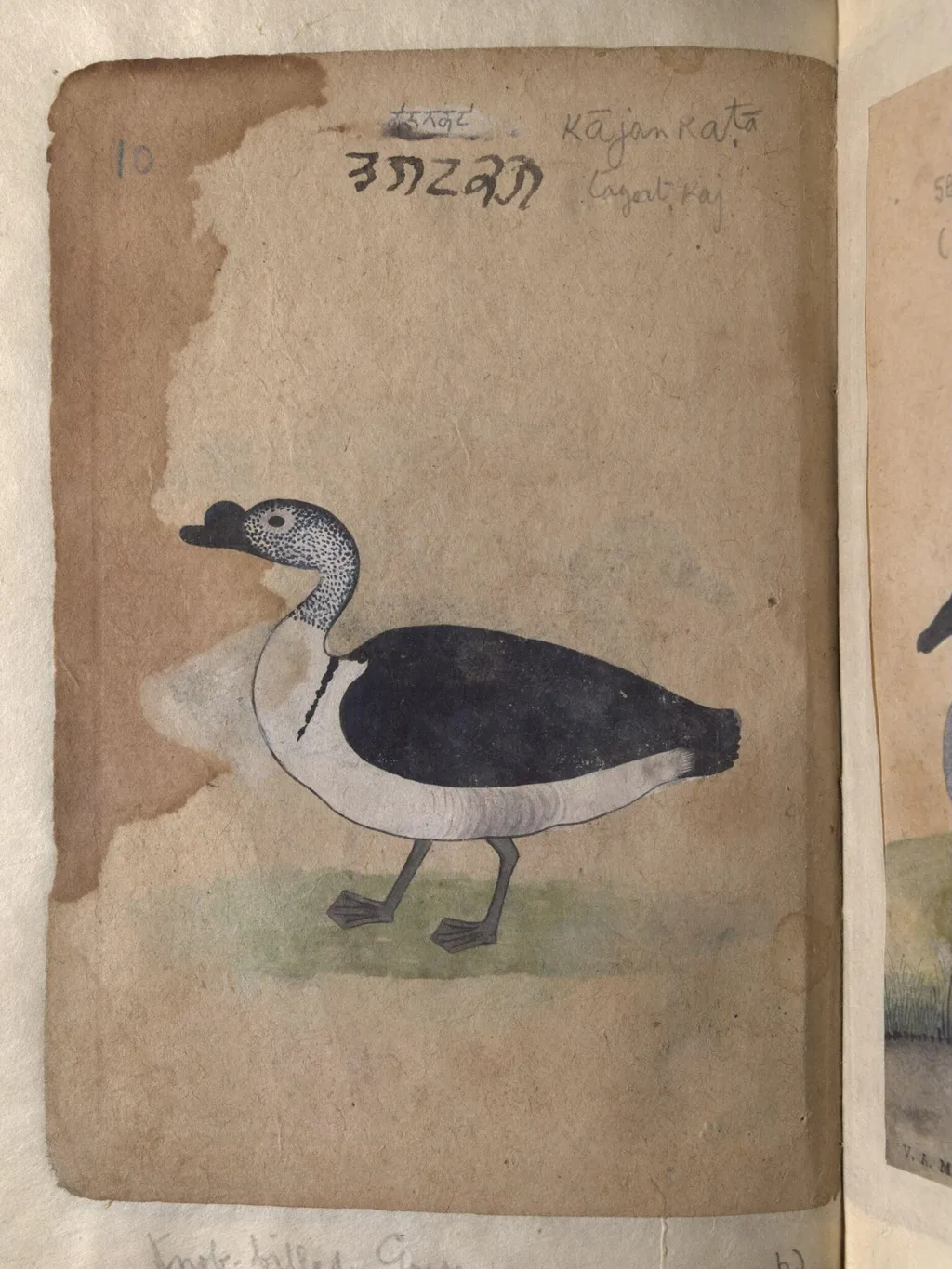
Depictions of a Grey lag goose and Knob-billed goose, of Northern India is a paint painting by the Romanticist artist Unknown. It dates from 1820 and is held in the collection of the Victoria and Albert Museum. The work consists of two small watercolour sheets, each portraying a different species of goose native to northern India.
About this work
Overview
The work consists of two small watercolour sheets, each portraying a different species of goose native to northern India. Executed in 1820 by an unidentified hand, the images present a Greylag goose and a Knob‑billed goose in a straightforward, naturalistic manner. The sheets were later donated to the collection in 1929 by former Indian Civil Service officer Robert Scott Greenshields.
Subject & Meaning
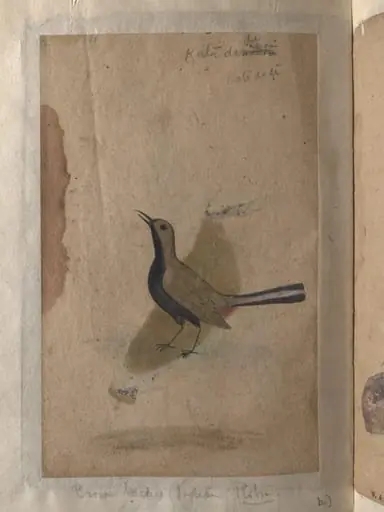
Both illustrations focus on a single bird positioned on a patch of green ground, emphasizing the distinctive plumage of each species. The Greylag goose is shown with a dark head marked by white spots, while the Knob‑billed goose displays a contrasting white belly and darker wings. The compositions serve as visual records of Indian avifauna rather than narrative scenes.
Technique & Style
The artist employed flat washes of colour and precise line work, creating a clean, uncluttered image. The watercolour is applied on a faded brown paper that retains faint script in an unfamiliar script along its margins. The limited palette and restrained detailing highlight the bird’s form and posture, with one foot slightly raised to suggest movement.
History & Provenance
Painted in 1820, the sheets remained in private hands until they entered the museum through the generosity of Robert Scott Greenshields. Greenshields served in the Bengal and Assam districts of the Indian Civil Service from 1879 to 1910, and his 1929 gift reflects his interest in documenting the natural history of the region where he worked.
Context
During the early nineteenth century, British officials and naturalists in India frequently commissioned or produced illustrative studies of local wildlife for scientific and administrative purposes. These watercolours fit within that tradition, providing accurate visual references for species that were of interest to colonial administrators, hunters, and emerging ornithologists.
Artist & collection

 Domestic Scene
 Giacomo and Cardinal Marco, investing Andrea, Abbot of San Zeno, with his Benefice
 The Nymph of Fontainebleau
 Portrait of a Woman
 Madonna and Child with Saints in the Enclosed Garden
 Venus and Minerva
 Family Group of Four on Sofa
 Wall painting from Room H of the Villa of P. Fannius Synistor at Boscoreale
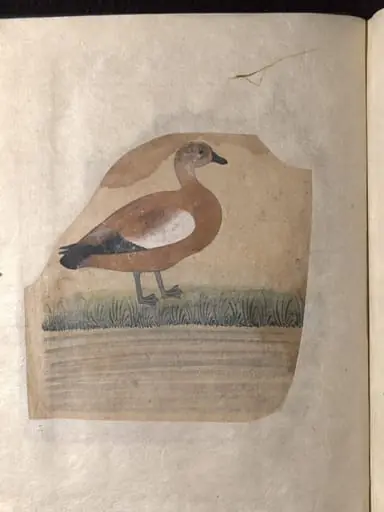 Depictions of a White wagtail and a Brahminy duck of Northern India
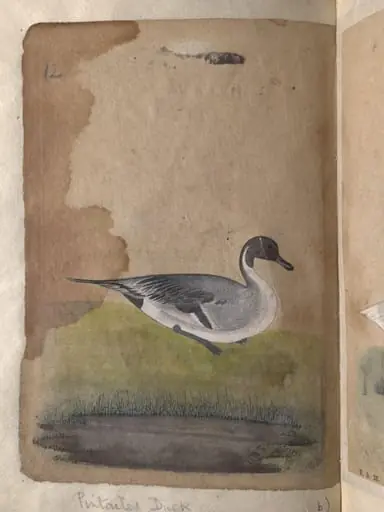 Depictions of a Gadwall duck and Pintailed duck of Northern India
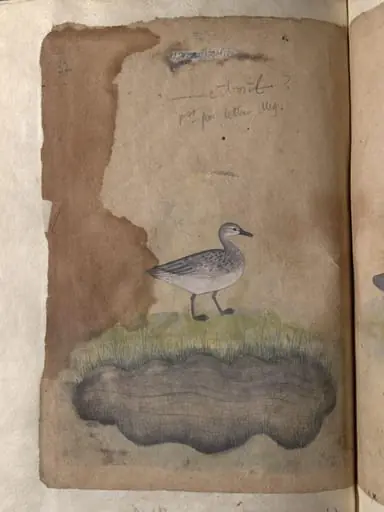 Depictions of an Indian darter and Duck (unidentified) of Northern India
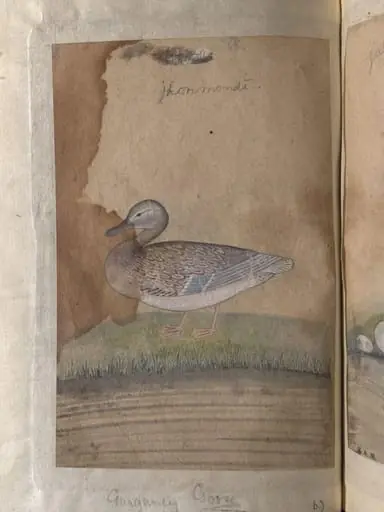 Depictions of a sandpiper and Garganey goose of Northern India
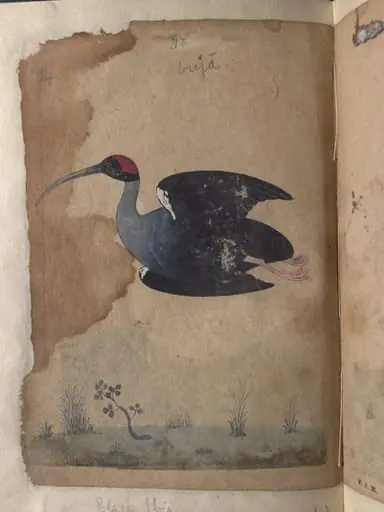 Depictions of a Domestic goose and Black ibis inocotis, of Northern India
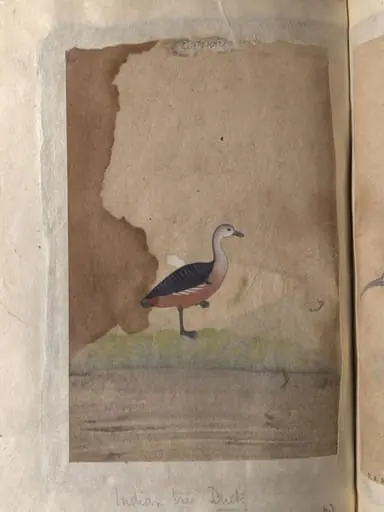 Depictions of a spot-bill duck and an Indian tree duck of Northern India
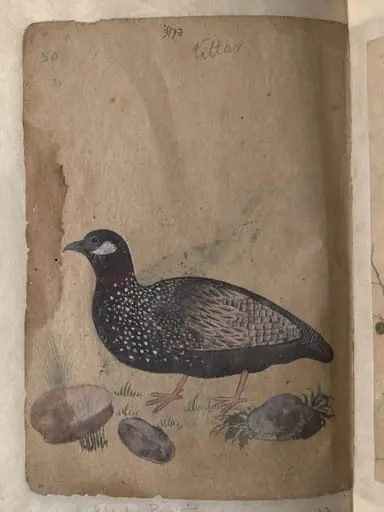 Depictions of Common (or grey) quail and a Black partridge of Northern India
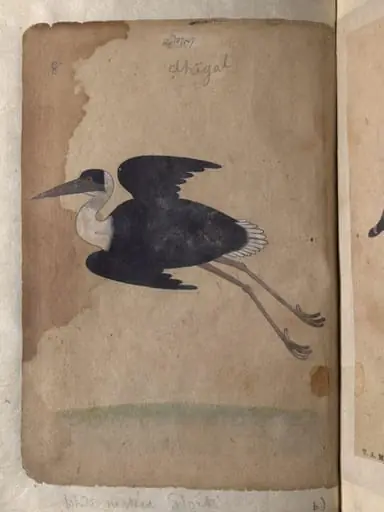 Depictions of a Demoiselle crane and a White-necked stork, of Northern India
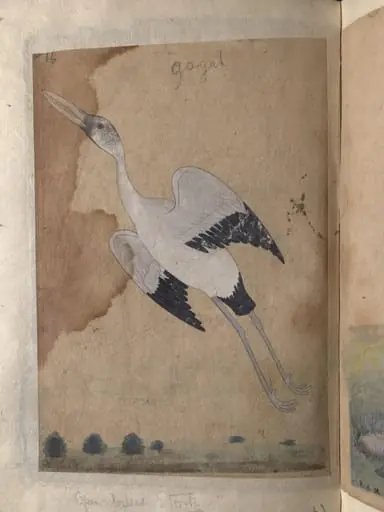 Depictions of a Spur-winged plover and Open-billed stork of Northern India,
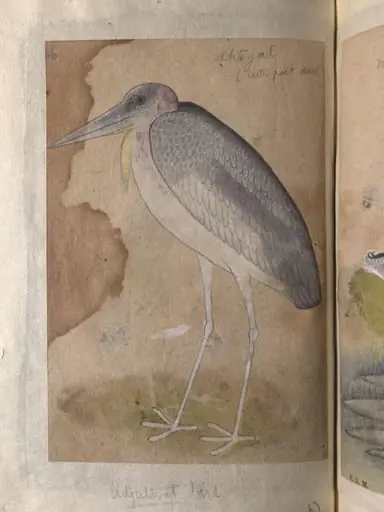 Depictions of Night heron (male) and Adjutant bird of Northern India
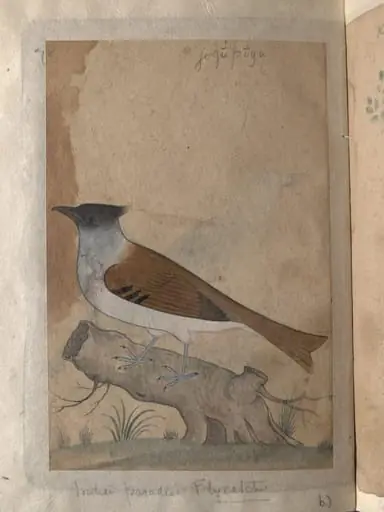 Depictions of Indian house crow and a Indian paradise flycatcher of Northern India
 Depictions of a India pitta and Brown-backed Indian robin of Northern India