Artwork
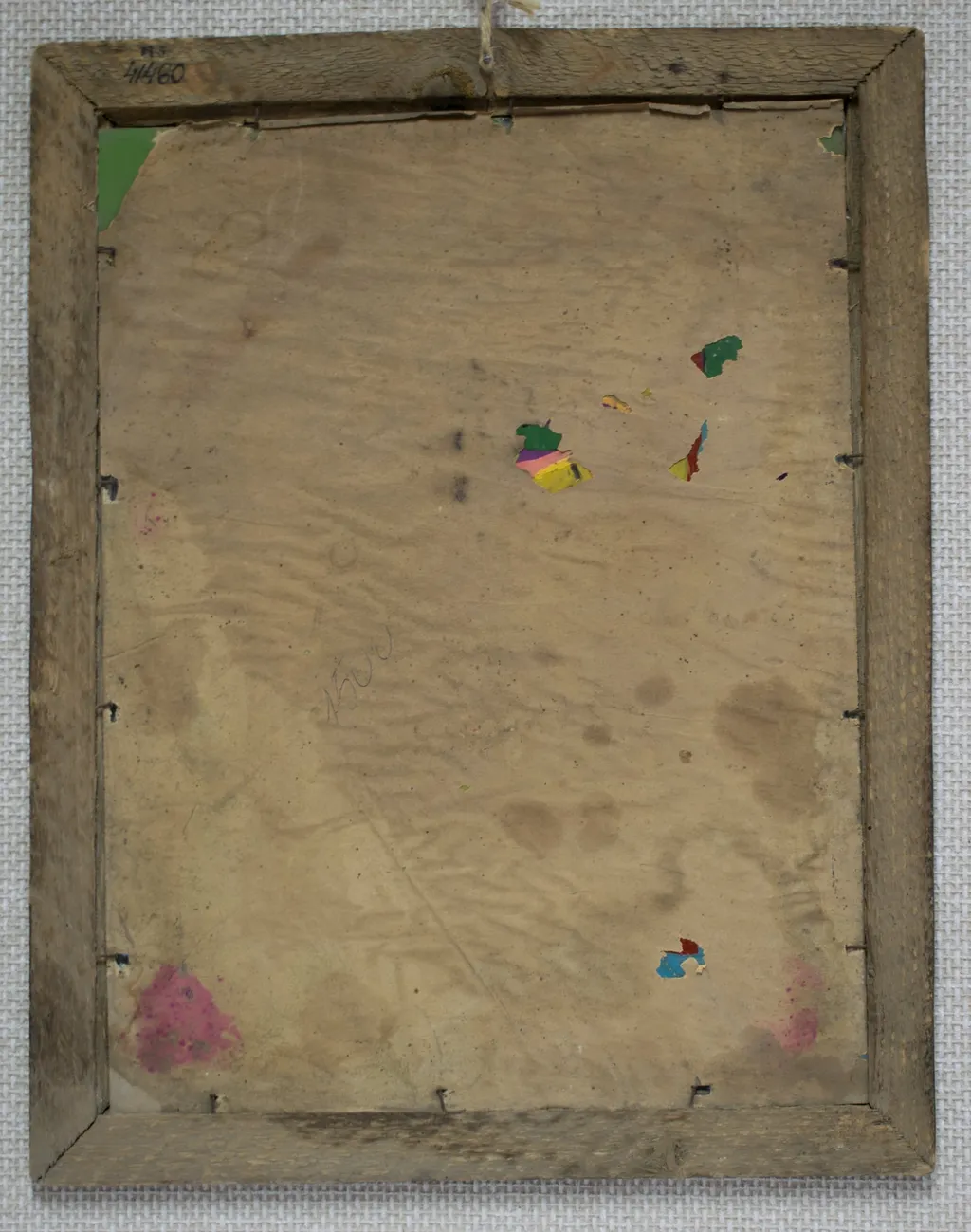
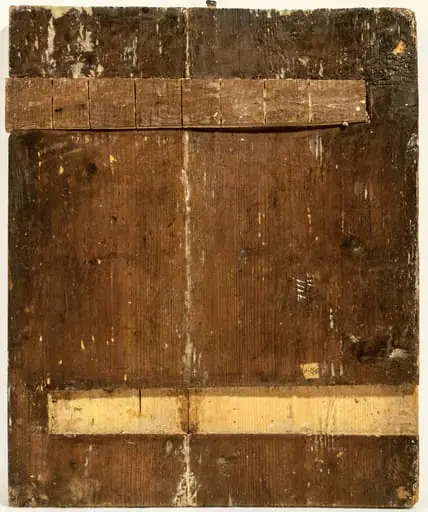
Desenul este executat probabil fără tipar, cu un instrument de scris cu cerneala.Culorile sunt stridente, dar se observă o oarecare măiestrie. Tema combină Răstignirea cu Plângerea de inspirație catolică. Isus răstignit pe crucea plasată deasupra pietrei mormântului, la picioare doi îngeri, îngenuncheați. Desenul este foarte naiv, chipul lui Isus invadat de barbă și păr, profilurile celor doi îngeri diforme. Crucea este treflată, verde cu chenar violet, cu inscripția INRI scrisă invers în partea de sus. Cei doi îngeri au părul creț, negru, înveșmântați unul cu albastru, celălalt cu roșu, aripile albe. Piatra de mormânt, încadrată de două coline verzi, decorată cu o floare mov. Fondul pe care se profilează scena este galben orange cu chenar roșu. Chenar marginal lat, pe laturile inferioare de flori mari pe fond albastru-bleu, iar în partea de sus de 5 turle de biserici inspirate din pictura rusească(fond verde) Paleta cromatică variată, culorile stridente. Pe spate a avut lipită o hârtie mai groasă care servea drept dos. Rama este simplă, din lemn de brad prelucrat rudimentar, de culoare cafenie, decorată cu un motiv vălurit dispus longitudinal.
Desenul este executat probabil fără tipar, cu un instrument de scris cu cerneala.Culorile sunt stridente, dar se observă o oarecare măiestrie. Tema combină Răstignirea cu Plângerea de inspirație catolică. Isus răstignit pe crucea plasată deasupra pietrei mormântului, la picioare doi îngeri, îngenuncheați. Desenul este foarte naiv, chipul lui Isus invadat de barbă și păr, profilurile celor doi îngeri diforme. Crucea este treflată, verde cu chenar violet, cu inscripția INRI scrisă invers în partea de sus. Cei doi îngeri au părul creț, negru, înveșmântați unul cu albastru, celălalt cu roșu, aripile albe. Piatra de mormânt, încadrată de două coline verzi, decorată cu o floare mov. Fondul pe care se profilează scena este galben orange cu chenar roșu. Chenar marginal lat, pe laturile inferioare de flori mari pe fond albastru-bleu, iar în partea de sus de 5 turle de biserici inspirate din pictura rusească(fond verde) Paleta cromatică variată, culorile stridente. Pe spate a avut lipită o hârtie mai groasă care servea drept dos. Rama este simplă, din lemn de brad prelucrat rudimentar, de culoare cafenie, decorată cu un motiv vălurit dispus longitudinal. is a drawing by Unknown. It dates from 1850 and is held in the collection of the "Dimitrie Gusti" National Village Museum. This drawing depicts a combined scene of the Crucifixion and the Lamentation, inspired by Catholic themes.
About this work
Overview
This drawing depicts a combined scene of the Crucifixion and the Lamentation, inspired by Catholic themes. Executed without a stencil, using a writing instrument with ink, the artwork features jarring colors and a certain level of craftsmanship. Notable for its naive style, the piece includes a crucified Jesus, two kneeling angels, and a tombstone, all set against a distinctive background.
Subject & Meaning
The subject merges two pivotal Christian moments: the Crucifixion, with Jesus on a cross atop a tombstone, and the Lamentation, symbolized by two kneeling angels. The cross bears the inverted INRI inscription, adding to the religious symbolism. The combination of these themes in one scene conveys a unified narrative of sorrow and redemption.
Technique & Style
Characterized by a naive artistic approach, the drawing exhibits distorted profiles, notably in the angels, and a bearded, haired Jesus. The cross is trefoiled, with a violet border and green body, contrasting with the vibrant, albeit clashing, colors of the angels' attire (blue and red) and the white wings. The overall style leans towards simplicity and direct expression over realism.
History & Provenance
Originally mounted on a thicker paper backing serving as a support, the drawing is framed in crudely processed pine wood, decorated with a longitudinal wavy motif. The frame's condition and the artwork's execution suggest an informal or amateur creation context, with no clear attribution or detailed provenance provided.
Context
The drawing's elements, such as the five church towers on the top border inspired by Russian painting and the floral motifs on the lower edges, indicate eclectic influences. The dominant yellow-orange background with a red border, combined with the green and blue accents, reflects a varied chromatic palette, though the colors have faded over time.
Legacy
While the drawing's naive style and jarring colors might not align with traditional notions of religious art, it preserves a unique, personal interpretation of Catholic themes. Its legacy lies in its sincerity and the glimpse it offers into amateur artistic practices, potentially reflecting broader folk or devotional art trends of its time.
Artist & collection
Museum
"Dimitrie Gusti" National Village Museum
Continue through works from the same source collection.
 Domestic Scene
 Giacomo and Cardinal Marco, investing Andrea, Abbot of San Zeno, with his Benefice
 The Nymph of Fontainebleau
 Portrait of a Woman
 Madonna and Child with Saints in the Enclosed Garden
 Venus and Minerva
 Family Group of Four on Sofa
 Wall painting from Room H of the Villa of P. Fannius Synistor at Boscoreale
 Icoană cu tema. Fecioara și pruncul Isus, ținut în mâna dreaptă; sus un chenar cu flori. Cromatică: fond albastru; culori: negru; alb; verde; galben.
 Icoambla
 Icoana este pictată în tehnica "în oglindă", pe un suport de sticlă dreptunghiular, (în ax vertical). Tema indicată de inscripție reprezintă aducerea la templu a Fecioarei Maria copilă (la trei ani), așteptată fiind de arhiereul Zaharia și însoțită de Sfinții Ei Părinți, Imaginea este simplificată, aparând doar Maria flancată de Ioachim și Ana.. Zugravul redă scena într-o manieră naivă, stângace. Ioachim și Ana în veșminte lungi, de culoare roșie și albă, o țin de câte o mână pe Fecioara Maria, care poartă o fustă lungă bleumarin, și o ie albă cu mâneci verzi. Fețele sunt pătrățoase, dar expresive, ochii umbriți. În jurul capului au trasate aureole. Câmp bicolor, ocru în jumătatea inferioară, bleu în cea superioară, decorat pe cu o ghirlandă de flori roșii(ruje). Un element florale imprecis (stea, floare, soare?) și două lalele, central, sub inscripția cu majuscule stângace. Rama îngustă, înlocuită recent. "Prezentarea Mariei la templu" este cunoscută din frescele de la Studenița, pictate în 1314, mai des fiind utilizată din secolul XVI, odată cu constituirea iconostasului.
 Portret de femeie
 Icoana de factură catolică îl reprezintă pe sfântul Teodor Tiron (306 d. Hr) sărbătorit pe 17 februarie.Sf. Teodor înveșmântat ca oștean: coif cu pene, armura și mantie roșie. În dreapta ține un coif cu stânga sulița. În planul doi o biserică catolică. Pe fondul alb, de o parte și alta a sfântului câte tulpină cu o floare roșie. Cromatica: predomină roșul(inclusiv ca desen) albastru, bleu, negru, maro, auriu, verde deschis, verde închis, fond alb.Ramă îngustă, patru stinghiii îmbinate oblic la colțuri.
 Pasăre
 Flori galbene
 Icoajumă
 Prohodul lui Isus
 Compoziție cu păpuși
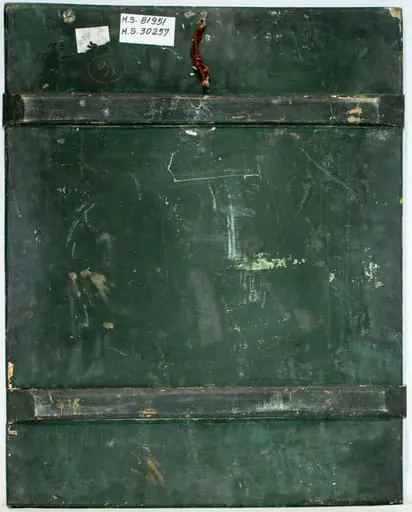 Spațiul icoanei este împărțit în 13 casete dreptunghiulare cu scene din viața celor doi sfinți. Scena centrală, cu inscripție de culoare roșie indicând tema, mai mare ca dimensiuni, o reprezintă pe Sfânta Ulita cu o cruce în mâna dreaptă și un rotulus desfășurat în stânga, împreună cu fiul ei Kirik, de asemenea purtând o cruce. Începând din colțul stânga sus, în ordinea narațiunii, sunt reprezentate secvențe din viața sfintei de la nașterea și botezul fiului ei Kirik, trecând prin momentul Judecății în fața ighemonului Alexandru, moartea lui Kirik și diferitele episoade de martiraj până la decapitarea Sf. Ulita. Fiecare scenă reprezentată abundă de inscripții, litere negre pe fond auriu. Cromatica: Fond auriu, desen cu roșu, verde, ocru-galben, alb, negru; Spatele icoanei vopsit cu verde; Prezintă exfolieri, arsuri, zgârieturi a stratului pictural.
 Compoziție complexă, (13 scene), centrată pe scena Învierii redată în varianta coborârii lui Iisus la Iad, episod biblic cunoscut și sub denumirea de Anastasis sau Învierea.Mântuitorul încadrat de o mandorlă îl scoate pe Adam și pe alți drepți(sfinți, prooroci) din gura gheenei. Deasupra este pictată scena ridicării din mormânt a Mântuitorului, lângă piatra mormântului, îngerul. În celelalte casete sunt reprezentate scene din viața lui Iisus Hristos și a Maicii Domnului, cu un număr redus de personaje (3 – 4, maxim 5): „Sfânta Treime”(ospitalitatea lui Avraam), Nașterea Fecioarei Maria”, „Intrarea Maicii Domnului în biserică(Ovidenia), „Buna Vestire”, „Nașterea lui Iisus Hristos”, Întâmpinarea Domnului(Stretenia), „Botezul lui Hristos” „Schimbarea la față” „Intrarea Domnului în Ierusalim”, , „Înălțarea Domnului, Adormirea Maicii Domnului, „Înălțarea Sfintei Cruci”. Toate personajele au nimburi trasate cu alb.Desen schematic, trasat cu finețe, ușor dezordonat, ca și inscripțiile. Cromatica specifică, tonuri calde, brun, galben, roșu în contrast cu verde, albastru, negru, valorate de foița de aur. Chenarul lat, roșu(tipul de icoană krasnushka)