Artwork
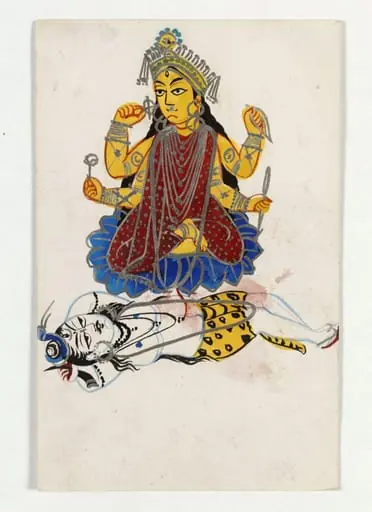
Devi as Chhinnamastaka
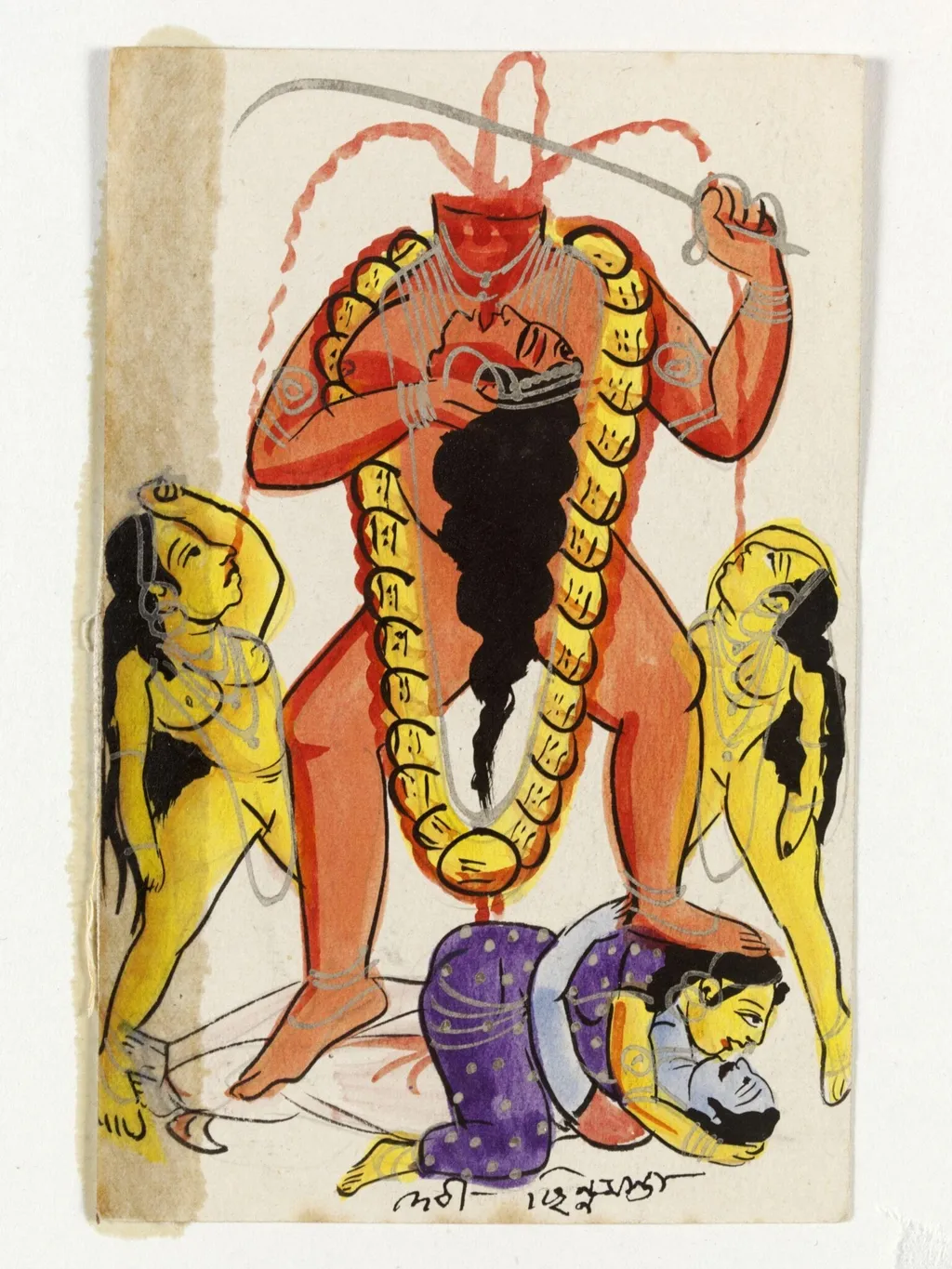
Devi as Chhinnamastaka is a paint painting by the Impressionist artist Unknown. It dates from 1890 and is held in the collection of the Victoria and Albert Museum.
About this work
Overview
Its composition centers on a self-decapitated deity, surrounded by symbolic elements that convey spiritual transformation and the transcendence of ego.
This 1890 watercolour and tin alloy painting on cardboard portrays the Hindu goddess Devi in her Chhinnamastaka form—a fierce manifestation in which she severs her own head. The work combines delicate brushwork with metallic accents, typical of late 19th-century Pahari or Rajasthani devotional art. Its composition centers on a self-decapitated deity, surrounded by symbolic elements that convey spiritual transformation and the transcendence of ego.
Subject & Meaning
Chhinnamastaka represents the goddess’s act of self-sacrifice to nourish her attendants, symbolizing the dissolution of the ego and the cyclical nature of creation and destruction. She stands atop a copulating couple, signifying the subjugation of desire and sensual attachment. The blood flowing from her neck, forming a halo, denotes life force transformed into spiritual energy, while the sword and bowl reflect her role as both destroyer and sustainer.
Technique & Style
The painting employs watercolour with subtle tin alloy highlights to accentuate details like jewelry and blood streams. The figure’s crimson skin contrasts sharply with the plain white background, heightening visual focus. The brown border frames the scene without distraction, while the dynamic flow of blood and the intertwined bodies beneath suggest motion within a static composition. The style reflects regional miniature traditions adapted for tantric iconography.
History & Provenance
Created in 1890, the painting entered public discourse through its inclusion in the 1971 'Tantra' exhibition at London’s Hayward Gallery, curated by Philip S. Rawson. Organized by the Arts Council of Great Britain, the show was among the first in the West to present tantric art as a serious spiritual tradition rather than exotic curiosity. The painting’s prior provenance remains undocumented, though its materials and technique suggest an Indian artisanal workshop.
Context
This work emerged during a period when devotional art in northern India increasingly incorporated tantric themes, blending esoteric symbolism with accessible visual language. While tantric texts described Chhinnamastaka in abstract terms, artists translated them into vivid imagery for ritual or meditative use. The painting reflects a broader trend of codifying complex theological concepts through portable, intimate formats suited to private worship.
Legacy
The painting’s inclusion in the 1971 'Tantra' exhibition helped shift Western perceptions of tantric art from sensationalism to scholarly engagement. It remains a key example of how regional Indian painting traditions preserved and transmitted esoteric religious ideas. Though not widely reproduced, it continues to inform academic studies on the visual representation of divine self-sacrifice in South Asian art.
Artist & collection

 Domestic Scene
 Giacomo and Cardinal Marco, investing Andrea, Abbot of San Zeno, with his Benefice
 The Nymph of Fontainebleau
 Portrait of a Woman
 Madonna and Child with Saints in the Enclosed Garden
 Venus and Minerva
 Family Group of Four on Sofa
 Wall painting from Room H of the Villa of P. Fannius Synistor at Boscoreale