Artwork
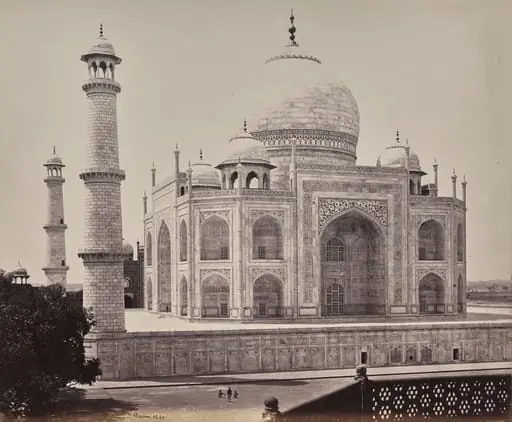
Elevation of the east side of the Taj Mahal, Agra, with part of the surrounding tiled terrace and water-tank in the foreground.
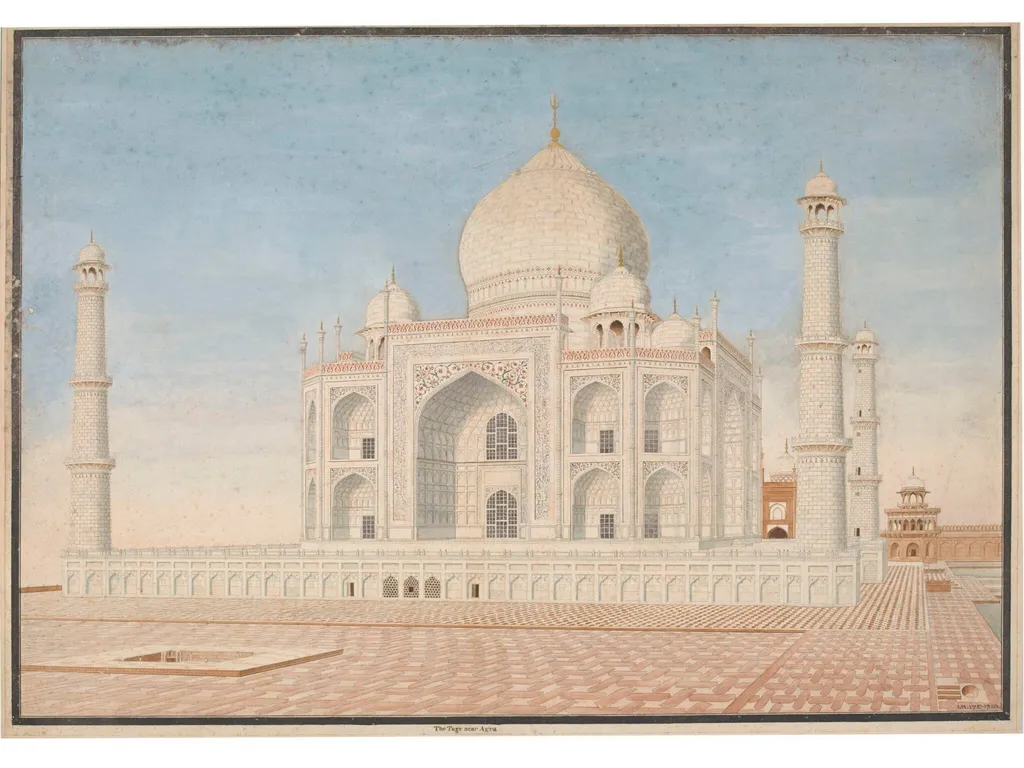
Elevation of the east side of the Taj Mahal, Agra, with part of the surrounding tiled terrace and water-tank in the foreground. is a drawing by the Romanticist artist Unknown. It dates from 1819 and is held in the collection of the Victoria and Albert Museum. The drawing presents the east façade of the Taj Mahal in Agra, foregrounded by a section of its tiled terrace and an adjacent water tank.
About this work
Overview
The drawing presents the east façade of the Taj Mahal in Agra, foregrounded by a section of its tiled terrace and an adjacent water tank. Executed in fine pen work, the image captures the monument’s central dome, flanking minarets, and the rhythmic series of arches that define its silhouette, set against a light blue sky.
Subject & Meaning
Focused on the architectural composition rather than narrative, the work records the monumental tomb’s structural elements and surrounding landscape. By isolating the east elevation, the drawing emphasizes the symmetry and ornamental detailing that characterize Mughal imperial architecture, offering a visual study of the building’s spatial relationship to its immediate environment.
Technique & Style
Rendered with meticulous line work and stippling, the drawing achieves a high degree of realism through varied hatching that conveys texture of stone, tile, and water. The precision of the draftsmanship reflects the early‑19th‑century British interest in topographical and architectural documentation, aligning with the empirical visual practices of the period.
History & Provenance
Created between 1816 and 1822 by a group of Delhi‑based artists employed in Calcutta, the drawing formed part of a fifteen‑piece portfolio commissioned by Colonel Pownell Phipps. The collection remained in the Phipps family until Colonel R.W. Phipps donated it to the museum, where it now resides in the drawing department.
Context
The portfolio was assembled during a time when British officials sought detailed records of Mughal monuments for both scholarly and administrative purposes. The east elevation of the Taj Mahal, one of the most celebrated structures in Agra, was thus documented alongside other local edifices, contributing to early Western understandings of Indo‑Islamic architecture.
Artist & collection

 Domestic Scene
 Giacomo and Cardinal Marco, investing Andrea, Abbot of San Zeno, with his Benefice
 The Nymph of Fontainebleau
 Portrait of a Woman
 Madonna and Child with Saints in the Enclosed Garden
 Venus and Minerva
 Family Group of Four on Sofa
 Wall painting from Room H of the Villa of P. Fannius Synistor at Boscoreale
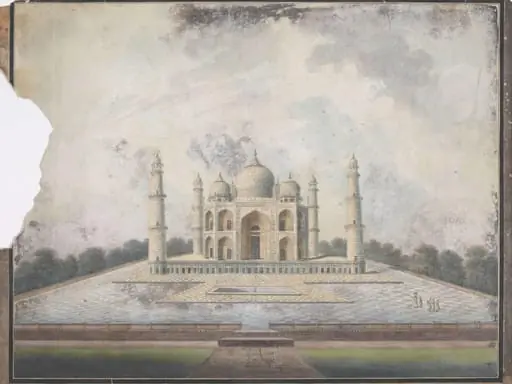 The Taj Mahal, Agra
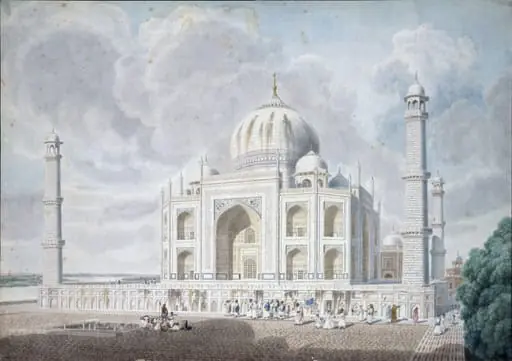 The Taj Mahal on the River Jumna at Agra
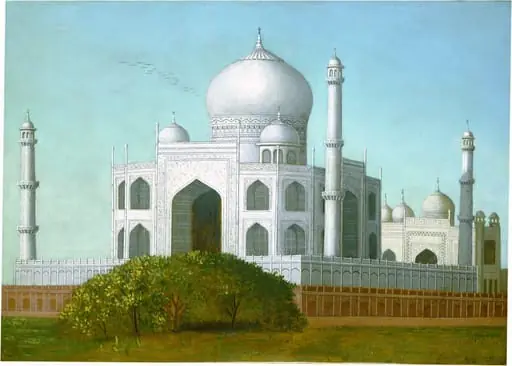 The Taj Mahal
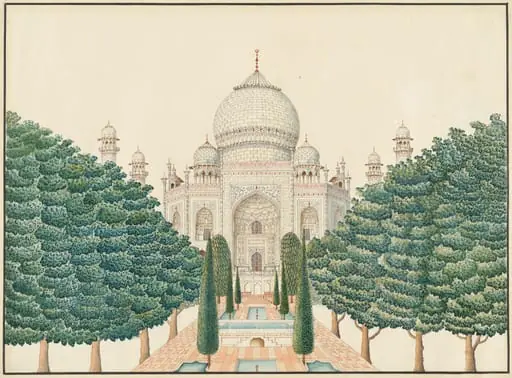 Taj Mahal
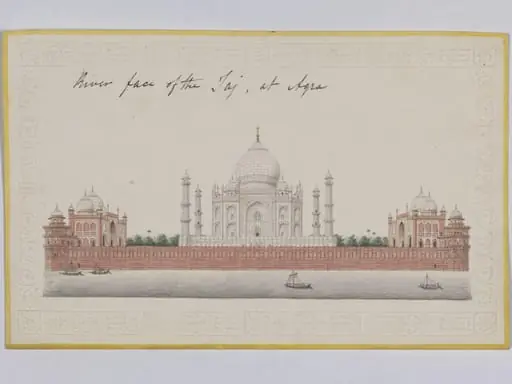 View of the Taj Mahal from across the Jumna river.
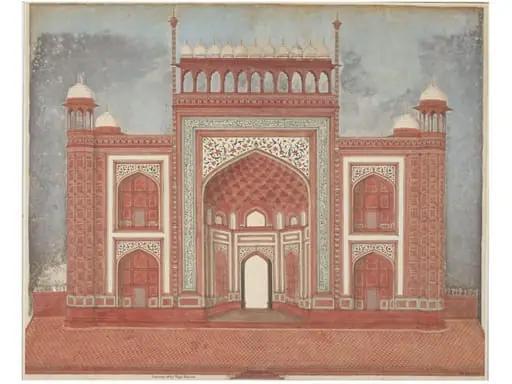 Elevation of the great gateway of the garden court of the Taj Mahal.
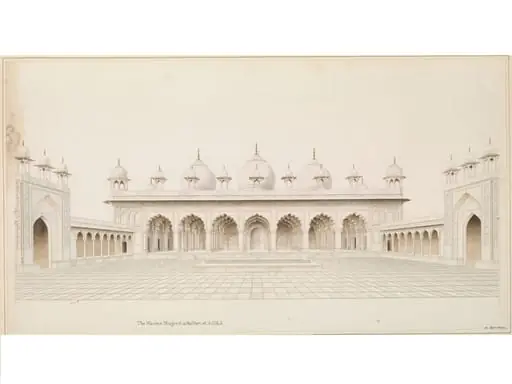 Elevation of the Moti Masjid (Pearl Mosque), Agra
 Taj Mahal
 Agra. The Taj, the Central of Principal City
 Front elevation of Amar Singh's Gate, Agra Fort.
 I'timad-ud-Daula's Tomb at Agra
 Agra. View of the Taj from a Corner in the Quadrangle