Artwork
The Taj Mahal on the River Jumna at Agra
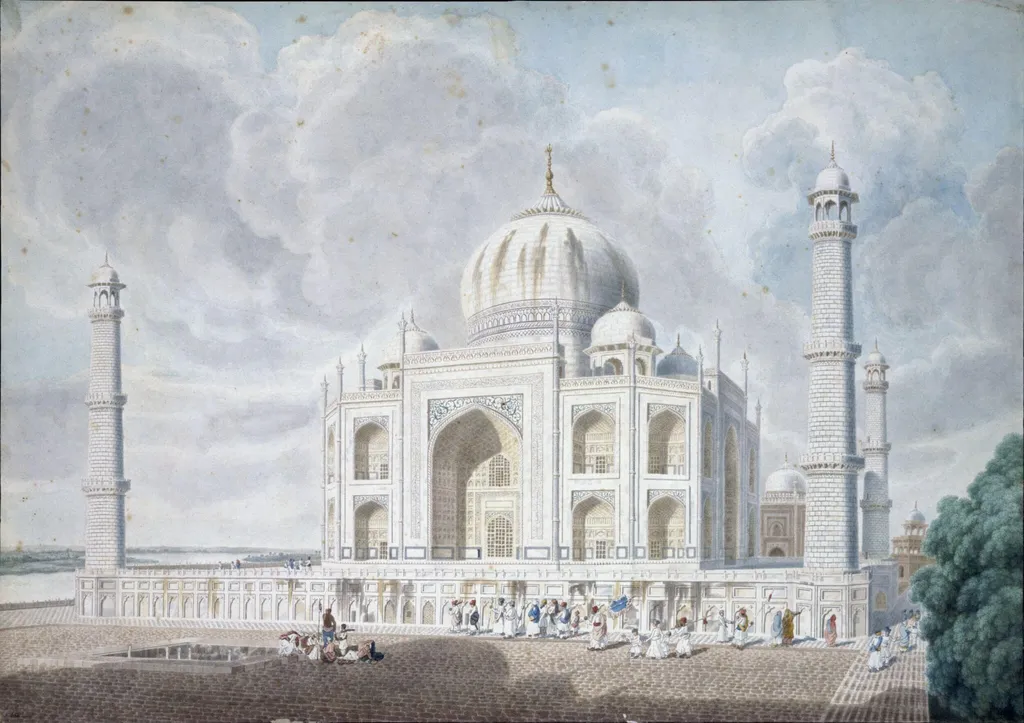
The Taj Mahal on the River Jumna at Agra is a watercolor work on paper by the Patna School of Painting artist Thomas Longcroft. It dates from 1786 and is held in the collection of the Victoria and Albert Museum.
About this work
Overview
Thomas Longcroft’s watercolor, dated 1786, depicts the Taj Mahal as seen from the River Jumna near Agra. Executed in transparent pigments, the work is part of the Victoria and Albert Museum’s collection and offers an eighteenth‑century European perspective on the Indian monument.
Subject & Meaning
The composition centers on the white marble mausoleum, emphasizing its central dome and the quartet of slender minarets. Figures in light clothing populate the foreground courtyard, suggesting everyday activity and the monument’s role as a public space within a bustling riverine setting.
Technique & Style
Longcroft employs delicate washes to render the building’s smooth surfaces, achieving a luminous quality that heightens the dome’s glow. Contrasting light and shadow under the arches create a sense of depth, while the soft blue sky and diffused clouds frame the structure in a tranquil atmosphere.
History & Provenance
Created in 1786, the painting entered the Victoria and Albert Museum’s holdings, where it remains on display. Its provenance traces back to the period when European artists frequently produced exotic views for patrons interested in the expanding British presence in India.
Context
The work belongs to a broader genre of travel‑inspired watercolors produced by British artists documenting far‑off locales during the late eighteenth century. Such images catered to a growing appetite for visual information about the subcontinent among European audiences.
Artist & collection
Artist
Thomas Longcroft spent his 1780s bouncing between India and England, sketchbook always in hand.

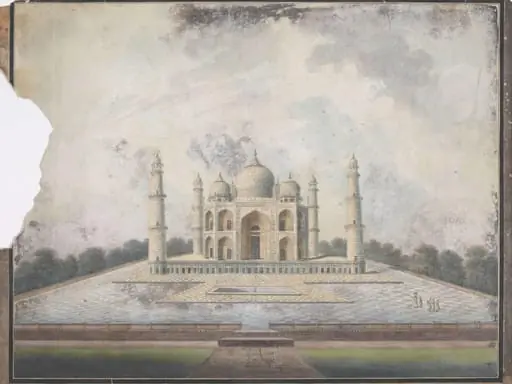 The Taj Mahal, Agra
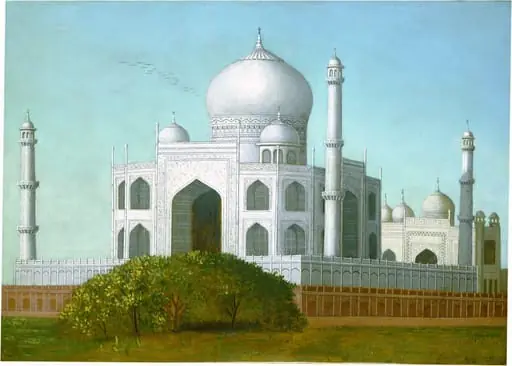 The Taj Mahal
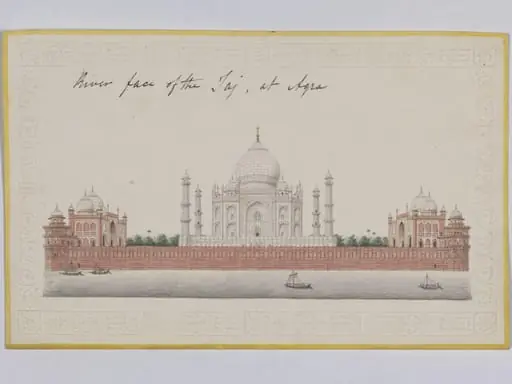 View of the Taj Mahal from across the Jumna river.
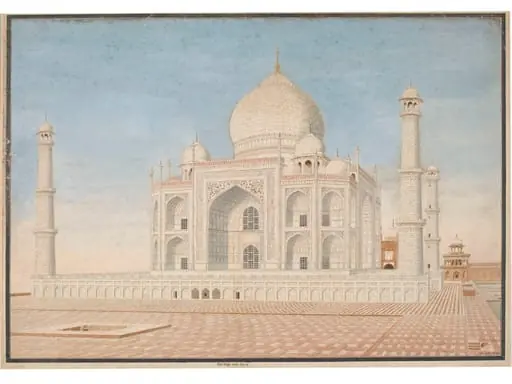 Elevation of the east side of the Taj Mahal, Agra, with part of the surrounding tiled terrace and water-tank in the foreground.
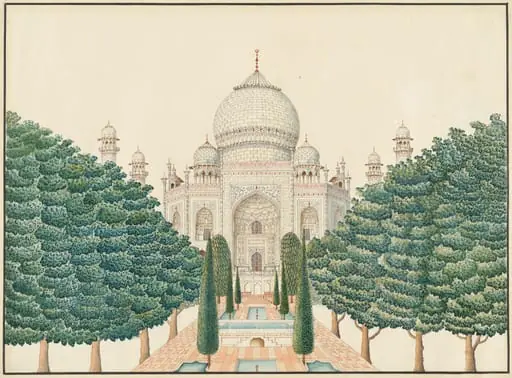 Taj Mahal
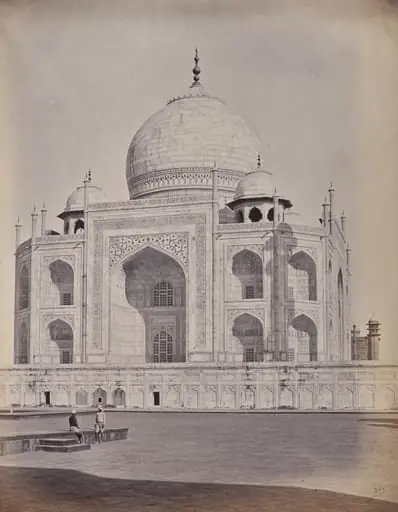 Agra. The Taj, the Central of Principal City
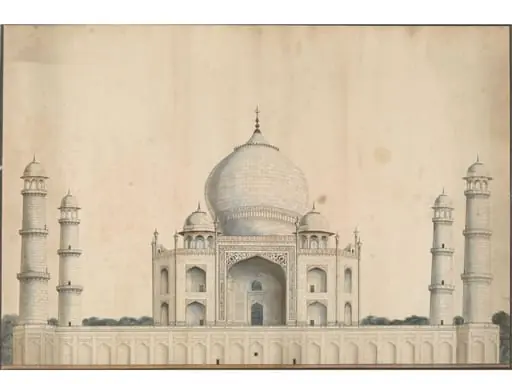 Three drawings of the Taj Mahal
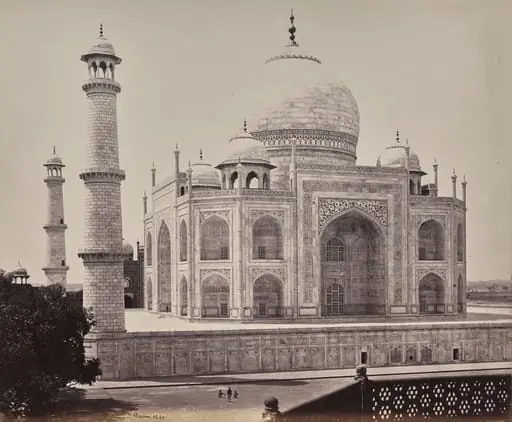 Agra. View of the Taj from a Corner in the Quadrangle
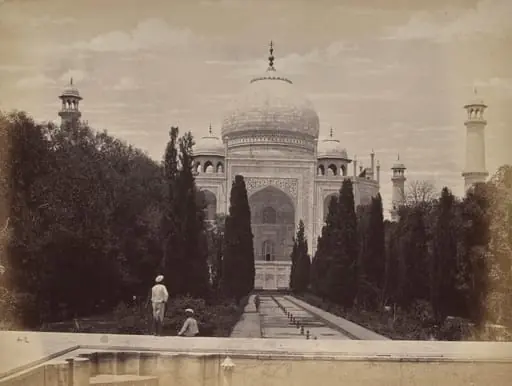 Agra. View of the Taj in Front of Nootkan (The Light of the World), Wife of the Emperor Akbar, View from the River
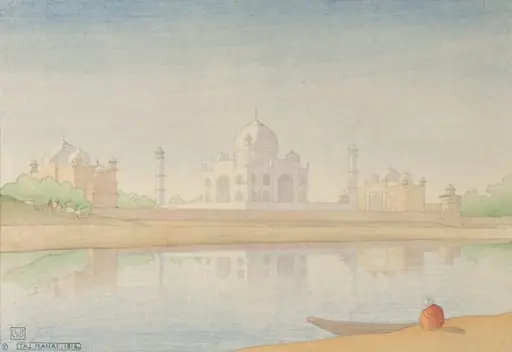 Taj Mahal
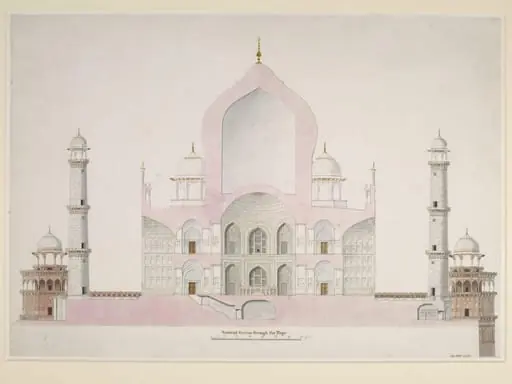 Vertical Section through the Tage
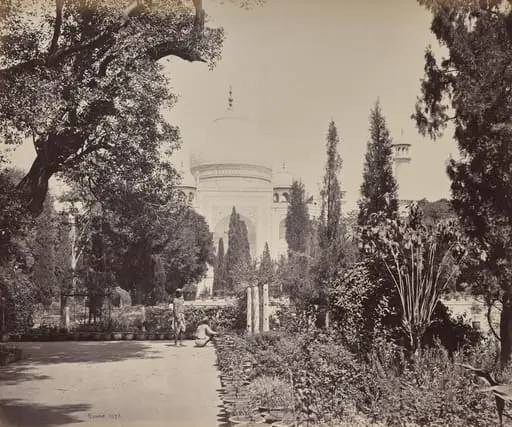 Agra. View of the Taj from the Garden