Artwork
Emperor Farrukhsiyar
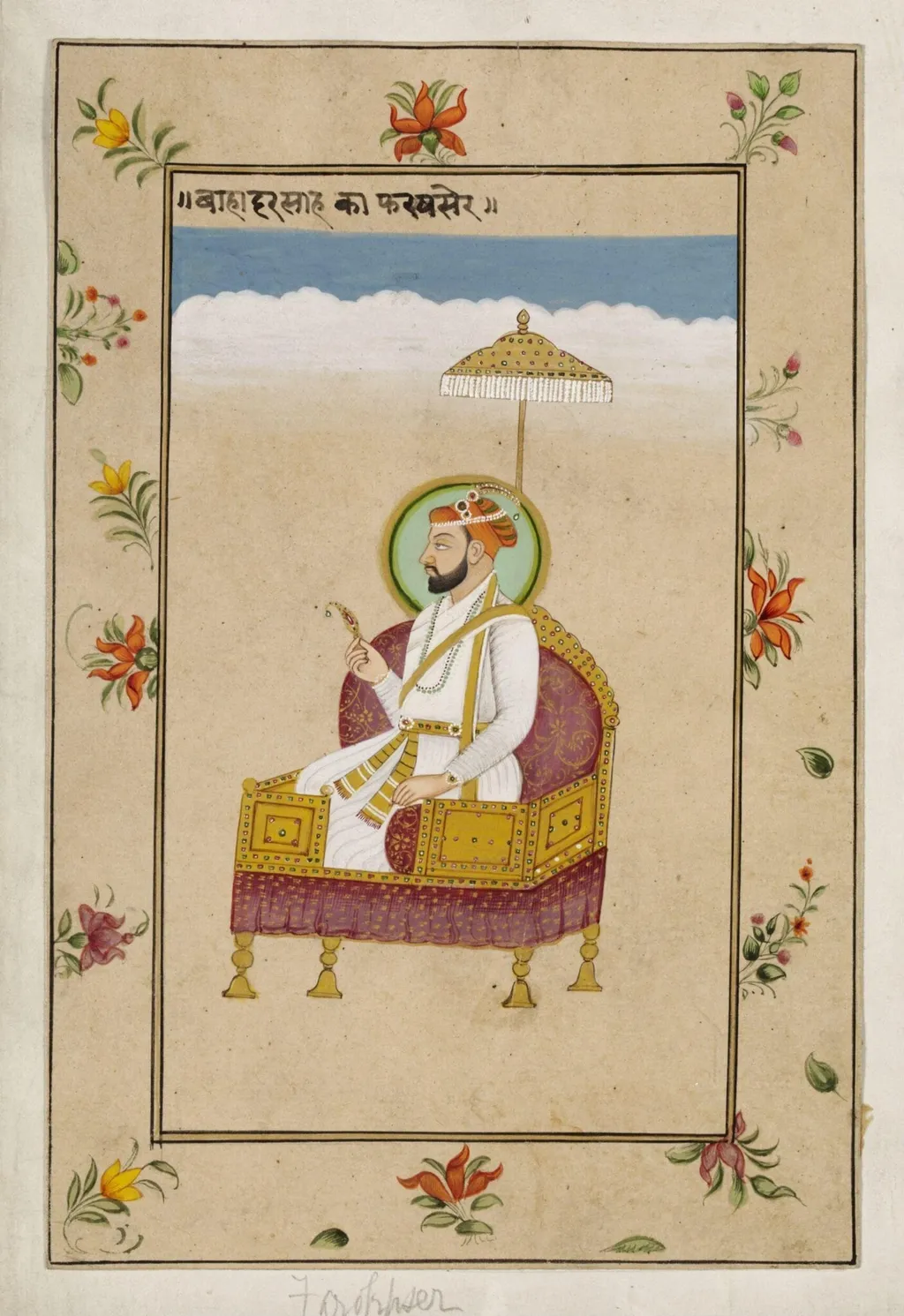
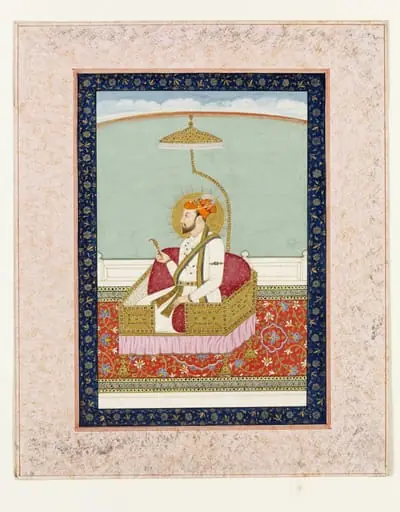
Emperor Farrukhsiyar is a paint painting by the Impressionist artist Unknown. It dates from 1890 and is held in the collection of the Victoria and Albert Museum.
About this work
Overview
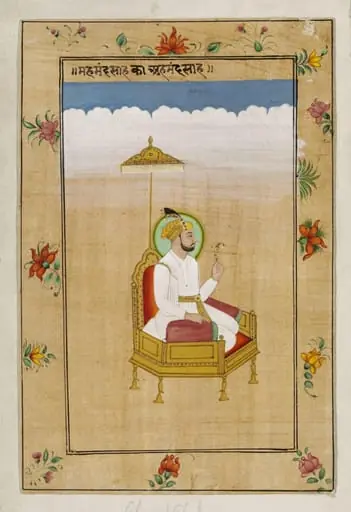
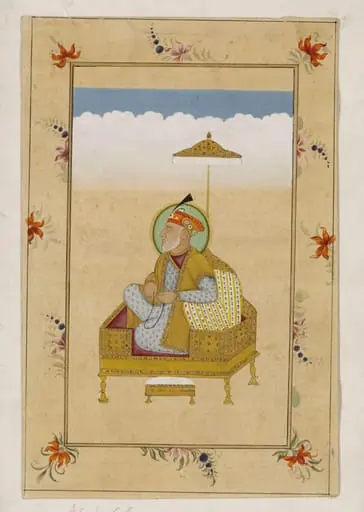
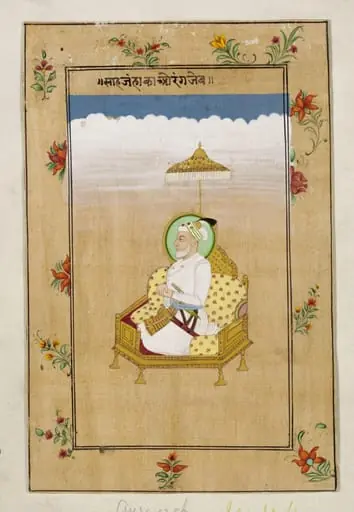
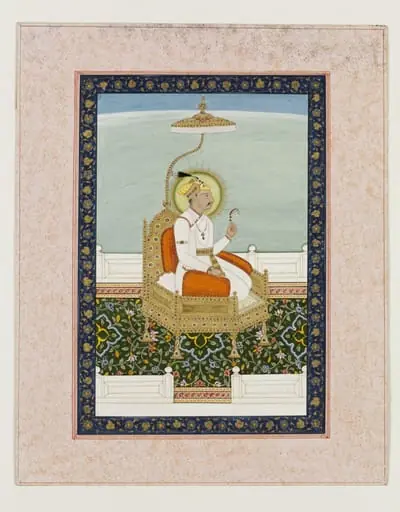
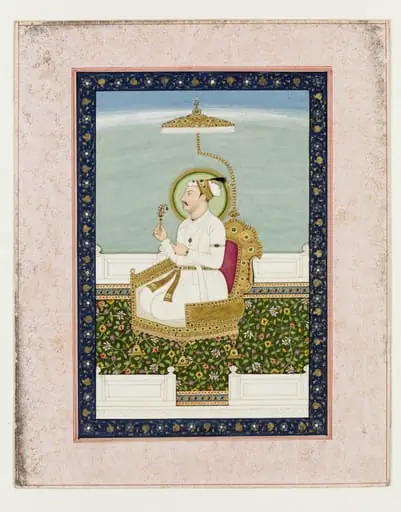
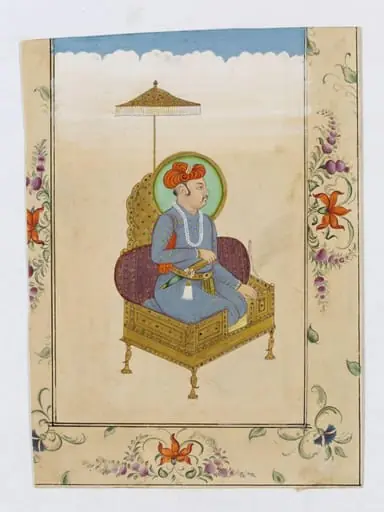
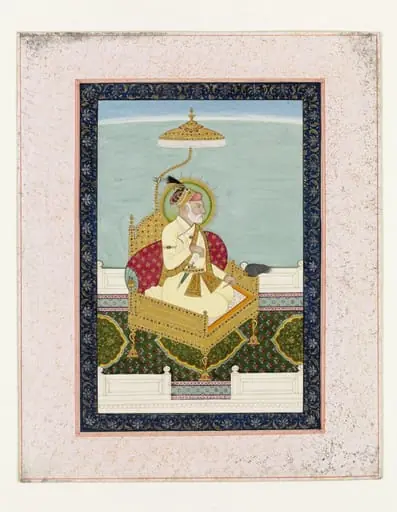
The work is an opaque watercolor and gold painting on paper portraying Emperor Farrukhsiyar. He sits upon an elaborately decorated golden throne, positioned against a stylized desert scene with a clear blue sky and scattered clouds. The composition includes a decorative border of floral and foliage motifs, framing the regal figure.
Subject & Meaning
The portrait presents the Mughal ruler in formal regalia: a white garment edged with gold, a jeweled crown, and a turban ornament held in his hand. The scepter and parasol with gold‑white fringe emphasize his sovereign authority, while the throne’s red patterned upholstery and gilded details reinforce the visual language of imperial power.
Technique & Style
Executed in opaque watercolor, the artist applies layers of pigment to achieve solid color fields, while gold leaf accents highlight the throne, crown, and decorative border. The painting employs a flat, decorative approach typical of Mughal court portraiture, with limited modeling and a focus on surface ornamentation rather than realistic depth.
History & Provenance
The piece originates from the early eighteenth‑century Mughal court, created during the brief reign of Farrukhsiyar (1713–1719). Its precise workshop and patron remain unidentified, but such portraits were commonly commissioned to affirm the emperor’s legitimacy and were circulated among court officials and diplomatic contacts.
Artist & collection

 Domestic Scene
 Giacomo and Cardinal Marco, investing Andrea, Abbot of San Zeno, with his Benefice
 The Nymph of Fontainebleau
 Portrait of a Woman
 Madonna and Child with Saints in the Enclosed Garden
 Venus and Minerva
 Family Group of Four on Sofa
 Wall painting from Room H of the Villa of P. Fannius Synistor at Boscoreale