Artwork
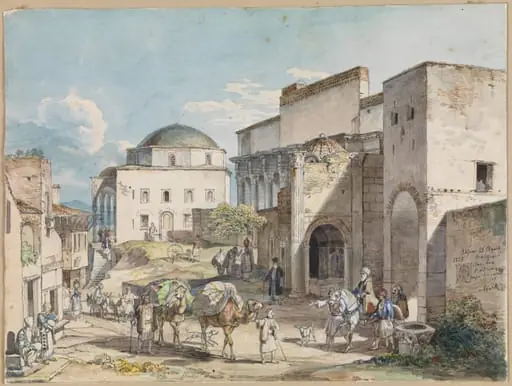
Το Τζαμί του Τζισδαράκη στο Μοναστηράκι
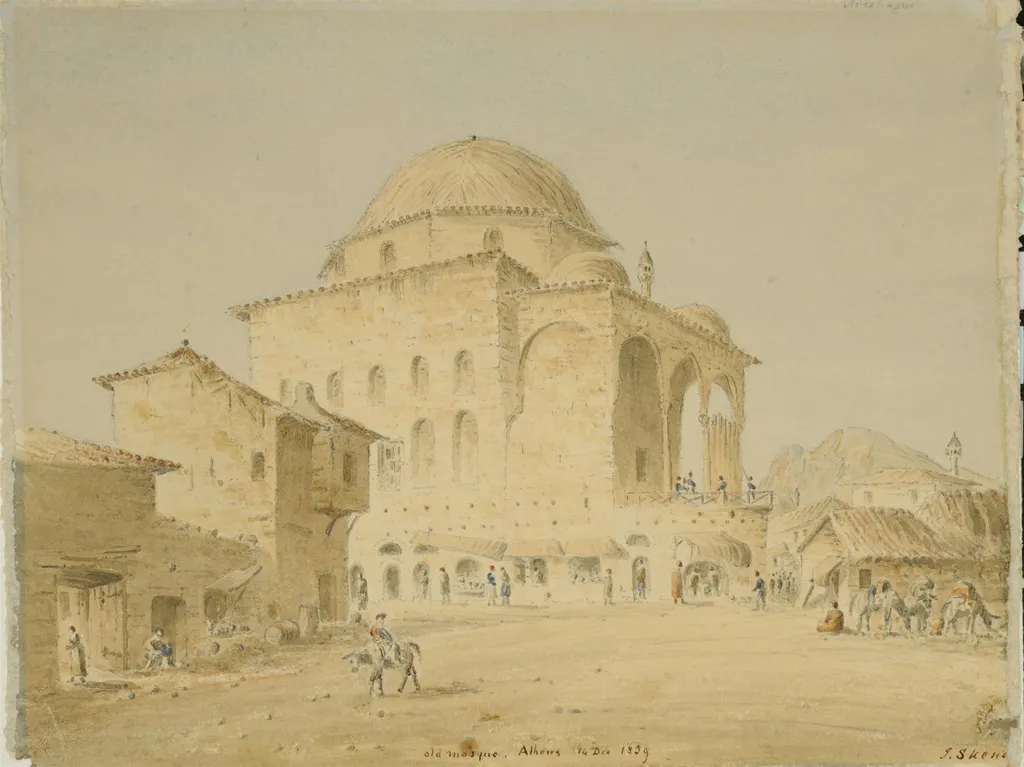
Το Τζαμί του Τζισδαράκη στο Μοναστηράκι is an unspecified painting by the Orientalist artist James Skene. It dates from 1839 and is held in the collection of the Historical & Ethnological Society of Greece.
About this work
Overview
The piece is held in the collection of the Museum of Ethnography, where it serves as a visual record of Ottoman-era architecture in post-independence Greece.
Painted in 1839 by James Skene, this work depicts the Mosque of Tzisdarakis in Athens’ Monastiraki district. Rendered in watercolor or ink wash, the image captures the structure alongside the bustling street life surrounding it. The artist inscribed the Greek title at the base, affirming the building’s identity and location. The piece is held in the collection of the Museum of Ethnography, where it serves as a visual record of Ottoman-era architecture in post-independence Greece.
Subject & Meaning
The painting presents the mosque not as a monument isolated from daily life, but as an active part of the urban fabric. Merchants, pedestrians, and a horse-drawn cart populate the foreground, suggesting continuity of public use after the Ottoman period. The inclusion of Greek script in the title signals a cultural reclamation, while the scene’s quiet normalcy implies the mosque’s enduring role in the neighborhood’s social rhythm.
Technique & Style
Skene employed muted earth tones—browns, grays, and soft ochres—to convey the architectural mass and atmospheric haze of the Athenian quarter. Accents of red and white, such as hats and fabric canopies, draw the eye without disrupting the subdued palette. The brushwork is loose yet precise, emphasizing texture over detail, and the perspective is slightly elevated, offering a street-level view that invites the viewer into the scene.
History & Provenance
Created during Skene’s time in Greece, the work likely stems from his travels as a British diplomat and amateur artist. It was acquired by the Museum of Ethnography in the 19th century, possibly as part of a broader effort to document cultural transitions in the newly formed Greek state. The painting’s survival reflects early interest in preserving visual records of Ottoman heritage within modern Greek identity.
Context
Painted just decades after Greek independence, the image reflects a period of cultural negotiation. While many Ottoman structures were repurposed or neglected, this work portrays the mosque as still functional and integrated into daily life. Skene’s focus on ordinary activity, rather than grandeur, aligns with Romantic-era interest in authentic, unidealized scenes of local culture, even as political narratives shifted.
Legacy
The painting remains a rare visual document of Monastiraki’s 19th-century streetscape and the mosque’s post-Ottoman use. It contributes to scholarly understanding of how architectural heritage was perceived during Greece’s nation-building phase. Unlike later nationalist depictions that erased Ottoman traces, Skene’s image acknowledges coexistence, offering a nuanced perspective on cultural continuity.
Own this work as a print
Artist & collection

Artist
James Skene of Rubislaw (1775–1864) was a Scottish lawyer and amateur artist, best known as a friend of Sir Walter Scott.
Museum
Historical & Ethnological Society of Greece
Continue through works from the same source collection.
 Gadeparti i Athen. Med Hadji Hazekis' palads og Tzistarakis Moskeen
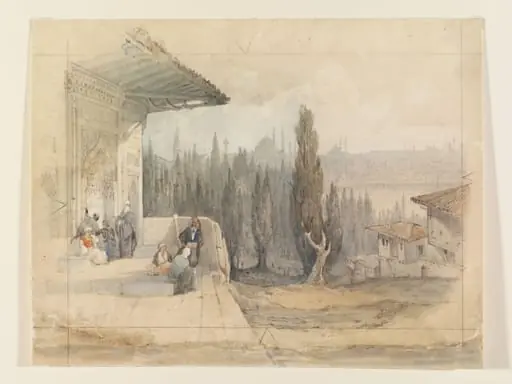 Pera
Pera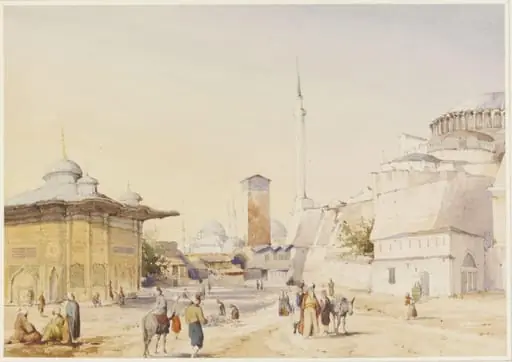 Fountain & part of Mosque of St. Sophia, Stamboul
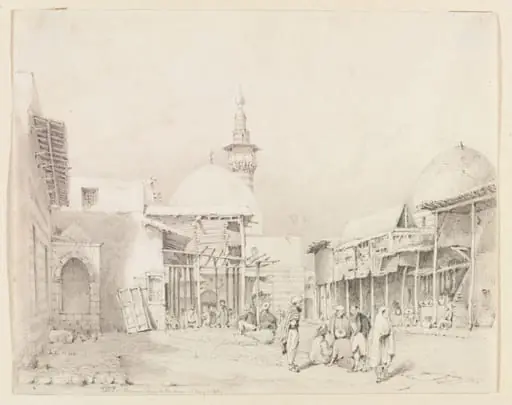 Damas. dans le Madan
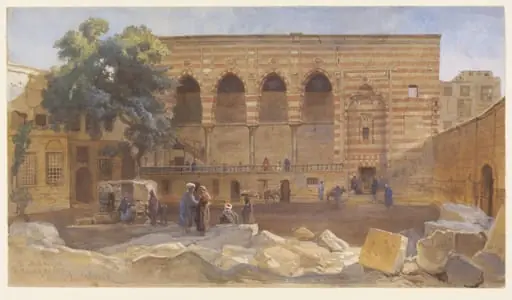 El Mahkemeh or Court of the Cadi Cairo
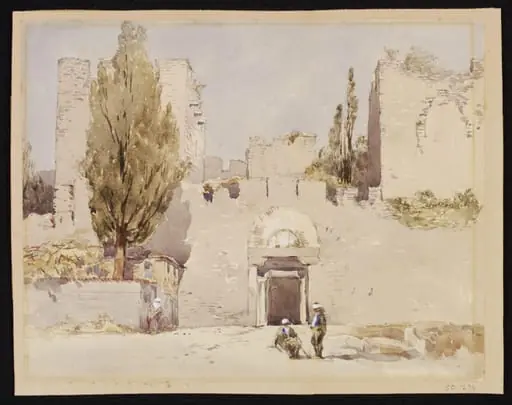 Entrance to the Cannon Gate (Top Kapisi) in Constantinople
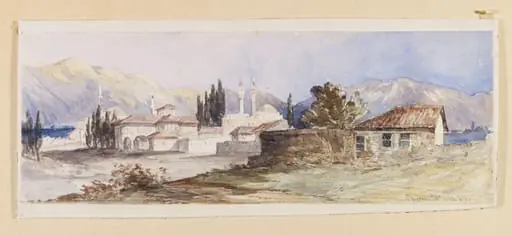 Smyrne
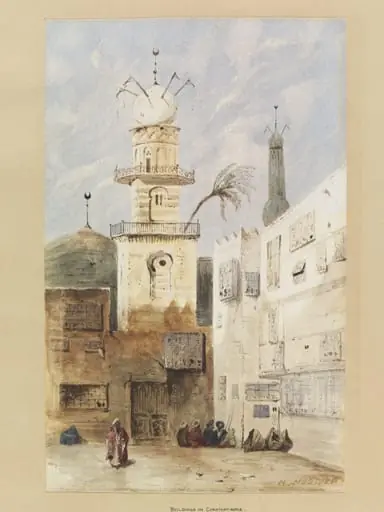 Mosque, possibly in North Africa
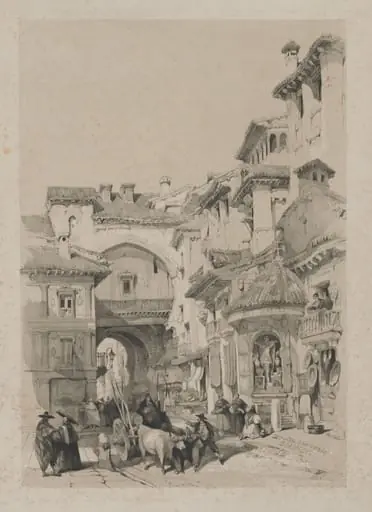 Picturesque Sketches in Spain: Gate of the Vivarrambla, Granada
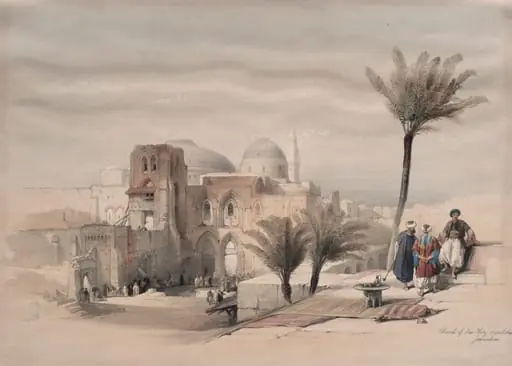 Church of the Holy Sepulchre, Jerusalem
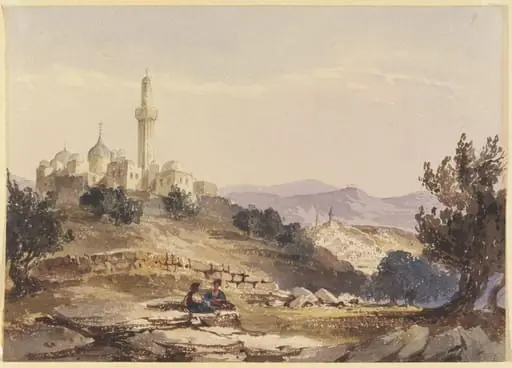 Mosque of the Ascension on the Mount of Olives
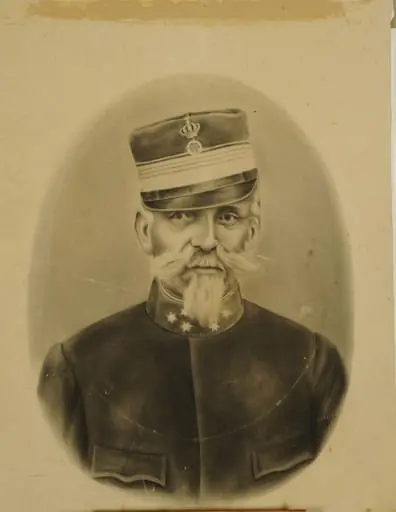 Προσωπογραφία του Συνταγματάρχη Γεωργίου Πλαπούτα