Artwork
Eventail plié
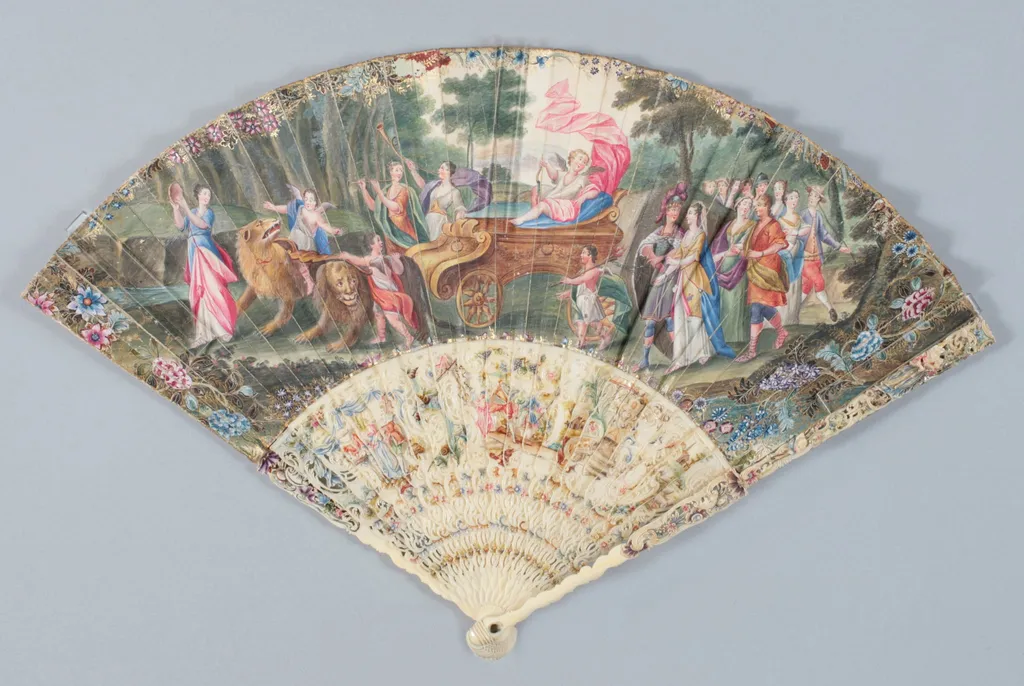
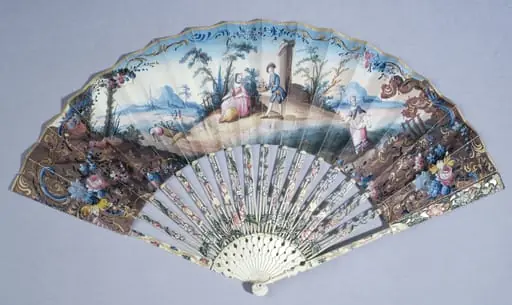
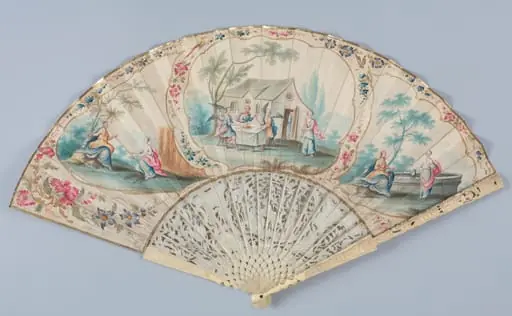
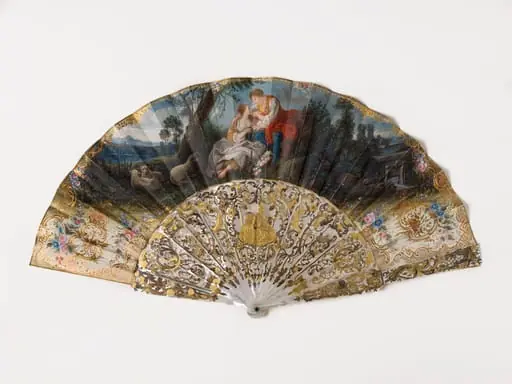
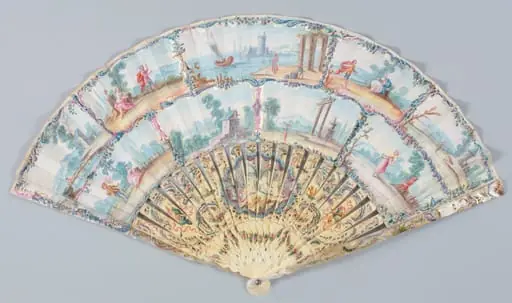
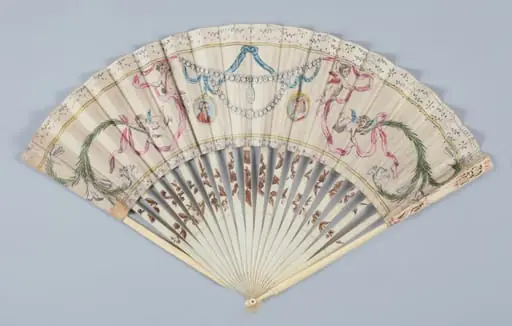
Eventail plié is an unspecified work on paper by the Rococo painting artist Unknown. It dates from 1750 and is held in the collection of the Palais Galliera - Musée de la Mode de la Ville de Paris. This folding fan features painted scenes on both sides, executed in watercolor on a delicate paper surface.
About this work
Overview
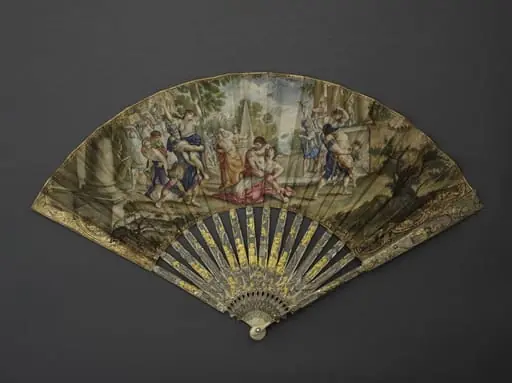
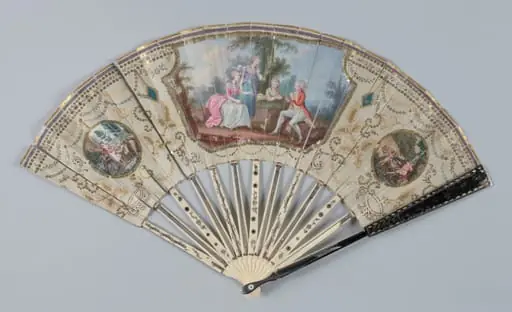
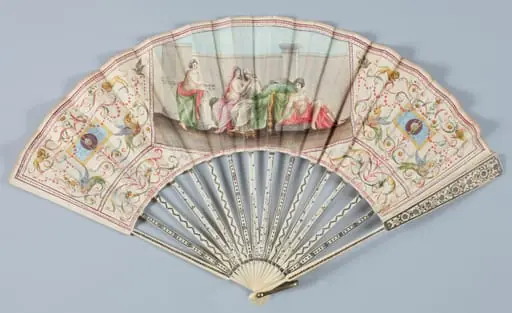
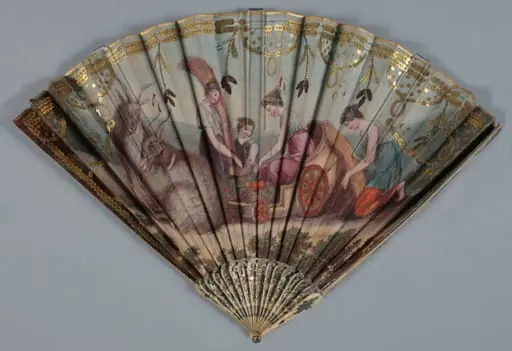
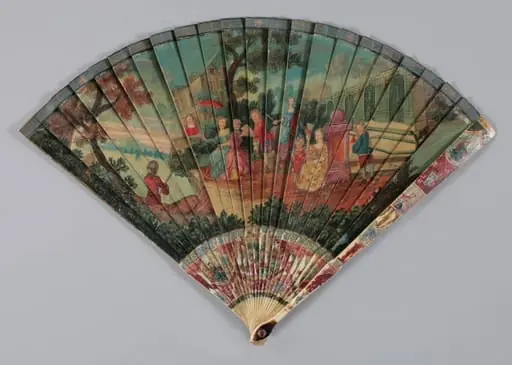
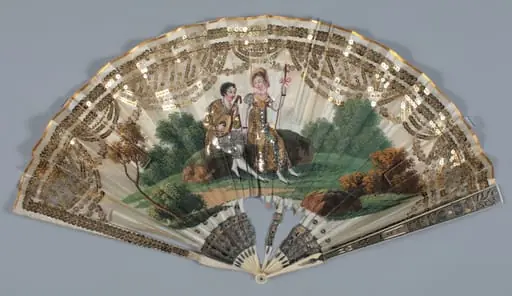
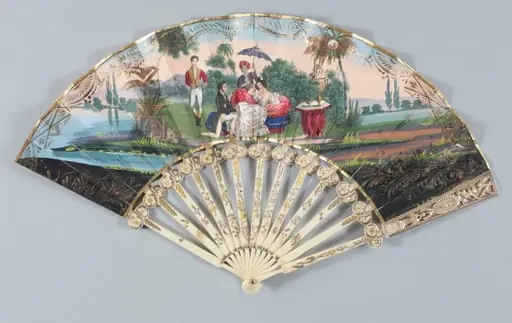
This folding fan features painted scenes on both sides, executed in watercolor on a delicate paper surface. The imagery is densely packed with figures and decorative elements, suggesting it was designed for visual delight rather than mere utility. The handle is unadorned, drawing focus to the painted panels, which bear signs of wear consistent with regular use over time.
Subject & Meaning
One panel depicts aristocratic women near a carriage, accompanied by a lion and a figure in pink beneath a tree, evoking a stylized outdoor gathering. The reverse side continues the narrative with additional figures in period attire. The scenes likely reference fashionable leisure or allegorical themes popular in 18th-century European court culture, though no specific event is identifiable.
Technique & Style
The imagery is rendered in translucent watercolor washes, creating soft transitions and a luminous quality. Fine brushwork details costumes and foliage, while the faded appearance suggests repeated handling and exposure to light. Decorative borders frame the scenes with intricate patterns, reinforcing the object’s role as a refined personal accessory.
History & Provenance
Made likely in the late 1700s, the fan reflects European craftsmanship of the period, possibly French or English. Its condition indicates it was owned and used by someone of means, though its specific origin and prior owners remain undocumented. The wear on the paint and paper aligns with typical patterns of domestic use among the upper classes.
Context
Fans like this were not only practical cooling tools but also social objects, used to convey status and taste. Painted fans often illustrated contemporary fashion, mythology, or pastoral fantasies. Their portability made them ideal for displaying curated imagery, and watercolor was favored for its ability to capture delicate detail without obscuring the paper’s translucency.
Legacy
This fan exemplifies the intersection of fine art and decorative craft in pre-industrial Europe. While no longer in active use, such objects remain valuable for understanding how personal items carried cultural narratives. Today, they are studied as artifacts of visual storytelling and material culture, offering insight into everyday aesthetics of the past.
Artist & collection
Museum
Palais Galliera - Musée de la Mode de la Ville de Paris
Continue through works from the same source collection.
 Domestic Scene
 Giacomo and Cardinal Marco, investing Andrea, Abbot of San Zeno, with his Benefice
 The Nymph of Fontainebleau
 Portrait of a Woman
 Madonna and Child with Saints in the Enclosed Garden
 Venus and Minerva
 Family Group of Four on Sofa
 Wall painting from Room H of the Villa of P. Fannius Synistor at Boscoreale