Artwork
Farfurie cu fundul plat, puțin adâncit. Pe fundul vasului decor ilustrând un buchet de flori albastre cu tulpini și frunze verzi. Pe marginile vasului dispuse câte trei grupuri a două flori ca și cele de pe fund. La buză o linie neagră dispusă circular.. La posterior pe inelul de susținere practicate două perforații pentru atârnare. Cromatica: fond: alb; motive: albastru, verde, negru.
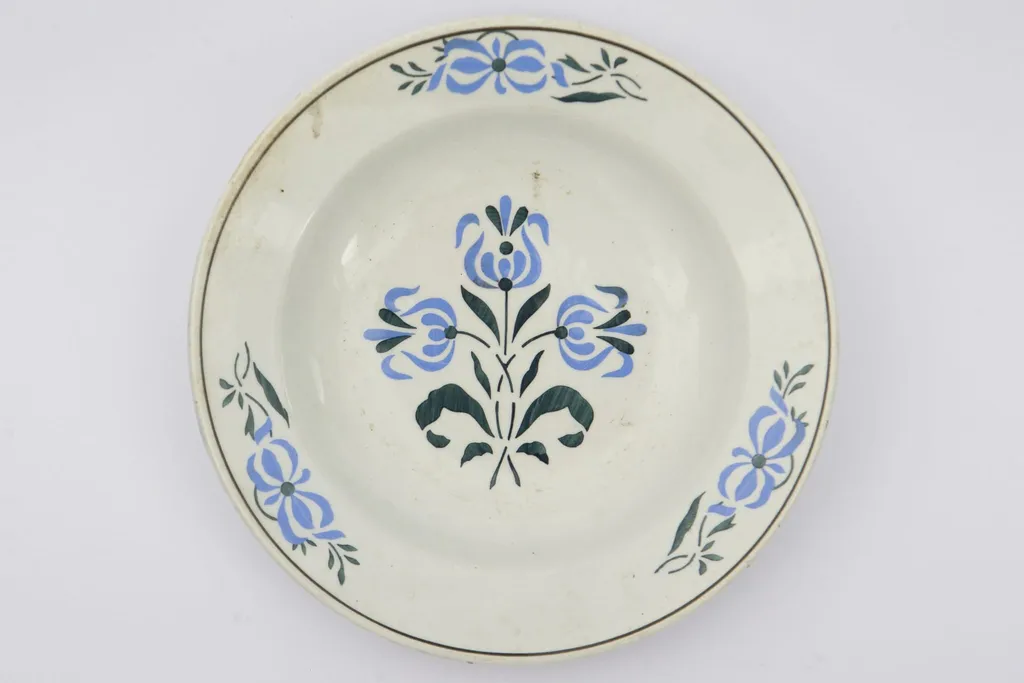
Farfurie cu fundul plat, puțin adâncit. Pe fundul vasului decor ilustrând un buchet de flori albastre cu tulpini și frunze verzi. Pe marginile vasului dispuse câte trei grupuri a două flori ca și cele de pe fund. La buză o linie neagră dispusă circular.. La posterior pe inelul de susținere practicate două perforații pentru atârnare. Cromatica: fond: alb; motive: albastru, verde, negru. is a poster by Unknown. It dates from 1850 and is held in the collection of the ASTRA National Museum Complex. A shallow, white ceramic dish with a slightly indented base, featuring a restrained floral decoration in blue, green, and black.
About this work
Overview
Two small perforations on the rear support ring suggest it was intended for hanging, indicating a possible functional or devotional use beyond mere tableware.
A shallow, white ceramic dish with a slightly indented base, featuring a restrained floral decoration in blue, green, and black. The design is symmetrical and evenly spaced, with a central bouquet and three paired floral motifs along the rim. A thin black line encircles the edge, framing the composition. Two small perforations on the rear support ring suggest it was intended for hanging, indicating a possible functional or devotional use beyond mere tableware.
Subject & Meaning
The decoration centers on a simple bouquet of blue flowers with green foliage, repeated in pairs around the rim. The repetition suggests a rhythmic, almost meditative pattern rather than a naturalistic arrangement. Blue and green, colors associated with calm and nature, dominate, while the black outline provides definition. The motif lacks overt symbolism, implying an aesthetic preference for harmony and order rather than narrative or religious content.
Technique & Style
The dish was likely hand-painted with mineral pigments on a white slip ground, using fine brushwork to define the floral forms. The limited palette—blue, green, black—reflects a deliberate economy of color, typical of utilitarian ceramics with decorative intent. The flat, shallow form and precise linear borders indicate a focus on clarity and balance, with no modeling or shading, emphasizing outline and flat planes over depth.
History & Provenance
This object belongs to a broader tradition of ceramic wares from the Balkans or Eastern Europe, likely produced between the 17th and 19th centuries. Similar pieces have been found in domestic and ecclesiastical contexts, often used as wall hangings or devotional objects. The presence of hanging perforations aligns with regional practices of displaying decorated ceramics in homes or chapels, where their visual serenity served both decorative and contemplative purposes.
Context
In rural and small-town households of the region, such dishes were common household items, blending utility with ornament. Their floral motifs echoed local botanical knowledge and seasonal cycles, while their durability made them suitable for display. The use of blue and green pigments, derived from locally available minerals, reflects both resource constraints and aesthetic traditions passed through generations of potters and painters.
Legacy
This type of ceramic retains cultural resonance in folk art collections and regional museums, where it is valued for its quiet craftsmanship and continuity of form. Though not produced in large-scale workshops, such pieces represent a vernacular aesthetic that persisted alongside more elaborate porcelain traditions. Their survival offers insight into everyday visual culture, where beauty was found in repetition, restraint, and the subtle interplay of color and line.
Artist & collection

 Domestic Scene
 Giacomo and Cardinal Marco, investing Andrea, Abbot of San Zeno, with his Benefice
 The Nymph of Fontainebleau
 Portrait of a Woman
 Madonna and Child with Saints in the Enclosed Garden
 Venus and Minerva
 Family Group of Four on Sofa
 Wall painting from Room H of the Villa of P. Fannius Synistor at Boscoreale
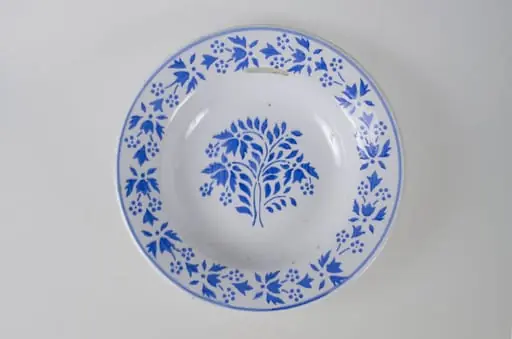 Farfuria are formă tronconică ușor adâncită. Pe buza vasului se identifică un registru decorativ floral, vegetal, continuu mărginit de o linie. Pe fund este o ștanță: o casă cu o pasăre pe acoperiș. Pe fundul vasului sunt două incizii în care este introdus șnurul folosit la agățarea vasului pe perete. Cromatică: fond: alb; motive: albastru.
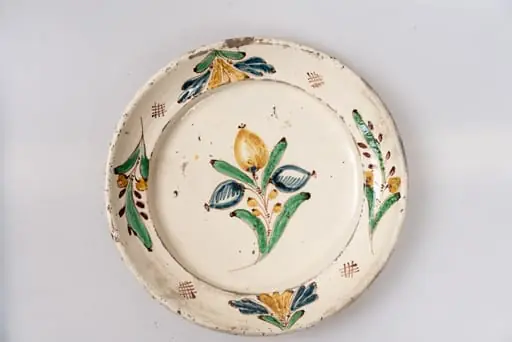 Farfurie de formă aplatizată, cu fund larg și buză ușor concavă spre interior; piesa este angobată pe fața interioară cu un strat de humă albă peste care este pictat cu cornul și cu pensula, cu contur din linii fine de culoare maro, decorul format din motive florale și fitomorfe stilizate: central pe fundul farfuriei este pictată o tulpină cu trei boboci, unul galben, ceilalți doi de culoare albastră, și frunze verzi. Buza farfuriei este decorată cu patru motive florale și vegetale dispuse simetric și separate de patru motive mici formate din linii hașurate intersectat, de culoare maro. Suprafața ornamentată a farfuriei este acoperită cu un strat de smalț transparent. Cromatica: alb, maro, albastru, verde, galben.
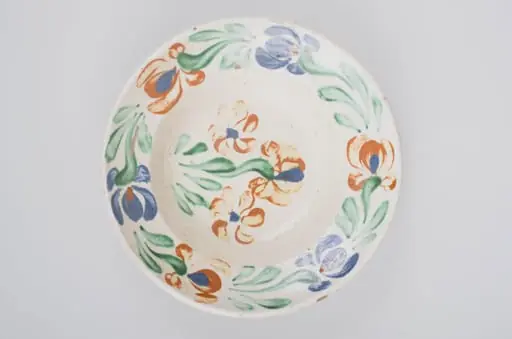 Farfurie cu fundul adâncit și buza evazată. Smălțuită numai în interior și scurgeri de smalț sub buză. Prezintă găuri pentru prinderea aței în vederea agățării. Decorată cu motive florale: central are trei flori iar pe margine un chenar floral. Cromatică: fond: alb; motive: maro; verde; albastru.
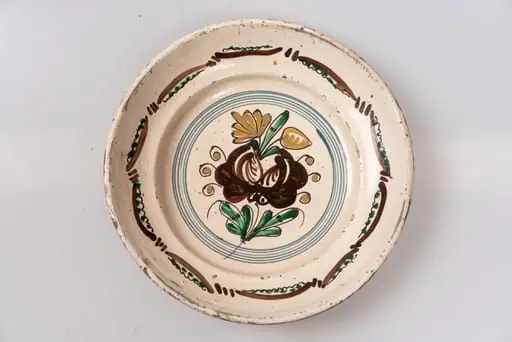 Farfurie adâncă, cu fund larg și buză evazată ușor concavă spre interior; este acoprită pe fața interioară cu un strat de humă albă peste care este pictat cu cornul și cu pensula decorul format din motive florale și vegetale stilizate, realizate cu contur fin, de culoare maro: central pe fundul farfuriei un buchet format dintr-o floare mare de culoare maro, o floare mai mică cu petale alungite, galbene, și un boboc galben, cu frunze verzi, buchet înscris între cercuri subțiri albastre. Buza este decorată cu un șir format dintr-un motiv repetitiv, format dintr-o linie mică maro, ușor curbă, puncte verzi și linie subțire ondulată; motivele sunt separate între ele de câte 2-3 linii mici maro. Fața ornamentată a farfuriei este acoperită cu un strat de smalț transparent. Cromatica: alb, verde, albastru, maro, galben.
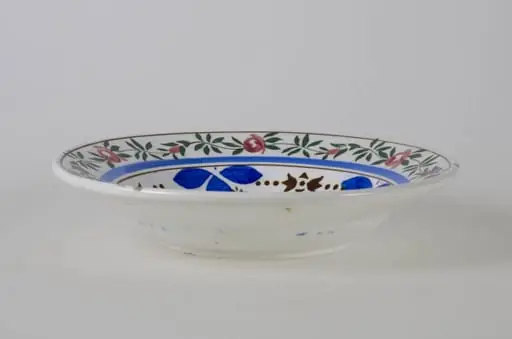 Farfurie de formă tronconică, adâncită; este decorată cu motive florale pe toată suprafața; florile de pe margine sunt încadrate de trei cercuri concentrice dintre care una spre exterior și două spre interior; cromatică: fond alb, motive: roșu; verde; albastru; maro; galben. Pe fund are o ștanță: trei cercuri concentrice. Tot pe fundul vasului sunt două incizii în care este introdus un șnur folosit la agățarea vasului pe perete.
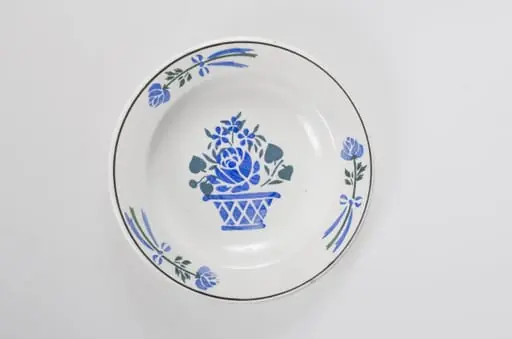 Vas tronconic și adânc realizat din porțelan. Pe fondul alb, central se află un coș albastru (realizat din motive geometrice: romuri și triunghiuri încadrate de două linii) cu un trandafir și trei floricele: pe marginimea farfuriei se observă trei secvențe cu trandafiri legate cu o fontiță. Marginea vasului este decorată cu un cerc. Cromatică: alb; motive: albastru; verde; negru.
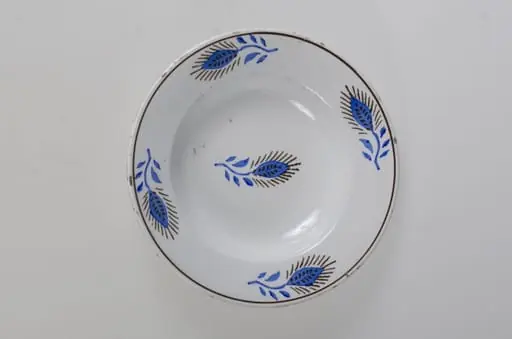 Vasul prezintă formă tronconică adâncită cu o bordură decorată cu motive florale și vegetale dispuse câte două în opoziție pe suprafața buzei (patru flori cu frunze). În centru este decorat cu o floare. Prezintă o marcă indescifrabilă pe exteriorul vasului. Cromatică: fond: alb; motive: albastru; maro.
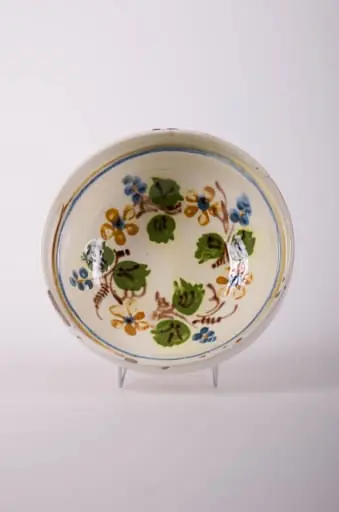 Farfurie de formă tronconică, adâncită, cu buza foarte înaltă; pe fund are găuri pentru agățare. Este smălțuit în interior și exterior (buza). Decorat cu motive geometrice: linie; motive fitomorfe; motive florale. Cromatică: fond: alb; motive: verde; maro; albastru.
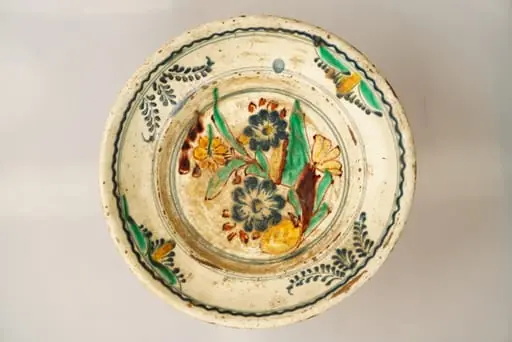 Farfurie adâncă, cu buza dreaptă evazată; suprafața exterioară este acoperită cu un strat de angobă albă peste care este pictat cu cornul și cu pensula decorul format din motive florale și geometrice, dispuse astfel: registrul decorativ de pe fundul farfuriei conține, încadrat într-un cerc dublu albastru, un buchet desenat cu contur subțire maro, format din două flori cu petale ușor alungite albastre, un boboc și două flori galbene și din frunze verzi. Registrul decorativ de pe buza farfuriei, marcat de două linii circulare duble albastre, conține două motive decorative formate din trei frunze realizate din linii mici albastre și două motive formate din două frunze verzi și o floare centrală galbenă, decorată cu linii mici albastre. Marginea buzei este decorată cu o linie circulară albastră. Suprafața ornamentată a farfuriei este acoperită cu un strat de smalț transparent. Cromatica: alb, galben, verde, maro, albastru.
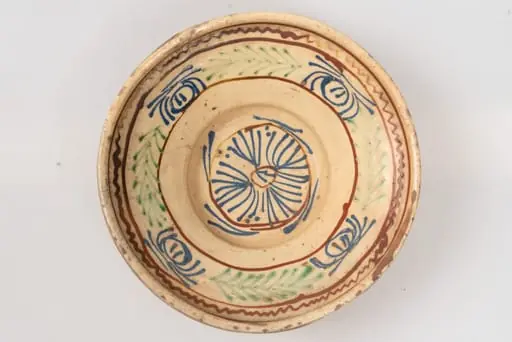 Farfurie adâncă, de tip castron, cu fund îngust, corp tronconic și buză dreaptă, verticală; este angobată pe fața interioară și pe suprafața exterioară a buzei cu un strat de humă albă. Este decorată prin pictare cu cornul cu motive florale și fitomorfe geometrizate: pe fundul farfuriei este pictată o floare cu petalele din linii subțiri albastre și centrul marcat cu un cerc mic maro, încadrată într-un cerc de asemenea de culoare maro. Peretele farfuriei este decorat cu patru grupuri de motive formate din linii verzi, sugerând o ramură cu frunze, intercalate de patru flori geometrizate, realizate din linii albastre. Decorul este completat cu trei linii circulare simple și o linie circulară ondulată. Suprafața ornamentată a farfuriei este acoperită cu un strat de smalț transparent. Cromatica: alb, verde, albastru, maro.