Artwork
Farfurie de formă tronconică, adâncită; motive florale în centru (trandafiri); pe margine este decorat cu trei cercuri concentrice. Pe fund este o ștanță: o casă cu o pasăre pe acoperiș cu inscripție deasupra: ”MAGYAR” și dedesubt: ”1971” și un cuvânt indescifrabil. Pe fundul vasului sunt două incizii în care este introdus un șnur folosit la agățarea vasului pe perete. Vasul este smălțuit interior-exterior. Decor obținut prin pictare. Cromatică: fond: alb, motive: roșu; verde; albastru; galben.
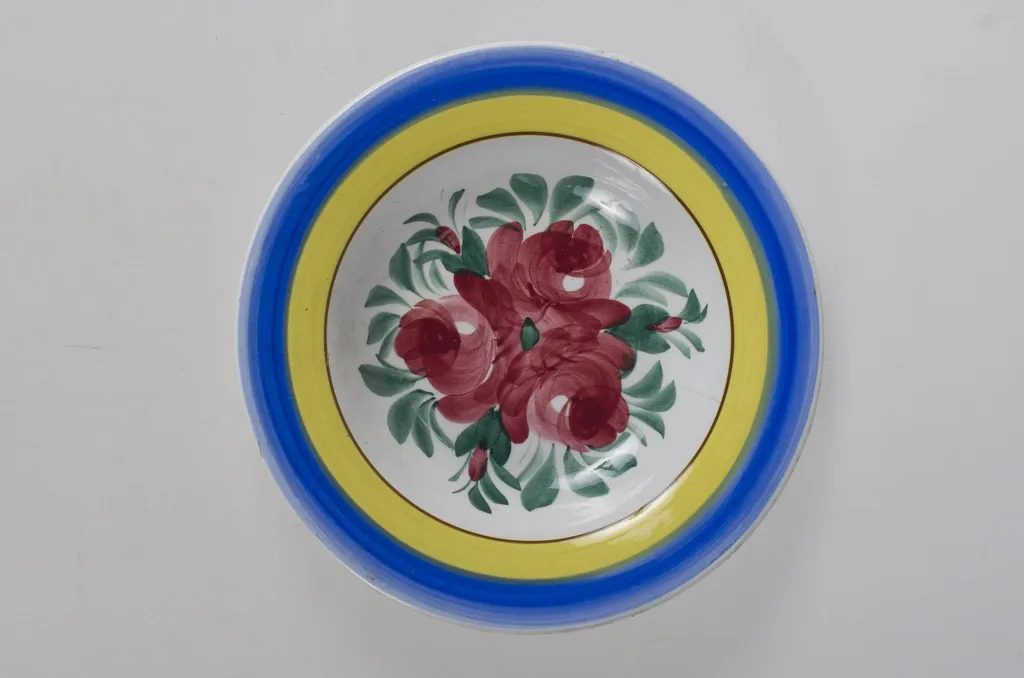
Farfurie de formă tronconică, adâncită; motive florale în centru (trandafiri); pe margine este decorat cu trei cercuri concentrice. Pe fund este o ștanță: o casă cu o pasăre pe acoperiș cu inscripție deasupra: ”MAGYAR” și dedesubt: ”1971” și un cuvânt indescifrabil. Pe fundul vasului sunt două incizii în care este introdus un șnur folosit la agățarea vasului pe perete. Vasul este smălțuit interior-exterior. Decor obținut prin pictare. Cromatică: fond: alb, motive: roșu; verde; albastru; galben. is a photography by Unknown. It dates from 1850 and is held in the collection of the ASTRA National Museum Complex.
About this work
The dish has a stamped mark on the bottom: a little house with a bird on the roof, plus the word *"MAGYAR"* (which means "Hungarian") and the year *1971*.
This is a round, shallow dish with bright colors. In the center, there’s a painted cluster of red roses with green leaves. Around the edge, three colored rings—yellow, blue, and another blue—frame the design. The background is plain white, and the whole thing looks like it’s meant to hold something.
The dish has a stamped mark on the bottom: a little house with a bird on the roof, plus the word *"MAGYAR"* (which means "Hungarian") and the year *1971*. It was likely made to hang on a wall, with two slits for a rope.
If you like painted flowers, check out rosa—the real kind these roses might be modeled after.
Overview
A shallow, circular plate of enamelled ceramic, dated 1971, bears a vivid floral motif centered with red roses and green foliage against a white ground. The rim is accented by three concentric rings in yellow and blue hues. The piece includes a stamped mark on its underside depicting a house, a bird, the inscription “MAGYAR,” and an undeciphered word.
Subject & Meaning
The central design celebrates a bouquet of roses, a traditional symbol of beauty and affection, rendered in bright reds and greens. The surrounding concentric circles frame the composition, adding a decorative border that emphasizes the central floral arrangement.
Technique & Style
The vessel is enamelled on both interior and exterior surfaces, with the decorative scheme applied by hand‑painting. The color palette—white background, red roses, green leaves, and yellow‑blue rim—reflects a mid‑20th‑century folk‑art aesthetic common in Hungarian ceramic production.
History & Provenance
Stamped on the base is a house with a bird, the word “MAGYAR,” and the year 1971, indicating Hungarian manufacture during that period. Two slits on the underside accommodate a rope, suggesting the object was intended for wall mounting rather than table use.
Context
The piece belongs to a tradition of decorative ceramics produced in Hungary in the post‑war era, when artisans often combined functional objects with vivid folk motifs. Such items were typically used as ornamental wall hangings in domestic interiors.
Artist & collection

 Domestic Scene
 Giacomo and Cardinal Marco, investing Andrea, Abbot of San Zeno, with his Benefice
 The Nymph of Fontainebleau
 Portrait of a Woman
 Madonna and Child with Saints in the Enclosed Garden
 Venus and Minerva
 Family Group of Four on Sofa
 Wall painting from Room H of the Villa of P. Fannius Synistor at Boscoreale
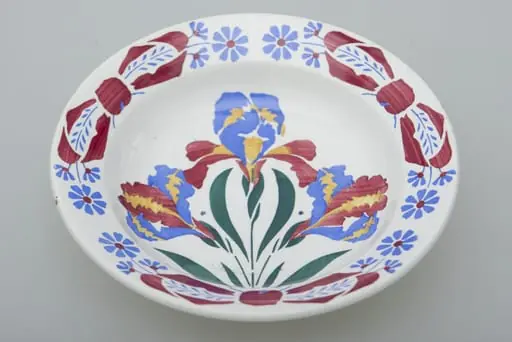 Farfurie de formă tronconică, ușor adâncită. Există două registre ornamentale, unul plasat de jur împrejurul buzei cu motive florale. Al doilea registru plasat în centru tot cu motive florale. Smălțuită. Cromatică: fond: alb; motive: albastru; verde; roșu; galben.
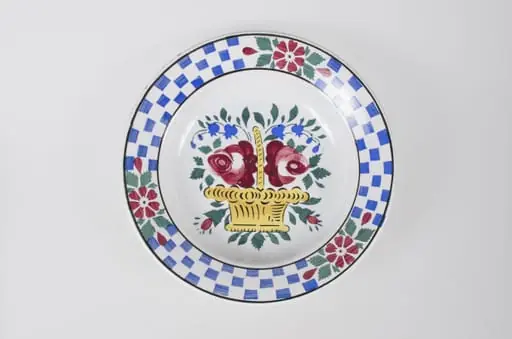 Vas de formă tronconică, adâncă. Pe fundul farfuriei se află un ornament format din: un coș de flori (trandafiri și clopoței). Pe marginea farfuriei între două cercuri concentrice apar trei flori despărțite de trei registre în formă de tablă de șah realizate din dreptunghiuri albastre. Cromatică: fond: alb; motive: galben; roșu; verde; albastru; negru.
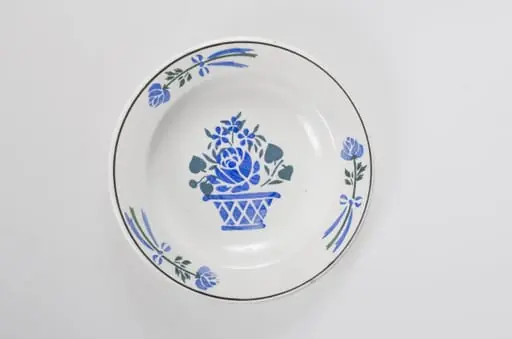 Vas tronconic și adânc realizat din porțelan. Pe fondul alb, central se află un coș albastru (realizat din motive geometrice: romuri și triunghiuri încadrate de două linii) cu un trandafir și trei floricele: pe marginimea farfuriei se observă trei secvențe cu trandafiri legate cu o fontiță. Marginea vasului este decorată cu un cerc. Cromatică: alb; motive: albastru; verde; negru.
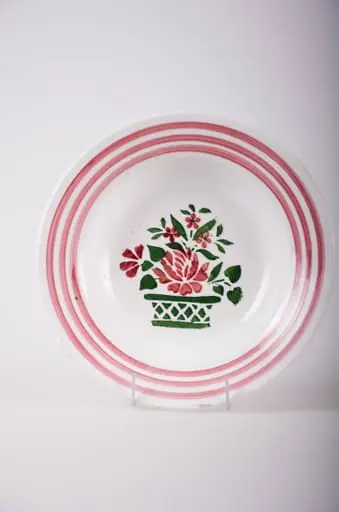 Vas de formă tronconică, adâncit; pe fund are găuri pentru agățare. În centru este decorată cu motive florale: vază cu flori; pe margine sunt trei cercuri concentrice; motive geometrice: linie, romb, triunghi. Pe fund are o marcă indescifrabilă. Cromatică: fond: alb; motive: vișiniu; verde.
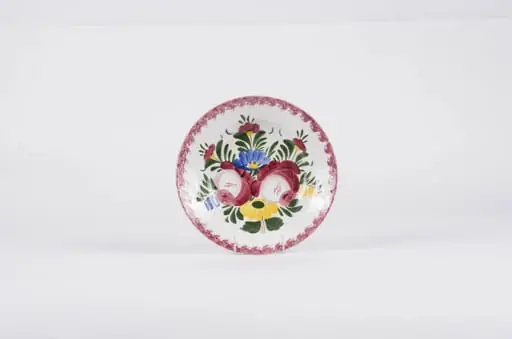 Vasul este de formă tronconică fiind smălțuit interior-exterior. Este confecționat din faianță Decorul este format din motive florale pictate pe fond alb; gura este decorată în stropi de culoare vișinie iar baza farfuriei este decorată cu motive florale. Se identifică șapte flori alcătuind motivul decorativ pe baza farfuriei. Pe spate inscripția este indescifrabilă. Cromatică: galben; albastru; verde; vișiniu; alb;
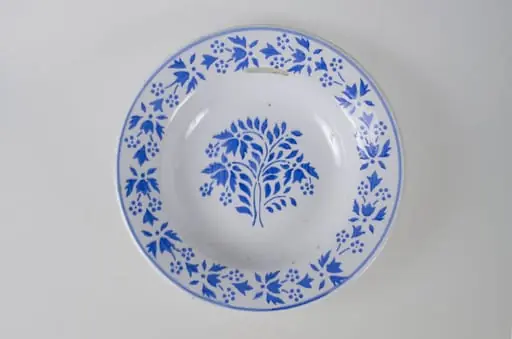 Farfuria are formă tronconică ușor adâncită. Pe buza vasului se identifică un registru decorativ floral, vegetal, continuu mărginit de o linie. Pe fund este o ștanță: o casă cu o pasăre pe acoperiș. Pe fundul vasului sunt două incizii în care este introdus șnurul folosit la agățarea vasului pe perete. Cromatică: fond: alb; motive: albastru.
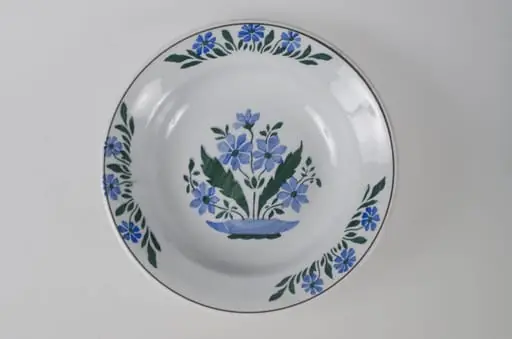 Vasul are formă tronconică, adâncită și este decorat cu motive florale dispuse în trei registre a câte trei flori pe margine, încadrate de o linie; în centru este decorat cu flori și frunze. Pe fund are trei cercuri concentrice care profilează trei registre. Vas evazat în partea superioară. Smălțuit interior-exterior. Cromatică: fond: alb; motive: verde; albastru; negru.
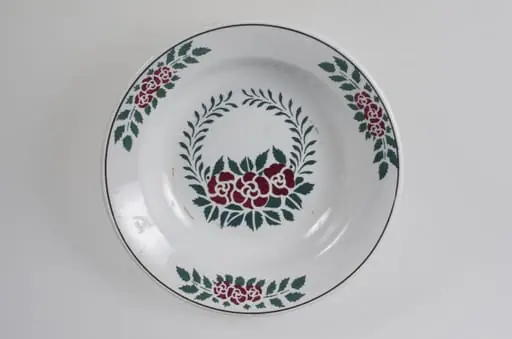 Vasul are formă tronconică, adâncită. Este decorat cu motive florale, vegetale și geometrice; are trei flori pe margine ce sunt delimitate de o linie; în centru este decorat cu un buchet format din trei trandafiri; pe fund are trei cercuri concentrice. Vasul este smălțuit interior-exterior. Cromatică: fond alb; motive: verde; roșu.
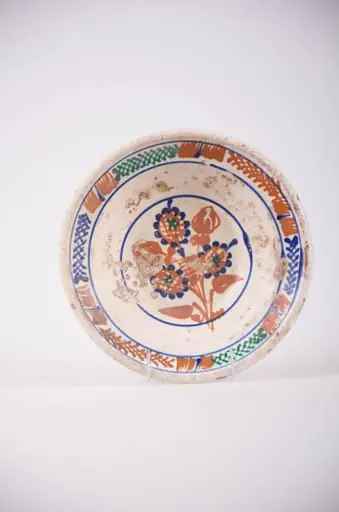 Farfurie de formă tronconică cu deschidere mare. Smălțuit în interior și ornamentat cu motive geometrice: cercuri; motive florale, pete de culoare și motiv vegetal: brăduț. Motivul floral se află pe fundul vasului și este înscris într-un cerc. Motivele vegetale și petele de culoare sunt amplasate pe marginea farfuriei și sunt încadrate de două cercuri. Cromatică: fond: alb; motive: maro; verde; albastru.
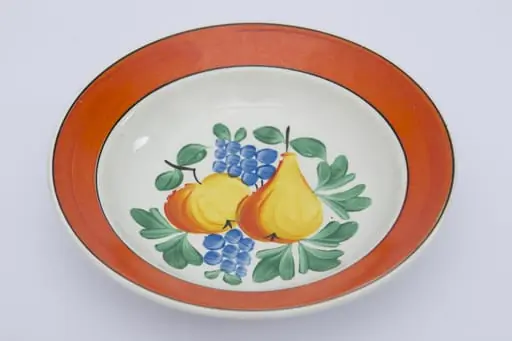 Vas ceramic de formă tronconică aplatizat pe bază inelară, ușor adâncit. Există două registre ornamentale, unul plasat de jur împrejurul buzei cu motive geometrice: un unel de culoare portocalie, cercul conturul inelului este negru. Al doilea registru plasat în centru cu motive fitomorfe, iar în interiorul acestora se găsesc: un măr, un strugure și o pară. Cromatică: fond: alb; motive: portocaliu; verde; galben; albastru; negru.