Artwork
Farfurie de formă tronconică, adâncită; pe margine este decorat cu motive vegetale încadrate de o linie; în centru are o crenguță cu fructe (cireșe). Pe exterior la baza vasului prezintă trei cercuri concentrice și cifra ”26”. Cromatică: fond: alb; verde; roșu; negru. Pe fundul vasului sunt două incizii în care este introdus un șnur folosit la agățarea vasului pe perete.
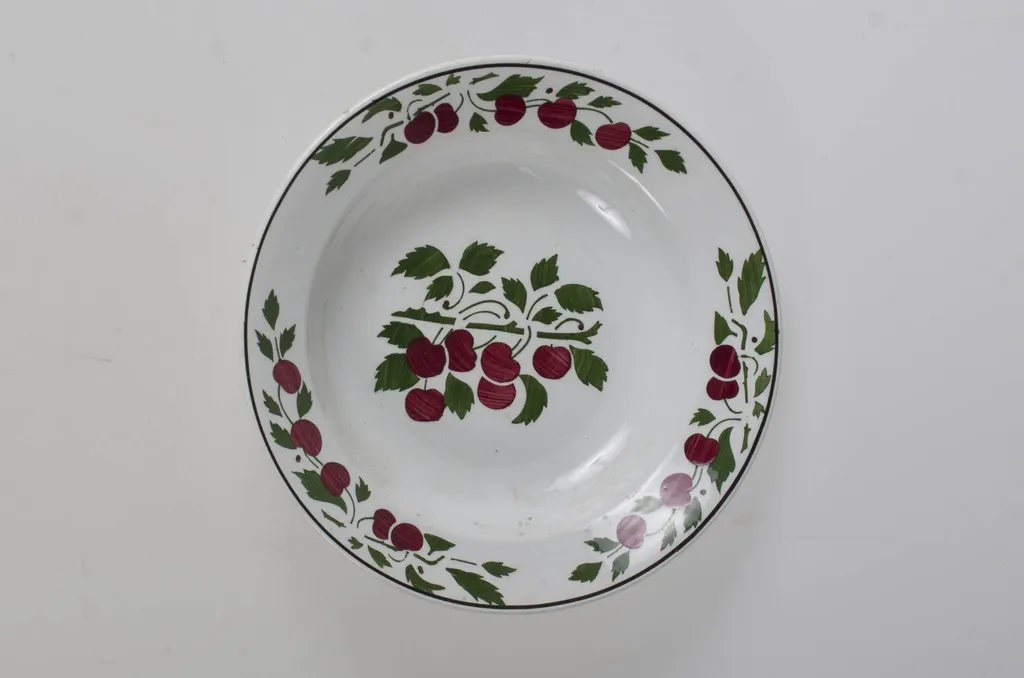
Farfurie de formă tronconică, adâncită; pe margine este decorat cu motive vegetale încadrate de o linie; în centru are o crenguță cu fructe (cireșe). Pe exterior la baza vasului prezintă trei cercuri concentrice și cifra ”26”. Cromatică: fond: alb; verde; roșu; negru. Pe fundul vasului sunt două incizii în care este introdus un șnur folosit la agățarea vasului pe perete. is a print by Unknown. It dates from 1850 and is held in the collection of the ASTRA National Museum Complex. The object is a white, conical‑shaped plate with a deep central depression.
About this work
Overview
The object is a white, conical‑shaped plate with a deep central depression. Its rim is decorated with a green vegetal motif framed by a thin line, while the central field features a branch bearing red cherries. The outer base displays three concentric circles and the numeral “26.” Two shallow cuts near the bottom accommodate a cord for wall suspension.
Subject & Meaning
The decorative program centers on a fruit‑bearing branch, a common motif in folk ceramics that evokes abundance and seasonal cycles. The red cherries contrast sharply with the white ground, emphasizing vitality, while the surrounding foliage reinforces a connection to the natural world, suggesting the plate’s original use in domestic or ritual contexts linked to harvest celebrations.
Technique & Style
The plate was formed from clay and fired to a white slip, then painted with mineral pigments in green, red, and black. The vegetal border and concentric circles are executed in linear incisions, a technique that allows precise, repeatable patterns. The overall aesthetic reflects a restrained, geometric approach typical of regional ceramic traditions.
History & Provenance
The presence of the hanging cord and the numeric inscription “26” indicates the piece was intended for wall display, possibly as a decorative talisman or offering. While the exact origin is not recorded, its stylistic traits align with Eastern European folk pottery produced in the late 19th to early 20th centuries.
Context
Such plates were often part of a larger ensemble of household ceramics used in festive gatherings, where painted fruit motifs symbolized prosperity. The combination of functional form and ornamental hanging suggests a dual role as both a utilitarian object and a visual element in interior decoration.
Artist & collection

 Domestic Scene
 Giacomo and Cardinal Marco, investing Andrea, Abbot of San Zeno, with his Benefice
 The Nymph of Fontainebleau
 Portrait of a Woman
 Madonna and Child with Saints in the Enclosed Garden
 Venus and Minerva
 Family Group of Four on Sofa
 Wall painting from Room H of the Villa of P. Fannius Synistor at Boscoreale
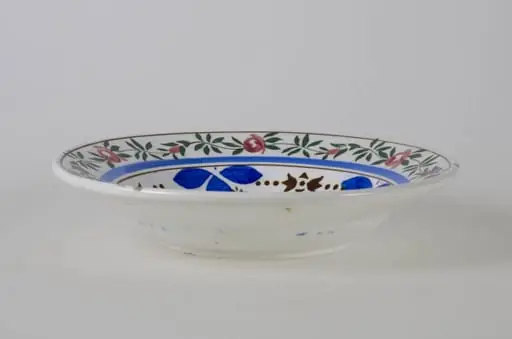 Farfurie de formă tronconică, adâncită; este decorată cu motive florale pe toată suprafața; florile de pe margine sunt încadrate de trei cercuri concentrice dintre care una spre exterior și două spre interior; cromatică: fond alb, motive: roșu; verde; albastru; maro; galben. Pe fund are o ștanță: trei cercuri concentrice. Tot pe fundul vasului sunt două incizii în care este introdus un șnur folosit la agățarea vasului pe perete.
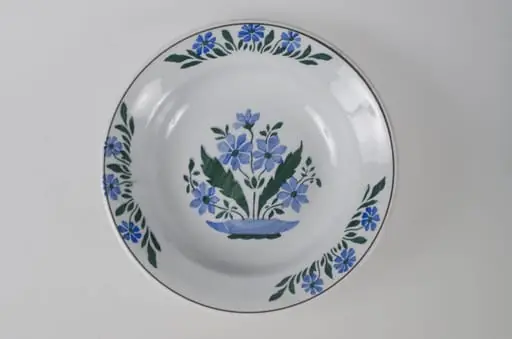 Vasul are formă tronconică, adâncită și este decorat cu motive florale dispuse în trei registre a câte trei flori pe margine, încadrate de o linie; în centru este decorat cu flori și frunze. Pe fund are trei cercuri concentrice care profilează trei registre. Vas evazat în partea superioară. Smălțuit interior-exterior. Cromatică: fond: alb; motive: verde; albastru; negru.
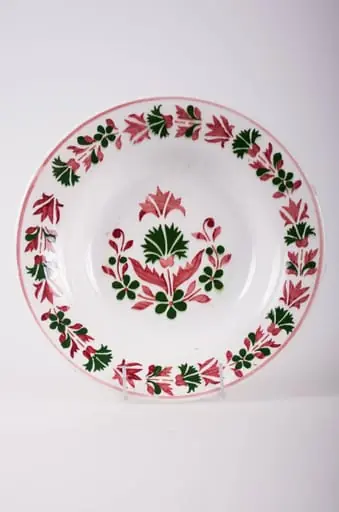 Farfurie de formă tronconică, adâncită; pe fund are găuri pentru agățare, Este decorată cu motive florale și geometrice; pe margine este decorat cu flori încadrate la exterior de o linie; în centru are mai multe flori. Pe fund are o marcă indescifrabilă. Cromatică: fond: alb; motive: vișiniu; verde.
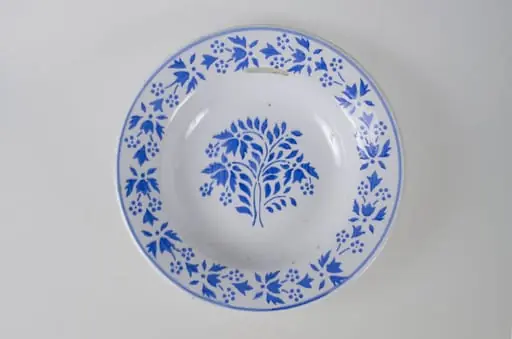 Farfuria are formă tronconică ușor adâncită. Pe buza vasului se identifică un registru decorativ floral, vegetal, continuu mărginit de o linie. Pe fund este o ștanță: o casă cu o pasăre pe acoperiș. Pe fundul vasului sunt două incizii în care este introdus șnurul folosit la agățarea vasului pe perete. Cromatică: fond: alb; motive: albastru.
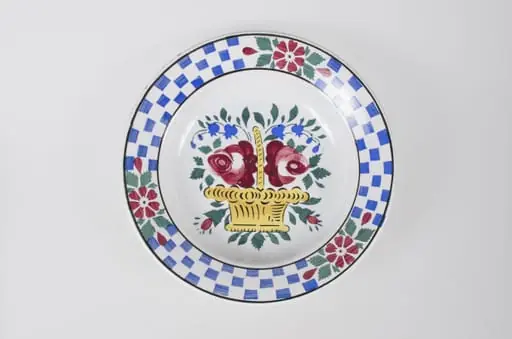 Vas de formă tronconică, adâncă. Pe fundul farfuriei se află un ornament format din: un coș de flori (trandafiri și clopoței). Pe marginea farfuriei între două cercuri concentrice apar trei flori despărțite de trei registre în formă de tablă de șah realizate din dreptunghiuri albastre. Cromatică: fond: alb; motive: galben; roșu; verde; albastru; negru.
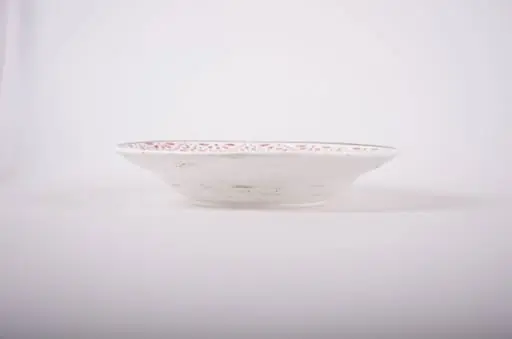 Farfurie de formă tronconică, adâncită; pe fund are găuri pentru agățare. Pe margine este decorat cu motive florale, despărțite de șiruri de puncte și încadrate de două cercuri concentrice; în centru are o cruce mare cu capete treflate încadrată de doi trandafiri (în lateral) și o floare la bază. Pe exterior are urme de pictură (probabil a fost așezată pe o altă farfurie proaspăt pictată). Cromatică: fond: alb; motive: roșu; verde; albastru; galben.
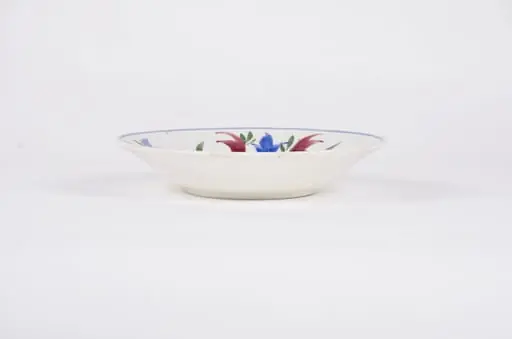 Vasul are formă tronconică fiind realizat din caolin. Fondul, interior-exterior, este alb iar decorul este floral-vegetal și acoperă interiorul vasului cu extensii pe buza acestuia. De asemenea pe buza vasului este pictată o linie circulară. Cromatică: fond: alb; motive: albastru; maro; verde; vișiniu.
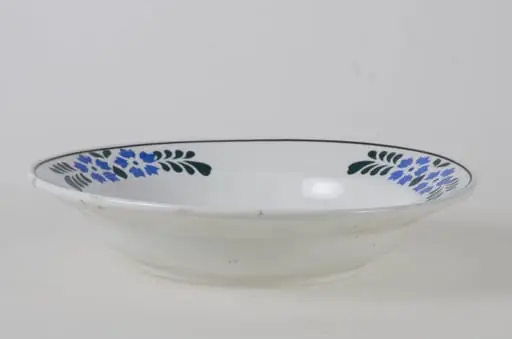 Vasul are formă tronconică smălțuit la interior și pe exterior (smalț de culoare albă). Prezintă motive decorative floral/vegetal și geometrice dispuse pe fundul vasului dar și într-un registru decorativ dispus pe buza vasului. De asemenea se identifică și motive decorative geometrice: pătratul, cercul, linia. Cromatică: fundal alb; verde; grena; albastru.
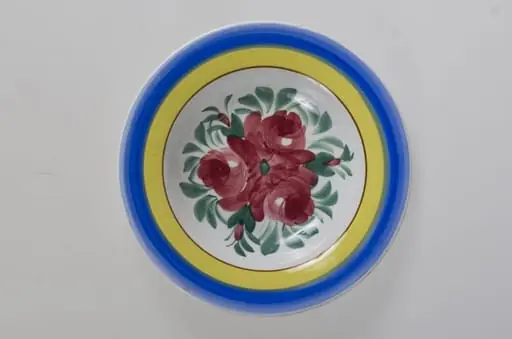 Farfurie de formă tronconică, adâncită; motive florale în centru (trandafiri); pe margine este decorat cu trei cercuri concentrice. Pe fund este o ștanță: o casă cu o pasăre pe acoperiș cu inscripție deasupra: ”MAGYAR” și dedesubt: ”1971” și un cuvânt indescifrabil. Pe fundul vasului sunt două incizii în care este introdus un șnur folosit la agățarea vasului pe perete. Vasul este smălțuit interior-exterior. Decor obținut prin pictare. Cromatică: fond: alb, motive: roșu; verde; albastru; galben.
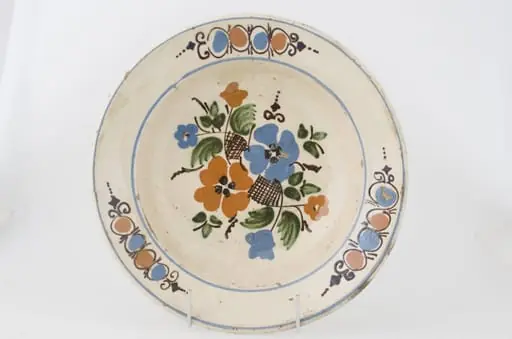 Farfuria este lucrată la roată, prezintă marginea evazată în plan orizontal fiind smălțuit în interior. Pe suprafața interioară a vasului se identifică registre decorative floral-vegetale dispuse pe fundul vasului și pe marginea interioară. Registrele sunt delimitate de două cercuri realizate prin pictare și dispuse pe buza vasului și spre interiorul acestuia. Cromatică: fond: alb; motive: roșu; albastru; verde; brun; maro.
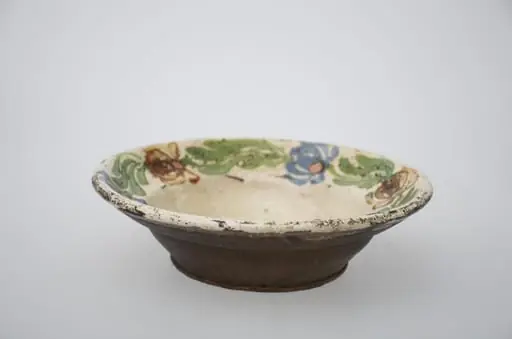 Farfurie de formă tronconică adâncă cu buza largă și decor pe fund, spre margini. Ornamentat cu motive florale. Cromatică: fond: alb; motive: maro; verde; albastru.