Artwork
farfurie
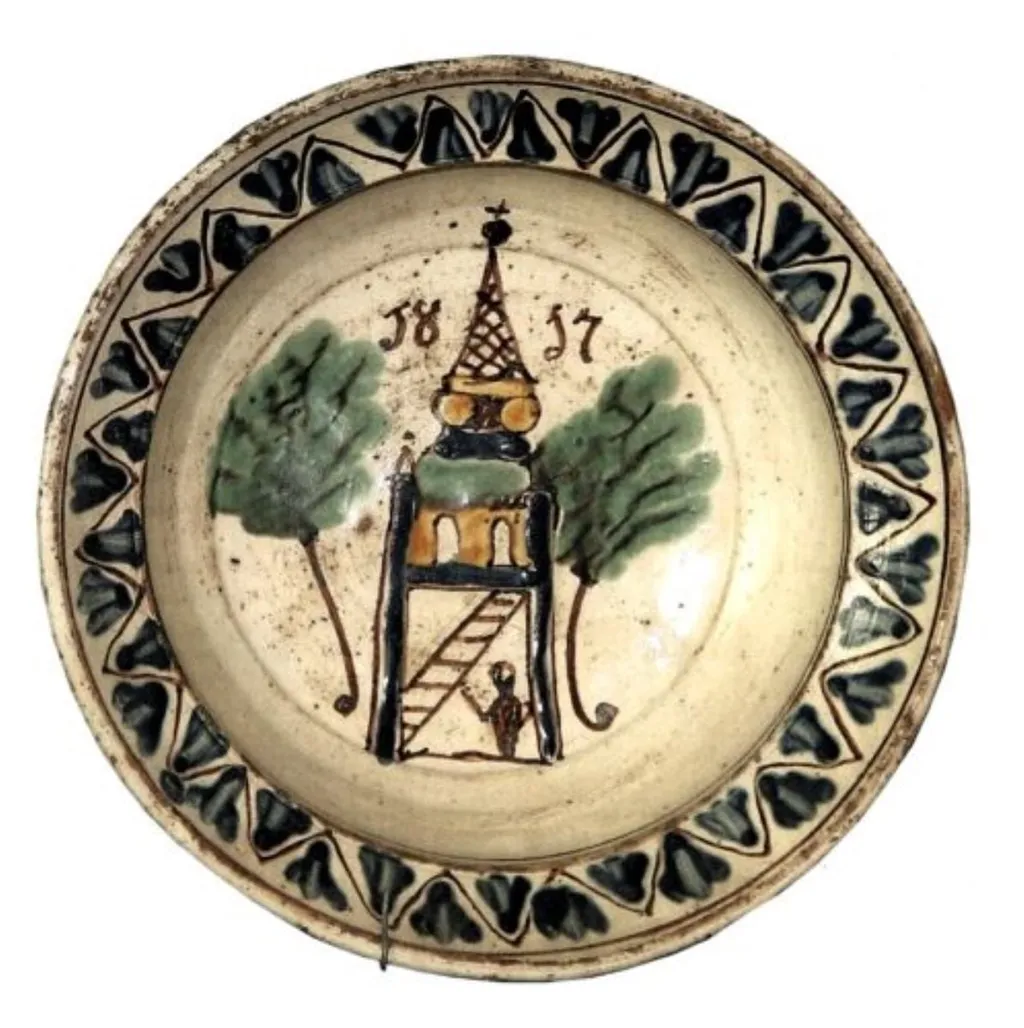
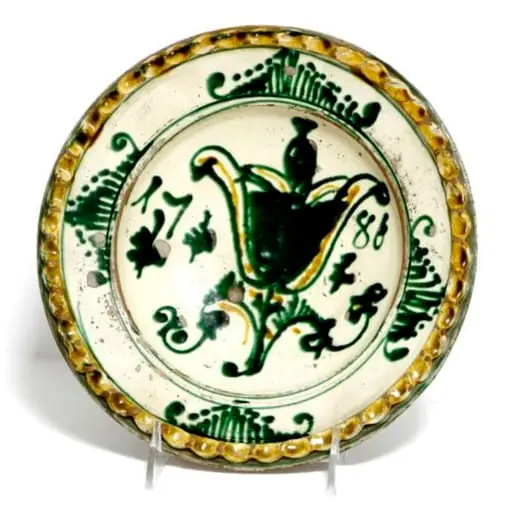
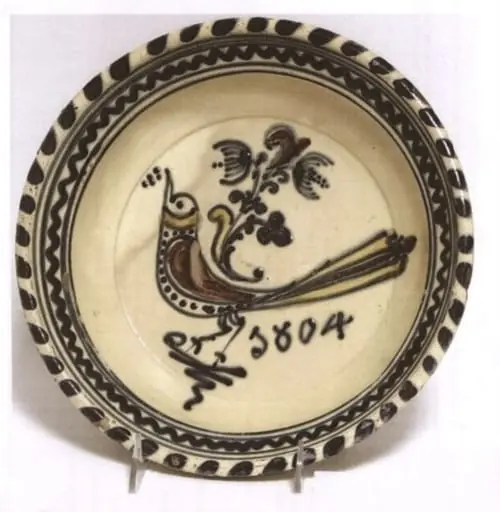
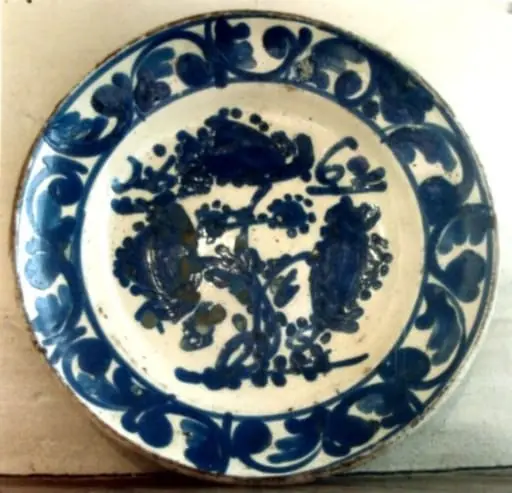
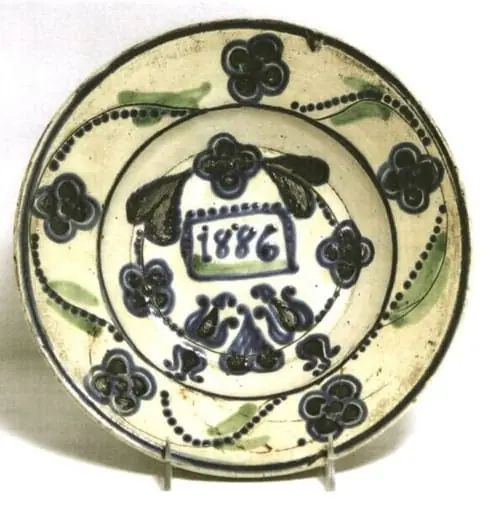
farfurie is a print by the Romanticist artist Unknown. It dates from 1817 and is held in the collection of the Romanian Peasant Museum. This ceramic dish, dated 1817, features a minimalist rural scene rendered in flat, unmodulated colors.
About this work
Two trees with green leaves frame the tower, and the sky is just a plain background.
This dish shows a simple scene with a small tower and a ladder leaning against it. A tiny figure stands at the bottom of the ladder, looking up. Two trees with green leaves frame the tower, and the sky is just a plain background. The edges of the dish have a repeating leaf pattern in dark blue and black.
The numbers "1817" are written near the top, which might mean when it was made. The colors are flat and not very detailed, giving it a rustic feel.
If you like this kind of old, handmade art, check out the Museum of Ethnography.
Overview
This ceramic dish, dated 1817, features a minimalist rural scene rendered in flat, unmodulated colors. A small tower, flanked by two leafy trees, is the central motif, with a lone figure at the base of a ladder. The design lacks perspective or shading, emphasizing pattern over realism. A continuous border of dark blue and black leaf motifs frames the composition, suggesting a decorative tradition rooted in folk craftsmanship.
Subject & Meaning
The scene depicts a solitary figure gazing upward toward a tower, possibly symbolizing aspiration, labor, or quiet contemplation. The ladder’s presence implies access or ascent, yet its small scale and the figure’s stillness suggest humility rather than triumph. The absence of narrative detail invites open interpretation, aligning with folk art’s tendency to convey emotion through simplicity rather than explicit storytelling.
Technique & Style
The dish was painted with restrained, opaque pigments applied in even planes, avoiding gradients or fine detail. The brushwork is deliberate but unrefined, characteristic of handcrafted utilitarian objects. The repeating leaf border reflects a standardized decorative motif common in regional ceramics, while the overall aesthetic prioritizes rhythm and symmetry over naturalism, reinforcing its artisanal origins.
History & Provenance
Marked with the year 1817, the piece likely originated in a local pottery workshop, possibly in Eastern Europe, where such decorated tableware was produced for domestic use. Its survival suggests it was valued beyond mere function, perhaps passed through generations. The Museum of Ethnography holds similar examples, indicating its place within a broader tradition of folk ceramic production in the early 19th century.
Context
In early 19th-century rural communities, ceramic vessels often bore symbolic or decorative motifs drawn from the natural world and daily life. This dish reflects a time when handmade objects carried cultural meaning beyond utility. The use of trees, towers, and ladders may echo local folklore or seasonal rhythms, embedding everyday scenes with quiet, unspoken significance.
Legacy
Though not widely known outside regional collections, this dish exemplifies the enduring value of vernacular art. Its preservation in ethnographic institutions highlights a shift in cultural appreciation toward ordinary, non-elite craftsmanship. Today, it serves as a quiet testament to the aesthetic sensibilities of pre-industrial artisans who transformed functional ware into subtle expressions of place and time.
Artist & collection

 Domestic Scene
 Giacomo and Cardinal Marco, investing Andrea, Abbot of San Zeno, with his Benefice
 The Nymph of Fontainebleau
 Portrait of a Woman
 Madonna and Child with Saints in the Enclosed Garden
 Venus and Minerva
 Family Group of Four on Sofa
 Wall painting from Room H of the Villa of P. Fannius Synistor at Boscoreale