Artwork
Farfurie adâncă, cu corp mic și buză lată, evazată; piesa este modelată la roata olarului și angobată cu humă albă pe fața interioară. Decorul este realizat prin pictare cu pensula și se compune din motive decorative florale și vegetale stilizate, dispuse central, pe fundul vasului (o floare albastră cu frunze verzi) și pe buza farfuriei (4 flori albastre alternate cu 4 grupuri de frunze). Fața decorată a farfuriei este acoperită cu un strat de smalț transparent. Cromatica: alb, albastru, verde.
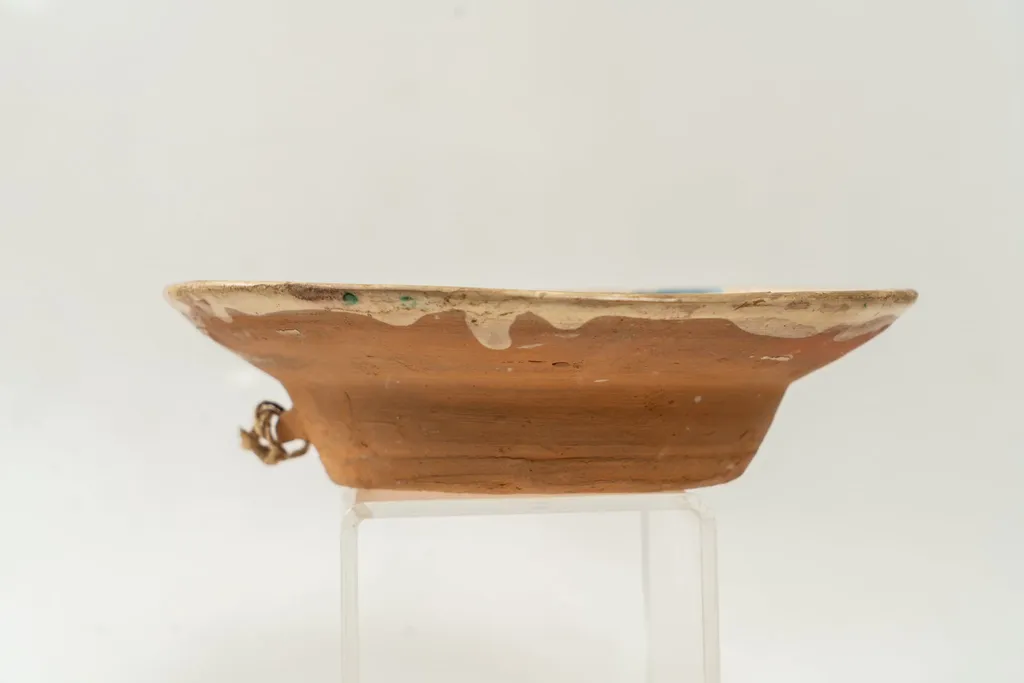
Farfurie adâncă, cu corp mic și buză lată, evazată; piesa este modelată la roata olarului și angobată cu humă albă pe fața interioară. Decorul este realizat prin pictare cu pensula și se compune din motive decorative florale și vegetale stilizate, dispuse central, pe fundul vasului (o floare albastră cu frunze verzi) și pe buza farfuriei (4 flori albastre alternate cu 4 grupuri de frunze). Fața decorată a farfuriei este acoperită cu un strat de smalț transparent. Cromatica: alb, albastru, verde. is a photography by Unknown. It dates from 1850 and is held in the collection of the Ethnographical Museum of Transylvania. This shallow ceramic dish, wheel-thrown from clay, features a broad, flared rim and a modest central well.
About this work
Overview
This shallow ceramic dish, wheel-thrown from clay, features a broad, flared rim and a modest central well. Its form balances utility with decorative intent, the gently scalloped edge reinforcing its functional origins. The surface bears traces of use, including minor chips and wear, while a glossy glaze preserves the painted motifs beneath.
Subject & Meaning
The decoration centers on simplified botanical motifs—a single blue blossom with green foliage at the base, flanked by alternating floral and leaf patterns along the rim. These stylized elements reflect a tradition of abstracting natural forms, emphasizing rhythm and repetition over realistic representation. The imagery suggests an ornamental rather than symbolic purpose.
Technique & Style
The dish was shaped on a potter’s wheel before receiving a white slip coating on its interior. Brushwork defines the floral and foliate designs, rendered in cobalt blue and copper green, with outlines and details applied in thin, controlled strokes. A final layer of transparent glaze seals the painted surface, enhancing durability while preserving the vibrancy of the colors.
History & Provenance
Details of the dish’s creation and early ownership remain unrecorded, though its craftsmanship aligns with traditional ceramic practices. The visible wear indicates prolonged domestic use, while the intact glaze and pigments suggest careful handling over time. Its current condition reflects both its age and the resilience of its materials.
Context
Such utilitarian wares were common in households where pottery served both practical and aesthetic roles. The stylized floral motifs echo broader decorative conventions found in regional ceramics, where abstracted plant forms often adorned everyday objects. The dish’s modest scale and ornamentation suggest it was intended for domestic rather than ceremonial use.
Artist & collection
Museum
Ethnographical Museum of Transylvania
Continue through works from the same source collection.
 Domestic Scene
 Giacomo and Cardinal Marco, investing Andrea, Abbot of San Zeno, with his Benefice
 The Nymph of Fontainebleau
 Portrait of a Woman
 Madonna and Child with Saints in the Enclosed Garden
 Venus and Minerva
 Family Group of Four on Sofa
 Wall painting from Room H of the Villa of P. Fannius Synistor at Boscoreale
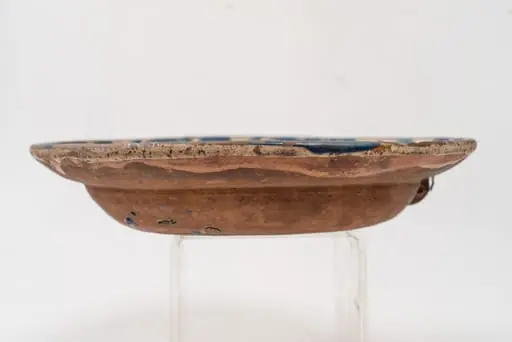 Farfurie adâncă, cu buza evazată și muchia ușor ridicată. Farfuria este angobată pe fața interioară cu un strat de humă albă, peste care este pictat cu cornul și cu pensula decorul monocromatic, format din motive florale și fitomorfe stilizate (tulpină cu cinci flori, din care patru sunt lalele, și frunze, reprezentate pe centrul farfuriei și un șir continuu format din elemente vegetale, ce decorează buza acesteia). Muchia buzei este marcată cu o dungă de culoare albastră. La baza tulpinii cu flori apare pictat cu pensula anul fabricării piesei: 1785. Cromatica: alb, albastru. Farfuria este acoperită pe fața decorată cu un strat de smalț transparent.
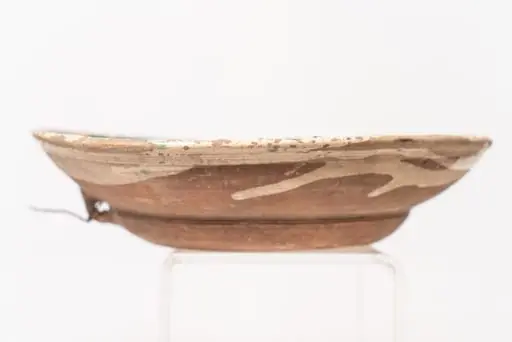 Farfurie adâncă, cu buza răsfrântă; piesa este modelată la roata olarului și angobată pe fața interioară cu humă albă. Decorul este realizat prin pictare cu pensula și cu cornul și se compune din motive florale și vegetale foarte stilizate (registrul central este format dintr-o floare sub formă de rozetă, cu patru petale verzi și patru albastre; buza farfuriei este decorată cu patru flori stilizate, posibil lalele, dispuse diametral opus iar între ele sunt pictate motive formate din linii groase verzi, sub formă de V, decorate pe exterior cu linii mici albastre și linii hașurate în interior). Cromatica: alb, verde, albastru. Fața ornamentată a farfuriei este acoperită cu un strat de smalț transparent.
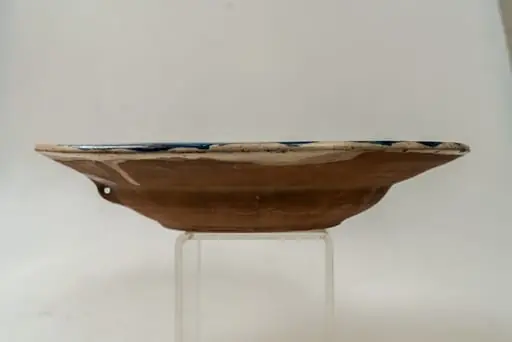 Farfurie mare, adâncă, cu corp scund și buză lată, răsfrântă. Piesa este modelată la roata olarului, angobată cu humă albă pe fața interioară a acesteia. Decorul este unul bogat, realizat prin pictare cu pensula, cu linii groase, și constă în motive decorative florale și vegetale stilizate (flori și frunze), dispuse pe toată suprafața farfuriei. Cromatica decorului: alb, albastru. Farfuria este smălțuită pe interior, cu smalț transparent.
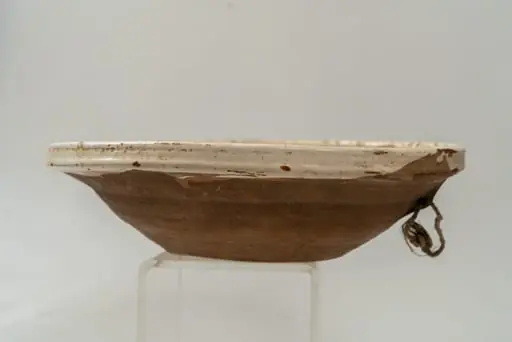 Farfurie mare, adâncă, de tip castron. Piesa este modelată la roata olarului și este angobată pe fața sa interioară. Decorul este pictat cu pensula și cu cornul și se compune din motive decorative florale (buchet de flori, în zona centrală a farfuriei) și geometrice (linii hașurate, linii sub formă de cercuri concentrice) situate pe buza farfuriei. Cromatica: alb, albastru, siena naturală, verde. Farfuria este acoperită, pe fața sa interioară, de un strat de smalț transparent.
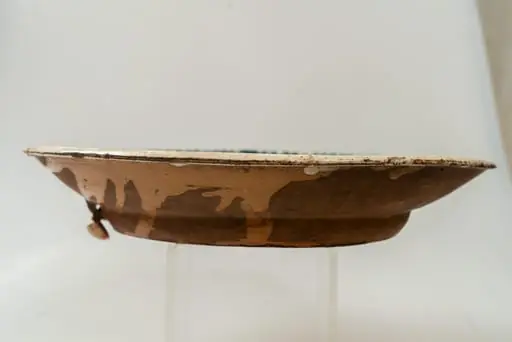 Farfurie mare, lată, cu buză răsfrântă. Este modelată la roata olarului și angobată cu humă albă pe fața interioară. Decorul este realizat prin pictare cu cornul și cu pensula și se compune din motive decorative florale stilizate (buchet central, pe fundul farfuriei) și motive geometrice variate, dispuse pe buza farfuriei. Cromatica: alb, brun, verde, galben, albastru. Fața interioară a farfuriei este acoperită de un strat de smalț transparent.
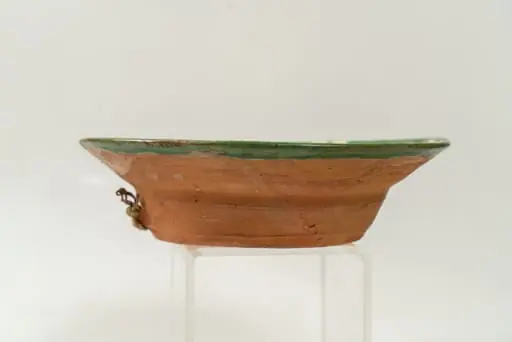 Farfurie adâncă, cu buză lată, evazată; piesa este modelată din lut la roata olarului și acoperită cu un strat de angobă verde pe fața interioară. Decorul este realizat prin pictare cu pensula și se compune din motive florale și vegetale stilizate (un buchet cu trei flori albe și frunze de culoare verde-închis, plasat în zona centrală, pe fundul farfuriei și cinci flori albe pictate pe buza acesteia, intercalate de cinci grupuri de frunze). Cromatica: verde, alb, verde-închis. Fața ornamentată a farfuriei este acoperită cu un strat de smalț transparent.
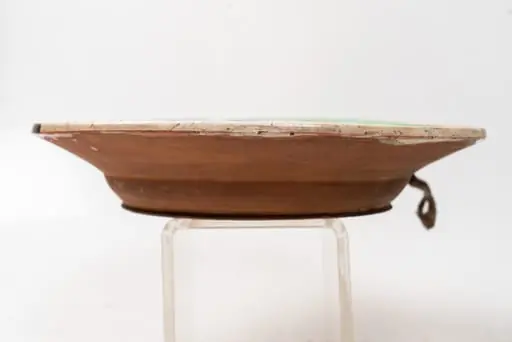 Farfurie mare, semi-adâncă, cu buza răsfrântă; piesa este modelată la roata olarului și angobată cu humă albă pe fața interioară. Decorul este realizat prin sgrafitare în pasta albă de angobă și prin pictare cu pensula și cu cornul și se compune din motive decorative vegetale (o floare foarte stilizată, cu patru petale, dispusă în registrul central de pe fundul farfuriei) și geometrice (linii circulare, de culoare verde și siena arsă, pe buza farfuriei). Cromatica: alb, verde, siena arsă, maro. Fața ornamentată a farfuriei este acoperită cu un strat de smalț transparent.
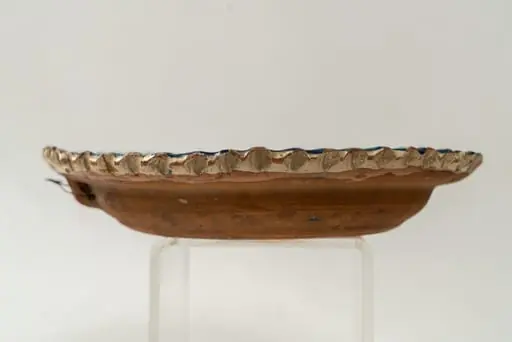 Farfurie semi-adâncă, cu corp scund și buză lată, răsfrântă, ușor concavă spre interior și muchie ondulată (mici alveole). Piesa este modelată la roata olarului, angobată cu humă albă pe fața interioară. Decorul monocromatic, bogat, este realizat prin pictare cu cornul și cu pensula: zona centrală a farfuriei este decorată cu motive florale stilizate - o floare centrală, încadrată într-o linie sub formă de spirală peste care au fost așternute puncte groase; pe exteriorul acestei linii au fost pictate alte flori. Întreg acest registru central este încadrat într-un cerc format dintr-o linie vălurită. Buza farfuriei este decorată cu motive geometrice, într-un registru continuu: linii mici, groase, așezate în formă de V, intercalate de șiruri de puncte mici, sugerând un decor vegetal (frunze). Bordura interioară a farfuriei este marcată de o linie subțire sub formă de cerc iar muchia buzei de o dungă albastră. Cromatica decorului: alb, albastru. Farfuria este smălțuită pe interior cu smalț transparent.
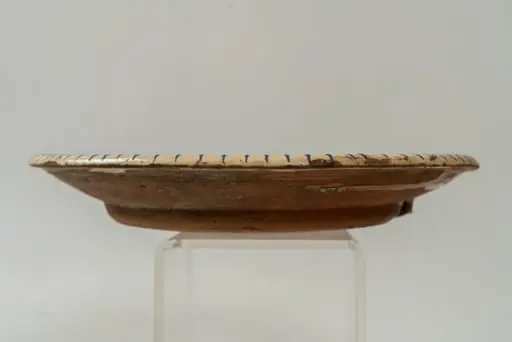 Farfurie de formă aplatizată, modelată la roata olarului, angobată cu humă albă pe fața interioară a acesteia. Decorul este realizat prin pictare cu pensula și cu cornul și constă în motive decorative vegetale stilizate (floare cu frunze - dispuse central, pe fundul farfuriei) și motive geometrice (grupuri de linii paralele, descrescătoare ca mărime - motivul brăduțului - și un șir de linii paralele pe toată lungimea muchiei buzei). Cromatica decorului: alb, albastru. Farfuria este smălțuită pe interior, cu smalț transparent.
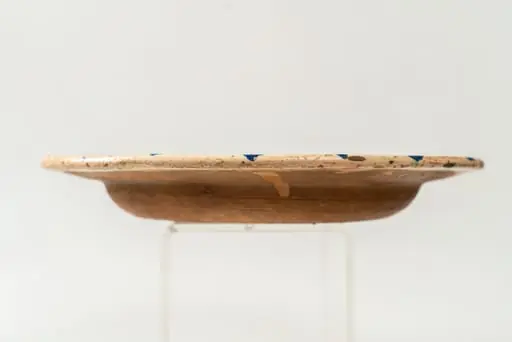 Farfurie semi-adâncă, cu buza răsfrântă; piesa este modelată la roata olarului și este angobată pe fața interioară cu humă albă. Decorul este realizat prin pictare cu pensula și se compune din motive decorative florale și vegetale stilizate, dispuse pe întreaga suprafață a piesei. La baza motivului decorativ central se află înscris anul fabricării piesei, 1782. Buza farfuriei este decorată cu un șir continuu de frunze de culoare verde și albastră. Cromatica: alb, verde, albastru. Fața decorată a farfuriei este acoperită cu un strat de smalț transparent.