Artwork
Farfurie mare, adâncă, cu corp scund și buză lată, răsfrântă și muchia rotunjită înspre interior. Piesa este modelată la roata olarului, angobată cu humă albă pe fața interioară a acesteia. Decorul este realizat prin pictare cu pensula, cu linii groase, și constă în motive decorative florale și vegetale stilizate (flori și frunze), dispuse pe toată suprafața farfuriei. Central, pe fundul farfuriei, sub motivul decorativ floral (flori de lalele), se află înscris anul fabricării piesei, 1775. Cromatica decorului: alb, albastru. Farfuria este smălțuită pe interior, cu smalț transparent.
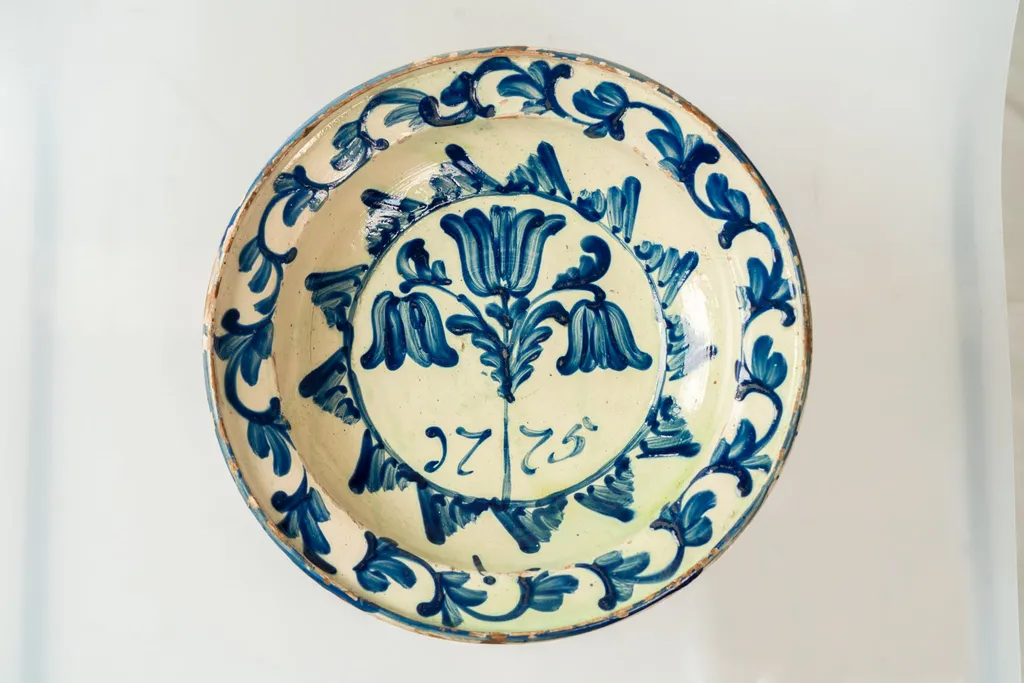
Farfurie mare, adâncă, cu corp scund și buză lată, răsfrântă și muchia rotunjită înspre interior. Piesa este modelată la roata olarului, angobată cu humă albă pe fața interioară a acesteia. Decorul este realizat prin pictare cu pensula, cu linii groase, și constă în motive decorative florale și vegetale stilizate (flori și frunze), dispuse pe toată suprafața farfuriei. Central, pe fundul farfuriei, sub motivul decorativ floral (flori de lalele), se află înscris anul fabricării piesei, 1775. Cromatica decorului: alb, albastru. Farfuria este smălțuită pe interior, cu smalț transparent. is a photography by Unknown. It dates from 1850 and is held in the collection of the Ethnographical Museum of Transylvania. This ceramic plate, crafted in 1775, features a low, wide-rimmed form with a gently inward-curving edge.
About this work
If you like this style, check out chiaroscuro next—it’s a way artists use light and shadow to make things pop.
This plate is round and sits on a white shelf. The outside rim has a band of blue leaves and flowers. Inside, there’s a big blue flower with smaller leaves around it. The background is a pale yellowish color.
The center of the plate has the year 1775 written in a small script. The blue paint looks thick and slightly uneven, like it was brushed on by hand.
If you like this style, check out chiaroscuro next—it’s a way artists use light and shadow to make things pop.
Overview
This ceramic plate, crafted in 1775, features a low, wide-rimmed form with a gently inward-curving edge. Made on a potter’s wheel and coated with a white slip on the interior, it is glazed with a transparent finish that enhances the painted decoration. The surface is adorned with hand-painted floral and vegetal motifs in blue and white, executed with broad, uneven brushstrokes that reflect artisanal technique rather than mechanical precision.
Subject & Meaning
The decoration centers on stylized tulip flowers and leaves, arranged symmetrically across the interior surface. These motifs, common in Eastern European ceramic traditions, suggest an appreciation for natural forms adapted to decorative rhythm rather than botanical accuracy. The inclusion of the year 1775 in small script at the center indicates a deliberate marking of time, possibly for provenance or workshop identification, rather than commemorative intent.
Technique & Style
The plate was formed on a wheel, then coated with white slip before being painted with opaque blue pigment using a brush. The thick, slightly irregular application of paint reveals the hand of the artisan, with visible brush marks and uneven pigment density. The use of only two colors—blue and white—on a pale yellowish ground reflects a restrained palette typical of regional ceramic workshops in the late 18th century.
History & Provenance
Produced in 1775, the plate likely originated in a ceramic workshop in the Romanian cultural sphere, where slip-painted wares were commonly made for domestic use. The presence of a dated inscription suggests a level of workshop organization and record-keeping. Its survival into the modern era indicates it was preserved as a functional or perhaps sentimental object, rather than discarded after use.
Context
This piece belongs to a broader tradition of folk ceramics in Eastern Europe, where floral patterns were adapted from textile and architectural ornamentation. Unlike courtly porcelain, such wares were utilitarian yet decorated with care, reflecting local aesthetics and available materials. The use of blue pigment, likely derived from cobalt, points to trade connections, as the material was often imported despite local production methods.
Legacy
The plate exemplifies the quiet persistence of regional ceramic practices in the face of industrialization. Its handmade quality and modest decoration stand in contrast to later mass-produced wares, offering insight into pre-industrial craft values. Today, it serves as a material record of everyday life and artistic sensibility in 18th-century Eastern Europe, valued for its authenticity rather than rarity.
Artist & collection
Museum
Ethnographical Museum of Transylvania
Continue through works from the same source collection.
 Domestic Scene
 Giacomo and Cardinal Marco, investing Andrea, Abbot of San Zeno, with his Benefice
 The Nymph of Fontainebleau
 Portrait of a Woman
 Madonna and Child with Saints in the Enclosed Garden
 Venus and Minerva
 Family Group of Four on Sofa
 Wall painting from Room H of the Villa of P. Fannius Synistor at Boscoreale
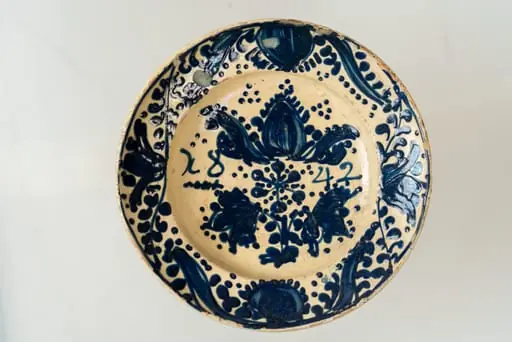 Farfurie adâncă, cu corp scund și buză lată, răsfrântă. Piesa este modelată la roata olarului, angobată cu humă albă pe fața interioară a acesteia. Decorul este realizat prin pictare cu cornul și cu pensula și constă în motive decorative vegetale stilizate (flori și frunze) și geometrice (puncte), dispuse pe întreaga suprafață a farfuriei. Central, pe fundul farfuriei, este înscris anul fabricației "1842", deoparte și de alta a registrului decorativ central. Cromatica decorului: alb, albastru. Farfuria este smălțuită pe interior, cu smalț transparent.
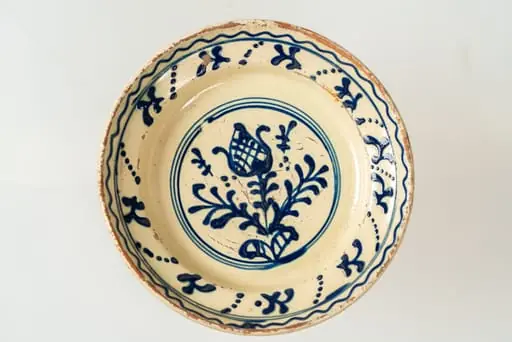 Farfurie semi-adâncă, cu corp scund și buză lată, răsfrântă, cu muchia buzei ușor concavă spre interior. Piesa este modelată la roata olarului, angobată cu humă albă pe fața interioară a acesteia. Decorul este realizat prin pictare cu pensula și cu cornul și constă în motive decorative florale și vegetale stilizate (flori și frunze), dispuse central, pe fundul farfuriei (încadrate in trei cercuri concentrice) și pe buza acesteia. Motive decorative geometrice: șiruri oblice de puncte, linie vălurită, linii sub formă de cerc. Cromatica decorului: alb, albastru. Farfuria este smălțuită pe fața interioară cu smalț transparent.
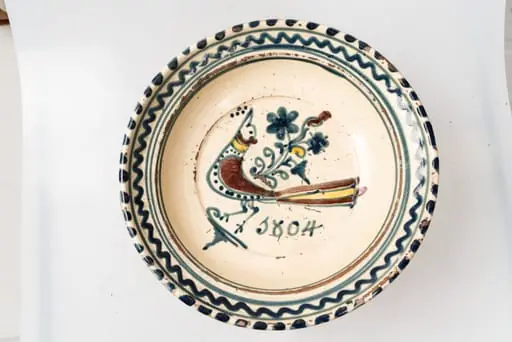 Farfurie mare, de formă semi-adâncă, cu buza răsfrântă, ușor concavă spre interior și muchia rotunjită. Piesa este modelată la roata olarului și angobată cu humă albă pe fața interioară. Decorul este realizat prin pictare cu cornul și cu pensula și se compune din motive vegetale, avimorfe și geometrice, dispuse astfel: registrul decorativ central de pe fundul farfuriei conține o pasăre cu aripi maro, ce ține în cioc o mică crenguță, așezată sub o tulpină cu trei flori albastre și frunze; sub coada păsării este înscris anul fabricării piesei, 1804. Buza farfuriei este decorată cu linii sub formă de cercuri concentrice, linie ondulată sub formă de cerc; muchia buzei este decorată cu un șir continuu de linii mici, groase, paralele de culoare albastru-închis. Fața ornamentată a piesei este acoperită cu un strat de smalț transparent. Cromatica: alb, maro, albastru, galben.
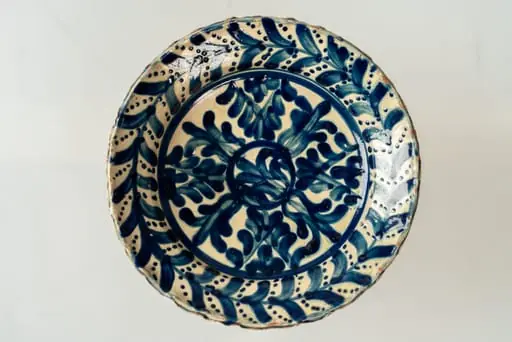 Farfurie semi-adâncă, cu corp scund și buză lată, răsfrântă și muchie ondulată (mici alveole). Piesa este modelată la roata olarului, angobată cu humă albă pe fața interioară a acesteia. Decorul, bogat, cu linii groase, este realizat prin pictare cu cornul și cu pensula și constă în motive decorative vegetale stilizate (flori și frunze) și geometrice (linii, puncte) dispuse pe întreaga suprafață a farfuriei. Cromatica decorului: alb, albastru. Farfuria este smălțuită pe interior, cu smalț transparent.
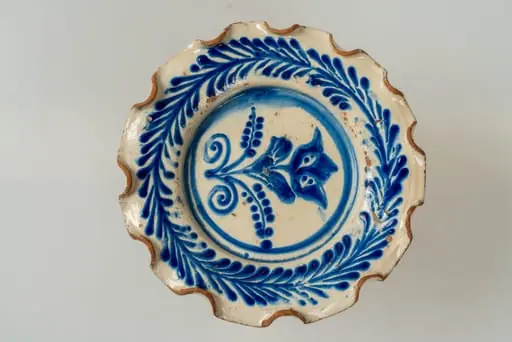 Farfurie mică, joasă, de formă plată, cu buză lată, răsfrântă, ușor concavă spre margine și cu muchie ondulată. Piesa este modelată la roata olarului, angobată cu humă albă pe fața interioară a acesteia. Decorul este realizat prin pictare cu cornul și cu pensula și constă în motive decorative florale și vegetale (flori și frunze), dispuse astfel: central, pe fundul farfuriei un motiv floral, încadrat în două cercuri concentrice, iar pe toată buza farfuriei este zugrăvit un decor vegetal sub formă de ghirlandă continuă din frunze. Cromatica: alb, albastru. Farfuria este smălțuită pe interior, cu smalț transparent.
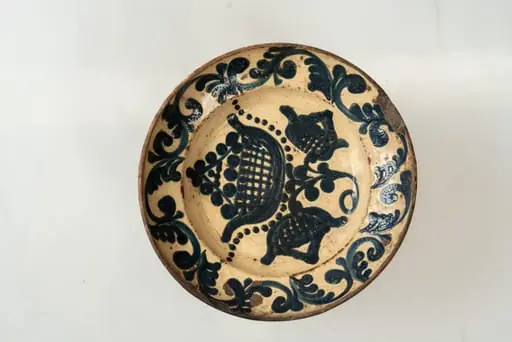 Farfurie semi-adâncă, cu corp scund și buză lată, răsfrântă și muchia buzei ușor concavă spre interior. Piesa este modelată la roata olarului, angobată cu humă albă pe fața interioară a acesteia. Decorul este realizat prin pictare cu pensula și cu cornul, cu linii groase, și constă în motive decorative florale și vegetale stilizate (flori și frunze), dispuse pe toată suprafața farfuriei. Cromatica decorului: alb, albastru. Farfuria este smălțuită pe interior, cu smalț transparent.
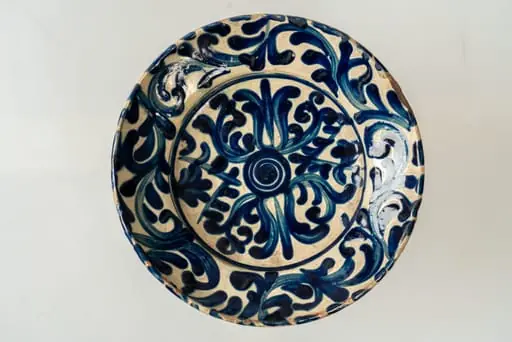 Farfurie semi-adâncă, cu corp scund și buză lată, răsfrântă. Piesa este modelată la roata olarului, angobată cu humă albă pe fața interioară a acesteia. Decorul este unul bogat, realizat prin pictare cu pensula, cu linii groase, și constă în motive decorative florale și vegetale stilizate (flori și frunze), dispuse pe toată suprafața farfuriei. Cromatica decorului: alb, albastru. Farfuria este smălțuită pe interior, cu smalț transparent.
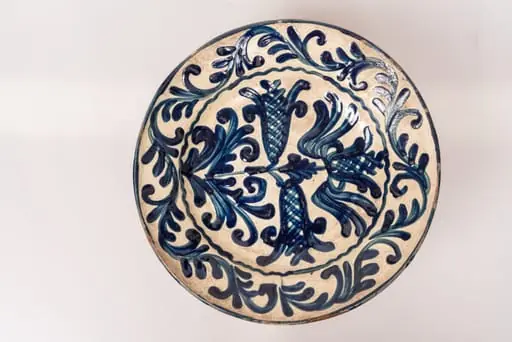 Farfurie semi-adâncă, cu buză răsfrântă; piesa este modelată la roata olarului și este angobată pe fața interioară cu humă albă. Decorul monocromatic este pictat cu pensula și se compune din motive decorative florale și vegetale stilizate (o floare de crin cu doi boboci și cu frunze, plasate central pe fundul farfuriei; buza farfuriei este acoperită cu un șir continuu de motive vegetale). Muchia buzei este marcată de o linie albastră iar bordura interioară a farfuriei de o linie vălurită. Cromatica: alb, albastru. Fața ornamentată a farfuriei este acoperită cu un strat de smalț transparent.
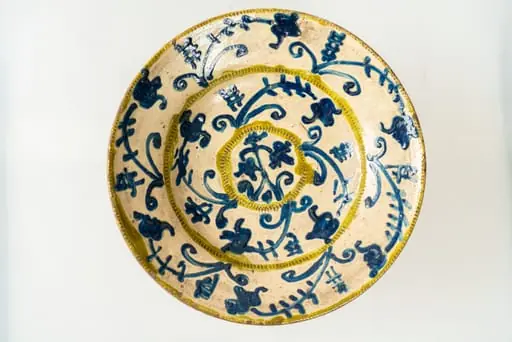 Farfurie mare, semi-adâncă, cu corp scund și buză lată, răsfrântă. Piesa este modelată la roata olarului, angobată cu humă albă pe fața interioară a acesteia. Decorul este realizat prin pictare cu pensula și cu cornul și constă în motive decorative florale și vegetale stilizate (flori și frunze), dispuse pe toată suprafața farfuriei, încadrate în trei registre separate de cercuri concentrice formate dintr-o linie verde și un șir continu de linii mici, paralele, incizate (cercuri localizate: central - pe fundul farfuriei; pe bordura interioară a buzei și pe muchia acesteia). Cromatica decorului: alb, albastru, verde. Farfuria este smălțuită pe interior, cu smalț transparent.
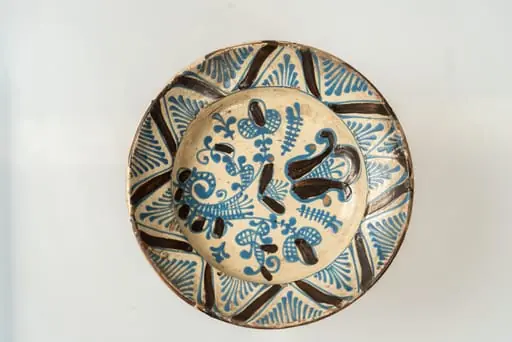 Farfurie adâncă, cu buză răsfrântă; piesa este modelată la roata olarului și este angobată cu humă albă pe fața interioară. Decorul este realizat prin pictare cu pensula și cu cornul și se compune din motive decorative florale stilizate (amplasate central, pe fundul farfuriei) și motive decorative geometrice, pe buza farfuriei (dungi de culoare maro, grupuri de linii paralele sub forma motivului de brăduț, linii hașurate). Cromatica: alb, maro, albastru. Fața farfuriei este acoperită cu un strat de smalț transparent.