Artwork
Fecioara Maria, dispusă în partea stângă a compoziției, este pictată în genunchi, într-o atitudine plină de evlavie. Arhanghelul Gavriil, este pictat în picioare, în partea dreaptă a scenei, având ambele mâini îndreptate spre Maica Domnului. Duhul Sfânt, în chip de porumbel, se pogoară deasupra Fecioarei. Între cei doi sfinți, într-un chenar oval, apare scrisă tema icoanei pe fundal alb: "Buna Vestire". În spatele Maicii Domnului e schițată o clădire simplă. Decorul icoanei se compune din nori și lalele sintetizate. Cromatica icoanei se compune din tonuri de roșu vermillon, verde, albastru, ocru galben, alb, gri. Rama icoanei e simplă, băițuită și e formată din îmbinarea a patru baghete de lemn.
Fecioara Maria, dispusă în partea stângă a compoziției, este pictată în genunchi, într-o atitudine plină de evlavie. Arhanghelul Gavriil, este pictat în picioare, în partea dreaptă a scenei, având ambele mâini îndreptate spre Maica Domnului. Duhul Sfânt, în chip de porumbel, se pogoară deasupra Fecioarei. Între cei doi sfinți, într-un chenar oval, apare scrisă tema icoanei pe fundal alb: "Buna Vestire". În spatele Maicii Domnului e schițată o clădire simplă. Decorul icoanei se compune din nori și lalele sintetizate. Cromatica icoanei se compune din tonuri de roșu vermillon, verde, albastru, ocru galben, alb, gri. Rama icoanei e simplă, băițuită și e formată din îmbinarea a patru baghete de lemn. is a drawing by Unknown. It dates from 1850 and is held in the collection of the Ethnographical Museum of Transylvania.
About this work
Overview
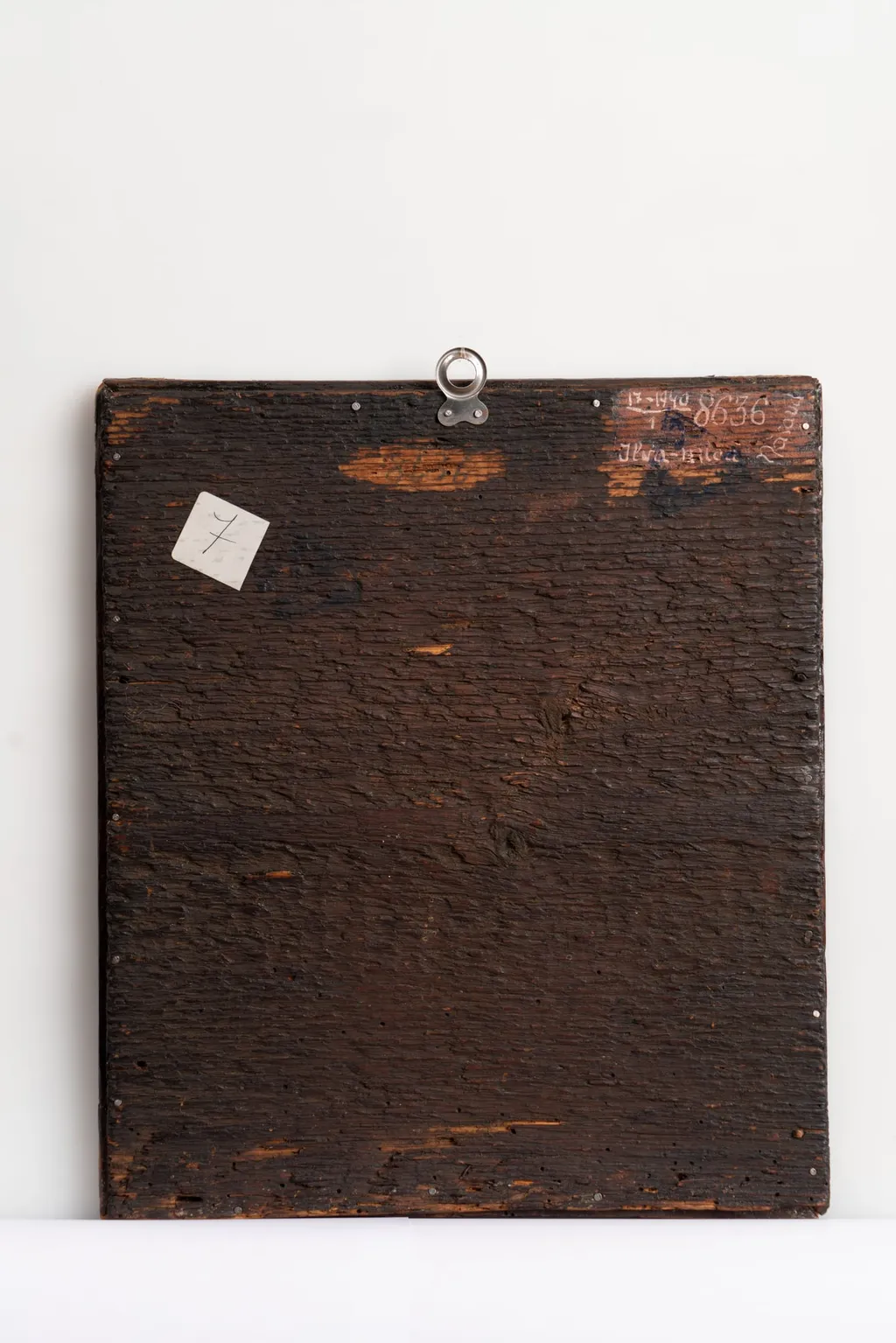
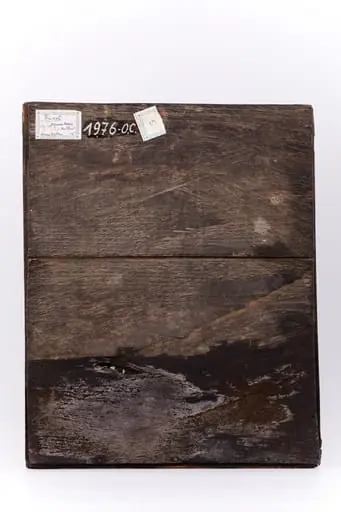
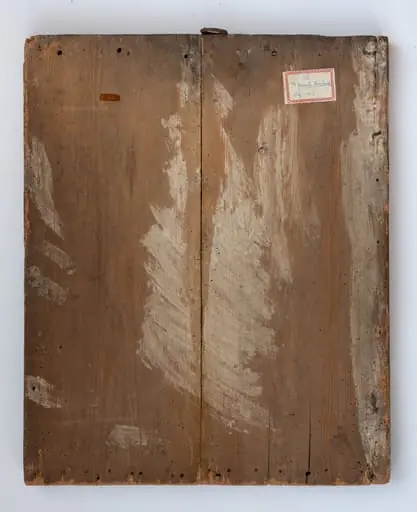
This wooden panel, painted on one side and left unfinished on the reverse, served as a devotional object in a domestic or ecclesiastical setting.
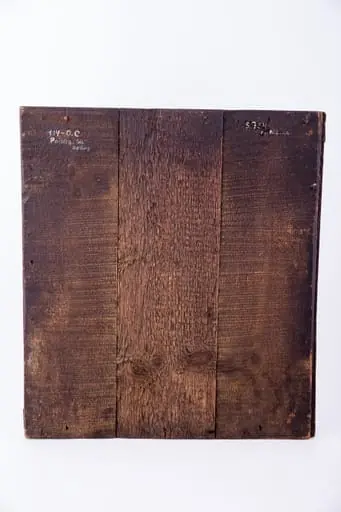
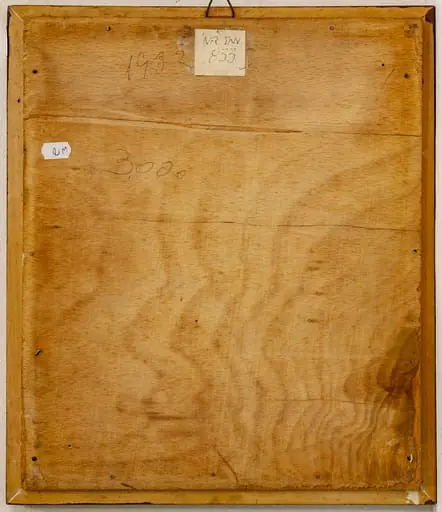
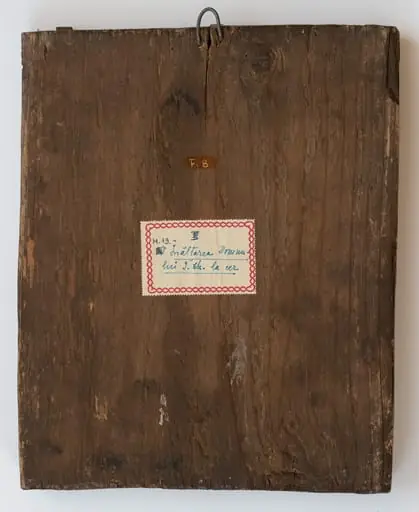
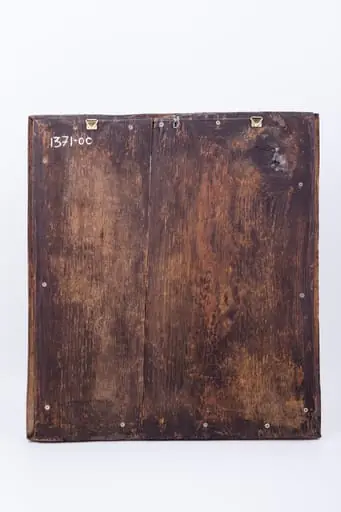
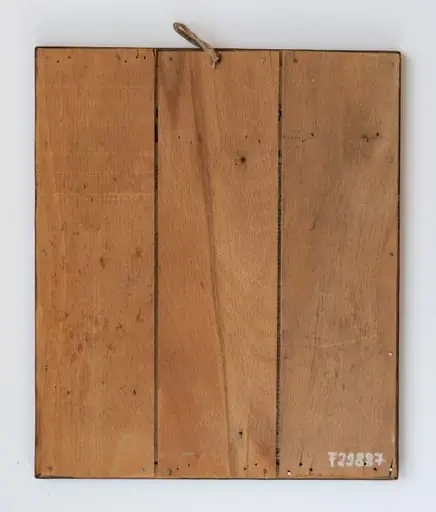
This wooden panel, painted on one side and left unfinished on the reverse, served as a devotional object in a domestic or ecclesiastical setting. Its simple wooden frame, assembled from four joined staves, and the worn, dark back with a hanging ring suggest frequent handling and ritual use. The front once displayed a scene of the Annunciation, rendered in traditional iconographic conventions with symbolic color and composition.
Subject & Meaning
The scene depicts the Annunciation: the Virgin Mary, kneeling in reverence, receives the message from the Archangel Gabriel, who stands facing her with arms outstretched. Above her, the Holy Spirit appears as a dove, signifying divine presence. The white oval inscription 'Buna Vestire' identifies the moment, anchoring the image in liturgical memory. The modest architecture behind Mary and the stylized clouds and lilies reinforce the sacred yet intimate nature of the event.
Technique & Style
The painting employs flat, symbolic forms typical of Byzantine-influenced iconography. Figures are rendered with minimal modeling, emphasizing spiritual presence over naturalism. Colors—vermillion red, lapis blue, ochre, and green—are applied in opaque layers, creating strong contrasts. The background is simplified to abstracted clouds and lilies, reducing the earthly setting to a spiritual stage. Brushwork is deliberate, with clean outlines and limited shading.
History & Provenance
The panel’s worn reverse, with faint cracks and patches of missing paint, indicates prolonged use, likely in a household shrine or small chapel. The metal ring at the top suggests it was suspended for veneration. A small paper label, now faded, once identified its origin or donor. Its construction and iconography align with 17th- to 18th-century Romanian religious art, reflecting regional traditions of devotional imagery.
Context
In Orthodox Christian practice, icons like this were not merely decorative but instrumental in prayer and ritual. Placed in homes or chapels, they served as focal points for meditation and supplication. The Annunciation, a key feast day, was especially venerated. The panel’s modest materials and restrained design reflect the piety of its users, prioritizing spiritual function over ornamental display.
Legacy
This icon exemplifies the enduring continuity of Byzantine iconographic forms in Eastern European religious art. Its survival, despite wear and partial loss, underscores the cultural importance of such objects in sustaining faith across generations. Though unattributed to a known artist, its craftsmanship and symbolism place it within a broader tradition of vernacular icon painting that shaped communal religious life.
Artist & collection
Museum
Ethnographical Museum of Transylvania
Continue through works from the same source collection.
 Domestic Scene
 Giacomo and Cardinal Marco, investing Andrea, Abbot of San Zeno, with his Benefice
 The Nymph of Fontainebleau
 Portrait of a Woman
 Madonna and Child with Saints in the Enclosed Garden
 Venus and Minerva
 Family Group of Four on Sofa
 Wall painting from Room H of the Villa of P. Fannius Synistor at Boscoreale
 Icoana îl reprezintă pe Sfântul Arhanghel Gavriil, un voievod al puterilor cerești, al doilea în rangul arhanghelilor, după Sfântul Arhanghel Mihail, cunoscut ca mesager al veștilor frumoase. Misiunea Sfântului Gavriil este de a vesti mântuirea omenirii. Sfântul Gavriil este îmbrăcat în cămașă albă de înger cu verde, cu mantie roșie vermillon, cu interiorul căptușit cu verde de China. Cu chipul angelic și foarte tânăr, sfântul are mâinile în gestul de a arăta calea și dăruind crinul, simbolul BuneiVestiri, Maicii Domnului sau totodată, primind o crenguță înflorită din Rai, din mâna Maicii Domnului. Sfântul Gavriil este încadrat într-un medalion auriu, pe un fond gri, îmbogățit cu flori roșii - ruje înfrunzite. Este o tematică rară, pictată la Nicula, din Nordul Transilvaniei. Motivul zăluței albe este prezent în pictura icoanei, abia-întrezărit, în veșmântul sfântului.
 Iisus Hristos este reprezentat în plan central, așezat pe teasc. Din coasta dreaptă pornește vița de vie, care formează o arcadă deasupra lui Hristos și se termină cu un ciorchine în mâinile Mântuitorului, pe care Acesta îl stoarce în potirul Sfintei Euharistii. Fondul e decorat cu frunze simple, esențializate. Cromatica icoanei se compune din tonuri de portocaliu, verde, albastru, maro, alb și auriu. Rama icoanei e profilată, bicromă (latura interioară roșie, iar cea exterioară maronie) și e formată din îmbinarea a patru baghete de lemn.
 Tema icoanei face parte din ciclul Pascal și înfățișează Învierea Domnului. În plan central apare reprezentat Iisus Hristos biruitor, deasupra unor nori stilizați, ținând în mâna dreaptă un steag cu cruce, iar cu stânga binecuvintează. În partea stângă a compoziției e pictat un paznic, iar în dreapta apare un înger cu un filacter deschis în mână. Cromatica icoanei se compune din tonuri de roșu vermillon, alb, ocru galben, verde, albastru, negru și gri. Rama icoanei e simplă, băițuită și e formată din îmbinarea a patru baghete de lemn. Sticla este spartă în partea dreaptă.
 Maica Domnului este înveșmântată în cămașă femeiască tradițională, presupusă iie cu câmpuri verticale alternativ pictate cu roșu vermillon și verde, cu danteluță aurie la baza gâtului, cu maforion roșu vermillon, poartă coroniță de împărăteasă și aureolă. Maica Domnului are gâtul neacoperit cu veșmânt și pe sub maramă se observă părul șaten castaniu. Este mai puțin frecventă această atitudine vestimentară a Maicii Domnului, asemănătoare femeilor din vremea aceea. Icoana este de la Poiana Sibiului, pictată în manieră specifică Mărginimii Sibiului. Pruncul Iisus Hristos este înveșmântat în roșu vermillon și verde și auriu la gulerașul cămășii populare, cu coroană și aureolă. Pruncul Iisus o ține pe Maica Domnului cu mânuța pe după gât, într-o tandrețe mângâietoare, lipindu-și capetele, unul de celălalt. Este a atitudine a Maicii Domnului Eleusa. Fondul icoanei este cerul de culoarea albastru ultramarin. Întreaga icoană este încadrată de un chenar decorativ geometrizant și floral compact, un ușor baroc, de culoare brun-roșcat-verde. Cromatică: roșu vermillon, albastru, verde de China, auriu, ocru-brun-bronziu, alb, negru, roșu stacojiu, brun-roșcat. Icoana este aparte și prin compoziție și prin veșminte. Chipurile au o delicatețe și o tandrețe emoționante. Inscripția din româno-chirilică se traduce MP Maica Domnului IC XC Iisus Hristos.
 Pasăre
 Înălțarea Domnului
 Scena Cinei celei de Taină se desfășoară într-un interior sugerat de elemente arhitectonice, coloane, candelabru, candele. În centrul icoanei este Mântuitorul Iisus Hristos binecuvântând mâncarea, la masă, alături de ucenici și apostoli. Cu brațul stâng îl ține lipit de piept pe Ioan cel iubit. Pe masă sunt așezate un potir pentru vin și tacâmuri și farfurioare mici.Personajele au chipurile expresive, veșmintele personajelor și faldurile feței de masă, cât și draperiile sunt pictate cu măiestrie de pictor. Veșmintele sunt predominant roșii. Cromatica este armonioasă și echilibrată, pornindu-se gradual dinspre exterior înspre interior, de la albastru spre alb, ajungându-se la albul luminos al mesei celor dăruite. Compoziția este încadrată de elemente de arhitectură, coloane, arcade, creându-se, astfel, intimitatea Cinei celei de Taină. Totul este concentric, strângându-se în jurul Potirului. Elemente de arhitectură se întrezăresc printre cele 5 coloane. Se întrezărește o cruce formată din axa verticală Potirul și candela și cea orizontală - brațele Îmbrățișării Mântuitorului - Dragostea jertfelnică atotcuprinzătoare. Icoana este a lui Savu Moga, din Arpașu de Sus, Țara Făgărașului. Icoana este datată 1877. Inscripția din româno-chirilică se traduce Cina cea de Taină.
 Icoana reprezintă Înălțarea Domnului Iisus Hristos, în a 40-a zi după Învierea Domnului. Înălțarea are loc într-o zi de joi, asemenea cu Cina cea de Taină, Cina Euharistiei. În registrul superior, este Mântuitorul Iisus Hristos cu mâinile ridicate în Binecuvântare și Ocrotire, fiind ridicat și Înălțat pe o mandorlă de nouri albi-gri-crem. În registrul inferior, este Maica Domnului dimpreună cu 4 din cei 12 ucenici și apostoli ai Mântuitorului Iisus Hristos. Veșmintele sunt într-o combinație de roșu vermillon, gri, negru antracit, crem-bej. Fondul icoanei este cerul albastru regal, în registrul superior, iar în registrul mediu-lateral este un câmp luminos galben-chihlimbar. Întreaga compoziție iconografică este încadrată de un chenar decorativ fitomorf, format dintr-o ghirlandă de bujori-trandafiri - 7 ruje duble roșii mari. Cromatica este armonioasă și luminoasă: roșu vermillon, albastru regal, ceruleum, verde forest, galben chihlimbar, crem-bej, gri, negru antracit, alb. Icoana este rară, datorită tematicii iconografice abordate și are o compoziție simetrică, echilibrată și armonioasă. Icoana este din Nordul Transilvaniei, Nicula.
 Fecioara cu Pruncul (Împărătiță)
 Isus Hristos și Ioan Botezătorul copii. Vegherea lui Isus în mormânt