Artwork
Gateway of Akbar's tomb, Sikandra
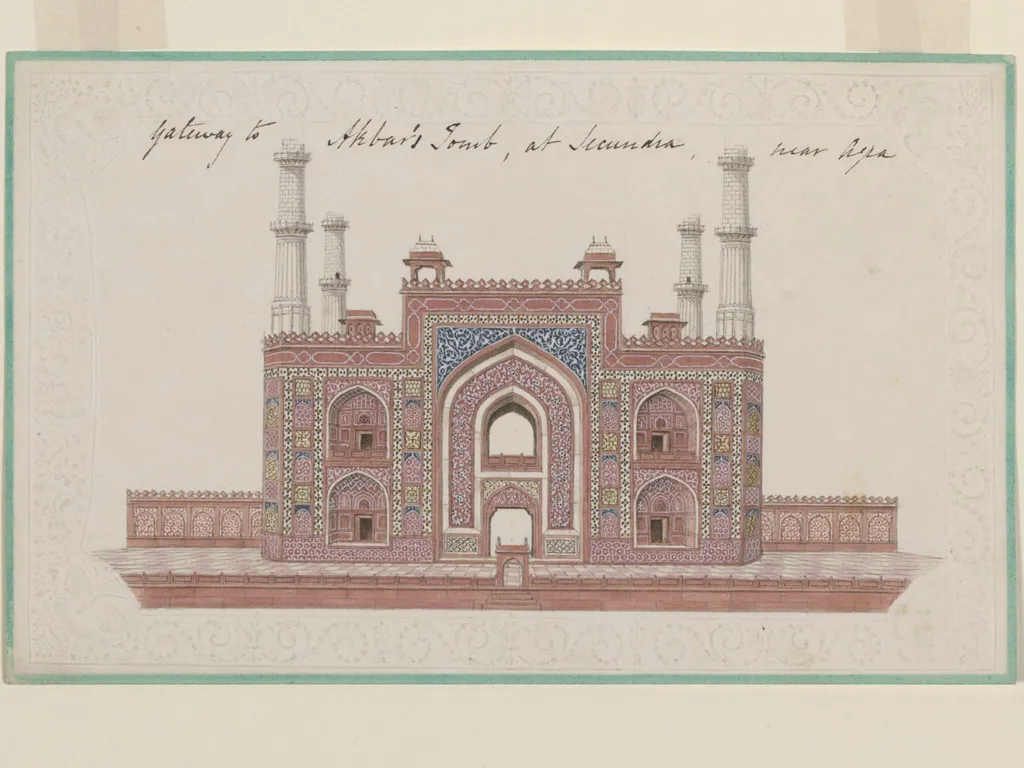
Gateway of Akbar's tomb, Sikandra is a paint painting by the Romanticist artist Unknown. It dates from 1820 and is held in the collection of the Victoria and Albert Museum.
About this work
Overview
The work belongs to a collection linked to Lord Amherst, Governor-General of India from 1823 to 1828, and his wife, who was an active amateur artist.
This watercolor depicts the entrance gateway to Akbar’s tomb at Sikandra, one of fifteen topographical studies made around 1820 documenting Mughal-era architecture in northern India. The work belongs to a collection linked to Lord Amherst, Governor-General of India from 1823 to 1828, and his wife, who was an active amateur artist. The drawing serves as a precise visual record rather than a romanticized interpretation, emphasizing architectural detail over emotional tone.
Subject & Meaning
The gateway marks the ceremonial entrance to the tomb complex of Emperor Akbar, built between 1605 and 1613. Its inclusion in the series reflects an interest in documenting imperial monuments during the early colonial period. The inscription identifying the structure confirms its function as a factual record, aligning with broader efforts to catalog India’s architectural heritage for administrative and scholarly purposes.
Technique & Style
Executed in watercolor with fine brushwork, the drawing renders the gateway’s ornate surfaces with careful attention to pattern and color. Red, blue, and green geometric motifs cover the walls, rendered with clarity rather than abstraction. The flat, unadorned foreground directs focus to the structure, while the precise rendering of arches and windows suggests a topographical intent, resembling architectural survey drawings of the era.
History & Provenance
The work was likely produced during or shortly after Lord Amherst’s tenure in India, possibly by his wife, who was known for her watercolors of Indian sites. It formed part of a larger set of drawings compiled as a visual archive. The collection eventually entered the Victoria and Albert Museum’s holdings, where it remains a key resource for understanding early 19th-century British engagement with Mughal monuments.
Context
These drawings emerged during a period when British officials and travelers systematically recorded India’s historical sites, often as part of colonial documentation efforts. Unlike later romanticized depictions, this work prioritizes accuracy and structural clarity. The series reflects a transitional phase in colonial visual culture, where observation began to replace imagination in representing Indian architecture.
Legacy
The drawing contributes to a body of work that helped preserve visual records of Mughal monuments before significant alterations or decay. Its inclusion in institutional collections underscores its value as a historical document. While not widely exhibited, it remains a reference point for scholars studying colonial-era documentation practices and the early study of Indian architecture by Western artists.
Artist & collection

 Domestic Scene
 Giacomo and Cardinal Marco, investing Andrea, Abbot of San Zeno, with his Benefice
 The Nymph of Fontainebleau
 Portrait of a Woman
 Madonna and Child with Saints in the Enclosed Garden
 Venus and Minerva
 Family Group of Four on Sofa
 Wall painting from Room H of the Villa of P. Fannius Synistor at Boscoreale
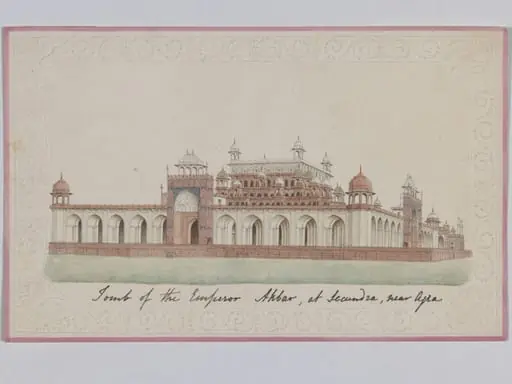 Akbar's mausoleum, Sikandra
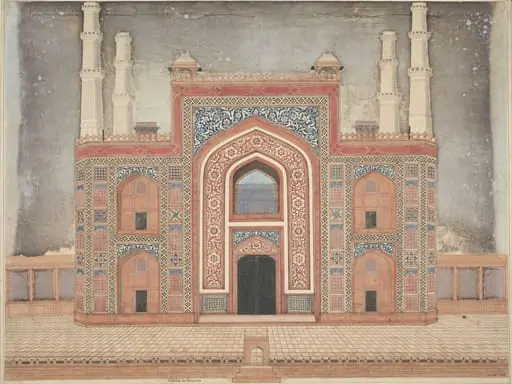 Elevation of the entrance gateway to the garden surrounding Akbar's masoleum.
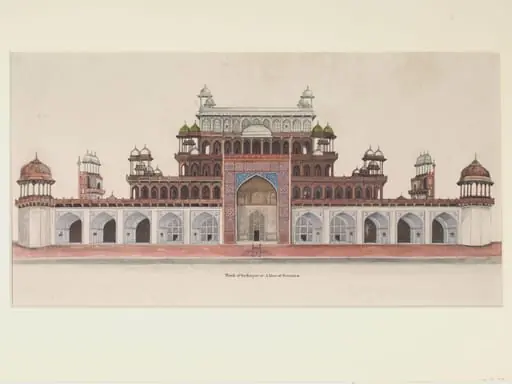 Elevation of the front of the mausoleum of the Emperor Akbar at Sikandra near Agra
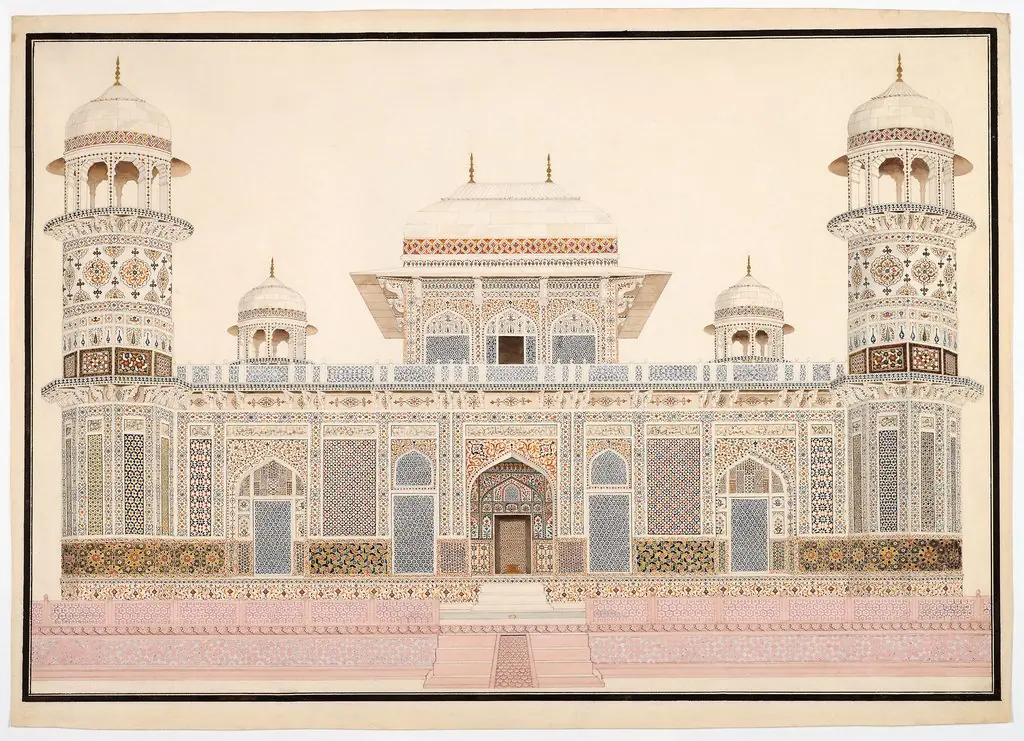 I'timad-ud-Daula's Tomb at Agra
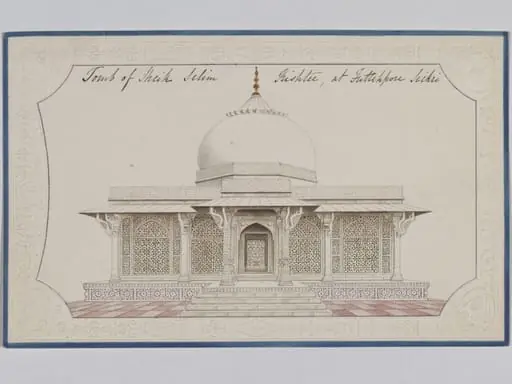 Mausoleum of Salim Chisti, Fatehpur Sikri
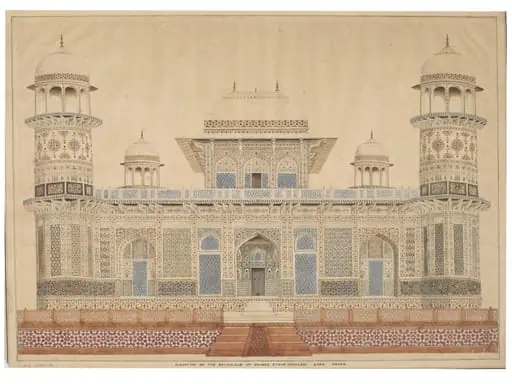 Mausoleum of Itimad ud-Daula.
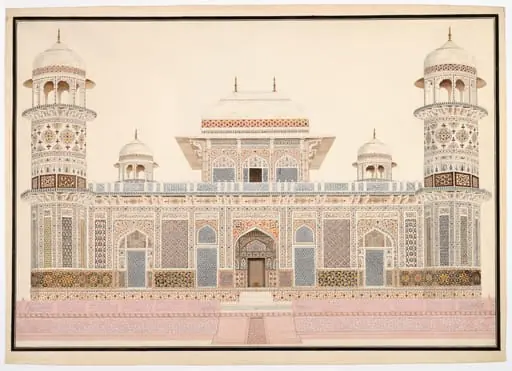 I'timad-ud-Daula's Tomb at Agra
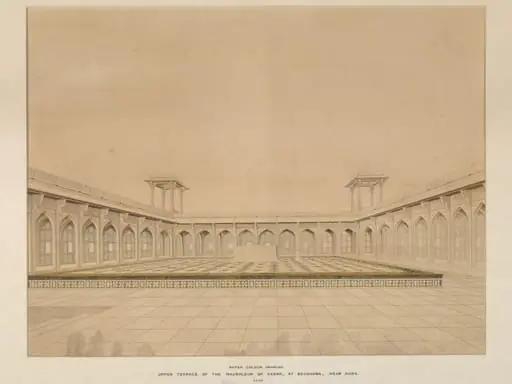 Upper terrace of the Mausolum of Akbar, Sikandra.
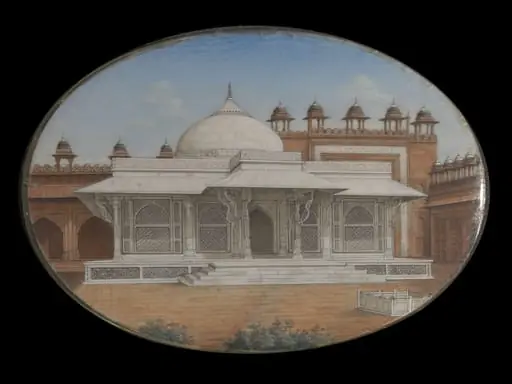 Tomb of Salim Christi