Artwork
Mausoleum of Salim Chisti, Fatehpur Sikri
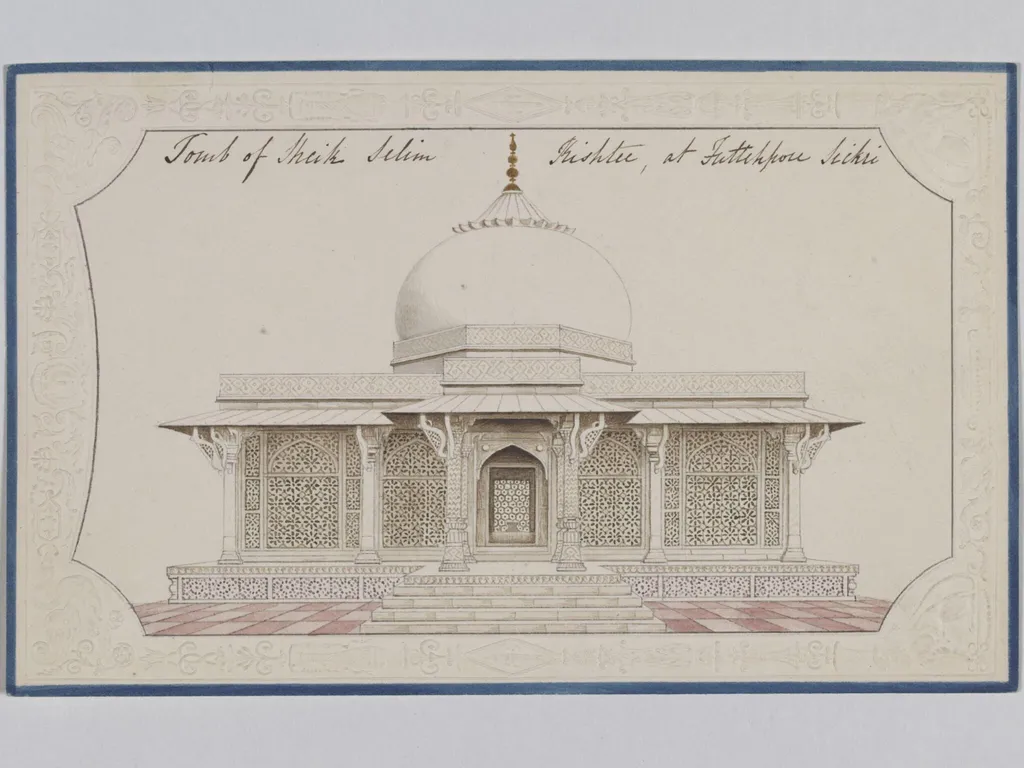
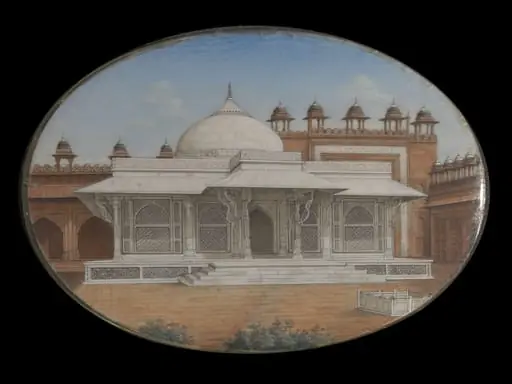
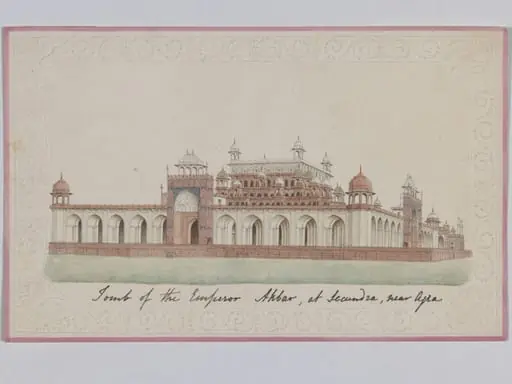
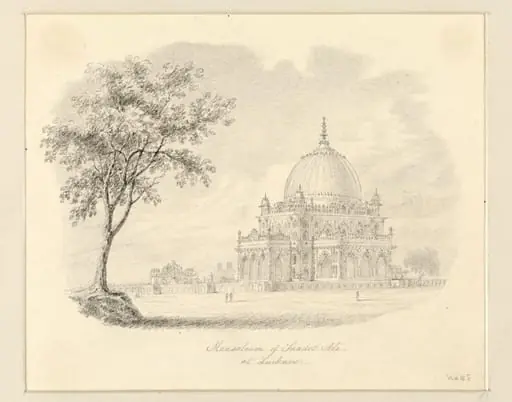
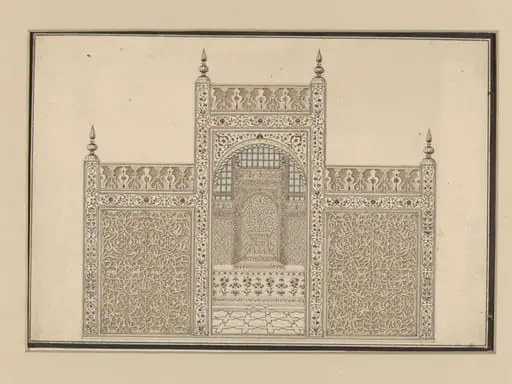
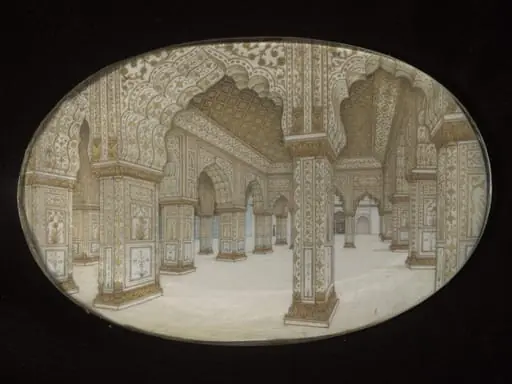
Mausoleum of Salim Chisti, Fatehpur Sikri is a paint painting by the Romanticist artist Unknown. It dates from 1820 and is held in the collection of the Victoria and Albert Museum. This watercolor drawing is one of fifteen in an album documenting Mughal-era architecture across Agra, Delhi, and Fatehpur Sikri.
About this work
Overview
The album is linked to Lord and Lady Amherst, whose interest in Indian monuments coincided with British colonial documentation efforts.
This watercolor drawing is one of fifteen in an album documenting Mughal-era architecture across Agra, Delhi, and Fatehpur Sikri. Created during the early 19th century, it records the Mausoleum of Salim Chisti with precise observation. The album is linked to Lord and Lady Amherst, whose interest in Indian monuments coincided with British colonial documentation efforts. The work reflects a topographical rather than decorative intent, emphasizing architectural accuracy over artistic embellishment.
Subject & Meaning
The drawing depicts the tomb of Sheikh Salim Chisti, a revered Sufi saint whose spiritual influence helped shape the founding of Fatehpur Sikri. The structure’s serene form—its white dome, intricate jali screens, and elevated entrance—conveys quiet reverence. The inclusion of the site in a colonial album suggests its recognition as a site of cultural and religious significance, even as British observers sought to catalog India’s heritage through systematic visual record.
Technique & Style
Executed in watercolor with fine ink linework, the drawing captures architectural detail with restrained precision. The latticework on the walls, the overhanging eaves, and the stairway leading to the entrance are rendered with delicate clarity. A narrow, ornamental border frames the composition, echoing decorative traditions without overpowering the subject. The palette is muted, favoring tonal gradations to suggest light and volume, consistent with topographical watercolor practices of the period.
History & Provenance
The drawing belongs to a collection assembled during the tenure of Lord Amherst as Governor-General of India (1823–1828). Lady Amherst, an accomplished amateur watercolorist, likely contributed to its creation. The album remained in the family before entering institutional collections, eventually finding a home at the Victoria and Albert Museum. Its survival reflects early colonial efforts to preserve visual records of India’s architectural heritage.
Context
Created during a period of heightened British interest in Indian antiquities, the drawing aligns with broader initiatives to document monuments before they deteriorated or were altered. While the Mughal Empire had declined, its structures remained potent symbols of cultural legacy. This work, like others in the album, served both scholarly curiosity and the colonial project of classification, offering a visual archive distinct from indigenous artistic traditions.
Legacy
The drawing endures as a historical record of the mausoleum’s appearance in the early 1800s, before modern restoration. It contributes to the understanding of how colonial observers interpreted and preserved Mughal architecture. As part of a larger album, it exemplifies the intersection of art, documentation, and imperial administration, offering insight into the visual culture of British India beyond official narratives.
Artist & collection

 Domestic Scene
 Giacomo and Cardinal Marco, investing Andrea, Abbot of San Zeno, with his Benefice
 The Nymph of Fontainebleau
 Portrait of a Woman
 Madonna and Child with Saints in the Enclosed Garden
 Venus and Minerva
 Family Group of Four on Sofa
 Wall painting from Room H of the Villa of P. Fannius Synistor at Boscoreale