Artwork
Guru Nanak
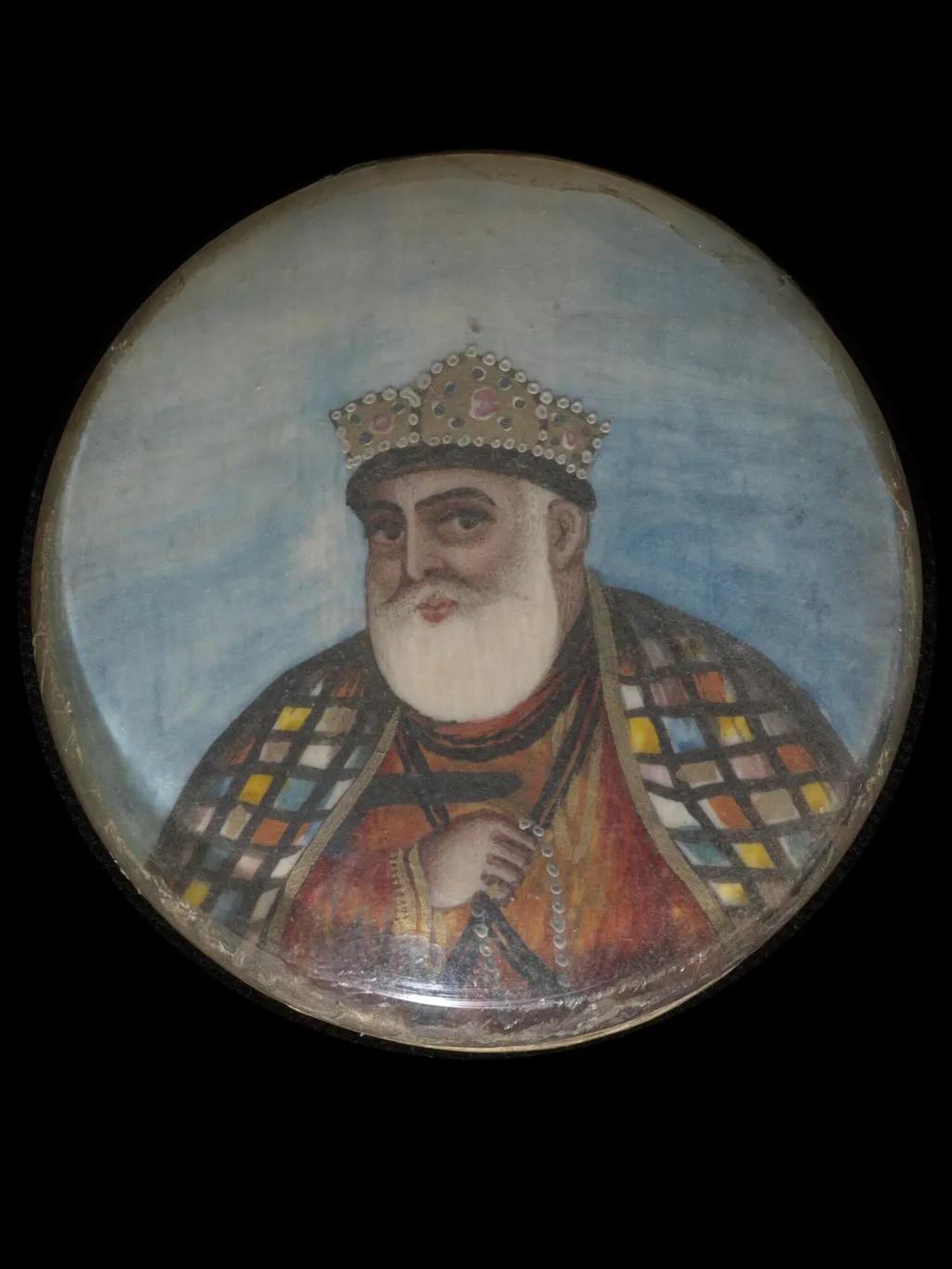
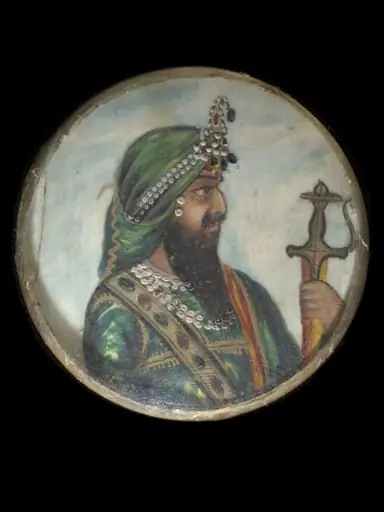
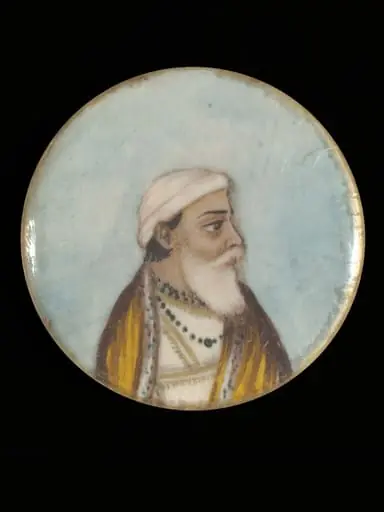
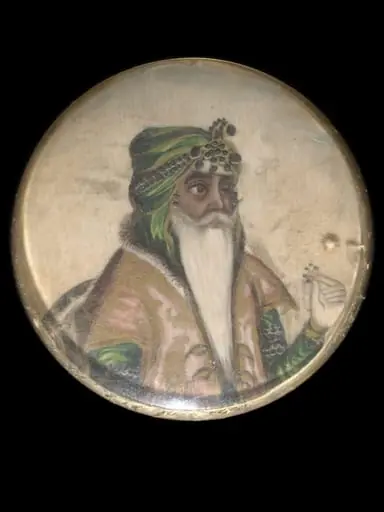
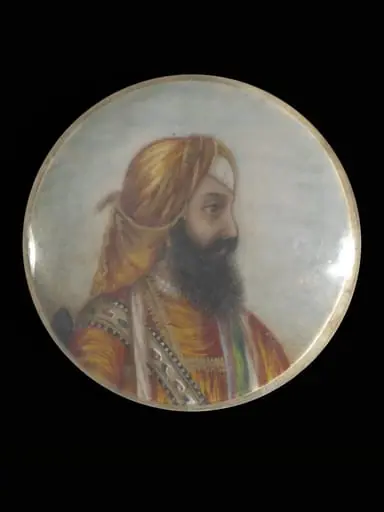
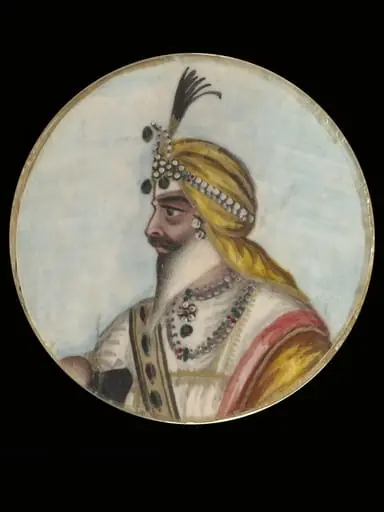
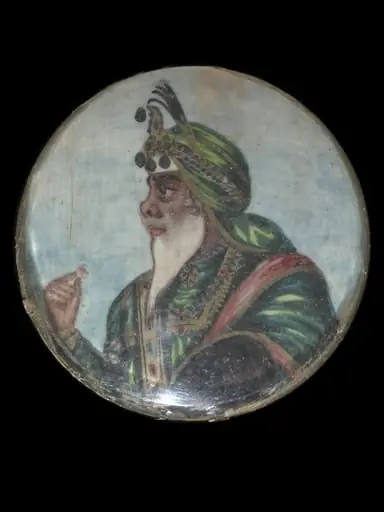
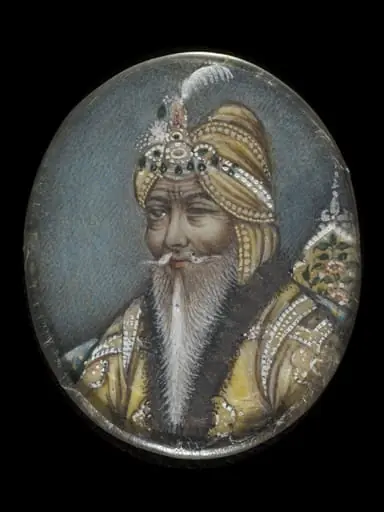
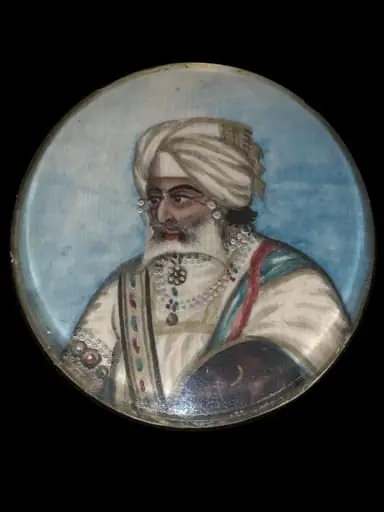
Guru Nanak is a paint painting by the Impressionist artist Unknown. It dates from 1850 and is held in the collection of the Victoria and Albert Museum.
About this work
Overview
The painting entered the Victoria and Albert Museum’s collection in 1954 through a donation with no documented prior ownership history.
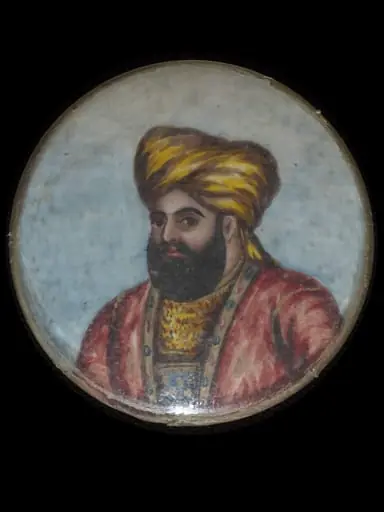
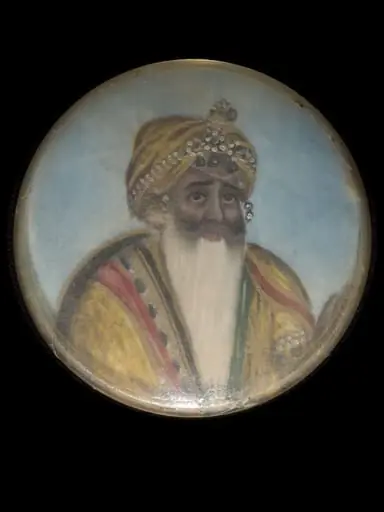
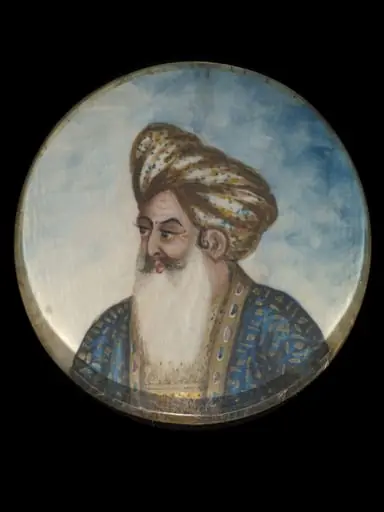
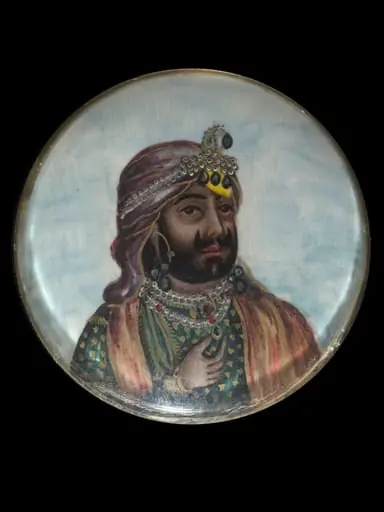
A small-scale portrait on ivory portrays Guru Nanak, the founder of Sikhism, rendered with meticulous detail. The image captures him from the head to the shoulders, set against a pale blue background. The medium’s smooth surface enhances the precision of the brushwork, typical of late Mughal or Punjabi courtly traditions. The painting entered the Victoria and Albert Museum’s collection in 1954 through a donation with no documented prior ownership history.
Subject & Meaning
Guru Nanak is depicted with a long white beard and a regal crown, symbols of spiritual authority and wisdom in Sikh tradition. His attire—a high-collared red robe fastened with a gold clasp and a patterned shawl—reflects both dignity and asceticism. The object held in his right hand, likely a rosary or scripture, signifies his role as a teacher. The crown’s inlaid dots may reference celestial or divine association, reinforcing his status as a spiritual guide.
Technique & Style
The portrait employs a realistic style with subtle chiaroscuro to model the face and fabric, lending volume and depth. Fine brushwork defines individual hairs in the beard and the intricate weave of the shawl. Ivory, a rare and costly support, was favored in elite Indian portraiture for its luminous quality. The color palette—rich reds, golds, and cool blues—contrasts harmoniously, emphasizing the figure’s presence against the plain background.
History & Provenance
The painting was donated to the Victoria and Albert Museum in 1954 by the Central Council for the Care of Churches, with no prior ownership records provided. Its origin remains uncertain, though stylistic elements suggest it was created in the Punjab region during the 19th century, possibly for a Sikh devotional context or as part of a colonial-era collection. The lack of documentation limits understanding of its commission or circulation.
Context
This portrait aligns with 19th-century Sikh artistic practices that blended Mughal naturalism with local devotional imagery. While early Sikh art avoided figural representation, later periods saw increasing use of portraiture to honor gurus, especially under British colonial influence. The use of ivory and detailed realism reflects both indigenous craftsmanship and exposure to European artistic conventions, illustrating a hybrid aesthetic emerging in Punjab.
Legacy
The painting contributes to a broader corpus of Sikh visual heritage that emerged after the gurus’ lifetimes, helping to solidify their iconography for later generations. Though not part of the earliest Sikh artistic traditions, it represents a key phase in how spiritual leaders were visually commemorated. Its preservation in a major museum ensures continued access for study and public engagement with Sikh history.
Artist & collection

 Domestic Scene
 Giacomo and Cardinal Marco, investing Andrea, Abbot of San Zeno, with his Benefice
 The Nymph of Fontainebleau
 Portrait of a Woman
 Madonna and Child with Saints in the Enclosed Garden
 Venus and Minerva
 Family Group of Four on Sofa
 Wall painting from Room H of the Villa of P. Fannius Synistor at Boscoreale