Artwork
Habbaza meets Bashir under a tree, from a Tuti-nama (Tales of a Parrot): Twenty-fourth Night
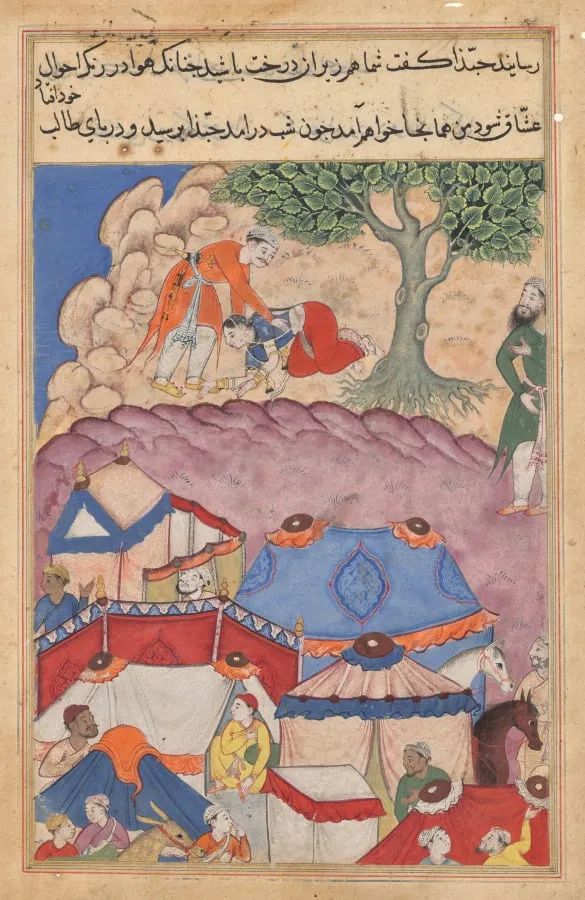
Habbaza meets Bashir under a tree, from a Tuti-nama (Tales of a Parrot): Twenty-fourth Night is an unspecified painting by the Mughal Painting artist Unknown. It dates from 1560 and is held in the collection of the Cleveland Museum of Art. The painting illustrates a clandestine encounter between Habbaza and Bashir, arranged under the cover of night beside a tree.
About this work
You see two people meeting under a tree at night, while a third person waits nearby.
You see two people meeting under a tree at night, while a third person waits nearby. Below them, a village bustles with small figures going about their day.
This painting comes from a book of parrot tales written for Emperor Akbar. The story is about secret love, but the artist made it feel quiet and still. The dark sky and bright faces pull your eye to the hidden meeting.
To see more art like this, look up Mughal India, court of Akbar (reigned 1556–1605).
Overview
The painting illustrates a clandestine encounter between Habbaza and Bashir, arranged under the cover of night beside a tree. A third figure, a friend of Bashir, stands to the right, awaiting their arrival. Beneath this central scene, the lower part of the composition depicts activity within Habbaza’s village, populated by numerous small figures.
Subject & Meaning
The work visualizes a narrative from a Tuti‑nama, a collection of parrot tales composed for Emperor Akbar. The story recounts Habbaza’s secret liaison with Bashir, which has been thwarted by her husband’s discovery of the affair, prompting the covert meeting orchestrated by Bashir’s companion.
Technique & Style
Rendered in the Mughal miniature tradition, the scene employs a dark night sky that contrasts with the illuminated faces of the protagonists, drawing attention to their hidden rendezvous. The artist balances detailed figuration in the village register with a more tranquil, still atmosphere in the foreground.
History & Provenance
Created as an illustration for the twenty‑fourth night of the Tuti‑nama, the painting was produced in the court of Akbar (1556–1605). It remains part of the manuscript’s illustrated folios, reflecting the patronage of the Mughal emperor for literary and visual arts.
Context
The image belongs to a broader corpus of Mughal court paintings that combined Persian artistic conventions with Indian themes. Such works often served both decorative and didactic purposes, conveying moral or romantic stories to elite audiences within the imperial household.
Legacy
As a visual record of Mughal narrative illustration, the painting contributes to our understanding of how love stories were depicted in imperial manuscripts, influencing later South Asian miniature traditions and informing contemporary scholarship on Akbar’s cultural projects.
Artist & collection

 Domestic Scene
 Giacomo and Cardinal Marco, investing Andrea, Abbot of San Zeno, with his Benefice
 The Nymph of Fontainebleau
 Portrait of a Woman
 Madonna and Child with Saints in the Enclosed Garden
 Venus and Minerva
 Family Group of Four on Sofa
 Wall painting from Room H of the Villa of P. Fannius Synistor at Boscoreale
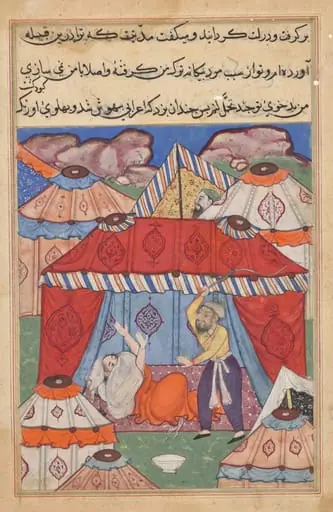 The disguised Arab, substituting for Habbaza, is whipped by her husband for refusing a bowl of milk, from a Tuti-nama (Tales of a Parrot): Twenty-fourth Night
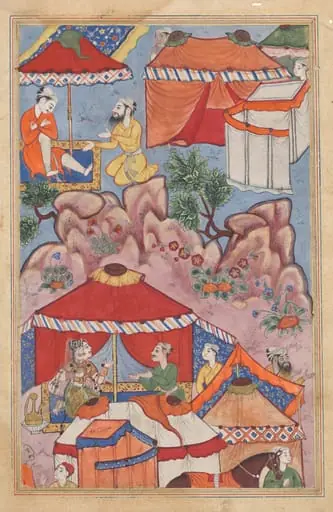 Bashir confides his love for Habbaza to an Arab friend, and sends him to her with a message, from a Tuti-nama (Tales of a Parrot): Twenty-fourth Night
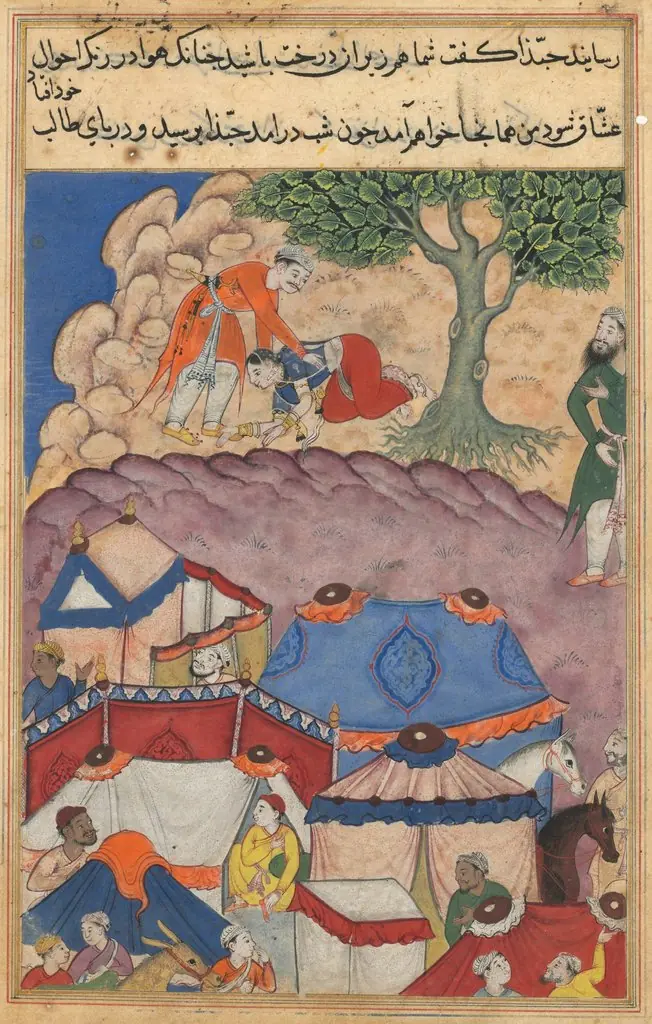 Habbaza meets Bashir under a tree, from a Tuti-nama (Tales of a Parrot): Twenty-fourth Night
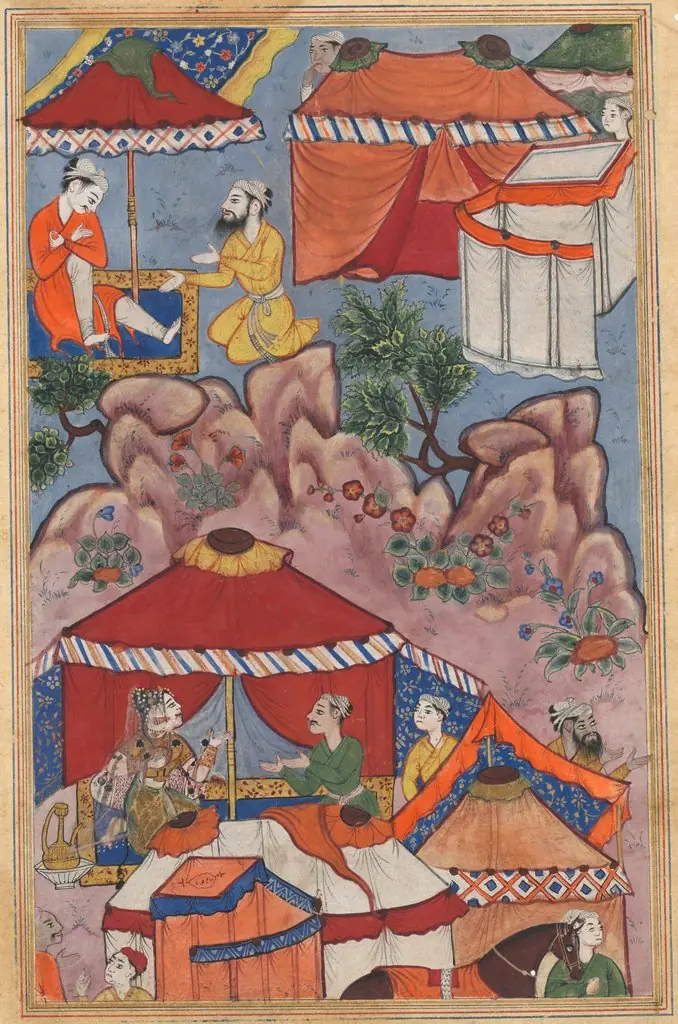 Bashir confides his love for Habbaza to an Arab friend, and sends him to her with a message, from a Tuti-nama (Tales of a Parrot): Twenty-fourth Night
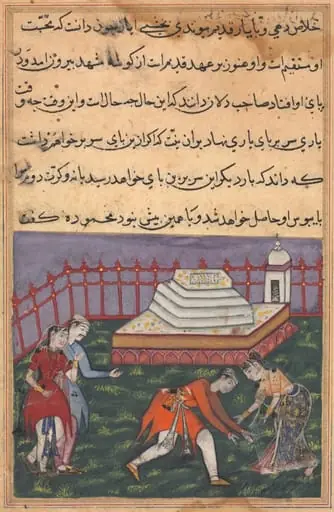 Hearing her declaration of love, Ayaz falls at the feet of Mahmuda at the holy shrine. The scene is witnessed by Salim, Ayaz’s friend, and a maid, from a Tuti-nama (Tales of a Parrot): Thirty-third Night