Artwork
The disguised Arab, substituting for Habbaza, is whipped by her husband for refusing a bowl of milk, from a Tuti-nama (Tales of a Parrot): Twenty-fourth Night
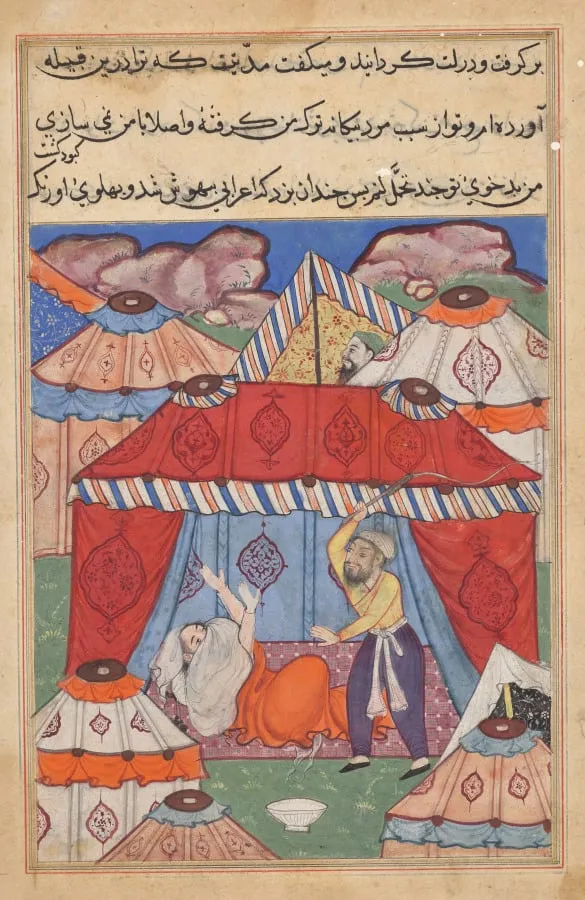
The disguised Arab, substituting for Habbaza, is whipped by her husband for refusing a bowl of milk, from a Tuti-nama (Tales of a Parrot): Twenty-fourth Night is an unspecified painting by the Mughal Painting artist Unknown. It dates from 1560 and is held in the collection of the Cleveland Museum of Art. The painting illustrates a scene from the *Tuti‑nama* (Tales of a Parrot), a Mughal narrative manuscript.
About this work
If you want to see more art like this, look up Mughal India, court of Akbar (reigned 1556–1605).
A woman in a striped robe is tied to a post while a man whips her. A small crowd watches under a tent.
This painting is from a storybook called the *Tuti-nama*, or *Tales of a Parrot*. The woman isn’t really Habbaza—it’s her lover’s friend in disguise. The husband thinks she’s refusing his milk, but she’s just playing a trick. The artist shows the moment when the trick goes wrong.
If you want to see more art like this, look up Mughal India, court of Akbar (reigned 1556–1605).
Overview
The painting illustrates a scene from the *Tuti‑nama* (Tales of a Parrot), a Mughal narrative manuscript. It depicts a woman bound to a post inside a tent, being whipped by a man while a small onlookers’ crowd watches. The episode is set during the twenty‑fourth night of the tale, where a disguised figure is mistaken for Habbaza.
Subject & Meaning
In the story, Habbaza’s lover Bashir’s companion assumes Habbaza’s clothing and occupies her tent while she is away. The husband, believing the woman to be his wife, offers milk each night; when she refuses, he becomes angry and punishes her. The painting captures the moment the ruse collapses, highlighting themes of deception, marital authority, and the consequences of mistaken identity.
Technique & Style
Executed in the Mughal court style of the late 16th century, the work combines delicate brushwork with intricate detailing of textiles and architecture. The striped robe, the tent’s drapery, and the figures’ expressions are rendered with fine lines and subtle colour modulation, characteristic of Akbar’s atelier where Persian influences merged with Indian motifs.
History & Provenance
The image originates from a illustrated manuscript of the *Tuti‑nama*, produced under the patronage of Emperor Akbar (reigned 1556–1605). Such books were commissioned for the imperial library and circulated among courtly audiences, serving both literary and decorative purposes.
Context
The narrative reflects social customs of Mughal society, where marital duties and hospitality were codified, and the act of offering milk symbolised domestic provision. The episode’s emphasis on punishment for refusal underscores the patriarchal authority prevalent in the period’s domestic sphere.
Artist & collection

 Domestic Scene
 Giacomo and Cardinal Marco, investing Andrea, Abbot of San Zeno, with his Benefice
 The Nymph of Fontainebleau
 Portrait of a Woman
 Madonna and Child with Saints in the Enclosed Garden
 Venus and Minerva
 Family Group of Four on Sofa
 Wall painting from Room H of the Villa of P. Fannius Synistor at Boscoreale
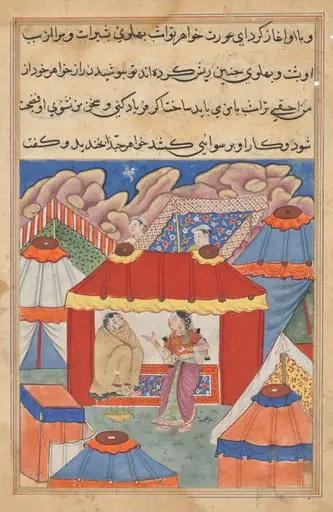 Habbaza’s sister, who is sent to console her, discovers the disguised Arab in her place, from a Tuti-nama (Tales of a Parrot): Twenty-fourth Night
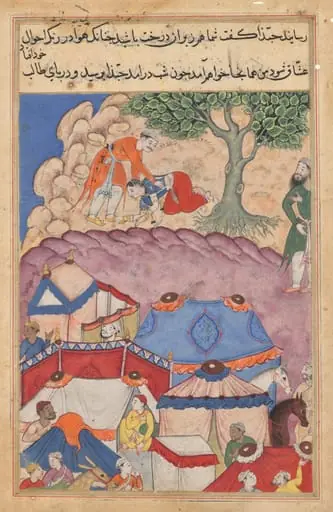 Habbaza meets Bashir under a tree, from a Tuti-nama (Tales of a Parrot): Twenty-fourth Night
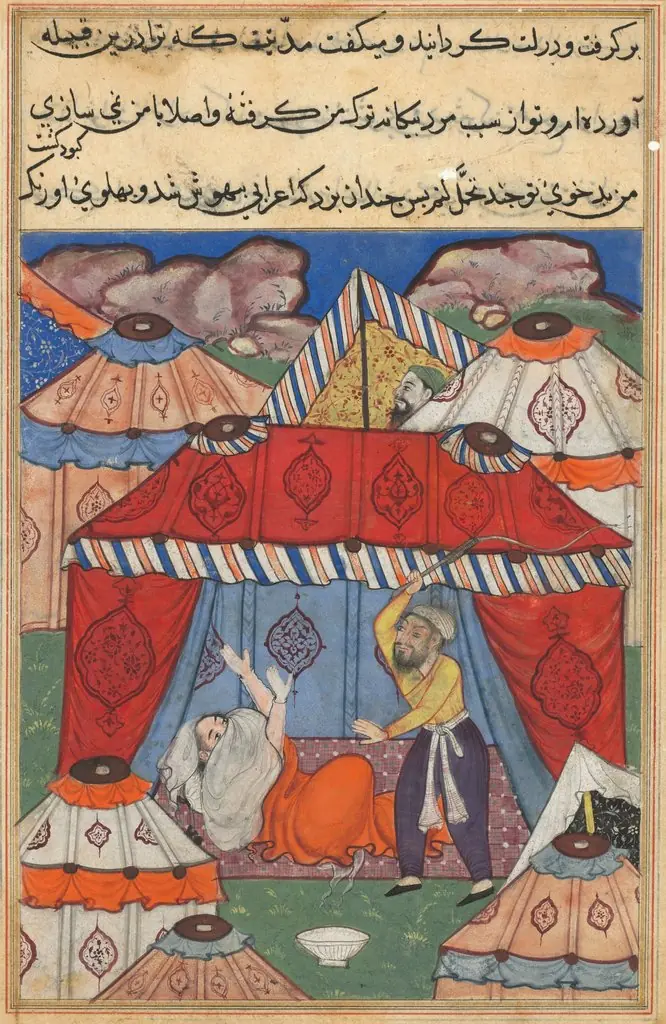 The disguised Arab, substituting for Habbaza, is whipped by her husband for refusing a bowl of milk, from a Tuti-nama (Tales of a Parrot): Twenty-fourth Night
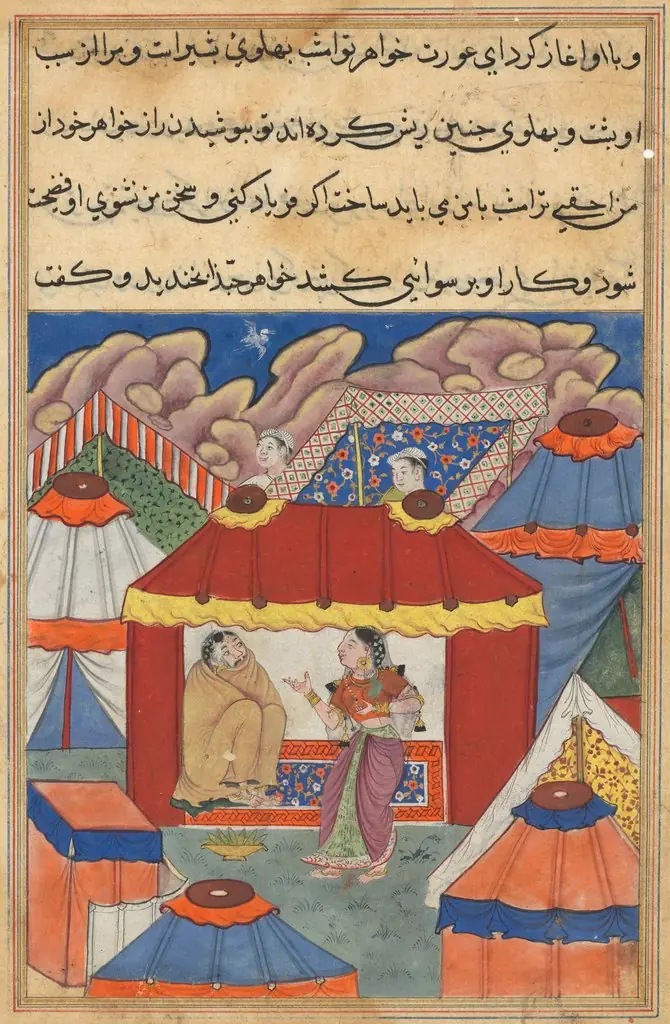 Habbaza’s sister, who is sent to console her, discovers the disguised Arab in her place, from a Tuti-nama (Tales of a Parrot): Twenty-fourth Night
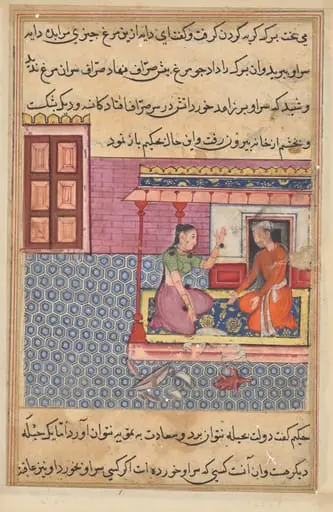 The pious man’s wife offers the seven-colored bird as food to her lover, but not finding its head, he breaks the pot and bowl in anger, from a Tuti-nama (Tales of a Parrot): Fifty-second Night
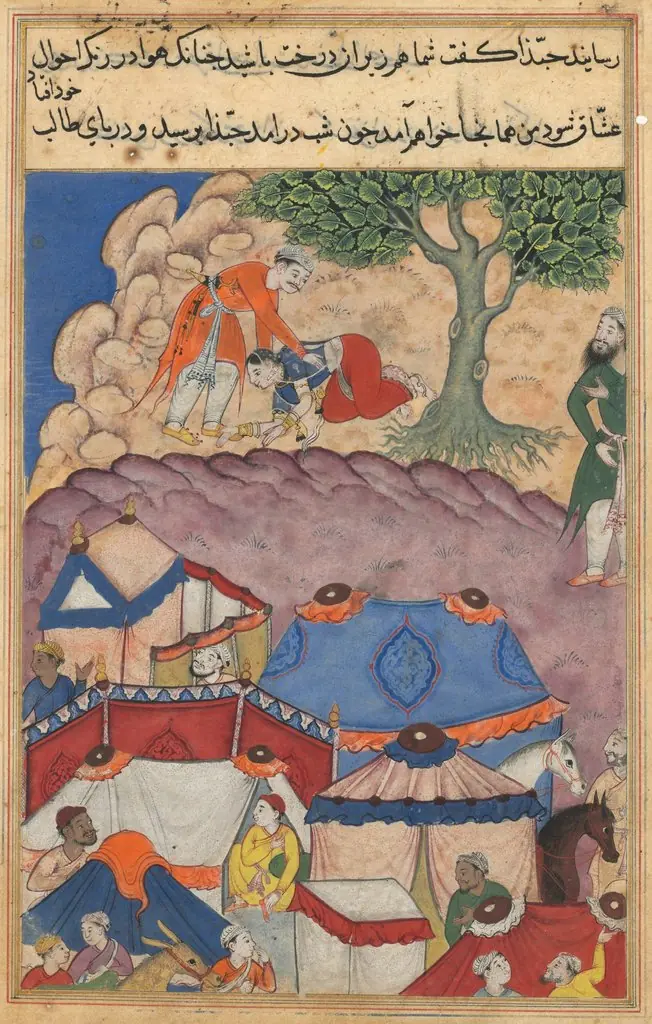 Habbaza meets Bashir under a tree, from a Tuti-nama (Tales of a Parrot): Twenty-fourth Night
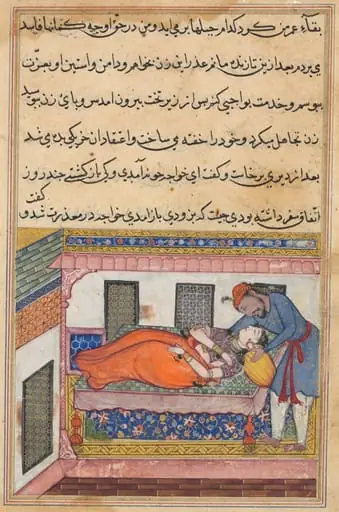 Shahr-Arai’s husband bends to kiss his wife who feigns sleep, from a Tuti-nama (Tales of a Parrot): Fortieth Night
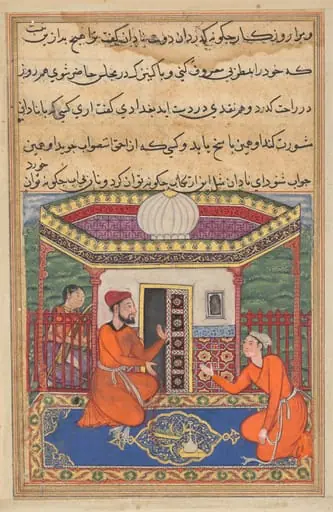 The young man of Baghdad solicits advice from a friend as his slave girl, who is adept at music, awaits, from a Tuti-nama (Tales of a Parrot): Forty-eighth Night
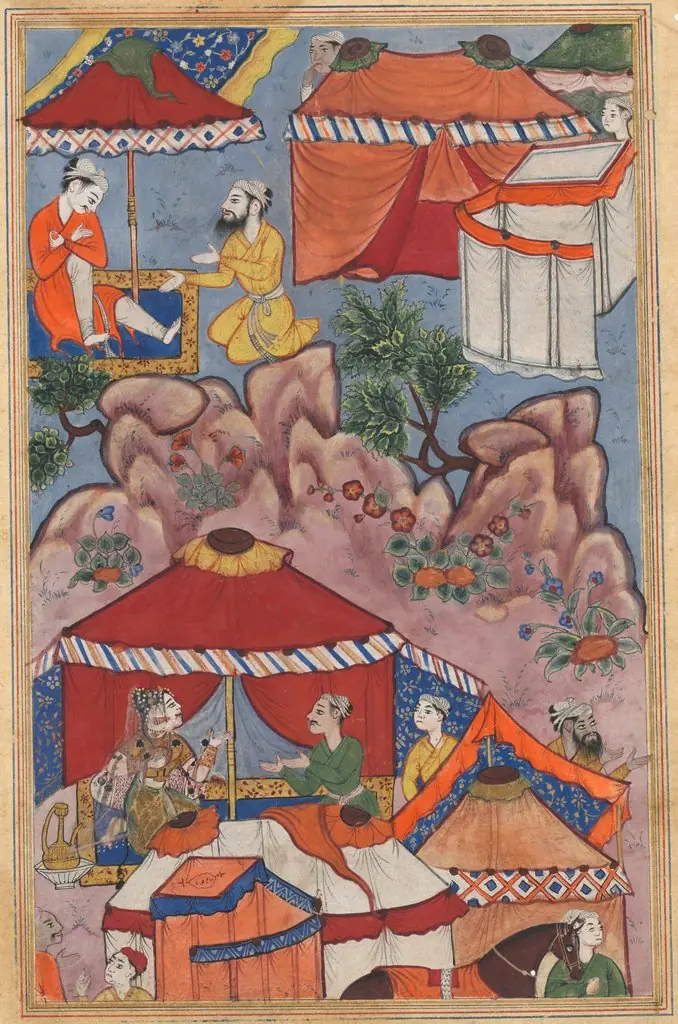 Bashir confides his love for Habbaza to an Arab friend, and sends him to her with a message, from a Tuti-nama (Tales of a Parrot): Twenty-fourth Night