Artwork
Hearing her declaration of love, Ayaz falls at the feet of Mahmuda at the holy shrine. The scene is witnessed by Salim, Ayaz’s friend, and a maid, from a Tuti-nama (Tales of a Parrot): Thirty-third Night
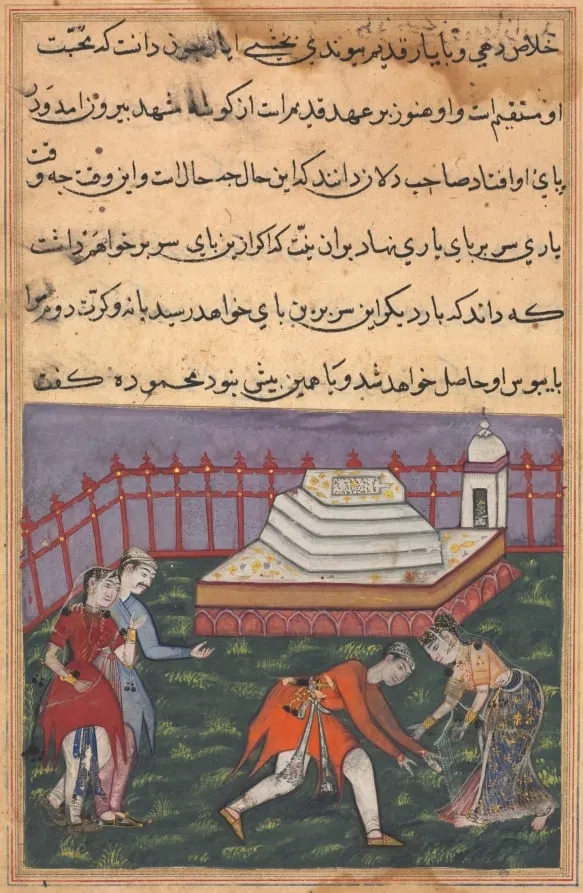
Hearing her declaration of love, Ayaz falls at the feet of Mahmuda at the holy shrine. The scene is witnessed by Salim, Ayaz’s friend, and a maid, from a Tuti-nama (Tales of a Parrot): Thirty-third Night is an unspecified painting by the Mughal Painting artist Unknown. It dates from 1560 and is held in the collection of the Cleveland Museum of Art. This painting depicts a dramatic reunion between Ayaz and Mahmuda, illustrating a scene from the Tuti-nama, a collection of tales.
About this work
The story is about love that survives forced separation, and the artist shows every emotion in tiny, careful brushstrokes.
A man in orange kneels at a woman’s feet in a walled garden, while two others peek from behind a pillar. The scene feels like a secret meeting—full of quiet tension and bright colors.
This painting comes from a book of parrot tales told to Emperor Akbar to delay a queen’s execution. The story is about love that survives forced separation, and the artist shows every emotion in tiny, careful brushstrokes.
To see more stories like this, look up Mughal India, court of Akbar (reigned 1556–1605).
Overview
This painting depicts a dramatic reunion between Ayaz and Mahmuda, illustrating a scene from the Tuti-nama, a collection of tales. The artwork is characterized by vivid colors and intricate brushwork, capturing a moment of intense emotion.
Subject & Meaning
The scene shows Ayaz, dressed in orange, kneeling at Mahmuda's feet in a walled garden, as two onlookers observe from behind a pillar. The narrative revolves around the enduring love between Ayaz and Mahmuda, despite her coerced marriage to another.
Technique & Style
The artist's use of bright colors and meticulous brushstrokes conveys the emotional depth of the scene, creating a sense of quiet tension and secrecy.
Context
The painting is part of the Tuti-nama, a series of stories told to entertain and delay the execution of a queen during the reign of Emperor Akbar in Mughal India.
Artist & collection

 Domestic Scene
 Giacomo and Cardinal Marco, investing Andrea, Abbot of San Zeno, with his Benefice
 The Nymph of Fontainebleau
 Portrait of a Woman
 Madonna and Child with Saints in the Enclosed Garden
 Venus and Minerva
 Family Group of Four on Sofa
 Wall painting from Room H of the Villa of P. Fannius Synistor at Boscoreale
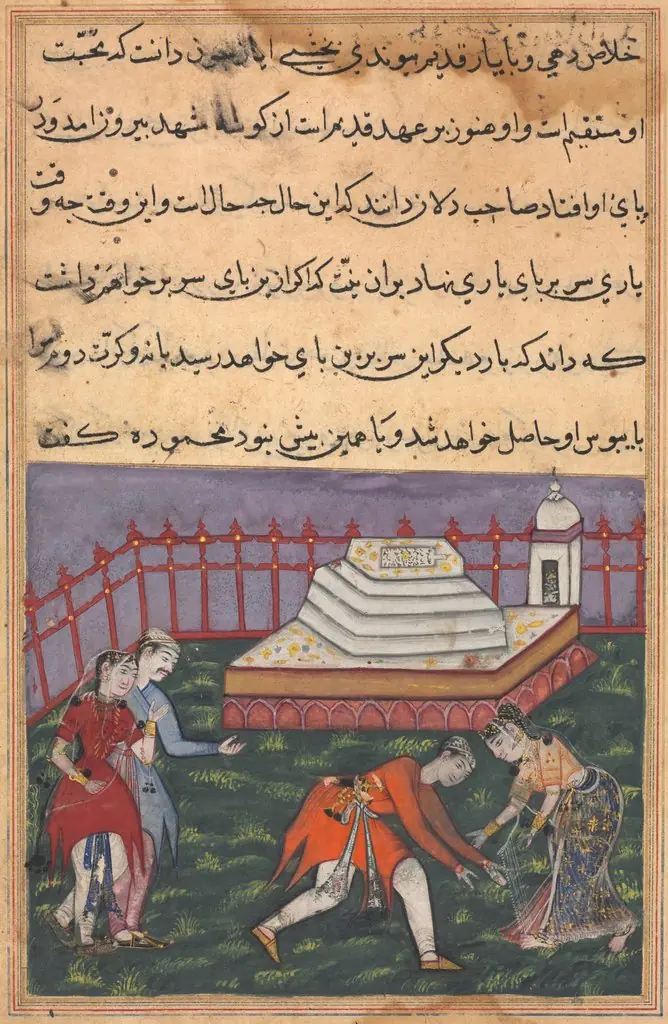 Hearing her declaration of love, Ayaz falls at the feet of Mahmuda at the holy shrine. The scene is witnessed by Salim, Ayaz’s friend, and a maid, from a Tuti-nama (Tales of a Parrot): Thirty-third Night
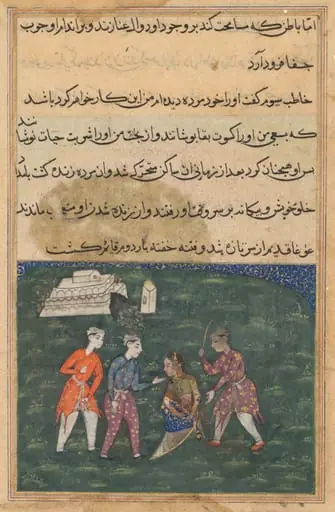 The third suitor strikes the devotee’s daughter and thus restores her to life, from a Tuti-nama (Tales of a Parrot): Twentieth Night
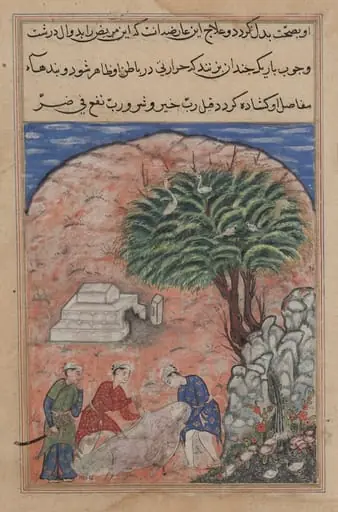 The suitors take the devotee’s daughter out of her tomb after breaking it open, when the physician discovers she is still alive, from a Tuti-nama (Tales of a Parrot): Twentieth Night
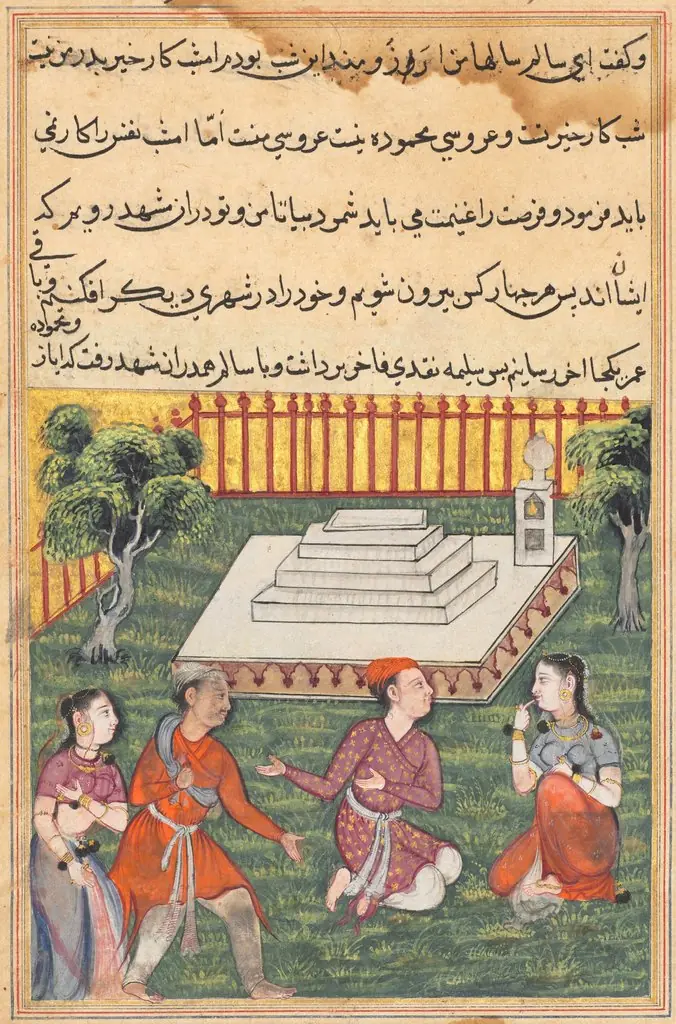 Salim and Salima return to Ayaz and Mahmuda in the sanctuary, from a Tuti-nama (Tales of a Parrot): Thirty-third Night
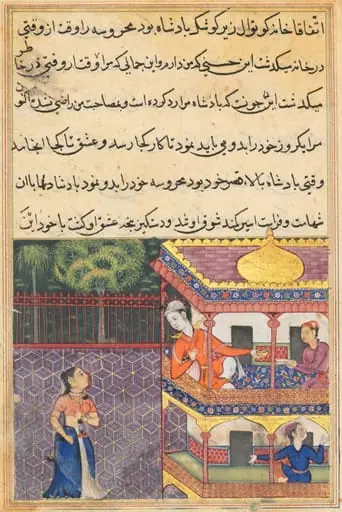 The king of Zabul sees Mahrusa from his palace balcony, from a Tuti-nama (Tales of a Parrot): Thirty-sixth Night
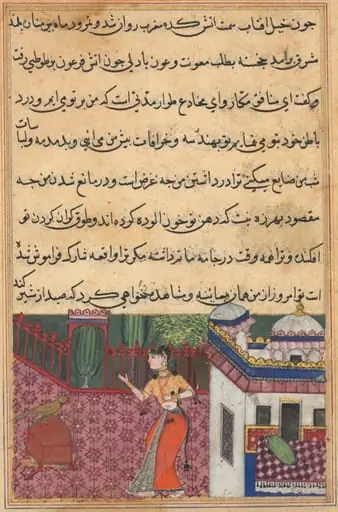 The parrot addresses Khujasta at the beginning of the thirty-third night, from a Tuti-nama (Tales of a Parrot)
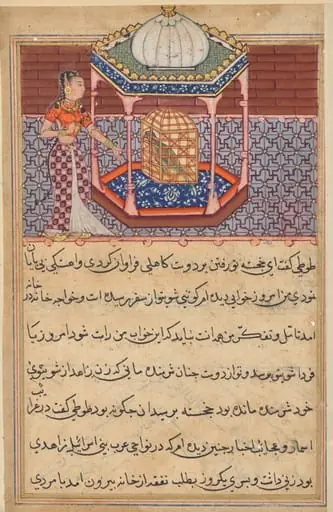 The parrot addresses Khujasta at the beginning of the fifty-second night, from a Tuti-nama (Tales of a Parrot): Fifty-second Night
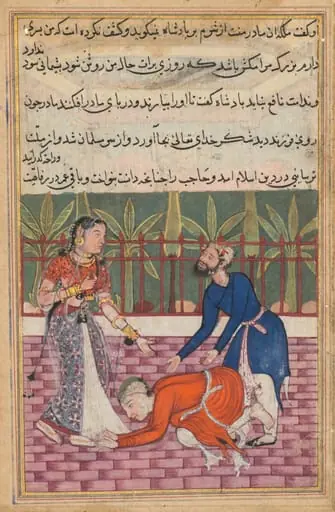 The guard restores the son who falls at his mother’s feet, from a Tuti-nama (Tales of a Parrot): Fiftieth Night
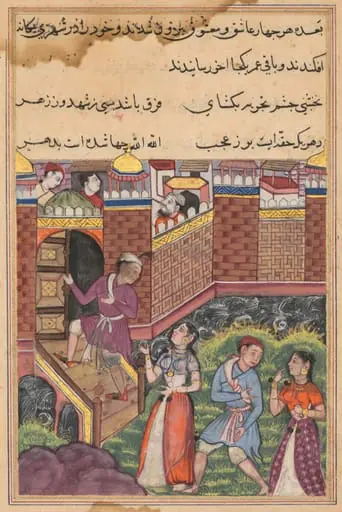 The two couples reach a foreign city where they make their home, from a Tuti-nama (Tales of a Parrot): Thirty-third Night
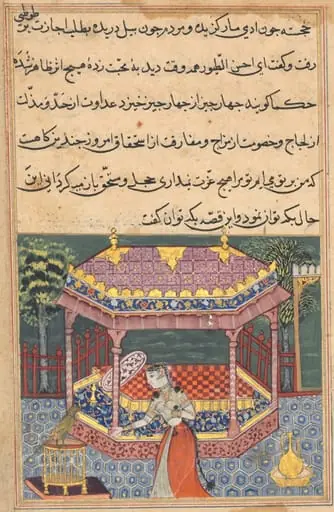 The parrot addresses Khujasta at the beginning of the thirty-seventh night, from a Tuti-nama (Tales of a Parrot)
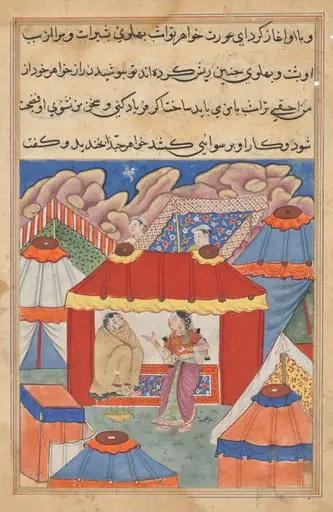 Habbaza’s sister, who is sent to console her, discovers the disguised Arab in her place, from a Tuti-nama (Tales of a Parrot): Twenty-fourth Night