Artwork
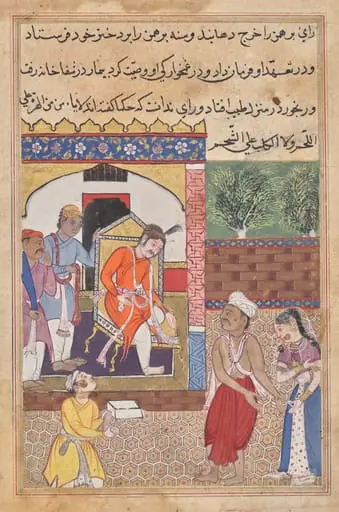
Bashir confides his love for Habbaza to an Arab friend, and sends him to her with a message, from a Tuti-nama (Tales of a Parrot): Twenty-fourth Night
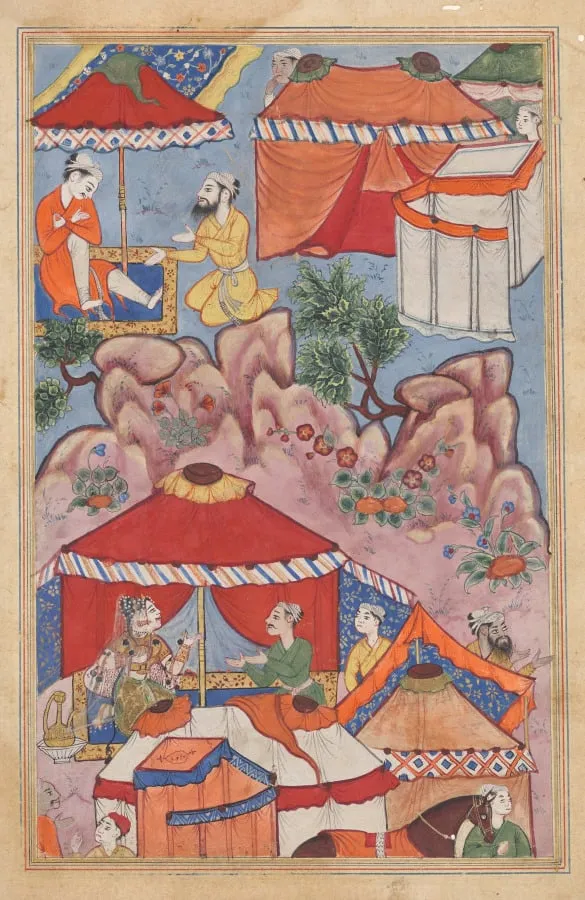
Bashir confides his love for Habbaza to an Arab friend, and sends him to her with a message, from a Tuti-nama (Tales of a Parrot): Twenty-fourth Night is an unspecified painting by the Mughal Painting artist Unknown. It dates from 1560 and is held in the collection of the Cleveland Museum of Art.
About this work
The bright colors and tiny details—like surprised villagers pointing—show how news spreads fast in small communities.
You see a busy scene: a man in orange whispers to a friend, sending a secret love note to a woman in a striped tent.
This painting comes from a book of parrot tales told in Mughal India. The bright colors and tiny details—like surprised villagers pointing—show how news spreads fast in small communities. It’s like a 16th-century gossip snapshot.
To see more art like this, look up *Mughal India, court of Akbar (reigned 1556–1605)*.
Overview
The miniature illustrates a moment from the twenty‑fourth night of the *Tuti‑nama*, a collection of parrot‑told stories popular in Mughal India. In the upper part of the scene, a man clothed in orange relays a love message to a companion, who is to deliver it to Habbaza, a married woman waiting inside a striped tent.
Subject & Meaning
The composition captures the clandestine nature of the affair: the messenger’s hushed gesture, the anticipation of Habbaza, and the surrounding villagers whose surprised pointing gestures suggest the rapid spread of gossip within the tribe. The narrative underscores themes of secret desire and communal scrutiny.
Technique & Style
Executed in the miniature tradition, the work employs vivid pigments and fine brushwork to render intricate details—such as the patterned tent, the bright orange attire, and the expressive faces of onlookers. The crowded foreground and layered registers create a sense of bustling activity typical of Mughal court illustrations.
History & Provenance
The painting originates from a Mughal manuscript produced during the reign of Emperor Akbar (1556–1605), a period noted for the flourishing of illustrated literary works. The *Tuti‑nama* was circulated among elite patrons, and this particular leaf reflects the court’s interest in Persian‑influenced storytelling.
Context
Mughal miniatures often blended Persian artistic conventions with Indian motifs, and the *Tuti‑nama* exemplifies this synthesis by pairing a parrot‑narrated tale with vivid courtly aesthetics. The scene’s focus on interpersonal intrigue mirrors broader courtly preoccupations with romance, loyalty, and reputation.
Artist & collection

 Domestic Scene
 Giacomo and Cardinal Marco, investing Andrea, Abbot of San Zeno, with his Benefice
 The Nymph of Fontainebleau
 Portrait of a Woman
 Madonna and Child with Saints in the Enclosed Garden
 Venus and Minerva
 Family Group of Four on Sofa
 Wall painting from Room H of the Villa of P. Fannius Synistor at Boscoreale
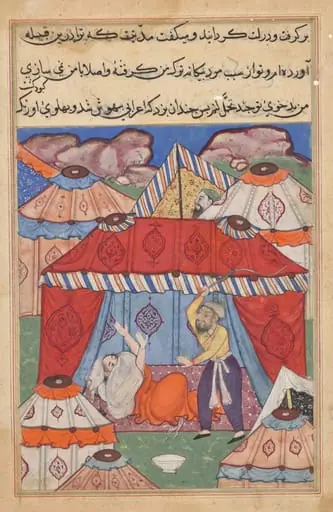 The disguised Arab, substituting for Habbaza, is whipped by her husband for refusing a bowl of milk, from a Tuti-nama (Tales of a Parrot): Twenty-fourth Night
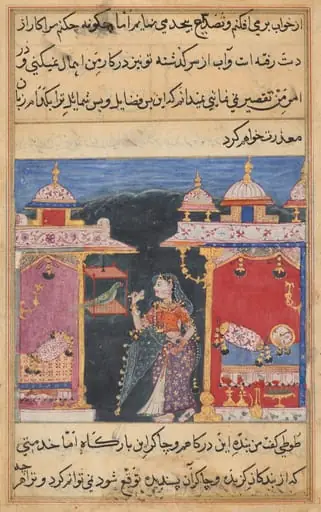 The Parrot Addresses Khujasta at the Beginning of the Seventh Night, from a Tuti-nama (Tales of a Parrot)
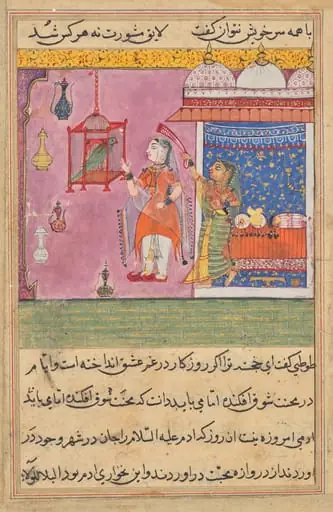 The Parrot Addresses Khujasta at the Beginning of the Nineteenth Night, from a Tuti-nama (Tales of a Parrot)
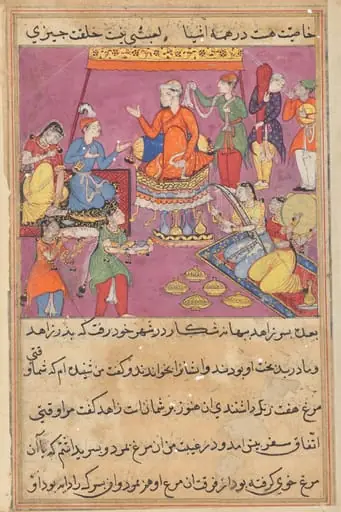 The king gives his daughter in marriage to the pious man’s son, from a Tuti-nama (Tales of a Parrot): Fifty-second Night
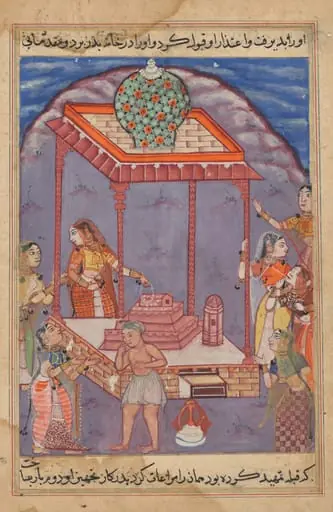 The destitute Mukhtar meets his wife Maimuna at a holy shrine, from a Tuti-nama (Tales of a Parrot): Twenty-fifth Night
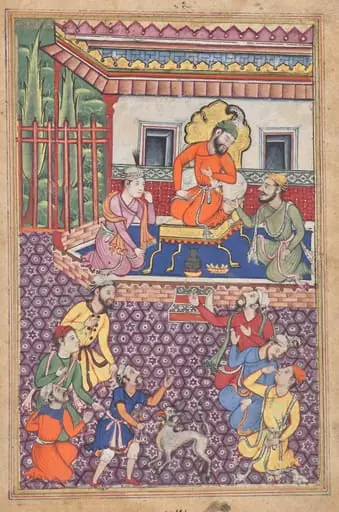 The court of the Raja of Ujjain, from a Tuti-nama (Tales of a Parrot): Forty-sixth Night
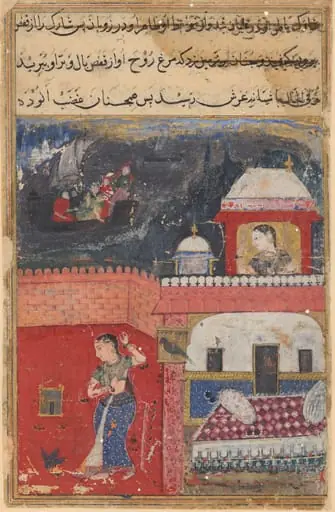 Khujasta kills the pet mynah who advises her not to be unfaithful to Maymun, her husband, from a Tuti-nama (Tales of the Parrot): First Night
 The magician, disguised as a Brahman, visits the king of Babylon, from a Tuti-nama (Tales of a Parrot): Thirty-fifth Night