Artwork
Jatayu, Sita and Ravana
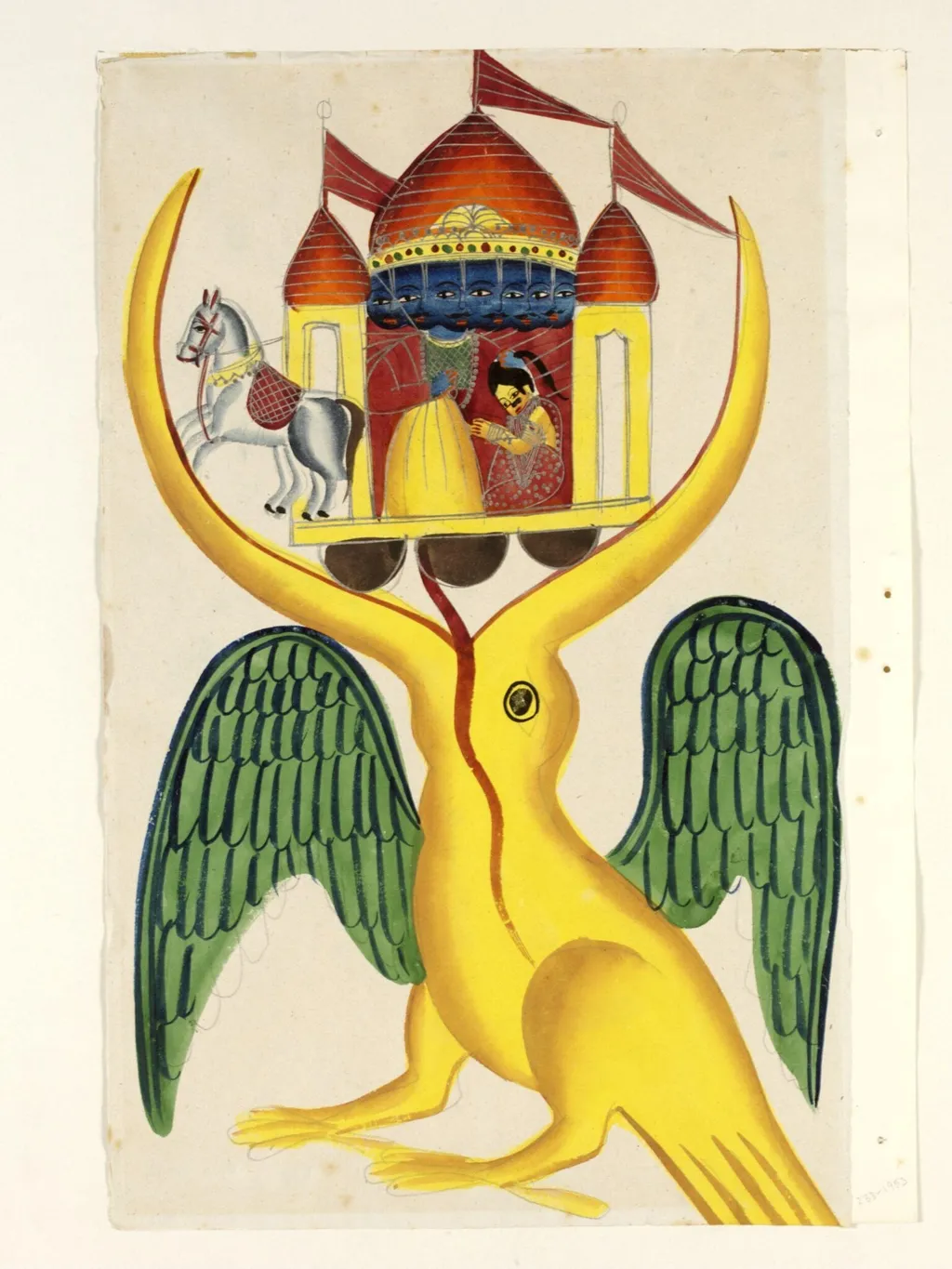
Jatayu, Sita and Ravana is a paint painting by the Impressionist artist Unknown. It dates from 1865 and is held in the collection of the Victoria and Albert Museum. Created in 1865, this painting is executed in opaque watercolour and tin alloy on paper, reflecting a regional Indian artistic tradition.
About this work
Overview
Created in 1865, this painting is executed in opaque watercolour and tin alloy on paper, reflecting a regional Indian artistic tradition.
Created in 1865, this painting is executed in opaque watercolour and tin alloy on paper, reflecting a regional Indian artistic tradition. It illustrates a moment from the Ramayana, capturing the mythic struggle between the vulture Jatayu and the demon king Ravana. The work was acquired by the University Museum of Archaeology and Ethnology in Cambridge through a donation from Mrs. Western of Hampshire, later becoming part of its permanent collection.
Subject & Meaning
The scene portrays Jatayu, a divine bird, in mid-air, clutching a miniature palace where Sita is held captive by Ravana. The composition emphasizes the bird’s futile yet heroic attempt to rescue her, symbolizing loyalty and sacrifice. The presence of a child within the palace suggests Sita’s maternal role, deepening the emotional weight of her abduction. The figures are rendered with symbolic clarity, prioritizing narrative over naturalism.
Technique & Style
The painting employs flat, bold areas of colour—yellow for Jatayu’s body, green for its wings, and vivid reds and blues for the figures—creating a decorative, almost textile-like surface. Tin alloy adds subtle metallic sheen, enhancing the luminosity. Forms are simplified, with minimal shading and no perspective, aligning with folk and devotional painting conventions. The eye of Jatayu is rendered as a plain circle, reinforcing the stylized, non-naturalistic approach.
History & Provenance
The work was donated to the University Museum of Archaeology and Ethnology in Cambridge by Mrs. Western of Langrookside, Havant, Hampshire, in the late 19th century. Its journey from a private collection to institutional care reflects broader 19th-century trends of collecting South Asian art in Britain. It was later transferred to the current repository, where it remains as part of a scholarly archive of Indian visual culture.
Context
This painting belongs to a tradition of illustrated Ramayana manuscripts and devotional imagery common in northern and central India during the 19th century. While influenced by Mughal and Rajput styles, its simplified forms and bright palette suggest a local, possibly rural, workshop. Such works were often used in storytelling or ritual settings, bridging religious narrative and everyday visual culture.
Legacy
The painting contributes to the understanding of how Indian mythological narratives were visually adapted in the colonial era. Its preservation in a Western museum highlights the complex history of cultural collection and interpretation. While not widely known, it remains a valuable example of regional painting practices that resisted Western naturalism in favor of symbolic storytelling.
Artist & collection

 Domestic Scene
 Giacomo and Cardinal Marco, investing Andrea, Abbot of San Zeno, with his Benefice
 The Nymph of Fontainebleau
 Portrait of a Woman
 Madonna and Child with Saints in the Enclosed Garden
 Venus and Minerva
 Family Group of Four on Sofa
 Wall painting from Room H of the Villa of P. Fannius Synistor at Boscoreale
 Ravana, Sita and Jatayu
 Jatayu, Ravana and Sita
 Ravana, Sita and Jatayu
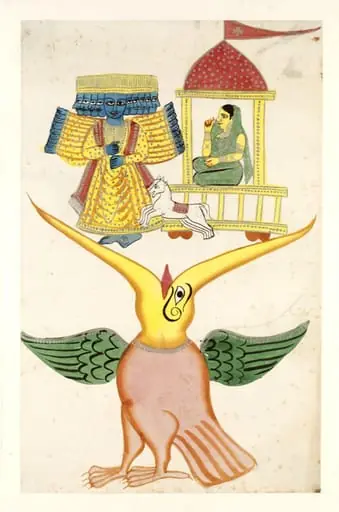 Jatayu, Ravana and Sita
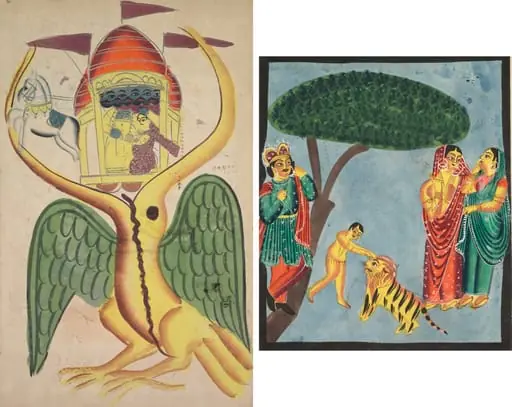 Leaf from a Kalighat album: Jatayu hinders Ravana’s chariot, trying to prevent the abduction of Sita (recto); Dushyanta watching his son Bharat playing with the tiger at the end of the Abhijnanashakuntalam (verso)
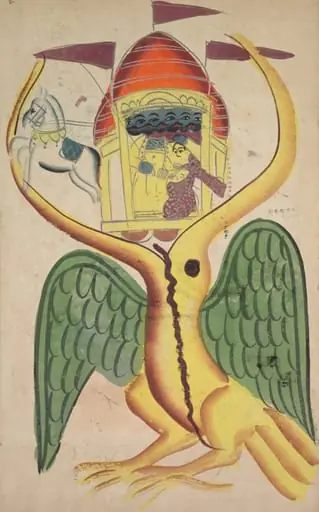 Jatayu hinders Ravana’s chariot, trying to prevent the abduction of Sita (recto), from a Kalighat album
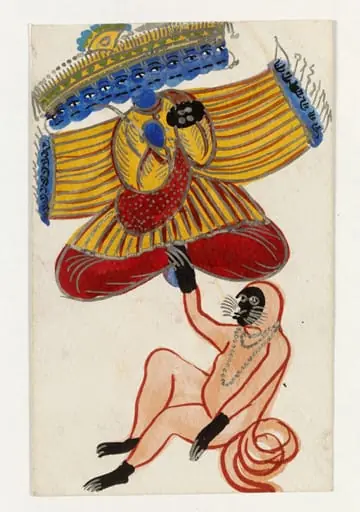 Hanuman and Ravana
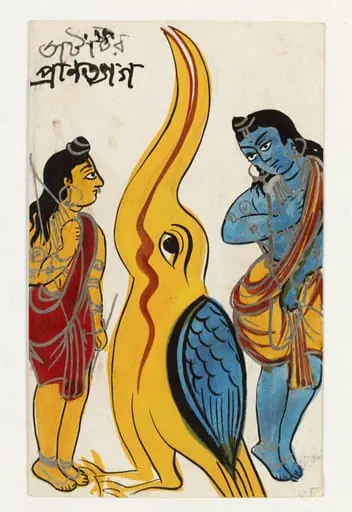 Rama, Lakshmana and Jatayu
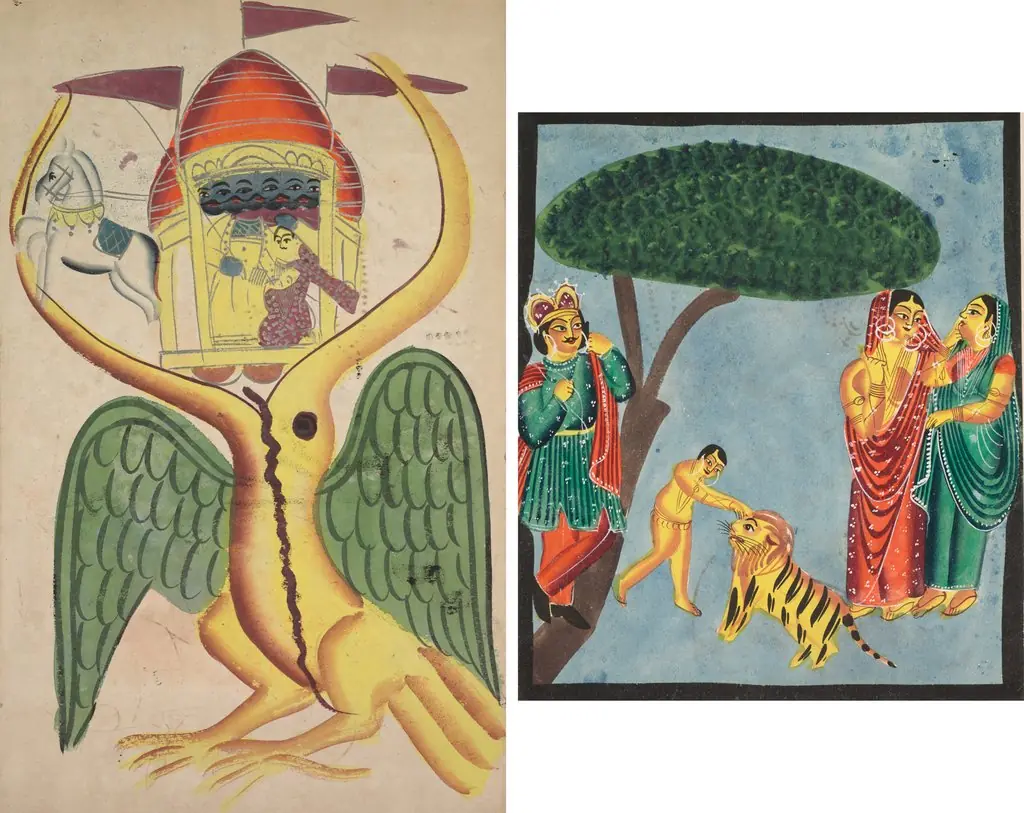 Leaf from a Kalighat album: Jatayu hinders Ravana’s chariot, trying to prevent the abduction of Sita (recto); Dushyanta watching his son Bharat playing with the tiger at the end of the Abhijnanashakuntalam (verso)
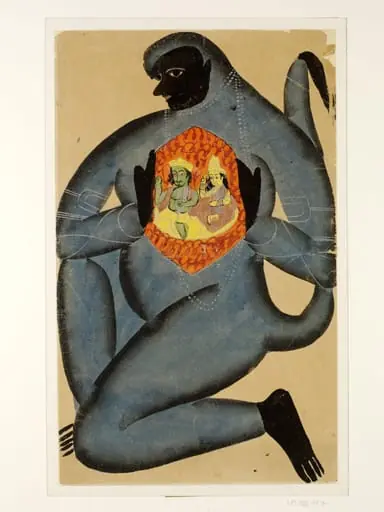 Hanuman, Rama and Sita