Artwork
Ravana, Sita and Jatayu
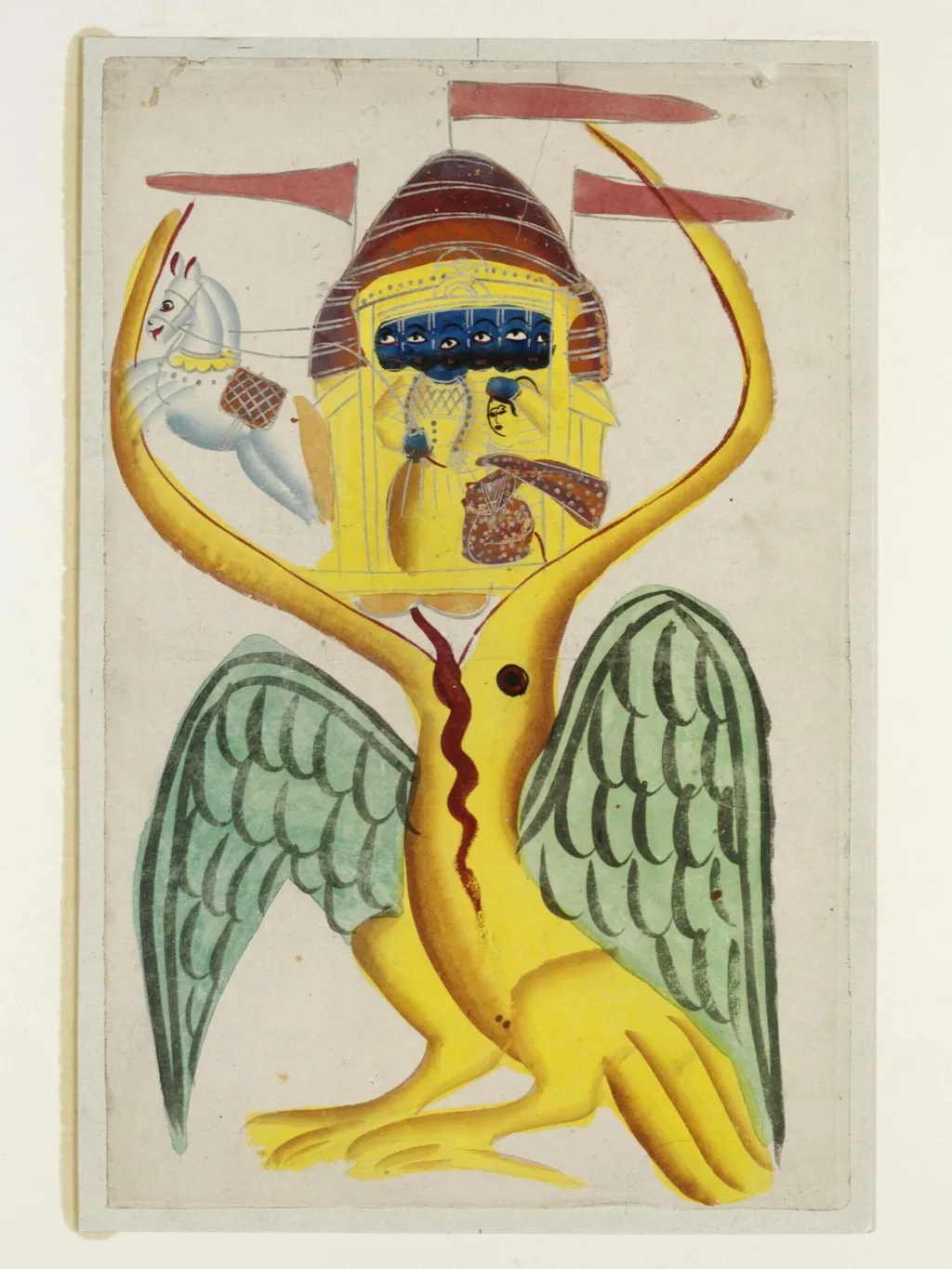
Ravana, Sita and Jatayu is a paint painting by the Impressionist artist Unknown. It dates from 1880 and is held in the collection of the Victoria and Albert Museum.
About this work
Overview
The painting presents a dramatic episode from the Indian epic Ramayana, where the heroic bird Jatayu confronts the demon king Ravana as he attempts to seize Sita. The composition captures the airborne struggle over the legendary Pushpaka chariot, with vivid colors and intricate detailing that emphasize the mythic intensity of the moment.
Subject & Meaning
In the narrative, Jatayu, a giant eagle‑like creature, intercepts Ravana’s flight to rescue Sita, who is shown kneeling behind the abducting king. The clash symbolizes loyalty and sacrifice, highlighting Jatayu’s self‑less bravery against Ravana’s forceful ambition, a theme recurrent in the epic’s moral framework.
Technique & Style
Executed in opaque watercolour on paper, the work dates to 1880 and employs a bold palette of yellows, greens, reds, and blues. The artist renders the bird’s feathered form, the chariot’s horses, and the miniature domed structure with fine brushwork, creating a layered, fantastical visual narrative that blends realism with mythic imagination.
History & Provenance
The painting entered the collection through the estate of Mrs. E. M. Milford, having previously been owned by the Church Missionary Society. Its documented acquisition reflects the 19th‑century interest in Indian religious and literary subjects among European collectors and missionaries.
Artist & collection

 Domestic Scene
 Giacomo and Cardinal Marco, investing Andrea, Abbot of San Zeno, with his Benefice
 The Nymph of Fontainebleau
 Portrait of a Woman
 Madonna and Child with Saints in the Enclosed Garden
 Venus and Minerva
 Family Group of Four on Sofa
 Wall painting from Room H of the Villa of P. Fannius Synistor at Boscoreale
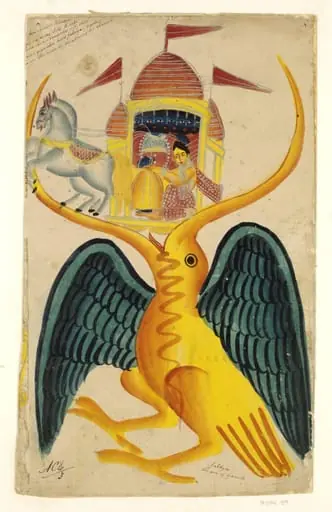 Ravana, Sita and Jatayu
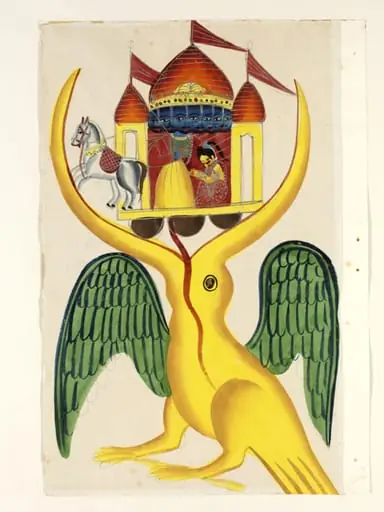 Jatayu, Sita and Ravana
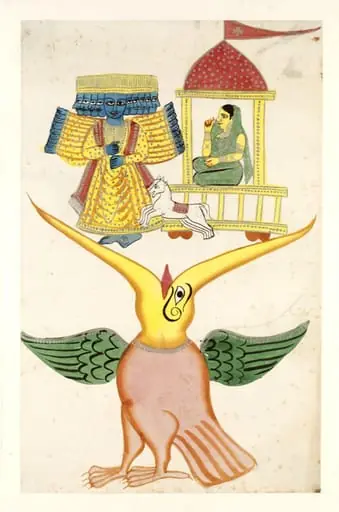 Jatayu, Ravana and Sita
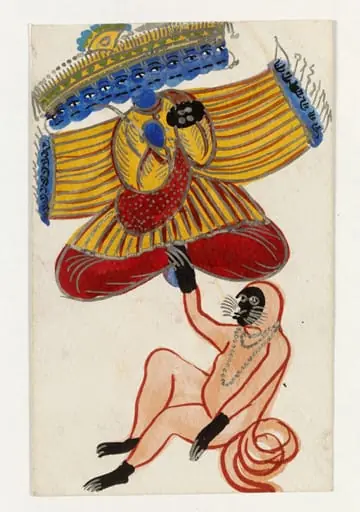 Hanuman and Ravana
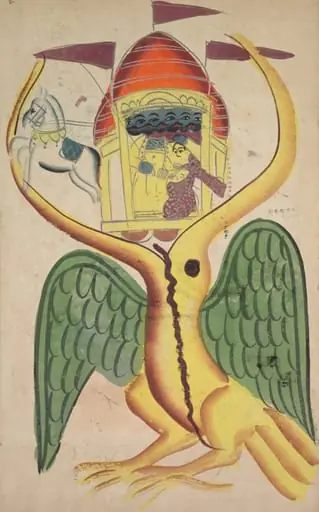 Jatayu hinders Ravana’s chariot, trying to prevent the abduction of Sita (recto), from a Kalighat album
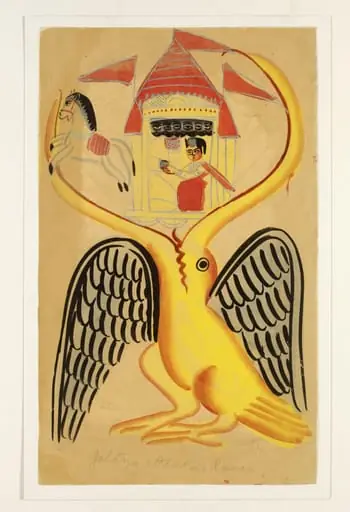 Jatayu, Ravana and Sita
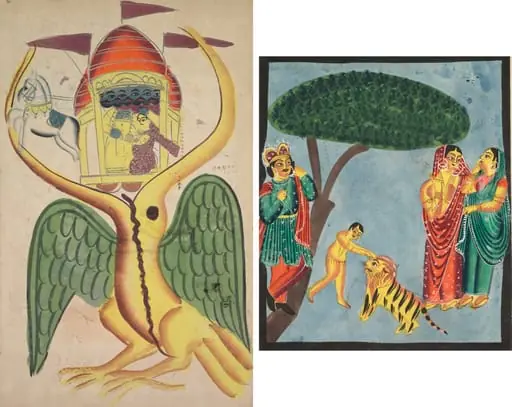 Leaf from a Kalighat album: Jatayu hinders Ravana’s chariot, trying to prevent the abduction of Sita (recto); Dushyanta watching his son Bharat playing with the tiger at the end of the Abhijnanashakuntalam (verso)
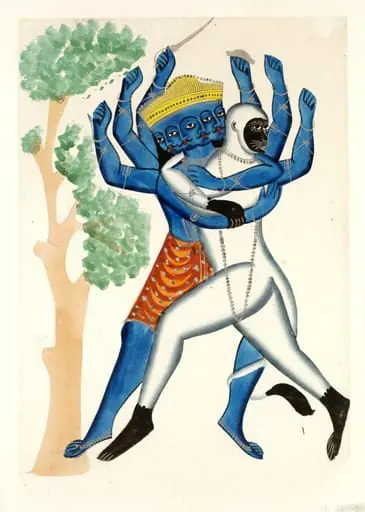 Hanuman and Ravana
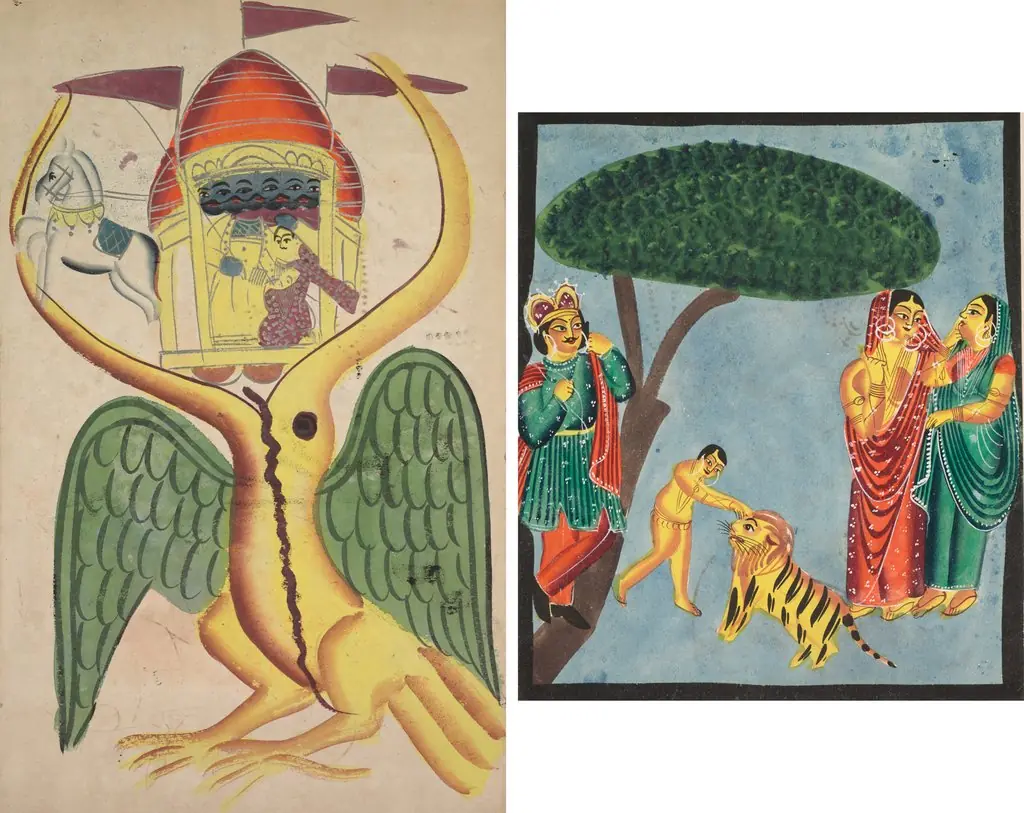 Leaf from a Kalighat album: Jatayu hinders Ravana’s chariot, trying to prevent the abduction of Sita (recto); Dushyanta watching his son Bharat playing with the tiger at the end of the Abhijnanashakuntalam (verso)