Artwork
Icoabui.
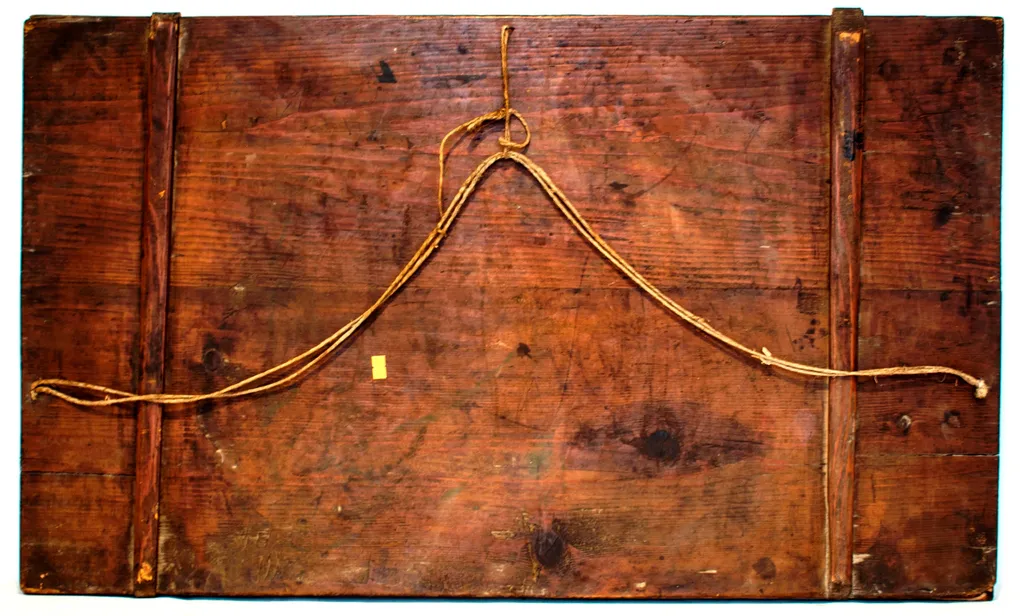
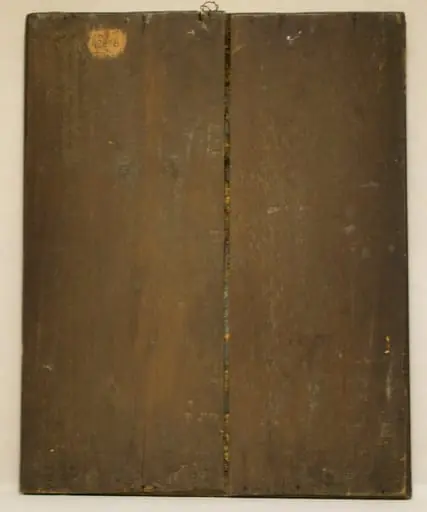
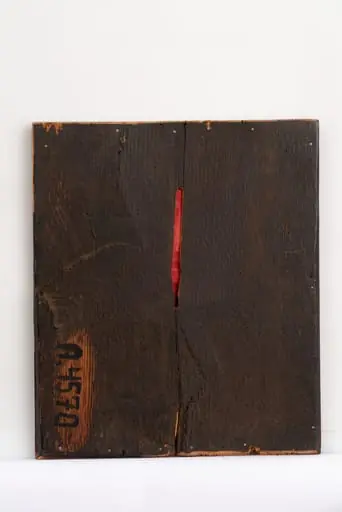
Icoabui. is a drawing by Unknown. It dates from 1850 and is held in the collection of the "Dimitrie Gusti" National Village Museum. Icoabui is a small, weathered wooden object bearing minimal linear markings.
About this work
Overview
The surface shows signs of prolonged exposure—dark streaks, scattered abrasions, and a softened texture—suggesting use and age.
Icoabui is a small, weathered wooden object bearing minimal linear markings. Its form consists of two curved strokes that converge at the apex, joined by a looped connection. The surface shows signs of prolonged exposure—dark streaks, scattered abrasions, and a softened texture—suggesting use and age. The lines appear hand-drawn with organic materials, possibly plant-based, and the wood’s condition implies it has endured environmental and human handling over time.
Subject & Meaning
The meaning of Icoabui remains undocumented, but its abstract geometry suggests symbolic intent. The triangular arrangement and loop may represent a conceptual or ritual form, perhaps denoting connection, containment, or a natural element. Its simplicity and lack of figuration point toward a non-representational function, possibly tied to communal or spiritual practices rather than narrative depiction.
Technique & Style
The lines were likely applied using a natural pigment or fiber, pressed or dragged across the wood’s surface. The strokes are uneven, with subtle variations in pressure, indicating manual execution without tools of precision. The wood was not smoothed or treated, preserving its raw texture. This unrefined approach aligns with utilitarian or ceremonial object-making traditions that prioritize function over ornamentation.
History & Provenance
No documented origin or collection history accompanies Icoabui. Its material state suggests it was not stored in controlled conditions, implying local, non-institutional use. The wear patterns and material decay are consistent with objects used in daily or seasonal rituals before being set aside. Its current form reflects decades, possibly centuries, of exposure to ambient elements and handling.
Context
Icoabui resembles artifacts from indigenous traditions where symbolic forms are carved or marked on wood for ceremonial or mnemonic purposes. Similar objects appear in ethnographic collections from regions where natural materials are used to encode cultural knowledge. Its lack of elaborate decoration aligns with practices that value subtlety and material authenticity over visual complexity.
Legacy
Icoabui contributes to the understanding of non-literate symbolic systems in material culture. Its endurance, despite minimal preservation efforts, highlights how ordinary objects can carry enduring cultural weight. It stands as a quiet example of how meaning can be embedded in simple forms, preserved not through display but through continued, if unrecorded, use.
Artist & collection
Museum
"Dimitrie Gusti" National Village Museum
Continue through works from the same source collection.
 Domestic Scene
 Giacomo and Cardinal Marco, investing Andrea, Abbot of San Zeno, with his Benefice
 The Nymph of Fontainebleau
 Portrait of a Woman
 Madonna and Child with Saints in the Enclosed Garden
 Venus and Minerva
 Family Group of Four on Sofa
 Wall painting from Room H of the Villa of P. Fannius Synistor at Boscoreale
 Icoambla
 Untitled
 Icoajumă
 Icoae jo
 Maica Domnului este pictată în picioare, în partea dreaptă a imaginii, având o atitudine evlavioasă, iar sfântul arhanghel Gavriil, tot în picioare, pictat la aceeași înălțime cu Maica Domnului, în stânga compoziției. Duhul Sfânt, sub forma unui porumbel, se pogoară din slava cerului deasupra Fecioarei Maria. Fondul e decorat cu flori și frunze simple, esențializate. Cromatica icoanei se compune din tonuri de portocaliu, verde, albastru, maro, alb și foiță aurie. Rama icoanei e simplă, băițuită și e formată din îmbinarea a patru baghete de lemn.
 Spaniola
 Fecioara Maria, dispusă în partea dreaptă a compoziției, este pictată în genunchi, într-o atitudine plină de evlavie. Arhanghelul Gavriil este pictat în picioare, în partea stângă, ținând o floare în mâna stângă, iar cu dreapta binecuvinteză și arată spre slava cerului, de unde Duhul Sfânt, în chip de porumbel, trimite raze spre Maica Domnului. Între cei doi sfinți este pictată o masă pe care stă cartea sfântă închisă, în spatele căreia e un crin. În spatele Maicii Domnului este schițată o clădire. Icoana este pictată integral doar în zona fețelor, a mâinilor, precum și Duhul Sfânt, sub formă de porumbel. În rest, s-au folosit doar laviuri colorate pe un fond de hârtie argintată. Cromatica icoanei se compune din tonuri de roșu, ocru galben, verde, maro. Rama icoanei e profilată, bicromă (latura interioară roșie, iar cea exterioară maronie) și e formată din îmbinarea a patru baghete de lemn.
 Icoa Zug
 Icoasemn
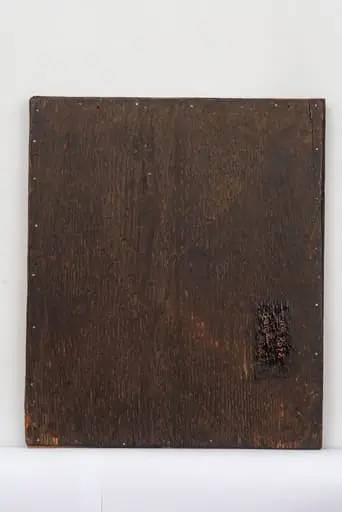 Tema icoanei face parte din ciclul Pascal și înfățișează Pogorârea la Iad a Domnului. În plan central apare reprezentat biruitor Iisus Hristos, ținând în mâna stângă un steag cu cruce, iar cu dreapta îl prinde pe Adam. În dreapta lui Hristos e pictat sfântul Ioan Botezătorul, arătând cu mâna dreaptă spre Mântuitorul. Compoziția e încadrată în partea superioară cu un brâu ornat cu motivul torsadei. Cromatica icoanei se compune din tonuri de roșu vermillon, alb, verde, albastru, maro și gri. Rama icoanei e profilată, băițuită și e formată din îmbinarea a patru baghete de lemn. Sticla este spartă, iar din suport lipsește colțul din stânga-sus și colțul din dreapta-jos.